




How to Evaluate 3 Roll Plate Bending Machine Manufacturers Before Buying
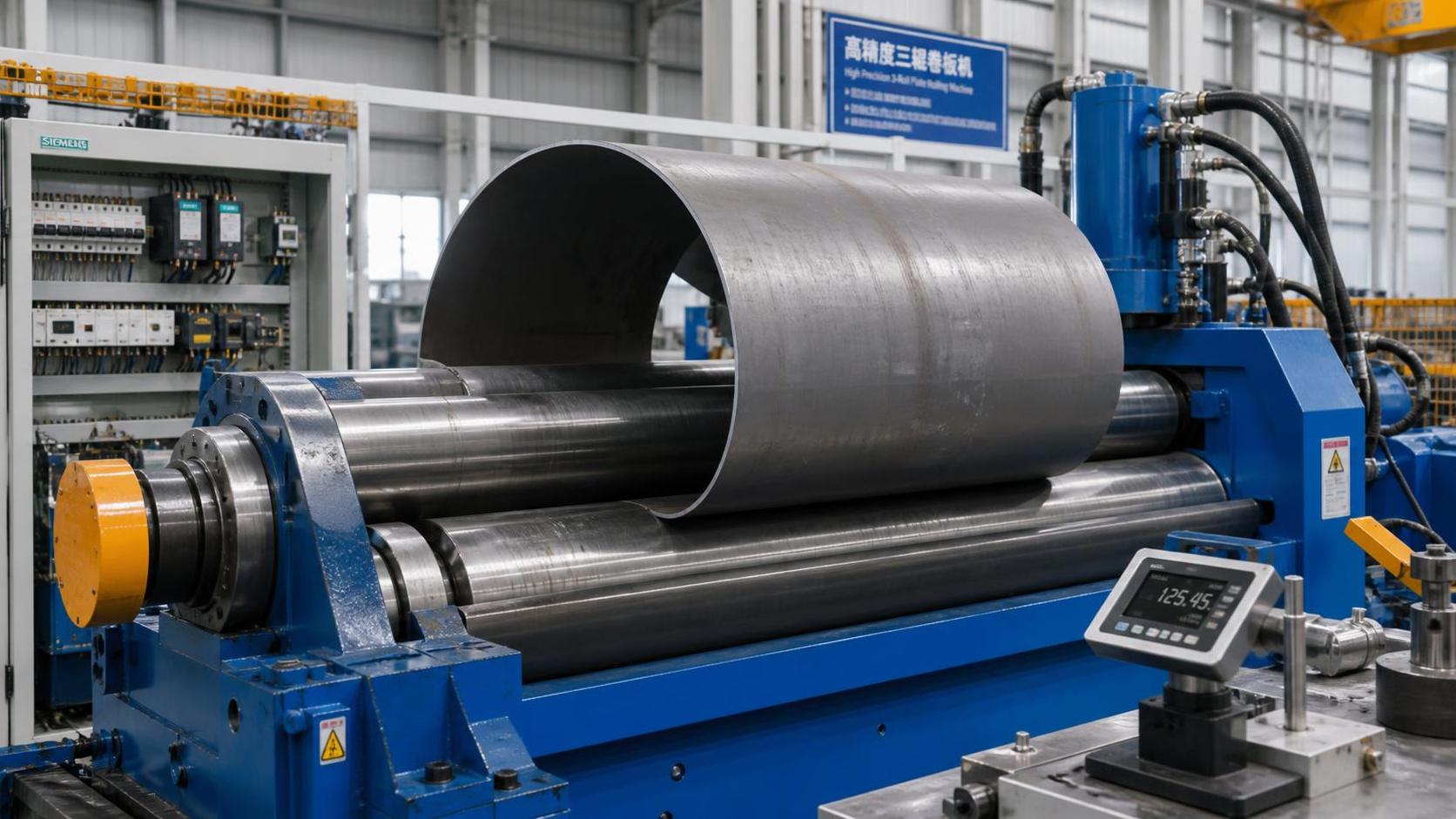
How to Evaluate 3 Roll Plate Bending Machine Manufacturers Before Buying
Choosing among 3 roll plate bending machine manufacturers is rarely a simple price comparison. On paper, two machines may look similar: same plate width, similar thickness range, comparable motor power. In actual production, though, the difference shows up in roll accuracy, hydraulic stability, frame rigidity, operator usability, and how quickly the supplier responds when the machine is down and your delivery schedule is already slipping.
For procurement teams, the real job is risk control. You are not only buying a machine; you are buying manufacturing consistency, documentation quality, spare parts availability, and a supplier’s attitude toward problems after shipment. That is why evaluating a manufacturer matters more than reading a catalog.
In the plate rolling segment, this becomes especially important because the machine often sits in the middle of a broader fabrication workflow. If the rolling step is unstable, downstream welding, fit-up, and dimensional correction all become more expensive. Buyers who have sourced welding lines, CNC cutting equipment, or beam fabrication systems already know this pattern: one weak machine creates hidden cost across the whole shop.
Start with the actual workpiece, not the brochure
Before comparing suppliers, define what the machine must do in your plant. A 3 roll plate bending machine for thin mild steel shells is not the same purchase as a machine for thicker plates, tighter diameters, or frequent material changes. Many buying mistakes happen because the inquiry is too general. “Need a plate rolling machine” is not enough.
A useful technical brief should include at least material type, plate thickness range, plate width, minimum rolling diameter, expected monthly output, and whether pre-bending quality matters for your product. If your shop processes stainless steel, high-strength plate, or jobs with strict roundness tolerance, tell the manufacturer early. These details affect roll design, hydraulic configuration, control system recommendations, and sometimes even whether a 3-roll concept is the best fit.
Good manufacturers usually ask a lot of questions before quoting. That is not a delay tactic. It is often a sign they understand the machine will be judged by production results, not just by successful installation.
Look past nominal capacity
One common procurement trap is treating rated capacity as a complete buying standard. In practice, rated thickness can be presented under ideal conditions, and those conditions may not match your workload. You need to clarify what the capacity means: full-width rolling or narrower plate? Carbon steel or another material? With pre-bending or without? What target diameter is assumed?
Ask each supplier to explain the basis for the machine’s capacity. If they cannot clearly connect the quoted model to your plate specification, that should raise a flag. A manufacturer with real application experience will usually discuss not only maximum capacity, but also the “comfortable working range” where accuracy, repeatability, and speed are more realistic.
This is also where procurement should involve production or engineering people. A machine that technically reaches the required thickness but struggles on day-to-day jobs may become a false economy.
Evaluate manufacturing depth and process control
Not every supplier that sells plate rolling machines is the same kind of manufacturer. Some produce core machine structures themselves. Some assemble from outsourced parts. Some operate more like trading companies with technical support. None of these models is automatically bad, but procurement should know which one they are dealing with.
What matters is whether the supplier can control quality at the points that affect machine life and bending performance: frame machining, roll material and heat treatment, hydraulic system selection, electrical integration, and final testing. If they claim ISO9001-based production management or CE-oriented design, ask what that means in day-to-day documentation. Can they provide inspection records, test procedures, electrical drawings, and operation manuals that are actually usable?
Suppliers with experience across related fabrication equipment often have an advantage here. A company that has spent years handling welding equipment, CNC cutting systems, milling machines, lathes, beam production lines, and sheet metal machinery tends to understand how machines perform in integrated workshops, not just as standalone products. Wuxi Samgins International Trade Co.,Ltd, established in 2012 in Wuxi, Jiangsu, works in exactly this kind of broader mechanical equipment environment, which matters because procurement buyers often source for a full fabrication line rather than a single isolated asset.
Check whether the supplier understands downstream production
A manufacturer who only talks about machine tonnage and motor size may be missing the bigger picture. Plate bending quality affects fit-up, seam alignment, tack welding time, and rework. In many shops, the true cost of a poor rolling machine appears one station later.
This is why it helps to work with suppliers familiar with adjoining processes such as welding automation, section fabrication, or material handling. For example, in structural steel production, efficiency gains do not come from one machine alone but from how assembly, welding, conveying, and correction link together. That same systems thinking can be seen in equipment such as the Horizontal H beam line, where horizontal assembly in one pass, SAW integration, 180° chain flipping, and PLC-based monitoring are designed as one continuous workflow rather than separate manual steps. Even if you are not buying a beam line, a supplier who thinks in process terms usually gives better advice on machine matching and plant layout.
That kind of experience becomes useful when your plate bending machine must feed welding cells, shell fabrication, pressure-related components, or custom steel structure work with real dimensional expectations.
Do not skip the conversation about tolerances
Procurement often focuses on dimensions and budget, while production cares about repeatability. The gap between those two views causes many avoidable disputes later.
When comparing 3 roll plate bending machine manufacturers, ask how they define acceptable rolling results. What can they commit to for roundness, straightness, repeat pass consistency, and pre-bending edge performance? Not every supplier will guarantee the same outcome, especially if the workpiece range is wide, but the serious ones will discuss limitations openly.
If your product requires frequent short cylinders, narrow diameters, or limited flat ends, that should be part of the quotation review. Otherwise, you may receive a machine that is “within specification” but awkward for your real work.
Assess service as if a breakdown will happen
At some point, something will need attention. Maybe not a major failure, but sensors drift, seals age, hydraulic parts wear, operators make mistakes, and local electricians interpret drawings differently. The right question is not whether service is needed. It is how the supplier handles it when it is needed urgently.
Ask practical questions:
- How are spare parts identified and supplied?
- Are standard electrical and hydraulic brands used, or custom components that are hard to replace locally?
- Can remote troubleshooting be done effectively?
- What training is included for operators and maintenance staff?
- What documents are delivered with the machine?
For overseas sourcing, location and export experience matter more than people sometimes admit. A supplier based in a major manufacturing area with regular international shipments is usually better prepared for packing, documentation, and coordination. Wuxi, for instance, sits in one of China’s strongest machinery clusters and is well connected to Shanghai, which tends to help on logistics and supplier access. But logistics convenience should support your decision, not replace technical evaluation.
Compare quotations by total ownership cost
A lower machine price can still become the higher-cost purchase. Procurement teams know this in theory, but under time pressure it is easy to reduce comparison to three numbers on a spreadsheet.
When reviewing quotes, separate cost into a few layers: machine base price, tooling or optional supports, shipping and installation, operator training, spare parts package, downtime risk, and expected rework cost if bending quality is unstable. If the cheaper supplier offers limited testing, vague electrical documentation, or weak support after delivery, the saving may disappear quickly.
The same principle applies in more automated fabrication lines. A higher-spec system can make sense if it reduces manual handling and distortion correction. In beam production, for example, some horizontal lines are designed for high-volume, light-duty H-beam manufacturing with beam heights from 250 to 1500 mm, widths from 150 to 500 mm, workpiece weights up to 4000 kg, and welding speeds around 0.3–1.9 m/min. Those numbers only matter if they translate into stable output and less downstream correction. Plate rolling purchases should be judged with the same discipline.
What to ask before you issue the PO
Before final approval, it helps to force every shortlisted supplier to answer the same set of operational questions. Not to create paperwork for its own sake, but to expose differences that sales presentations often hide.
A supplier that answers clearly, even when the answer is “this needs confirmation by drawing or sample,” is usually safer than one that promises everything too quickly.
A final buying judgment
The best choice among 3 roll plate bending machine manufacturers is usually not the one with the most aggressive quote, and not always the one with the most features. It is the supplier whose machine capacity matches your real workload, whose quality control can be checked, whose documentation is usable, and whose service response looks credible before money changes hands.
If you are comparing Chinese suppliers, especially from established machinery centers such as Wuxi, you will likely find a wide range of capabilities under similar product names. That is normal in this industry. The practical approach is to narrow the decision to verifiable points: technical fit, production control, export readiness, service structure, and total ownership cost. If those five line up, the machine usually has a much better chance of performing the way your purchasing plan assumed.
And if a quotation still feels unclear after several rounds of discussion, that uncertainty itself is useful information. In machinery sourcing, confusion before purchase often becomes cost after delivery.
search
Products Navigation
Send Us A Message