




What Can a 3 Roller Plate Bending Machine Handle in Small Batch Production?
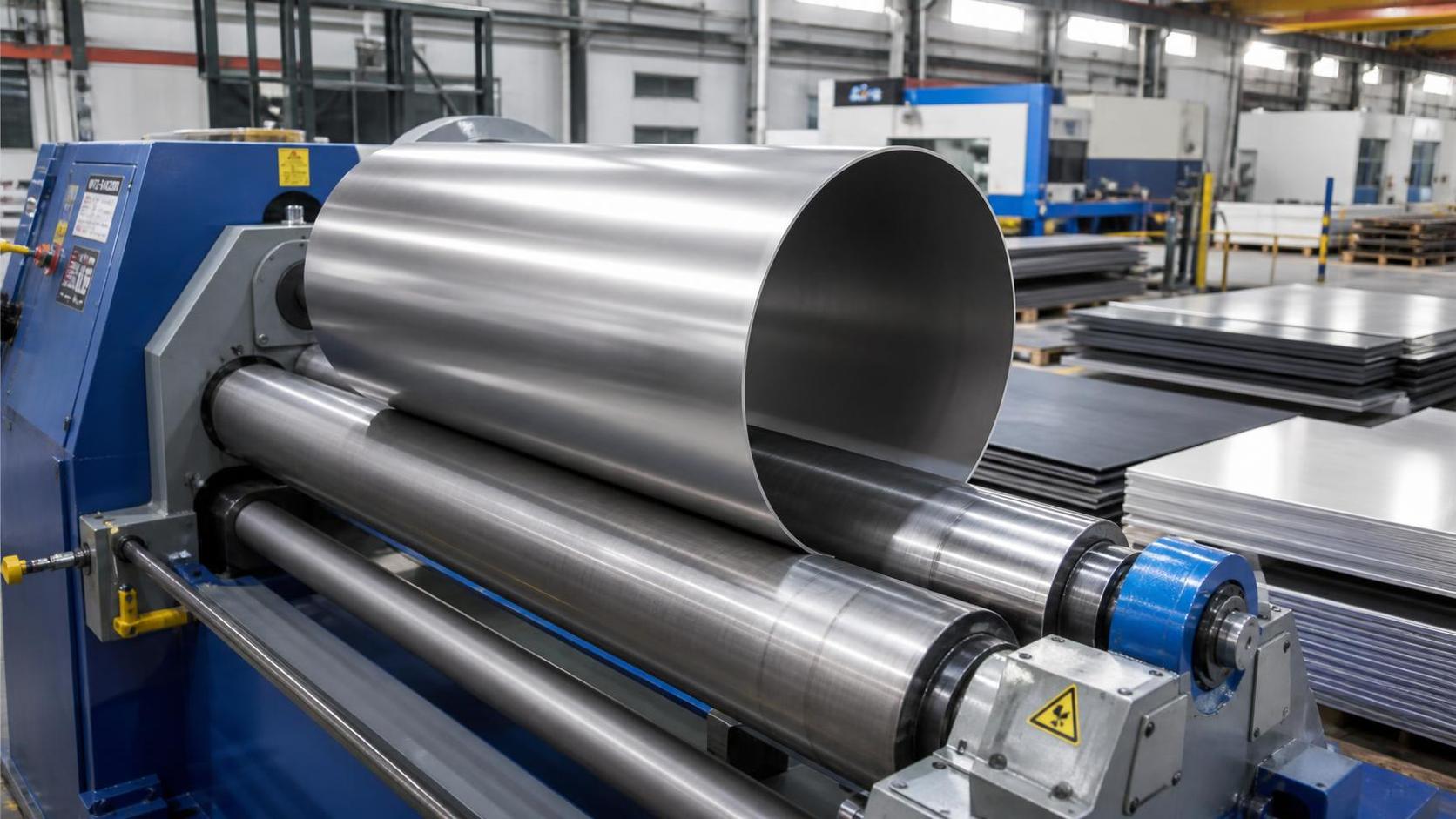
For project managers running small batch fabrication, the real question is not whether a 3 roller plate bending machine can roll plate. It can. The more useful question is what range of parts it can handle without turning setup time, edge defects, and rework into the hidden cost of every order. In small batch production, flexibility matters more than headline capacity. You are usually balancing mixed materials, varying diameters, frequent drawing changes, and delivery pressure from downstream welding or assembly.
A 3 roller plate bending machine is often a practical fit when batches are too small to justify highly specialized tooling, but too demanding for manual forming methods. It is commonly used to produce cylinders, shells, cones, partial arcs, sleeves, ducts, covers, and other curved sections from carbon steel, stainless steel, and aluminum plate. For workshops serving tanks, structural fabrications, agricultural equipment, environmental systems, or general process equipment, that range covers a large share of recurring low-to-medium volume work.
What buyers are usually trying to confirm
Most searchers looking into this type of machine are trying to answer four operational questions:
- Can it cover enough part variety to reduce subcontracting?
- Will it hold shape quality across different materials and thicknesses?
- How much operator intervention is still required in small runs?
- Where do the real limits appear before a quote turns into a delivery problem?
These are the right questions. In small batch production, machine utilization is not only about running speed. It is about how quickly a team can move from one job to the next while still hitting dimensional expectations.
Where a 3 roller plate bending machine works well
The strongest use case is mixed-job production with repeatable but not fully standardized parts. If your workshop regularly rolls shells for tanks, transition sections for ducting, machine guards, curved covers, support sleeves, or medium-complexity conical parts, a 3-roll layout usually gives enough forming range without the cost and operating complexity of more specialized systems.
For project-based work, this matters because orders rarely arrive in neat families. One week may involve stainless covers with thin wall sections; the next may involve thicker carbon steel shells for a welded vessel. A capable 3 roller plate bending machine can bridge that variability, especially where the business needs acceptable precision with manageable setup effort rather than fully automated mass production.
It is also well suited to workshops that need to produce prototypes and then convert those same setups into short repeat runs. That reduces the gap between engineering release and production start. For project managers, that is often more valuable than chasing maximum theoretical throughput.
What it can typically handle in small batch production
In practical terms, the machine can handle more than simple cylinders, but not every geometry with equal efficiency.
Cylindrical shells
This is the most straightforward application. Rolling full or partial cylinders is where the process is easiest to predict, especially when material properties are stable and plate edges are prepared correctly. Small batch shops often use this for storage tank sections, pipe shells, hoppers, filter housings, and general welded round bodies.
Cones and tapered sections
Many 3-roll machines can form cones, but this is one area where capability claims should be checked closely. Cone rolling depends on machine configuration, roller adjustment range, operator skill, and the ratio between large and small diameters. It is possible, but not always efficient if the geometry changes frequently or tolerances are tight.
Arcs and segmented curved parts
For architectural metalwork, support structures, enclosure panels, and transport-related fabrications, arc segments are common. A 3-roll machine is usually effective here because the job does not require a full closed cylinder. However, springback control becomes more important, especially in stainless and aluminum.
Thicker plate with moderate complexity
Heavy plate work is possible within the machine’s rated capacity, but in small batch environments, plate thickness alone should not drive the decision. Thick plate increases loading effort, rolling force requirements, and the risk of flat ends or mismatch at closure. If jobs involve heavy sections combined with tight fit-up requirements for pressure-related fabrications, process planning has to account for edge prep, welding shrinkage, and lifting logistics as a single workflow.
What the machine does not solve by itself
A common purchasing mistake is to assume that bending capacity automatically translates into finished-part readiness. It does not. In small batches, the machine is only one part of the forming route.
Three issues regularly determine whether the machine delivers value:
- Edge condition before rolling. Poorly prepared edges create fit-up gaps, inconsistent seam alignment, and extra welding correction.
- Pre-bending performance. If plate ends are not formed adequately, flat sections remain and downstream assembly slows down.
- Material variation. Two plates with the same nominal grade can still behave differently in forming, particularly with stainless and aluminum.
This is why experienced shops do not evaluate a rolling machine in isolation. They evaluate the forming cell. When rolled parts are intended for heavy tanks, pressure vessels, or thick structural weldments, upstream edge quality can affect the entire fabrication rhythm. In those cases, equipment such as Beveling & Milling Edge For Heavy Tank may matter just as much as the roller itself, because precise bevel preparation reduces manual grinding, improves weld consistency, and shortens the time between rolling and joining.
The real limits in small batch environments
The headline specification sheet usually highlights maximum thickness and width. Those numbers matter, but they are rarely the first constraint in real workshop scheduling.
Limit 1: Setup efficiency
If operators spend too long adjusting roller position, checking trial passes, and correcting edge mismatch, small orders become unprofitable even when the machine is technically capable. For mixed production, ease of adjustment and repeatability from one setup to the next are often more important than absolute top-end force.
Limit 2: End flatness and closure quality
Every rolling process has some sensitivity around the plate ends. If the machine’s pre-bending performance is limited, operators may need secondary correction before welding. That becomes a bottleneck on short runs because labor time per piece stays high.
Limit 3: Springback management
Higher-strength steels, stainless grades, and aluminum alloys can all produce more springback than less demanding carbon steel jobs. In a small batch scenario, this matters because there may be little historical process data to rely on. The first few pieces often become the learning curve.
Limit 4: Handling and support
Long or heavy plates may exceed what the rolling process itself can comfortably control without additional side supports, overhead handling, or skilled assistance. For project managers, this is a safety and scheduling issue, not just a machine issue.
Limit 5: Tolerance expectations
If the downstream customer expects near-machined roundness or very tight seam matching, standard rolling may need extra correction, tack-fit steps, or post-form calibration. That is achievable, but it changes both lead time and cost assumptions.
How to judge fit for your current business
A 3 roller plate bending machine is usually a good investment for small batch production when the part mix is broad, order quantities are moderate, and the business needs an in-house forming capability that is versatile enough to support quoting speed. It is less compelling if most jobs fall into one of two extremes: either very thin, very repetitive parts better suited to dedicated high-speed production, or very heavy, high-precision work where forming, beveling, and assembly need a more integrated heavy-fabrication line.
For project leaders evaluating a purchase or subcontract strategy, it helps to screen jobs against a few practical criteria:
Why process linkage matters more than machine selection alone
In fabrication for tanks, vessels, and heavy structures, rolling is rarely a standalone operation. The part usually moves through cutting, edge preparation, forming, fit-up, welding, and inspection. Small batch efficiency depends on whether those steps are connected with minimal waiting and rehandling.
That is where some project teams underestimate the impact of auxiliary equipment. If plate edges arrive at rolling with inconsistent bevel geometry or poor straightness, operators compensate during forming and welders compensate later during assembly. The cost shows up as delay, not as a line item on the purchase order.
For thicker materials, especially in carbon steel, stainless steel, and aluminum plate applications tied to large storage tanks or pressure-related fabrications, a coordinated route can be more valuable than adding raw machine tonnage. A heavy-duty edge milling solution, for example, may process standard plate thicknesses around 6-80 mm and extend much higher in certain heavy configurations, while also supporting adjustable bevel angles and one-pass formation of V-, K-, U-, and straight bevels. That kind of preparation can remove a surprising amount of manual correction before rolling and welding, provided the workload actually justifies it.
What common sales claims often miss
There are a few statements buyers should treat carefully.
- "One machine can handle every curved part." Broadly true in a marketing sense, but not equally efficient across all diameters, tapers, and tolerances.
- "Maximum capacity defines suitability." Capacity is necessary, but setup time, edge quality, and operator experience often determine actual profitability.
- "Automation alone solves small batch inefficiency." Only partly true. If job data, lifting, edge prep, and inspection are still manual bottlenecks, the gain may be limited.
- "Material switching is routine." It is routine only when the team has process discipline and records for compensation values, springback behavior, and acceptable tolerances.
What project managers should check before committing
Before you commit to equipment or lock in a subcontractor, it is worth reviewing three things with production, welding, and quality teams together.
- Define the actual part family, not just the largest plate size.
- Check whether edge preparation, rolling, and welding assumptions are aligned.
- Run trial parts or at least process simulations on the materials that create the most risk.
If your business is moving toward larger tanks, thicker shells, or more demanding weld preparations, it may be sensible to review the rolling machine together with the upstream beveling route instead of treating them as separate decisions. In some cases, pairing the roller with equipment such as Beveling & Milling Edge For Heavy Tank makes operational sense, not because every shop needs it, but because the forming-and-welding chain becomes easier to control when plate edges are accurate and repeatable from the start.
In small batch production, a 3 roller plate bending machine earns its place when it gives the workshop more control over delivery, material use, and part consistency across a mixed order book. That is the right lens for evaluating it. Not whether it can bend plate in theory, but whether it can support the way your jobs actually move from drawing release to finished assembly.
search
Products Navigation
Send Us A Message