




How to Choose a Gas Cutting Machine for Plate Thickness and Fuel Cost
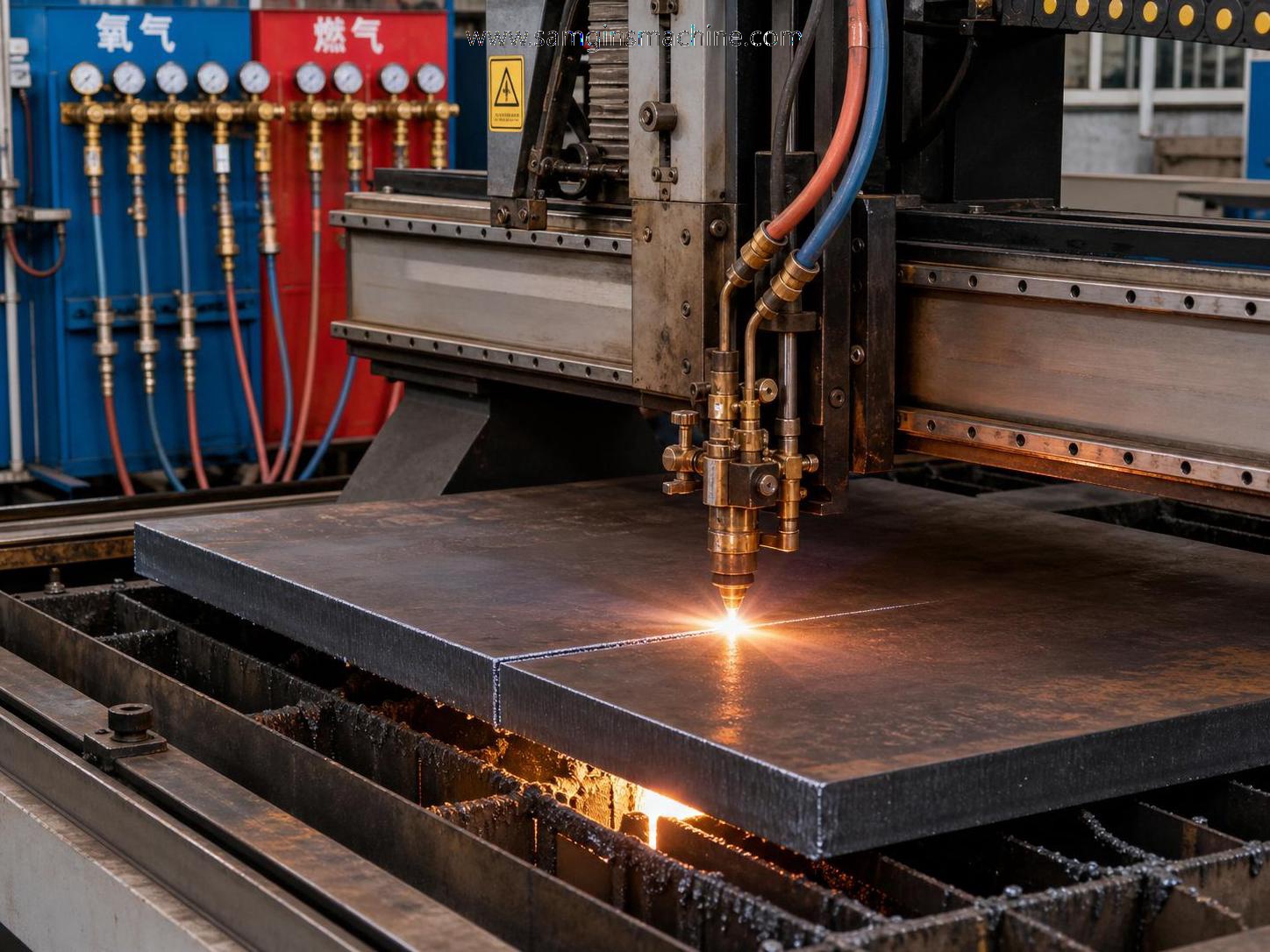
How to Choose a Gas Cutting Machine for Plate Thickness and Fuel Cost
Choosing the right Gas cutting machine is not only about plate thickness.
It also affects fuel cost, cut quality, delivery speed, and long-term operating stability.
That matters even more when production volumes change or plate specifications vary across orders.
In practical purchasing work, the cheapest machine is rarely the lowest-cost choice over time.
A better decision comes from comparing thickness range, fuel type, duty cycle, and maintenance burden together.
This guide explains how to evaluate a Gas cutting machine with a clear cost and application mindset.
Start with Plate Thickness, Not Machine Price
The first filter is your actual thickness range.
A Gas cutting machine sized for 6 mm plate behaves very differently from one designed for 50 mm carbon steel.
If most jobs are thin sheets, flame cutting may not be the most efficient route.
If most jobs are medium or heavy plate, fuel-based cutting can remain economical and dependable.
The key is to separate occasional jobs from daily production requirements.
Useful thickness questions before comparing models
- What thickness appears in more than 70% of monthly orders?
- What is the maximum plate thickness actually processed, not just quoted?
- Do you cut mainly carbon steel, or mixed materials?
- How often do operators switch between thin and thick plate jobs?
- Does edge quality need secondary grinding or bevel correction?
These answers quickly narrow the realistic machine range.
They also prevent overspending on capacity that stays idle most of the year.
Compare Fuel Cost as a Daily Operating Variable
Fuel cost is where many buying decisions drift off course.
A Gas cutting machine may look affordable upfront, yet become expensive under high utilization.
That is especially true when oxygen, acetylene, propane, or natural gas prices fluctuate locally.
In real purchasing comparisons, fuel cost should be measured per meter cut and per finished part.
What changes fuel consumption most
- Plate thickness and preheating time
- Nozzle condition and gas pressure stability
- Travel speed and pierce frequency
- Operator setup accuracy
- Batch size and nesting efficiency
Acetylene often delivers fast preheat and strong cutting performance.
However, propane or natural gas may offer lower fuel cost in stable, repetitive production.
The right Gas cutting machine should match the fuel source that your plant can supply consistently.
This is not only a budget issue.
It also affects flame stability, cut consistency, and downtime risk.
Match the Machine Configuration to Workload
Not every Gas cutting machine is built for the same production rhythm.
Some are suitable for intermittent fabrication work.
Others are designed for continuous CNC plate processing.
This difference shows up in gantry rigidity, torch system, control software, and service life of wear parts.
Configuration points worth checking
- Effective cutting width and length for your plate sizes
- Single torch or multi-torch productivity requirement
- CNC controller ease of programming and file transfer
- Automatic height control and ignition reliability
- Rail accuracy and long-term motion stability
- Spare parts lead time and service response
A lighter machine may satisfy current output, yet struggle when order volume grows.
A heavier machine may improve stability, yet tie up capital unnecessarily.
That is why workload data matters more than catalog claims.
Do Not Judge Cut Quality by Thickness Capacity Alone
A Gas cutting machine may cut thick plate, yet still create costly downstream work.
The real question is whether the cut edge meets your production standard.
Poor edge squareness, slag adhesion, and heat distortion can erase any fuel savings.
This becomes more visible in welded assemblies and precision-fit components.
Check quality from the next process backward
- Will the edge go directly to welding?
- Will the part require drilling, milling, or bending afterward?
- Can your current process absorb slag cleaning time?
- How much rework is acceptable per batch?
If thin or medium plate dominates, another process may offer better overall economics.
For example, Steel Plate cnc fiber laser cutting machine can be a strong option for precision manufacturing.
It supports carbon steel, stainless steel, aluminum alloy, copper, and titanium alloy processing.
With cutting speeds over 100 m/min and narrow kerf width, it suits small-batch, multi-variety work well.
That comparison helps clarify whether a Gas cutting machine should be your main process or a complementary one.
Calculate Total Cost, Not Just Purchase Cost
The most reliable selection method is total cost of ownership.
This puts purchase price into the right context.
A Gas cutting machine should be evaluated over three to five years, not one invoice cycle.
Main cost items to compare
This framework usually changes the ranking between competing machines.
It also creates a stronger internal case when approval depends on operating savings.
Check Supplier Capability Before Final Approval
Machine selection is not only about hardware.
Supplier consistency affects delivery, installation, documentation, and after-sales support.
That matters more when equipment will be used across multiple product types.
Wuxi Samgins International Trade Co.,Ltd focuses on mechanical equipment and related production solutions.
Its product range includes CNC cutting machines, welding equipment, lathes, milling machines, robots, and plate processing equipment.
The company organizes production under ISO9001 quality system requirements and EU CE standards.
That broader manufacturing background can be useful when comparing a Gas cutting machine with other cutting routes.
Questions to ask the supplier
- Can they provide sample cutting results on your actual plate thickness?
- Can they estimate fuel consumption by application?
- Do they stock common consumables?
- What is the response time for remote and on-site service?
- Can the machine be upgraded later for CNC or higher throughput?
A Practical Decision Path
A sound decision usually follows a simple order.
- List real plate thickness distribution from recent orders.
- Identify the dominant material and edge quality requirement.
- Estimate fuel cost per shift and per finished part.
- Review machine configuration against daily workload.
- Test sample parts before final selection.
- Compare total cost of ownership across realistic alternatives.
When this process is followed, the right Gas cutting machine becomes easier to identify.
You are no longer buying on headline capacity alone.
You are choosing a machine that fits plate thickness, fuel economics, and production reality together.
That is usually where the best return comes from, and where avoidable cost starts to disappear.
search
Products Navigation
Send Us A Message