




How to Choose an Automatic Gas Cutting Machine for Plate Thickness and Output
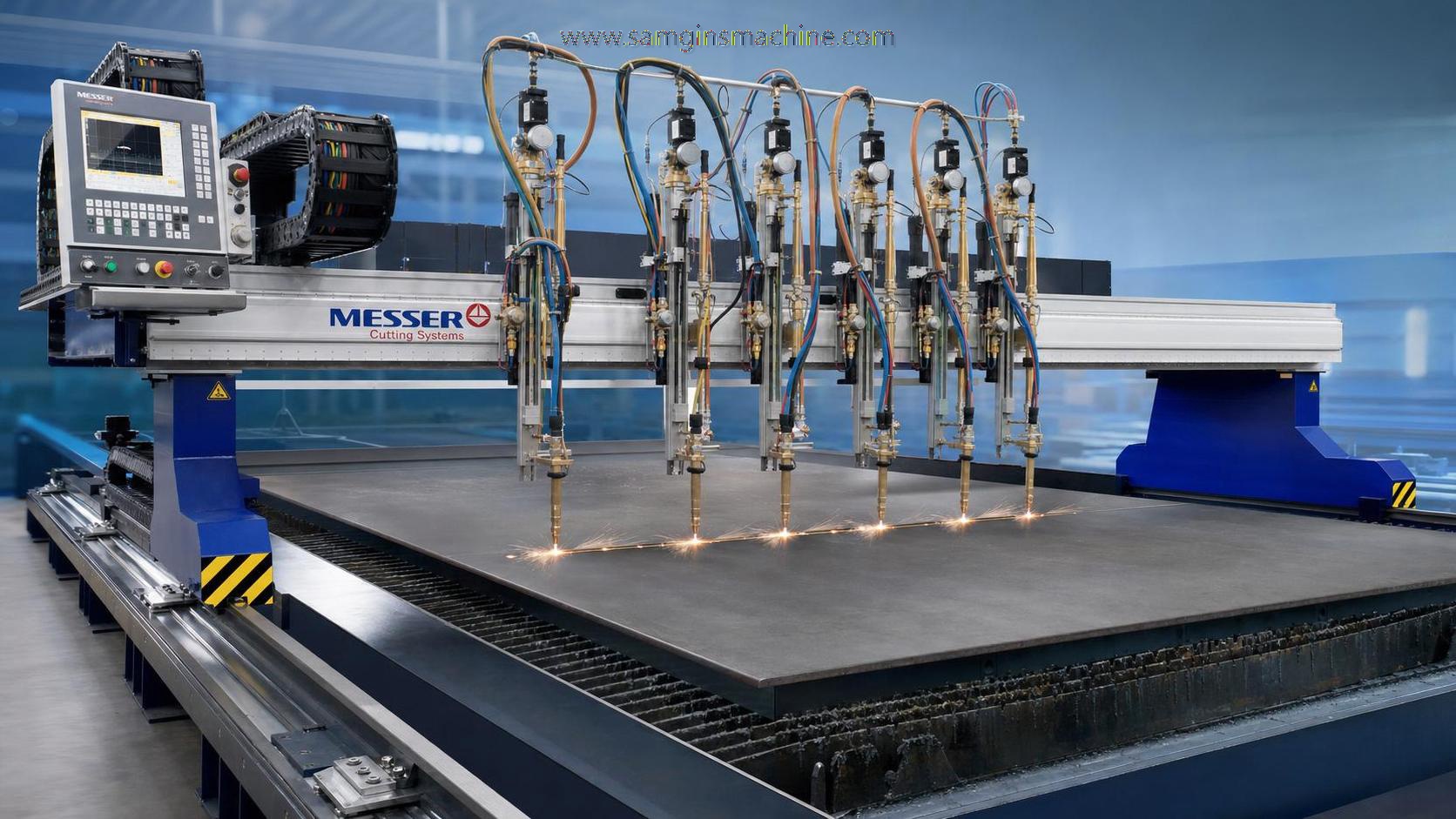
Choosing an Automatic Gas cutting machine is rarely about one specification alone. Plate thickness, daily output, cut consistency, fuel cost, and downstream processing all affect whether a machine fits real production. In metal fabrication, a poor match usually appears later as slow throughput, edge correction work, unstable quality, or higher operating cost than expected.
That is why selection should start with the workpiece and the production target, not with price alone. A suitable Automatic Gas cutting machine supports stable cutting on the required thickness range, keeps output predictable across shifts, and fits the broader production line without creating bottlenecks.
What an Automatic Gas cutting machine must deliver
An Automatic Gas cutting machine is mainly used for carbon steel plate cutting where flame cutting remains practical, economical, and reliable. It is especially relevant for medium and thick plates that do not always justify plasma or laser for every task.
In practical terms, buyers expect three things. The first is thickness capacity that matches actual jobs. The second is output that remains stable under normal shop conditions. The third is cut quality that limits rework before welding, drilling, beveling, or assembly.
These requirements matter across structural steel, machinery manufacturing, ship components, pressure vessel parts, construction equipment, and general fabrication workshops. In each case, the machine is not working in isolation. It affects scheduling, labor use, material flow, and delivery performance.
Start with plate thickness, not headline speed
Thickness is the first filter because it changes the entire cutting condition. As plate becomes thicker, preheat time rises, cutting speed drops, and oxygen stability becomes more important. A machine that performs well on 12 mm plate may not hold the same rhythm on 40 mm or 60 mm plate.
It helps to map actual order history into three bands: common thickness, occasional heavy thickness, and future expansion thickness. This prevents buying a machine sized only for ideal conditions or one oversized for work that rarely appears.
A useful comparison is not simply the maximum thickness printed in a brochure. The more meaningful question is this: at what thickness range can the Automatic Gas cutting machine keep acceptable speed, acceptable kerf quality, and acceptable consumable use during normal production hours?
Output depends on the whole cutting system
Output is often misunderstood as travel speed. In reality, output includes programming time, plate loading, alignment, preheating, actual cutting, slag cleaning, part sorting, and any waiting between operations. A faster gantry alone does not guarantee more finished parts per shift.
When comparing one Automatic Gas cutting machine with another, look at the entire process rhythm. Track length, effective cutting width, number of torches, motion stability, nesting efficiency, and operator adjustment time can matter more than top speed under ideal conditions.
Questions that reveal real throughput
- How many plates can be processed in one shift at routine thickness?
- How much time is lost in preheating and setup changes?
- Can multiple torches run accurately without distortion in spacing?
- How often does cut quality require grinding or correction?
- Does the control system shorten programming and job switching time?
For higher-volume operations, stability over time matters more than short demonstrations. A machine that maintains motion accuracy, gas control, and torch height during long runs usually creates better output than one that looks fast during a short test.
Cut quality affects downstream cost
Cutting quality should be judged by more than whether the plate is separated. Edge squareness, slag level, kerf consistency, dimensional accuracy, heat effect, and hole quality influence every later process. Poor cutting shifts cost downstream into grinding, fitting, and welding correction.
This is particularly important in factories that also run welding and assembly equipment. If cut parts feed beam lines, frames, or heavy sections, dimensional variation can slow fit-up. In that environment, an Automatic Gas cutting machine becomes a quality control point, not just a cutting device.
A good example is steel structure production, where plate preparation affects later alignment accuracy. In related workflows, equipment such as H beam assembly machine depends on consistent component dimensions, stable gaps, and clean connection areas before tack welding and full welding begin.
Machine structure, control, and gas system deserve close attention
A reliable Automatic Gas cutting machine is built around mechanical rigidity, motion accuracy, and dependable gas delivery. Frame stability affects straightness. Rail quality affects repeatability. Control response affects contour accuracy and operator convenience.
The gas system also deserves careful review. In flame cutting, inconsistent oxygen purity or pressure control can quickly reduce cut quality. Stable valves, sensible piping layout, and easy maintenance are not minor details. They are part of output protection.
Core items worth comparing
- Drive system stability during long straight cuts and curves
- Torch lifting and height control response
- Control interface for nesting, parameter storage, and job recall
- Availability of consumables and replacement parts
- Maintenance access for rails, valves, and electrical components
Suppliers with broad experience in fabrication equipment often understand these interactions better. Wuxi Samgins International Trade Co.,Ltd, based in Wuxi near Shanghai, works across CNC cutting, welding equipment, beam production lines, and related machine tools, which is useful when evaluating how cutting equipment fits a full manufacturing process rather than a single station.
Think in terms of line compatibility
The best purchase decision usually comes from line-level thinking. An Automatic Gas cutting machine should match material handling capacity, drawing formats, nesting software habits, welding preparation standards, and the expected takt of later operations.
This matters even more when fabrication includes heavy sections or structural members. For example, if cut plates become webs and flanges, later assembly equipment may require stable size control, accurate centering, and consistent edges. Some beam assembly systems support web thickness from 5 mm to 32 mm, flange thickness from 6 mm to 40 mm, customized beam lengths up to 15000 mm, and assembly speed from 0.5 to 6 m/min. That makes upstream cutting accuracy more than a convenience.
In other words, a cheaper cutting setup can become expensive if it weakens the efficiency of fitting, clamping, tack welding, or final welding.
Supplier evaluation should go beyond the quotation
A quotation shows price. It does not show whether the supplier can support commissioning, parameter optimization, training, and parts supply over time. For an Automatic Gas cutting machine, these factors strongly influence the usable life of the investment.
Look for evidence of manufacturing discipline and export experience. ISO9001-based quality management, CE-oriented design practices, practical documentation, and stable after-sales communication all reduce uncertainty. These points matter when the equipment will run in different regions and working conditions.
It is also useful to ask for examples from similar industries, especially structural steel, general fabrication, and heavy machinery. A supplier that understands related equipment interactions can usually give more realistic advice on torch layout, thickness range, material flow, and future expansion.
A practical way to narrow the options
A clear shortlist often comes from comparing a few operating facts instead of many marketing claims.
- List your routine plate thicknesses and monthly volume by part family.
- Define acceptable cut quality before grinding or fitting.
- Measure output in finished parts, not only cutting speed.
- Check consumable cost and gas use at real production settings.
- Review how the machine connects with downstream welding or assembly.
- Confirm support, spare parts lead time, and training scope.
The right Automatic Gas cutting machine is the one that keeps thickness capability, output, quality, and ownership cost in balance. Once those criteria are defined against actual production, it becomes much easier to compare models, verify supplier claims, and move toward a solution that will still make sense after installation.
search
Products Navigation
Send Us A Message