




Tube Bending Machine Trends in 2026: Automation, Precision, and Waste Control
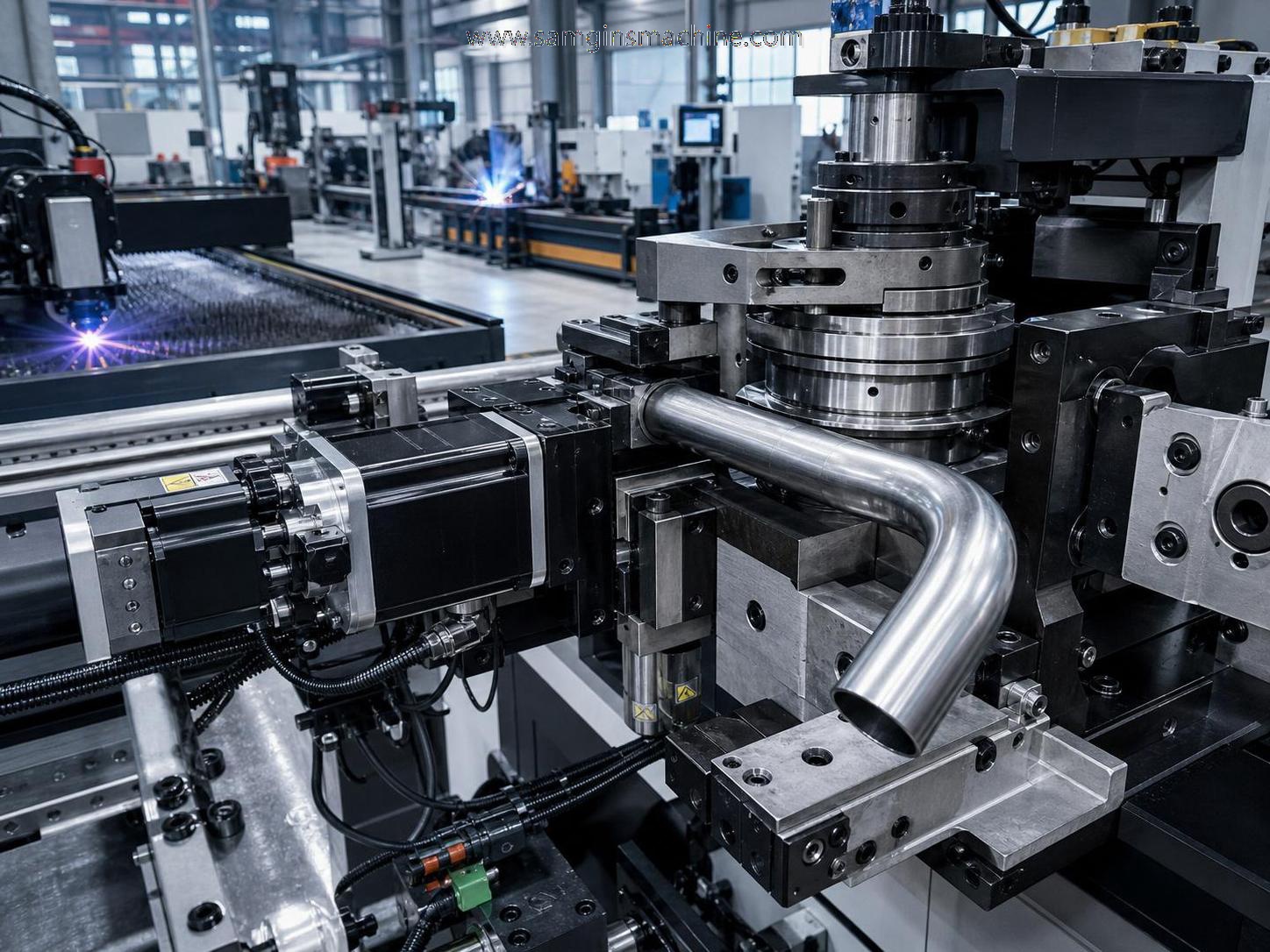
In 2026, the tube bending machine is no longer judged only by bending capacity or price. It is becoming a strategic asset for controlling output stability, labor intensity, and material use across modern fabrication lines.
That shift matters because tube components now serve industries with tighter tolerances, shorter lead times, and stronger cost pressure. A better tube bending machine strategy helps balance automation, precision, and waste control without slowing production.
Why 2026 changes the decision framework
Demand is moving toward smaller batches, mixed product structures, and faster changeovers. Under those conditions, a conventional bending setup often creates hidden losses that are easy to underestimate.
These losses include manual correction time, scrap from unstable angles, tube marking errors, and delays caused by inconsistent setup quality. The result is weaker margin control, even when machine utilization looks acceptable.
A tube bending machine in 2026 is expected to connect with digital planning, reduce operator dependency, and keep repeatability stable across different tube diameters and material grades.
What a modern tube bending machine must deliver
At its core, the machine must bend tubes accurately and consistently. In practice, the market now values a wider combination of capabilities.
- Servo-driven motion for stable angle and radius control
- Fast recipe switching for mixed production
- Automatic compensation for springback variation
- Integrated measurement or feedback functions
- Lower scrap during first-piece confirmation
- Traceable process data for quality review
Simple bending force is no longer enough. The stronger value comes from process control, not just mechanical movement.
Automation is becoming practical, not optional
Automation in tube bending used to be associated with very high volumes only. That assumption is weakening as labor availability tightens and consistency requirements rise.
Today, loading support, automatic positioning, digital program storage, and intelligent correction can bring value even in medium-volume work. They shorten setup cycles and reduce dependence on individual operator experience.
This is especially important in factories running several fabrication stages together. Bending, welding, cutting, and deburring now need better rhythm across the line, not isolated machine optimization.
That broader view explains why many equipment buyers compare tube bending automation with robotic solutions used elsewhere in fabrication. For example, the workflow discipline seen in 7 axis railway type welding robot systems reflects the same priority: repeatable motion, controlled sequence, visible status indication, and safer operation under continuous production conditions.
Where automation creates measurable gains
The biggest gains usually appear in three areas. First, fewer setup-related errors. Second, less unplanned interruption. Third, more consistent quality between shifts.
When cycle time is reduced but rework remains high, automation has not solved the real problem. The better benchmark is stable output quality with lower intervention.
Precision now affects more than product quality
Precision in a tube bending machine influences downstream assembly, welding fit-up, leak performance, and final dimensional acceptance. A small deviation at the bend often becomes a larger cost later.
For sectors such as automotive components, furniture frames, HVAC lines, fitness equipment, and infrastructure assemblies, repeatability matters as much as nominal accuracy.
This is why decision-making should include process capability over time. One accurate sample part tells very little. Stable part quality over repeated production tells much more.
Waste control is moving to the center of equipment selection
Material waste used to be treated as a routine production cost. In 2026, that approach is harder to justify, especially when metal prices and margin pressure remain volatile.
A tube bending machine contributes to waste control in several direct ways. Better programming reduces trial parts. Better clamping and support reduce deformation. Better feedback reduces correction loops.
Waste should also be measured beyond scrap weight alone. Time loss, energy use, re-bending attempts, and downstream defect handling are part of the same cost picture.
Signals that waste is equipment-related
- Frequent angle correction after first-piece approval
- Visible flattening or wrinkling on repeated jobs
- High scrap during material changeovers
- Large quality differences between operators or shifts
- Downstream welding fixtures requiring repeated manual adjustment
Application thinking matters more than generic specifications
A tube bending machine should be selected around real production conditions, not catalog comparisons alone. The same nominal machine can perform very differently across industries and part types.
Thin-wall decorative tubing needs different control priorities than structural tubing. Stainless steel behavior differs from carbon steel. Complex multi-bend geometry creates different setup risks than simple repetitive bends.
The practical question is not only what the machine can bend. It is whether it can bend the required parts repeatedly, with acceptable waste, under normal shop-floor conditions.
Suppliers with broad fabrication experience usually bring more useful perspective here. Wuxi Samgins International Trade Co.,Ltd, established in 2012 in Wuxi, works across bending, welding, cutting, milling, deburring, plate processing, and CNC equipment. That cross-process background helps frame tube bending as part of a wider manufacturing system rather than a standalone purchase.
How to assess a tube bending machine in real business terms
A stronger evaluation process combines technical fit with operating economics. Price remains relevant, but it should not dominate the decision.
- Review target materials, wall thickness, bend radius, and annual mix
- Check first-pass yield expectations, not only maximum speed
- Confirm changeover time between part programs
- Evaluate maintenance access and spare parts support
- Ask how the machine handles springback variation
- Compare data visibility for traceability and quality review
It also helps to look at adjacent automation examples. In rail fabrication, for instance, a system such as the 7 axis railway type welding robot applies structured motion, automatic positioning, clear alarm status, and emergency stop protection to large workpieces up to 12000 mm in length. The lesson is not about replacing tube benders with welding robots. It is about adopting the same discipline of predictable, visible, and controllable production.
The next move for 2026 planning
The most useful starting point is a process review, not a machine brochure. Track scrap causes, setup time, operator intervention, repeat order stability, and downstream fit issues for existing bent parts.
That information makes it easier to judge whether the next tube bending machine should prioritize automation depth, precision control, material handling, or digital integration.
In 2026, the strongest equipment decisions will come from linking bending quality to total production performance. Once that connection is clear, comparing solutions becomes more practical, more objective, and far more valuable over the long term.
search
Products Navigation
Send Us A Message