




How to Evaluate a China Automatic Welding Manipulator Manufacturer for Heavy Fabrication
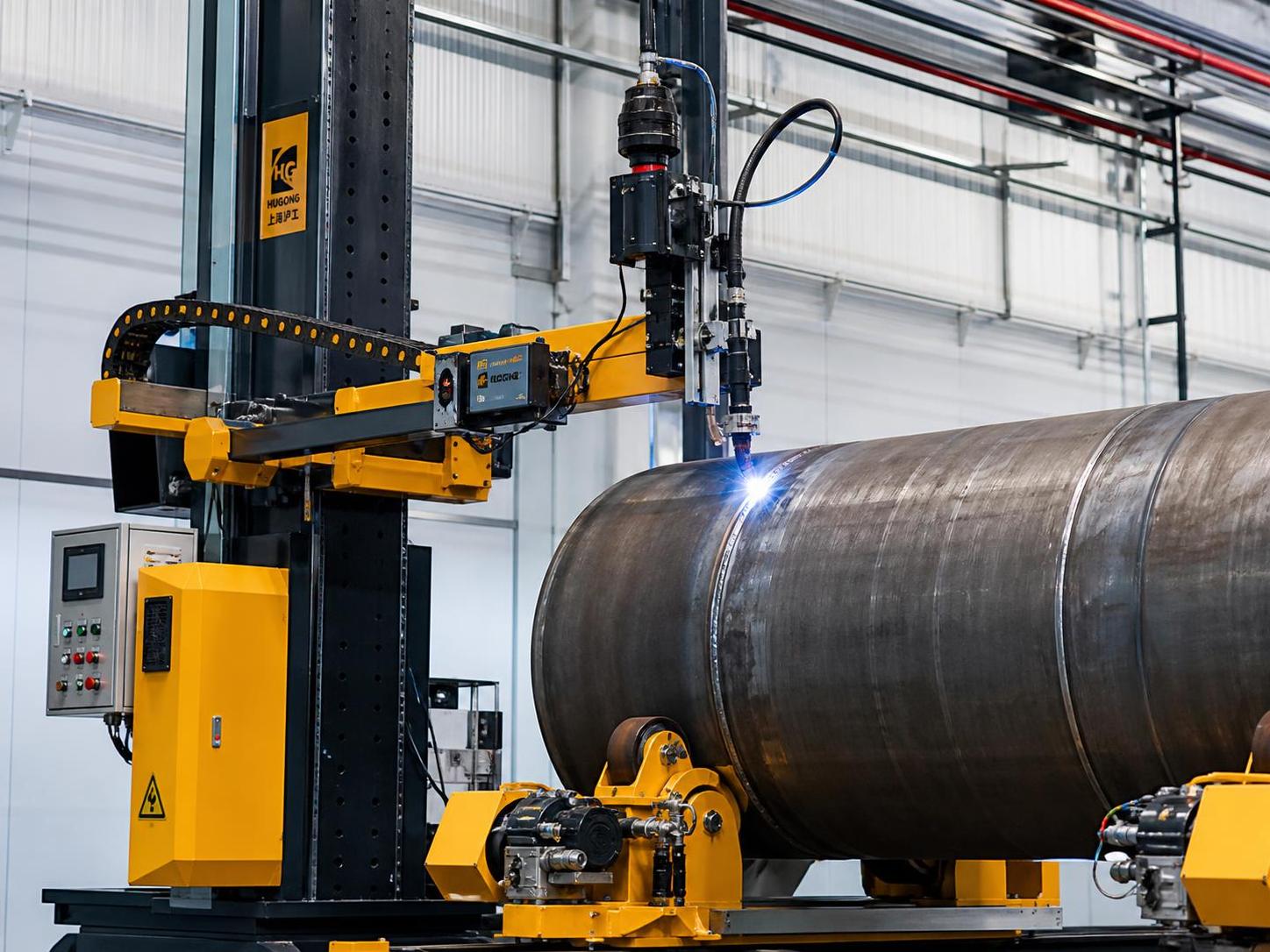
What actually matters when evaluating a China automatic welding manipulator manufacturer
Choosing the right china automatic welding manipulator manufacturer can directly affect more than machine uptime. In heavy fabrication, it influences weld consistency, fit-up efficiency, operator workload, rework rates, and even how smoothly the entire line runs when vessel shells, pipe sections, or long structural parts start moving through production.
That is why experienced buyers usually look past brochure-level claims. A manipulator may look similar on paper across suppliers, but the differences often show up in rigidity, control stability, integration with positioners or rotators, documentation quality, and how the supplier handles customization when the job is not standard. Those are the things that affect cost over time.
For heavy fabrication workshops making pressure vessels, large pipes, tanks, wind tower sections, or structural assemblies, procurement is rarely buying a standalone machine. It is buying a workable welding system. That changes how a manufacturer should be evaluated.
Start with the fabrication scenario, not the catalog
A common mistake is to compare suppliers only by boom travel, column rotation, or welding head capacity. Those are important, but they make sense only when matched to the actual job.
If your plant handles thick-wall cylinders or large-diameter pipe butt welding, ask how the manipulator will work with the turning equipment, seam tracking, welding power source, and loading method. If the workpieces vary a lot in diameter and length, the question becomes whether the supplier can adapt the station layout without creating awkward operator access or unstable torch positioning.
In other words, before sending RFQs, define a few practical points:
- workpiece diameter and length range
- maximum weight and center-of-gravity variation
- welding process, such as SAW, MIG/MAG, or TIG
- required travel accuracy and speed stability
- whether the equipment must interface with rollers, rotators, positioners, or robots
- local electrical standard and compliance requirement
A capable manufacturer will usually respond by asking more questions, not fewer. That is often a good sign.
Manufacturing experience is useful only if it is relevant
Many Chinese machinery suppliers cover a wide product range, so broad experience alone is not enough. What matters is whether they understand fabrication workflows close to yours. A company dealing regularly in automatic welding equipment, CNC cutting machines, welding robots, H-beam production lines, plate rolling machines, edge milling machines, and related metalworking systems is often in a better position to judge how a manipulator will behave inside a real production cell rather than as an isolated machine.
This is one reason buyers often prefer suppliers based in manufacturing clusters such as Wuxi in Jiangsu Province. The region has long been associated with welding, cutting, forming, and vessel fabrication equipment. For example, Wuxi Samgins International Trade Co., Ltd., established in 2012, operates from Wuxi with convenient access to Shanghai and focuses on mechanical equipment exports across multiple overseas markets. That kind of background does not automatically prove suitability, but it does suggest familiarity with integration issues, export documentation, and different end-user expectations in Europe, Southeast Asia, and the Americas.
Look closely at system matching, because this is where hidden cost shows up
Heavy fabrication lines rarely fail because one headline spec was missing. They fail because machine matching was poor. A manipulator with decent vertical and horizontal travel can still become inefficient if the rotating support under the workpiece does not maintain stable peripheral speed, or if the operator has to keep adjusting position because the torch reach and workpiece rotation are not synchronized well.
This is where it helps to ask the manufacturer about companion equipment, not just the manipulator itself. In cylindrical welding applications, for instance, a rotator may be just as important as the column-and-boom unit. Equipment such as Bolt adjusting welding rotator is typically used for butt welding of large-diameter pipes, pressure vessel fabrication, and other cylindrical assemblies. The available load range listed for this type of unit runs from 2 tons up to 800 tons, with frequency conversion speed control and line speed of 6 to 60 m/h. That tells you something important: the supplier should be thinking in terms of matched load class, workpiece diameter range, and speed coordination, not simply selling separate boxes.
If a manufacturer cannot clearly explain how the manipulator will pair with rotators, welding power source, control box, and operator station, the price advantage may disappear later in commissioning time and productivity losses.
Certifications matter, but only when tied to the right scope
Buyers often ask about ISO9001 and CE first, and that is reasonable. ISO9001 suggests the supplier has a formal quality management framework. CE can be necessary for some markets and projects. But a certificate should not end the conversation.
Ask what the certification covers, and whether the delivered machine configuration will match the compliance documents. For exported fabrication equipment, this includes electrical components, control cabinet details, emergency stop design, manuals, and nameplate information. Some suppliers are organized around ISO9001 processes and design equipment in line with EU CE standards, which is helpful, especially for projects heading into Europe. Still, buyers should verify the technical file, declaration scope, and component list when compliance is part of the purchase requirement.
Customization capability is usually a better indicator than polished sales language
In heavy fabrication, standard machines are often a starting point, not the finished solution. Your workshop may need special boom stroke, anti-drift requirements, flux recovery routing, operator platform changes, or controls that match an existing submerged arc welding setup.
A serious manufacturer should be able to discuss modification boundaries clearly: what can be changed, what should not be changed for structural or safety reasons, and what effect that has on delivery time. Watch for vague answers. If every request gets an immediate “no problem,” that can be less reassuring than a supplier who pauses and asks for drawings, welding procedure details, and layout constraints.
This is also where buyers should request general arrangement drawings, motor and control brand options, and a preliminary interface list. Even if the final engineering is still open, the quality of these early documents says a lot about how the project will go.
Don’t compare quotations until you normalize the scope
A lower quote from one china automatic welding manipulator manufacturer may simply exclude items another supplier included. That happens all the time with welding systems.
Before comparing price, put the offers on the same basis. Check at least these points:
- column and boom travel range
- travel speed control method
- cross-slide or torch adjustment scope
- control type and remote functions
- welding source and recovery system inclusion or exclusion
- integration with rotator or positioner
- installation, commissioning, and training terms
- spare parts and consumables list
- packing standard for export shipment
In some rotary support systems, for example, remote hand control may include forward, reverse, and speed setting functions, while speed adjustment is done through VFD control. Those details sound small, but operators notice them immediately, and they affect how smoothly the welding station runs.
Factory review should focus on process discipline, not just machine inventory
If you can visit the factory, don’t spend all your time looking at finished equipment. Spend time on the production floor and ask how they control fabrication accuracy, assembly alignment, painting, wiring, and final testing. A busy workshop full of steel does not necessarily mean good manufacturing control.
Good signs include traceable inspection steps, clear layout for assembly and testing, and technicians who can explain why one configuration is recommended over another. If the supplier also handles adjacent equipment categories such as CNC cutting, plate processing, lathes, welding robots, or end face milling machines, that can be useful because it often means the team understands upstream and downstream process demands. In fabrication, that context matters.
After-sales support is not a formality in export projects
For overseas buyers, the real test begins after shipment. Ask how the manufacturer supports installation, debugging, replacement parts, and electrical troubleshooting across time zones. Also ask who will respond: the factory, the trading team, a local partner, or a third-party service provider.
This is especially relevant for equipment exported to Southeast Asia, Europe, North and South America, and Oceania, where local standards, voltage, language, and documentation expectations can differ. A supplier with regular export experience will usually prepare better packing lists, manuals, and pre-shipment communication. That reduces surprises at customs and during commissioning.
A practical shortlist test
When narrowing candidates, ask each supplier to respond to the same technical brief and give one recommended configuration with reasons. Not just a price. Reasons. The manufacturer worth taking seriously will usually mention workpiece range, weld access, station matching, compliance scope, and service boundaries. The weaker one tends to repeat generic claims.
A reliable supplier does not need to promise everything. It needs to show that it understands heavy fabrication realities: long seams, awkward part handling, variable fit-up, and the fact that downtime costs more than a few points saved in initial purchase price.
If you are evaluating a china automatic welding manipulator manufacturer, the safest buying decision usually comes from a supplier that can connect machine design, welding application, export compliance, and after-sales execution into one clear proposal. If any one of those is missing, keep asking questions before you issue the order.
search
Products Navigation
Send Us A Message