




How to Evaluate an H Beam Production Line Manufacturer in 2026
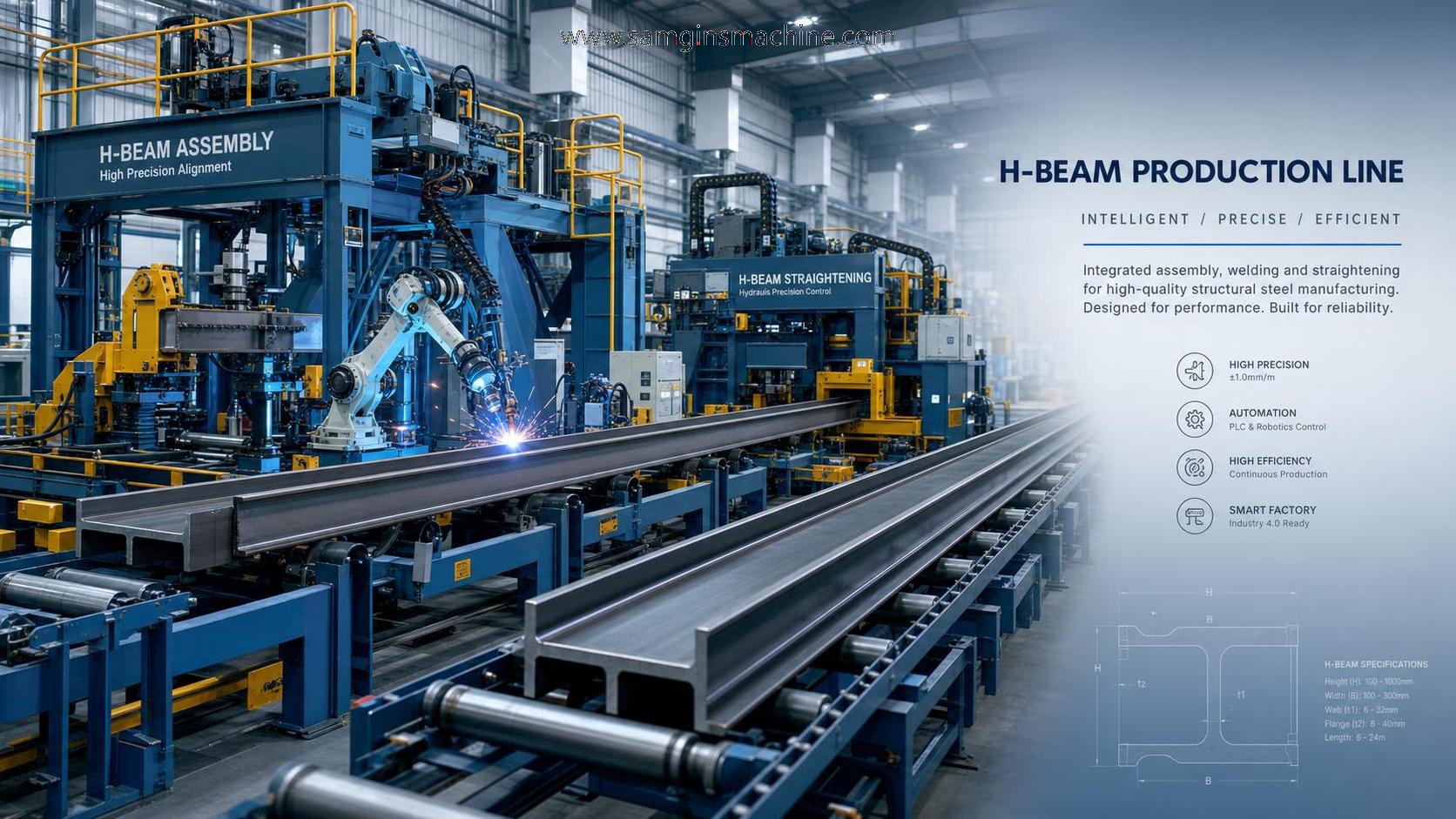
How to Evaluate an H Beam Production Line Manufacturer in 2026
Choosing the right h beam production line manufacturer in 2026 requires more than comparing prices. For business decision-makers, the real priorities are production efficiency, equipment reliability, compliance standards, technical support, and long-term return on investment. This guide explains the key factors to evaluate so you can identify a manufacturing partner that matches your steel structure production goals and helps your business stay competitive.
If you are buying an H beam line for a steel structure plant, fabrication workshop, or expansion project, the wrong supplier usually looks acceptable at quotation stage. The problems show up later: throughput misses, fit-up errors between machines, weak software support, consumable costs nobody explained, or commissioning that drags on while your production schedule slips. That is why the best evaluation process is not "Who gave the lowest number?" but "Who can prove they understand my production reality?"
Below is the checklist I would use before shortlisting any h beam production line manufacturer.
Start with the line configuration, not the brand name
Many buyers ask for a quote before they have locked down their actual process. That is backwards. An H beam production line can mean different setups depending on your product mix: light steel, heavy section beams, box columns, bridge components, or mixed batches with frequent changeovers. A manufacturer that immediately sends a standard quotation without asking about beam size range, monthly tonnage, welding method, flange/web preparation, and bottleneck stations is already telling you something.
- Ask what beam dimensions the line is designed to handle, and whether those are rated values or practical production values.
- Confirm the real bottleneck station. On paper, every supplier says the line is efficient. In practice, assembly, welding, straightening, and transfer logistics decide output.
- Check whether future expansion is possible. If your plant may add robotic welding, CNC drilling, shot blasting, or secondary finishing, the line layout should not block that.
A serious supplier will usually spend time clarifying your workflow before discussing machine count.
Look at process matching between machines
A production line is not a pile of individual machines. It is a chain. If one link is mismatched, your operators end up compensating manually.
When evaluating a manufacturer, ask how they match upstream and downstream tolerances. For example, if the assembly machine feeds material with inconsistent alignment, the welding station cannot magically recover perfect geometry. If the straightening section cannot handle the heat input and section range generated by your welding process, the line starts to create rework instead of finished beams.
Good manufacturers talk in terms of process continuity, not isolated machine specs. Ask them to explain the handoff from cutting, edge prep, assembly, welding, straightening, and discharge. If that explanation stays vague, keep digging.
Do not accept capacity claims without context
This is one of the most common buying mistakes. Suppliers often quote speed, but speed is not output. A transfer conveyor can run fast and still sit idle if fit-up or welding takes longer than expected.
If a manufacturer cannot translate technical speed into plant-level production assumptions, the proposal is still too shallow for a decision.
Check engineering depth, not just trading ability
In this sector, some companies are manufacturers, some are integrators, and some are trading companies with varying engineering support. That is not automatically a problem, but you need clarity. Ask who owns the design, who controls production quality, who handles software logic, and who will be responsible if a station underperforms after installation.
For example, Wuxi Samgins International Trade Co.,Ltd presents itself as a supplier focused on mechanical equipment including automatic welding equipment, CNC cutting machines, milling machines, lathes, welding robots, laser cutting machines, and H-beam production line equipment, while stating that production and design are organized in accordance with ISO9001 quality system certification and EU CE standards. Those points are relevant, but still need document review and project-level confirmation. Ask for the exact scope of supply, technical responsibility boundaries, and supporting records tied to the equipment you plan to buy.
Verify quality systems and compliance documents early
For international buyers, this is not paperwork trivia. If your destination market requires CE-related documentation, electrical conformity details, manuals, or traceable inspection records, you should ask before signing, not before shipment.
- Request the manufacturer’s ISO9001-related materials and confirm they are current.
- If CE is claimed, ask what exactly is covered: whole line, individual machines, electrical systems, or specific exported configurations.
- Check whether control cabinets, emergency stops, guarding, and manuals match your local compliance expectations.
- Ask for inspection and acceptance procedures before shipment.
A supplier that hesitates on documents usually creates delays later with customs, installation approval, or internal compliance review.
Pay attention to consumables, finishing, and downstream quality
Decision-makers often focus on major stations and overlook finishing quality. That is expensive. Burrs, slag, sharp edges, and poor surface condition slow assembly, affect welding consistency, and create safety issues for operators. Even if your main project is an H beam line, ask the supplier how they handle edge preparation and downstream finishing for the full fabrication flow.
In mixed fabrication environments, a deburring solution can matter more than people expect. One example is the RNS 800 Sheet metal deburring machine, which is presented for edge processing, hole deburring, descaling, polishing, and removing burrs generated by stamping, shearing, laser cutting, plasma cutting, and flame cutting. Its published parameters include up to 800 mm processing width, 0.5-40 mm thickness range, PLC control with a 10-inch touch screen, and independent grinding stations. Even if this exact model is not part of your beam line package, the broader lesson is simple: ask whether the supplier understands what happens after cutting and before final weld quality is judged on your shop floor.
Review component brands and serviceability
This is where experienced buyers usually spend more time. Not because imported parts are always better, but because downtime is rarely caused by the frame of the machine. It is usually electrical components, drives, control systems, sensors, hydraulic parts, or difficult-to-source wear items.
Ask for a component list. Then ask a second question: which of these parts are easy to replace in my country? If the answer is unclear, you are looking at future maintenance friction. You also want to know whether the manufacturer keeps recommended spare parts in stock and how quickly they can ship critical items.
A good service conversation includes preventive maintenance intervals, wear-part life assumptions 【待核实】, troubleshooting logic, and remote support capability.
Factory acceptance matters more than brochure confidence
Before shipment, insist on a clear FAT plan. Not a general promise. A documented test list. You want to see running accuracy, welding stability where applicable, motion coordination, safety devices, and operator interface behavior. If your line is customized, FAT should reflect your agreed configuration, not a similar machine in the corner of the workshop.
If travel is difficult, ask for live video verification, detailed check records, and serial-number traceability. It is not as strong as being there, but it is better than approving from photos.
Judge after-sales support by response structure, not promises
Every supplier says they provide good service. The useful questions are more operational:
- Who answers technical issues after handover?
- Is there English-language support for manuals, PLC interface, and troubleshooting?
- What is the remote response time commitment 【待核实】?
- Can they send commissioning engineers abroad if needed?
- What operator and maintenance training is included?
The best sign is not polished wording. It is a supplier who can show you how support actually works.
Compare total project risk, not only purchase price
A cheaper h beam production line manufacturer can become the most expensive option if installation takes longer, output falls short, or spare parts are slow. Decision-makers should compare suppliers across a wider commercial frame: equipment price, shipping, installation scope, civil requirements, utilities, training, warranty terms, spare parts package, and expected downtime exposure during the first year.
Also check payment milestones against technical milestones. Avoid contracts where most value is paid before meaningful acceptance points are completed.
What a solid shortlist usually looks like
By the time you finish proper evaluation, the shortlist often gets smaller fast. The strongest manufacturers are usually the ones who ask sharper questions, define scope clearly, explain process matching in detail, and are willing to tie performance claims to inspection and acceptance. They may not be the lowest quote. That is often the point.
If you are selecting in 2026, treat the purchase as a production system decision, not a catalog buy. Ask for real process logic, real documents, and real service structure. That is how you separate a capable h beam production line manufacturer from a supplier that only looks convincing in a proposal.
search
Products Navigation
Send Us A Message