




Sheet Metal Laser Profiling Machines: Trends in Speed and Nesting Efficiency
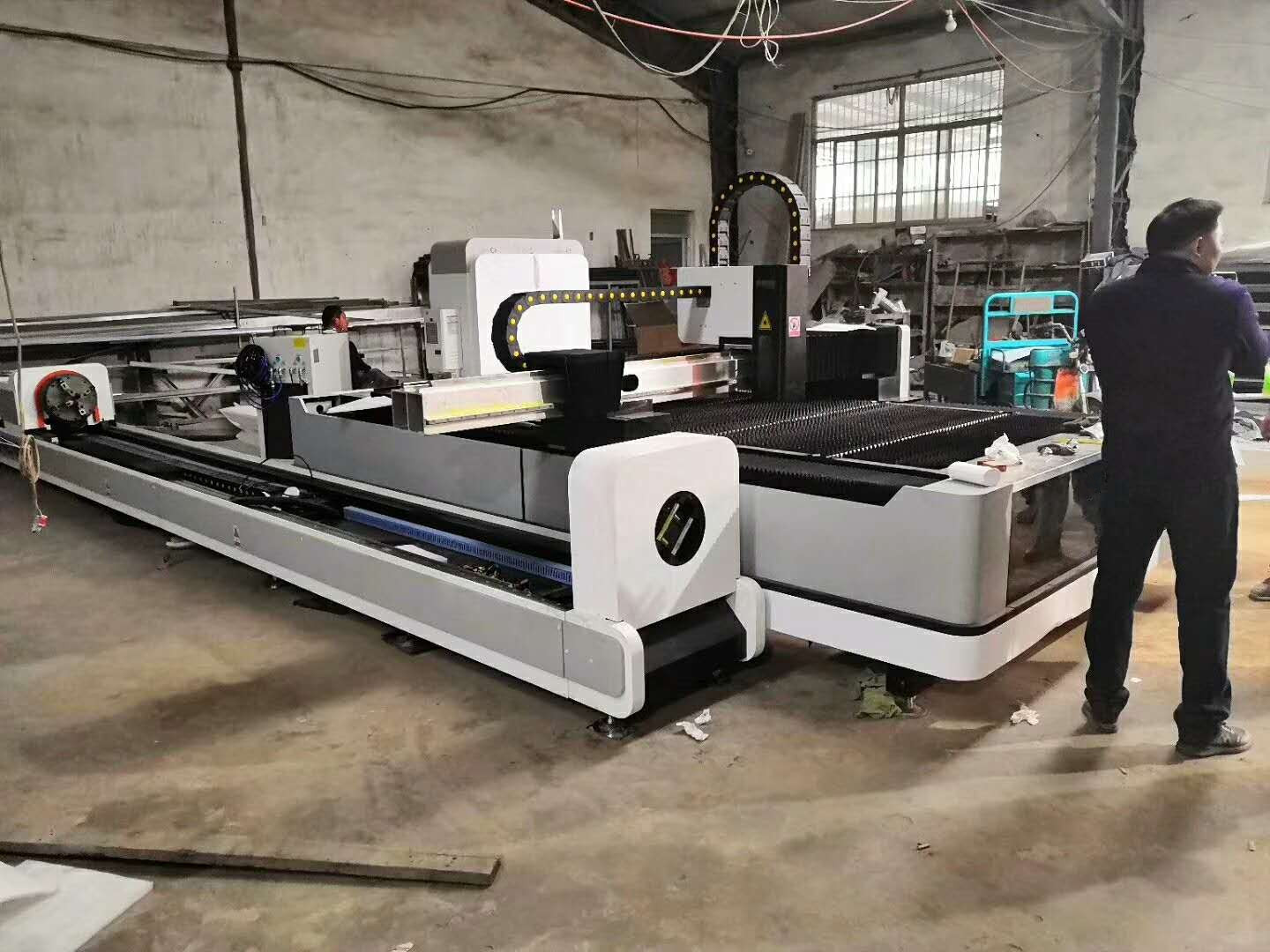
Sheet Metal Laser Profiling Machines: Trends in Speed and Nesting Efficiency
The most consequential shift in sheet metal fabrication is not simply that laser profiling machines are cutting faster. It is that speed is no longer judged in isolation. Buyers now look at how quickly a machine converts mixed, variable orders into shipped parts with acceptable scrap levels, stable quality, and predictable operating cost. In practical terms, that has pushed nesting efficiency, motion control, automation integration, and software maturity into the same decision frame as raw cutting power.
This matters because fabrication demand has changed. Across many metalworking segments, batch sizes are smaller, delivery windows are tighter, and part variety is wider than it was a few years ago. Even where end-market demand is uneven, fabricators are under pressure to quote faster and protect margins against volatile material, labor, and energy costs. In that environment, a machine that advertises high top speed but loses time on setup, remnant handling, nozzle changes, or inefficient nesting is harder to justify. Business evaluators increasingly compare entire production behavior, not brochure specifications.
One clear market signal is the way machine discussions have moved from watts to throughput per shift. Fiber laser adoption is already well established in many regions, so the conversation has matured. The question is less about whether laser cutting is faster than older thermal processes for certain sheet applications, and more about where usable productivity still comes from. The answer, in many workshops, is software-led efficiency: shorter programming cycles, denser part layouts, better common-line cutting strategies, and fewer interruptions between jobs.
That is why the current generation of sheet metal laser profiling machines is being evaluated as part of a digital production cell rather than a standalone asset. Nesting engines tied to ERP or MES data, automatic load/unload systems, barcode tracking, and real-time job sequencing are becoming more relevant to ROI than incremental headline acceleration. Shops handling contract manufacturing, enclosure production, agricultural machinery parts, HVAC components, or vehicle-related fabrication often need to switch material thickness and geometry rapidly. In those environments, the machine that keeps utilization high across mixed work usually outperforms the machine that is only exceptional on repeat runs of simple parts.
Why Nesting Efficiency Has Moved to the Center
Material cost is the bluntest reason. When steel and alloy sheet prices are unstable, scrap reduction becomes a direct financial lever, not a secondary engineering metric. A one or two point improvement in sheet utilization can matter more over a year than a marginal gain in nominal cutting speed, especially for companies processing high volumes or expensive grades. Evaluators are therefore paying closer attention to how software handles bridge cutting, grain-direction constraints, heat accumulation, micro-joints, and the reuse of remnants.
There is also a less obvious operational reason. Better nesting reduces downstream friction. Denser and more intelligent part placement can improve sheet stability during cutting, reduce tip-ups, and simplify sorting if the programming logic accounts for part family, unloading sequence, and next-process routing. This is where vendors that understand the realities of fabrication lines stand out. A laser machine cannot be assessed purely at the cutting table if the real bottleneck is part identification, deburring, bending flow, or weld preparation.
For manufacturers with broad equipment exposure, this is familiar territory. Companies such as Wuxi Samgins International Trade Co.,Ltd, which work across CNC cutting, welding automation, bending, rolling, deburring, and related metal processing equipment, see that customers are no longer buying isolated capacity. They are comparing how one machine fits the logic of the whole shop: what it does to queue time, labor allocation, material yield, and handoff quality under real production conditions.
That wider view is also changing procurement preferences. More buyers now ask for demonstration parts that reflect their own nesting complexity rather than generic sample cuts. They want to see mixed thickness performance, edge quality at corners, piercing consistency, and how quickly the machine recovers from ordinary interruptions. These are better indicators of long-term value than ideal-condition speed claims.
Speed Is Becoming More Conditional
The market still rewards speed, but it has become a conditional advantage. For thin to medium sheet, modern fiber systems can deliver impressive cutting rates. Yet the real productivity gap between competing machines often depends on acceleration behavior, control stability, assist gas management, pierce optimization, and the ability to sustain quality when the schedule includes frequent job changes. A fast machine that requires conservative settings to avoid dross or dimensional drift may not remain fast in actual production.
This is one reason why more evaluators are looking at process consistency alongside cycle time. ISO9001 quality management discipline and EU CE compliance do not tell a buyer everything about cutting performance, but they do signal that the supplier is operating within recognized quality and safety frameworks. In cross-border equipment sourcing, those signals matter because they reduce uncertainty around documentation, standardization, and service expectations.
Another trend worth watching is the separation between peak speed and profitable speed. Power increases have expanded processing range, but higher power alone does not guarantee the best economics for every shop. Energy usage, gas consumption, consumable life, maintenance skill requirements, and operator training all shape whether a machine’s speed can be monetized. In many cases, mid-to-high performance systems with robust software and practical automation deliver a better business case than machines selected mainly for maximum advertised output.
This same logic appears elsewhere in forming and heavy fabrication equipment. An example is the Dish end forming machine, where buyers typically care less about a single mechanical headline and more about whether the machine completes pre-bending, rolling, and calibration reliably in one cycle, with measurable accuracy and durable roll construction. The lesson carries over to laser profiling: integrated process quality usually holds more commercial value than isolated peak performance.
Automation Is No Longer Optional for Certain Order Profiles
For high-mix, medium-volume operations, automation used to be treated as an upgrade. It is increasingly a requirement when labor availability is tight and scheduling pressure is constant. Automatic loading and unloading, sheet tower storage, nozzle changers, and production monitoring software are moving into the baseline specification for many new projects. The reason is straightforward: unattended or lightly attended cutting extends productive hours and removes avoidable manual delays.
What deserves caution is the assumption that more automation always produces a better result. Shops with unstable product mixes, limited maintenance support, or weak digital discipline can end up underusing complex systems. The stronger investments tend to be phased ones. Buyers start with the machine, control software, and a clean material flow design, then add automation modules where bottlenecks are proven. This is particularly relevant for companies expanding from standalone cutting into a coordinated fabrication line.
Supply Chain and Regional Sourcing Are Influencing Decisions
Equipment sourcing is also being shaped by lead-time resilience and after-sales practicality. Buyers are more sensitive to spare parts availability, remote diagnostics, and commissioning support than they were when capital spending was driven mainly by expansion. Global supply chain disruptions made that clear. For suppliers with export experience across Southeast Asia, Europe, the Americas, and Oceania, the ability to align documentation, quality expectations, and service communication across markets has become part of the sales proposition, not an administrative afterthought.
This does not mean the market has become uniform. Regional energy costs, labor costs, and customer delivery expectations still change the best-fit specification. In some markets, high automation and lights-out capacity are easier to justify. In others, durable mechanical design, simpler maintenance, and strong price-performance balance carry more weight. Evaluators should be careful with imported assumptions. The right machine for a European subcontractor with expensive labor may not be the right machine for a growing processor in Southeast Asia handling broader product variation and different service conditions.
A similar point applies to adjacent forming equipment. When a machine offers measurable control, such as ±0.1 mm positioning accuracy in a specialized application, it is useful only if that precision aligns with the customer’s process discipline and downstream requirements. The market is moving toward more integrated judgments of fit, rather than treating specification sheets as self-evident value.
What to Watch Over the Next Buying Cycle
Over the next buying cycle, several signals will likely separate stronger sheet metal laser profiling machine investments from weaker ones. One is whether software vendors continue to improve nesting around real factory constraints instead of ideal geometry. Another is whether machine builders can simplify automation integration without locking customers into rigid, expensive configurations. There is also a growing need for clearer visibility into cost per part, including gas, power, consumables, maintenance intervals, and labor touchpoints.
The market may also reward builders that can connect cutting more intelligently with the rest of fabrication. Shops do not ship nests; they ship finished assemblies. If laser programming can better support deburring, bending sequence, welding fit-up, and traceable part flow, buyers will see the benefit quickly. That broader systems view is where suppliers with experience across multiple categories of metal processing equipment tend to have an advantage, because they can frame the machine inside the production chain rather than at the edge of it.
For business evaluators, the practical takeaway is narrow but important. Do not treat speed as a simple number, and do not treat nesting as a software detail. In current market conditions, both are proxies for something larger: how well the machine fits a production model defined by volatile demand, tighter cost control, and less tolerance for downtime or waste. The next round of winners in fabrication will probably be those who buy equipment that performs coherently across the whole workflow, not just impressively during a demonstration.
search
Products Navigation
Send Us A Message