




How to Train Operators on a New Shearing Machine Safely and Efficiently
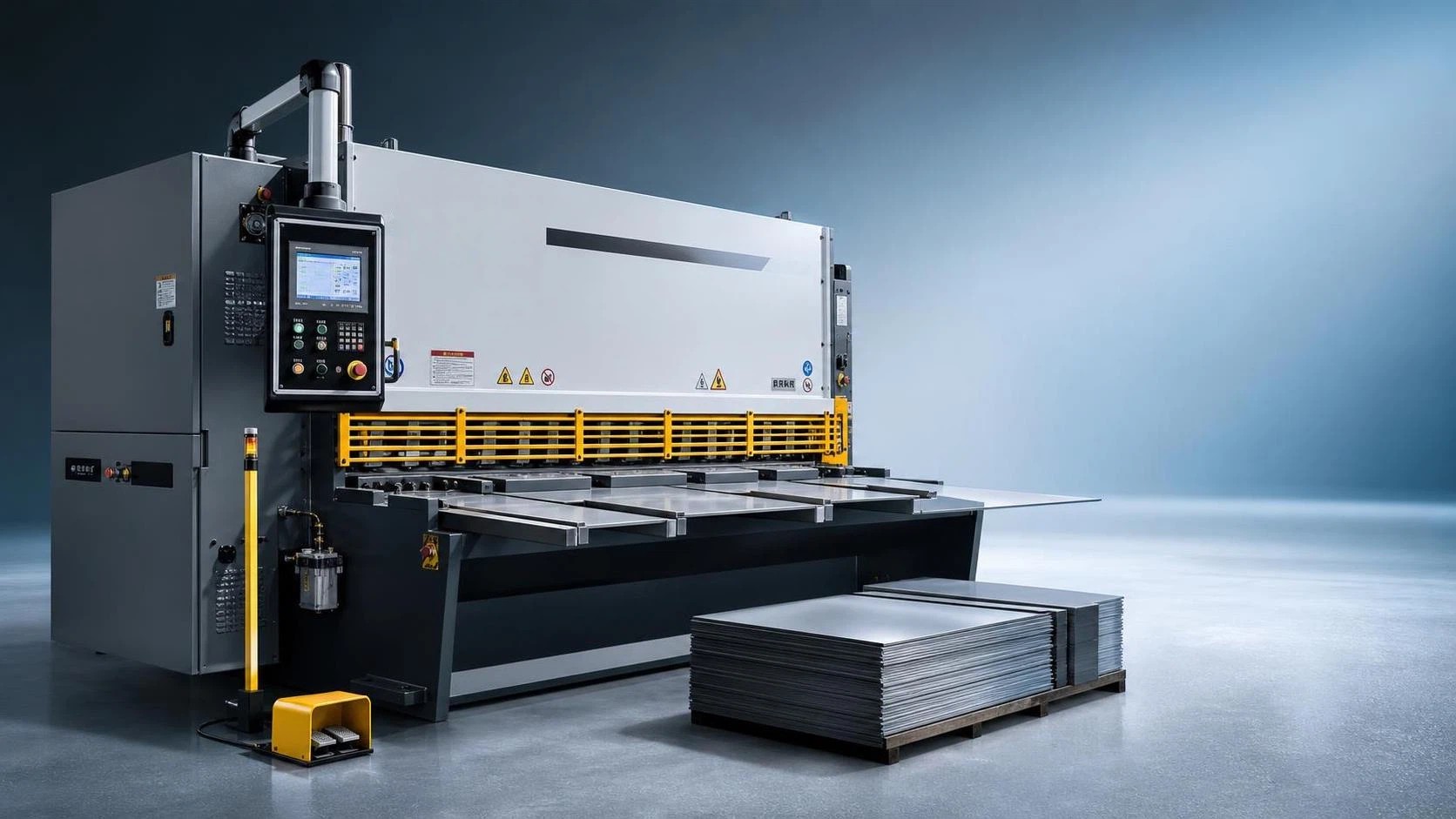
Learning how to train operators on a new shearing machine safely and efficiently is essential for improving productivity, reducing downtime, and preventing workplace accidents. In metal fabrication and manufacturing environments, a structured training process helps operators master machine controls, safety procedures, and maintenance basics with confidence. This guide explores practical training methods that support faster onboarding, safer operation, and long-term performance.
For many factories, the real challenge is not buying a shearing machine. It is bringing the machine into stable daily use without creating avoidable safety incidents, scrap, tooling damage, or production delays. A new machine often arrives with better automation, updated controls, tighter tolerances, or different guarding logic than legacy equipment. Even experienced operators can make mistakes when they assume that “all shears work the same way.” They do not.
That is why operator training should be treated as part of commissioning and risk control, not as a short handover at the shop floor. For plant managers, training affects output and insurance exposure. For technical teams, it affects machine reliability and cut quality. For buyers and cross-border equipment importers, it affects whether the investment performs as expected after installation.
Why training on a new shearing machine often fails in practice
In many workshops, training is compressed into a few hours: a supplier technician demonstrates the machine, a senior operator watches, and production starts immediately. This approach may seem efficient, but it usually leaves gaps in four areas.
The first gap is machine-specific safety understanding. Operators may know general sheet metal handling, but they may not understand the particular pinch points, backgauge movement range, hold-down behavior, blade clearance settings, foot pedal logic, emergency stop response, or lockout procedure of the new equipment.
The second gap is process discipline. A shearing machine can look simple compared with a CNC machining center, yet the consequences of poor workholding, wrong material positioning, or blade setup are serious. Injury risk is obvious, but quality risk is often underestimated. Inaccurate cuts, edge deformation, excessive burrs, and blade wear usually come from poor operating habits as much as from machine condition.
The third gap is mismatch between operator skill and machine complexity. A manually operated shear, hydraulic swing beam shear, and CNC guillotine shear do not require the same training depth. The more functions the machine has, the less effective informal shadowing becomes.
The fourth gap is language and documentation. In export scenarios, the machine manual, HMI interface, warning labels, and training materials may not match the operator’s first language. Even when CE-related documentation exists, it does not automatically mean the end user has an effective shop-floor training system.
Start with risk, not with buttons
The most effective training programs do not begin with “how to run the machine.” They begin with “what can go wrong, and under what conditions.” This matters because operators remember procedures better when they understand the reason behind them.
Before live operation, the training leader should walk through the actual hazards associated with the machine and the material being processed. Typical areas include:
- Hand injury at the blade zone or hold-down area
- Unexpected movement of backgauge or sheet support devices
- Sharp edge handling before and after cutting
- Kickback or unstable sheet positioning
- Slip or trip hazards around scrap and offcuts
- Hydraulic, electrical, and maintenance-related energy isolation risks
This stage should also clarify what safety systems are installed and what they do not do. Guards, light protection devices, interlocks, emergency stops, and foot switches reduce risk, but they do not replace correct behavior. A common training mistake is allowing operators to think that the machine’s built-in safety features make unsafe habits acceptable. They do not.
Where local regulations apply, the employer should align training with site risk assessment requirements and machine safety obligations. In the EU context, CE marking indicates that the equipment was placed on the market under applicable requirements, but safe use still depends on proper installation, instructions, risk assessment, and operator competence at the user site. In the United States, employers should also review relevant OSHA machine guarding and lockout/tagout obligations. Exact applicability should be verified according to jurisdiction and machine configuration.
Separate training into stages instead of one-time instruction
If the goal is both safety and efficiency, operator training should be staged. That approach shortens the time to competent operation while reducing overload.
A practical structure usually includes four phases.
Phase one: pre-start orientation. This covers machine purpose, operating limits, material range, safety devices, prohibited actions, personal protective equipment, and emergency procedures. No cutting is required yet. The objective is familiarity, not speed.
Phase two: supervised basic operation. Operators learn startup and shutdown, reference positioning, control panel navigation, backgauge setting, blade clearance adjustment if applicable, sample cutting, scrap removal, and fault response. The trainer should use simple jobs first: common material grades, moderate thickness, and straightforward dimensions.
Phase three: process-focused production practice. Here the operator runs real jobs under supervision. Training expands to part accuracy checks, repeatability, cut sequencing, handling of large sheets, changeover discipline, and quality control records. This is where efficiency begins to improve in a measurable way.
Phase four: independent operation with review. The operator runs the machine without step-by-step instruction, but performance is checked against a defined standard. If the business has multiple shifts, this review should include shift handover practices, cleaning, and routine inspection.
This staged model is more effective than intensive front-loaded instruction because it matches how operators actually learn. It also gives supervisors a way to identify whether a problem comes from the operator, the process setup, or the machine itself.
What operators need to know beyond basic operation
Training that focuses only on controls produces operators who can start the machine but cannot run it well. A competent shearing machine operator should understand several process variables that directly affect output.
Material behavior. Different materials respond differently during shearing. Mild steel, stainless steel, aluminum, and coated sheet do not behave the same way in terms of springback, edge quality, marking sensitivity, and blade wear impact. Operators should know the approved material range for the machine and where problems are likely to appear.
Blade condition and clearance. Not every operator needs maintenance-level expertise, but they should understand the relationship between blade condition, clearance, thickness, and cut result. Poor edge quality is often blamed on the machine when the real issue is blade wear or incorrect setup.
Backgauge accuracy. Repeatable cuts depend heavily on proper backgauge use. Operators should be trained to verify dimensions, not assume programmed settings are always correct. This is especially important after installation, relocation, maintenance, or heavy use.
Sheet support and handling. Large-format sheets can be awkward and dangerous even when the cut itself is simple. Training should include how to support material without distorting alignment, when two-person handling is required, and when lifting assistance is necessary.
Defect recognition. Operators should know how to identify burr, bow, twist, edge rollover, inaccurate length, and surface marking. Faster troubleshooting reduces scrap and prevents repeated errors across batches.
Use standard work to reduce skill variability
Factories with mixed operator experience often struggle because the “best operator” becomes the informal training system. That may work for a while, but it is difficult to scale, especially across shifts or multiple locations.
Standard work documents are one of the simplest ways to make training more efficient. These do not need to be long manuals. In fact, shorter visual instructions are often more effective on the shop floor. Useful documents include:
- Daily startup and shutdown checklist
- Pre-operation safety inspection sheet
- Approved material and thickness reference
- First-piece inspection procedure
- Blade and backgauge verification checklist
- Fault escalation guide for operators
- Lockout/tagout instruction for authorized personnel
From a management perspective, standard work has another advantage: it protects training quality when turnover is high. This is increasingly relevant in manufacturing labor markets where experienced sheet metal operators are harder to retain.
Digital controls change the training requirement
Older shears often relied more heavily on manual setup and operator feel. Newer machines, especially CNC-equipped models, improve repeatability and productivity, but they also introduce a different training burden. Operators may now need to understand touch-screen navigation, recipe storage, parameter recall, alarms, and access levels.
This creates a common misunderstanding in purchasing and implementation. A buyer may assume that more automation means easier adoption. In reality, it means easier production after operators are properly trained. Before that point, complexity can slow startup.
For imported machines, this is where supplier support matters. Clear manuals, translated interface terms, remote troubleshooting capability, spare parts access, and usable training videos can shorten ramp-up time significantly. Procurement teams evaluating shearing equipment should consider training support as part of the total implementation package, not as an afterthought.
How to measure whether training is actually working
Many companies say operators are trained once they have attended instruction. That is not a reliable standard. Attendance is not competence.
Training should be measured through operational indicators. The most useful metrics are usually practical rather than academic:
- Time to independent operation
- First-pass yield on standard jobs
- Scrap rate during the first 30 to 90 days
- Minor stoppages caused by operator error
- Dimension repeatability on sample batches
- Safety observations and near-miss frequency
- Compliance with inspection and maintenance routines
If the machine is technically sound but these indicators do not improve, the problem is often in the training method, not in the equipment. In particular, if new operators repeatedly bypass checks to save time, management should review whether production targets are undermining safe behavior.
Common mistakes that increase risk and delay productivity
Some mistakes appear across many factories regardless of region or machine brand.
One is assigning training responsibility entirely to the equipment supplier. The supplier can explain the machine, but only the employer understands site-specific material flow, staffing reality, and production pressure. Training has to be shared between supplier knowledge and internal process control.
Another is letting highly experienced operators skip formal training. Experienced people often learn faster, but they are also more likely to rely on habits from older machines. Differences in control logic, guarding, and setup procedure matter.
A third is ignoring maintenance basics. Operators do not need to perform all service tasks, but they should know what normal machine condition looks and sounds like. Early reporting of hydraulic leaks, abnormal noise, misalignment, or inconsistent cutting can prevent downtime.
A fourth is failing to define who is authorized to change parameters. On some machines, improper adjustment of clearance, stroke, backgauge limits, or system settings can create both safety and quality problems. Training should distinguish between operator-level tasks, setup-level tasks, and maintenance-only tasks.
What buyers and managers should ask before installing a new shear
For companies still in the procurement or import stage, training outcomes are influenced by pre-purchase decisions. It is worth asking a few direct questions before the machine arrives:
- What training is included at installation, and for how many people?
- Are operation manuals and safety instructions available in the local working language?
- Does the supplier provide training records, videos, or standard checklists?
- What competencies are expected from operators versus maintenance staff?
- What guarding and safety devices are included as standard?
- What local power, foundation, and space conditions affect safe operation?
- How are spare parts, service, and remote support handled after commissioning?
These questions are not administrative details. They directly affect how quickly the machine reaches stable output and how much risk the user carries during the first months of operation.
Safe and efficient training is an operating strategy, not a formality
Understanding how to train operators on a new shearing machine safely and efficiently is not only a shop-floor issue. It is part of equipment ROI, production stability, and workplace risk management. Well-trained operators do more than avoid accidents. They produce consistent parts, protect tooling, identify issues earlier, and reduce hidden costs that are often blamed on the machine itself.
In a competitive fabrication environment, the difference between a successful machine investment and a disappointing one often comes down to implementation discipline. Training should be structured, documented, machine-specific, and tied to real production conditions. When companies treat training as a core part of machine deployment rather than a final checklist item, both safety performance and operational efficiency improve in ways that are visible very quickly.
search
Products Navigation
Send Us A Message