




Is a Swing Beam Hydraulic CNC Shear Worth the Cost for Batch Production?
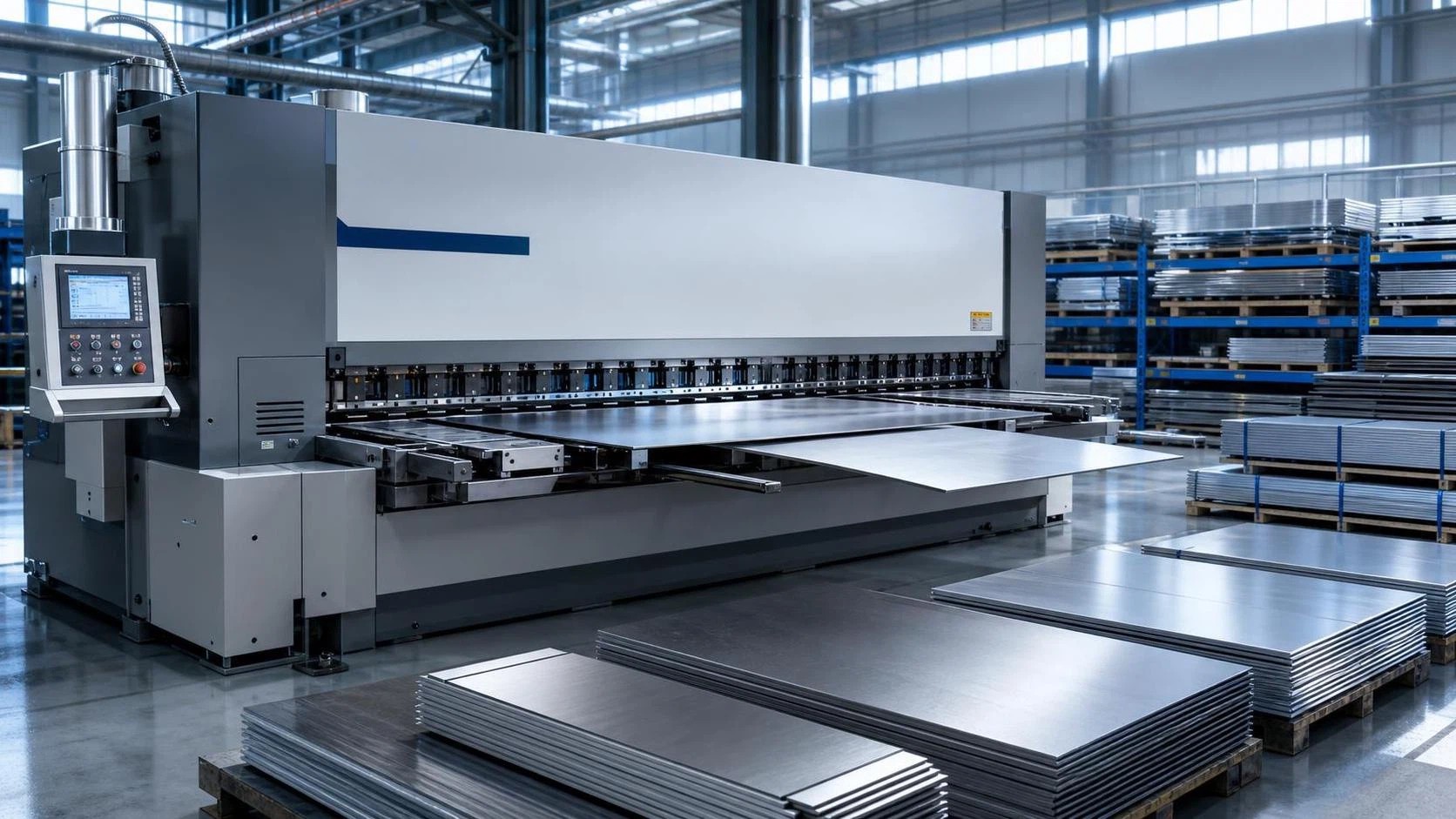
Is a Swing Beam Hydraulic CNC Shear Really Worth It in Batch Production?
For batch production, equipment cost is only the visible part of the decision.
The real question is whether a swing beam hydraulic cnc shear improves throughput, cut quality, labor efficiency, and operating stability over time.
That matters even more when material prices fluctuate and delivery schedules stay tight.
In practical metal fabrication, a machine that cuts consistently can protect downstream bending, welding, and assembly accuracy.
A poor choice usually shows up later through scrap, rework, blade wear, and avoidable downtime.
For that reason, the value of a swing beam hydraulic cnc shear should be judged as a production asset, not as a one-time purchase.
What does a swing beam hydraulic CNC shear actually do better?
A swing beam hydraulic cnc shear is designed for repeated sheet cutting with controlled stroke, hydraulic stability, and programmable backgauge positioning.
Its strongest advantage is not complexity.
It is repeatability.
When the same thickness and dimensions run all day, repeatability becomes a direct cost factor.
Compared with manual or older hydraulic shears, CNC control reduces setup variation between operators.
That helps maintain part size consistency across longer shifts and mixed production lots.
In actual use, the machine is often chosen for carbon steel, stainless steel, and general sheet processing where stable edge quality matters.
It also fits shops that need faster changeover between recurring jobs.
- More predictable cut length and squareness
- Lower dependence on operator experience
- Better control in repeated batch programs
- Reduced handling errors during frequent order changes
Simple jobs can be done on cheaper equipment.
The value appears when volume, consistency, and schedule pressure start to rise together.
When does the cost make sense, and when does it not?
This is usually the turning point in the buying decision.
A swing beam hydraulic cnc shear is worth the cost when production runs are frequent enough to recover setup savings and scrap reduction.
It becomes harder to justify when production is highly irregular, material is thin and simple, or precision demands stay modest.
A useful way to judge value is to compare hidden daily costs.
The machine does not create savings by itself.
It creates savings when the production system can use its speed and consistency every week.
Which cost drivers matter more than the purchase price?
Purchase price gets attention because it is immediate.
Operating cost usually decides whether the investment was right.
For a swing beam hydraulic cnc shear, the most important drivers are material utilization, setup time, blade maintenance, hydraulic reliability, and labor efficiency.
Even a small reduction in scrap can change annual equipment economics.
That is especially true when cutting thicker plates or higher-cost stainless materials.
Setup time is another overlooked item.
If operators frequently stop to reset dimensions, production loss accumulates faster than many buyers expect.
Need to look at the full production chain as well.
Accurate shearing reduces trouble later in bending, fitting, and welding.
In facilities that process structural components, the shearing stage often feeds broader automated lines.
For example, a plant using Heavy automatic h beam line equipment may already value stable material flow, reduced manual intervention, and controlled downstream processing.
That same logic applies when assessing a swing beam hydraulic cnc shear.
A reliable upstream cut improves the efficiency of the whole line, not just one machine station.
How should you compare a swing beam hydraulic CNC shear with other shearing options?
The comparison should start with job mix, not catalog claims.
Some buyers compare a swing beam hydraulic cnc shear with guillotine shears, older hydraulic systems, or basic mechanical shears.
The best choice depends on thickness range, edge quality expectations, speed targets, and budget discipline.
A swing beam hydraulic cnc shear is often preferred for balanced performance in general batch work.
It can offer practical productivity without the complexity or cost level of more specialized alternatives.
More advanced options may outperform it in narrow conditions.
Still, many operations do not need maximum specification.
They need dependable output with manageable maintenance.
- Choose by actual plate range, not peak theoretical capacity
- Check backgauge repeatability during repeated cuts
- Ask about hydraulic components and service access
- Review blade life under your material mix
- Confirm compatibility with existing handling and workflow
The better comparison is not machine versus machine.
It is production outcome versus production outcome.
What mistakes lead to disappointing ROI?
Most poor results come from mismatched expectations rather than bad equipment alone.
One common mistake is buying only by maximum cutting thickness.
That ignores duty cycle, daily workload, and dimensional repeatability.
Another mistake is underestimating workflow around the machine.
If loading, unloading, and stacking remain inefficient, the shear cannot deliver its full value.
Maintenance planning also gets missed.
Hydraulic systems, blades, and operator training need predictable routines.
Without that, performance declines gradually and the cost picture becomes misleading.
A further risk appears when the supplier cannot support broader fabrication requirements.
In metalworking, buyers often benefit from partners that understand connected processes such as welding, cutting, milling, bending, and structural line integration.
Companies with long experience in equipment supply, export practice, and ISO9001-aligned quality management usually provide more grounded application advice.
That matters when the goal is not just buying a machine, but building a stable production solution.
So, is a swing beam hydraulic CNC shear the right investment?
In many batch production environments, yes.
A swing beam hydraulic cnc shear is often worth the cost when repeated jobs, quality consistency, and delivery discipline are central to the business.
Its value is strongest when lower scrap, quicker setup, and reduced operator variation can be measured clearly.
It is less convincing when production remains occasional, highly manual, or too simple to benefit from CNC repeatability.
The better next step is to map actual monthly cutting volume, thickness range, tolerance needs, and downstream process sensitivity.
Then compare those facts against machine capacity, maintenance demands, and expected payback period.
If the decision connects with a larger fabrication upgrade, it also helps to review related automation paths, including beam processing, welding flow, and material handling.
That is usually where the most reliable return becomes visible.
search
Products Navigation
Send Us A Message