




How a Swing Beam Hydraulic Shear Improves Cutting Stability on Medium Plates
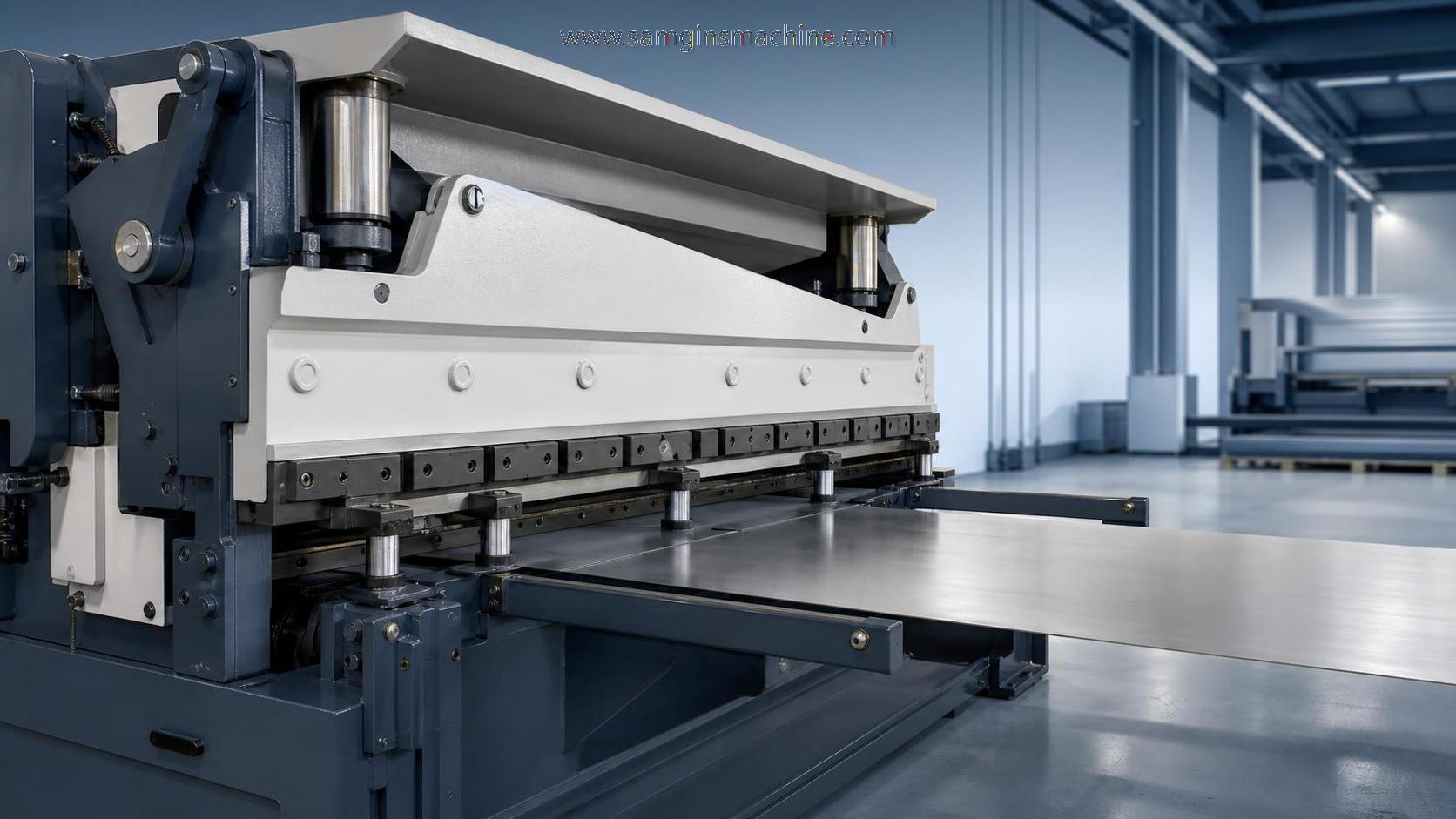
A swing beam hydraulic shear is often chosen for medium plate cutting because it combines steady force, manageable motion, and dependable edge quality in daily production. When plate thickness moves beyond light sheet work, cutting stability becomes more than a quality issue. It affects operator control, downstream fit-up, scrap rate, and the repeatability of the whole fabrication process.
That is why this machine remains relevant across manufacturing and metal processing lines. In workshops handling carbon steel, stainless steel, or aluminum plates, a stable cut reduces rework and keeps later operations more predictable. For plate fabrication, stability is not a luxury feature. It is a practical condition for safe, efficient output.
Why stability matters on medium plates
Medium plates place a different demand on cutting equipment than thin sheet. The material offers more resistance. It can shift under load. It can also amplify vibration when the machine frame, hold-down system, or blade geometry is not well matched.
In practical terms, poor stability shows up quickly. The cut edge may become uneven. Burrs may increase. The plate may twist slightly near the cut line. Blade wear can accelerate, and operating confidence usually drops at the same time.
A swing beam hydraulic shear addresses these issues through controlled blade movement, hydraulic clamping, and a structure designed to absorb cutting loads more consistently. The result is usually a cleaner, calmer cutting cycle.
How the swing beam mechanism supports a steadier cut
The key feature of a swing beam hydraulic shear is the swinging motion of the upper blade carrier. This motion creates a strong shearing action while keeping the machine mechanically straightforward. For medium plate work, that balance is valuable.
Because the upper beam follows a defined arc, the machine can deliver cutting force with less sudden impact than less controlled systems. That matters when processing plates that are heavy enough to resist the blade, but still common in general fabrication.
The hydraulic system also contributes to stability. Instead of relying on inconsistent manual pressure, it applies repeatable force during the cutting stroke. This helps the blade enter the plate more smoothly and maintain a more stable cut path.
Three stability gains that matter most
- Reduced vibration during the cutting stroke, especially on wider plates.
- More consistent blade engagement from one cycle to the next.
- Better control of plate movement through reliable hold-down action.
Blade alignment and clearance control
Cutting stability is closely tied to blade alignment. Even a strong frame cannot compensate for poor blade setup. A swing beam hydraulic shear performs best when the upper and lower blades remain properly aligned across the working length.
On medium plates, blade clearance becomes especially important. If the gap is too small, cutting force rises sharply and edge tearing may appear. If the gap is too large, burrs and deformation become more likely.
A well-configured swing beam hydraulic shear allows more predictable clearance adjustment for different materials and thicknesses. That gives the operator a practical way to match machine behavior to the plate being processed.
Cleaner edges improve the next process
A stable cut does more than improve the shearing result itself. It affects what comes next. Medium plates are often sent to welding, bending, rolling, bevel preparation, or assembly. Irregular edges create delays in all of those stages.
When a swing beam hydraulic shear produces straighter cuts with less distortion, fit-up becomes easier. Marking lines remain more reliable. Edge cleanup takes less time. Material handling also becomes simpler because the plate behaves more predictably after cutting.
This is especially useful in fabrication fields such as pressure vessel work, shipbuilding, boiler production, power equipment, and heavy machinery. In those environments, upstream cutting errors often multiply later.
For parts requiring beveling before welding, a clean sheared edge can support more efficient preparation. In some production lines, this may connect naturally with equipment such as Non-standard Edge Milling Machine Without Pressure Beam, which is used for straight flanges, bevel edges, and U-type grooves on plates from 8 mm to 100 mm.
Where this machine fits in current fabrication lines
The value of a swing beam hydraulic shear is strongest where medium-thickness plate processing is frequent and batch consistency matters. It is commonly used in general metal fabrication, structural component preparation, tank work, and support part cutting.
It also fits well in workshops that do not need the highest level of automation for every cut, but still require reliable quality and stable operation. In such settings, the machine offers a practical midpoint between simple manual shearing and more complex cutting systems.
Wuxi Samgins International Trade Co.,Ltd has worked across a broad range of fabrication equipment, including shearing machines, bending machines, CNC cutting machines, milling machines, deburring equipment, and welding systems. That wider equipment perspective matters because cutting stability should be judged as part of the whole process, not as an isolated machine feature.
Typical situations where stability matters most
- Repeated cutting of medium plates in mixed material batches.
- Parts that move directly into welding preparation.
- Long plates where vibration can affect straightness.
- Work requiring consistent edge quality without heavy secondary finishing.
What to watch during real operation
Even a capable swing beam hydraulic shear will not stay stable without correct use. Day-to-day performance depends on setup discipline, material condition, and maintenance quality.
Blade sharpness should be checked regularly. Dull blades increase load and promote edge defects. Hold-down components should also be inspected, because weakened clamping can allow subtle plate movement that ruins cut consistency.
Material condition matters too. Plates with scale, warpage, or internal stress can behave differently during shearing. A stable machine helps, but it does not remove the need to assess the incoming plate.
- Match blade clearance to plate thickness and material type.
- Keep hydraulic pressure within the recommended range.
- Confirm backgauge accuracy before batch cutting.
- Check frame, blade seat, and hold-down wear points.
- Review edge quality before releasing a full production run.
Judging equipment beyond basic tonnage
When comparing a swing beam hydraulic shear, tonnage and cutting length are only part of the decision. Stability depends on frame construction, hydraulic responsiveness, blade adjustment convenience, and the behavior of the hold-down system.
Noise, vibration, and maintenance access are also worth checking. In plate processing lines that run daily, small differences in machine smoothness can have a large effect over time. A machine that feels controlled is often easier to operate consistently.
This is similar to later edge preparation. For example, beveling equipment with stronger structural stability and reduced vibration can improve surface finish and process continuity. That is one reason systems such as the XBN or XBJ series edge milling designs are valued in heavy equipment, chemical, boiler, and shipbuilding applications.
The point is not to compare unlike machines directly. It is to recognize a broader rule in fabrication: stable motion leads to better accuracy, safer handling, and less correction work.
A practical next step for evaluation
The best way to assess a swing beam hydraulic shear is to connect machine specifications with the actual plate range, material mix, edge quality target, and downstream process route. A stable cut should be verified through real production conditions, not only catalog data.
It helps to review the full workflow: cutting, handling, welding preparation, and final assembly. If medium plates frequently require beveling or precision edge preparation after shearing, equipment coordination becomes more important than single-machine performance.
A clear evaluation standard should include cutting smoothness, repeatability, edge condition, maintenance demands, and how well the machine supports the next operation. That approach makes the choice of a swing beam hydraulic shear more grounded, and usually more useful over the long run.
search
Products Navigation
Send Us A Message