




Swing Beam Shears Explained: Which Sheet Metal Jobs Are They Best For?
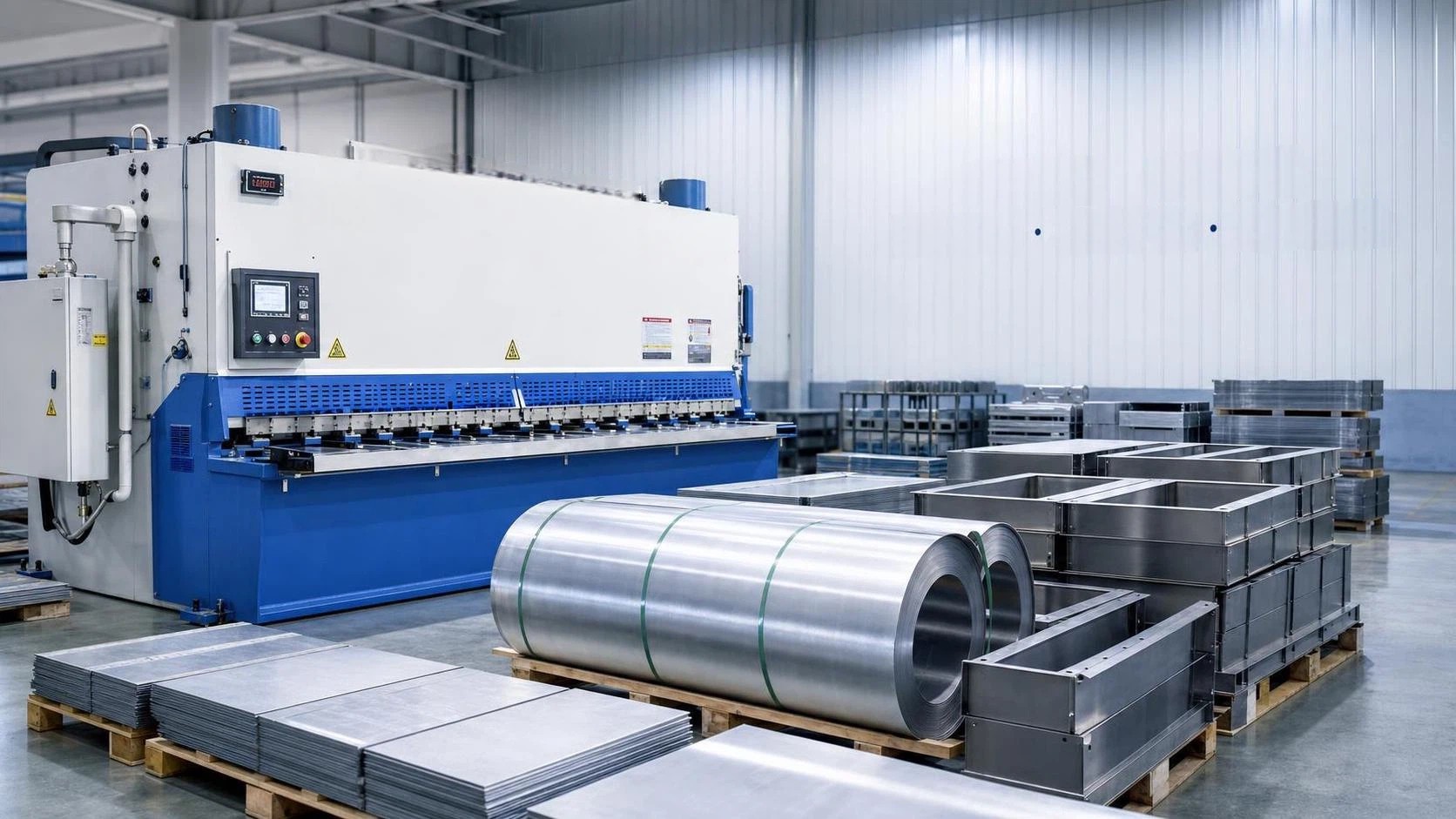
Swing Beam Shears Explained: Which Sheet Metal Jobs Are They Best For?
For sheet metal projects, equipment choice affects schedule, cost, and downstream quality.
That is why swing beam shears remain a practical option in many fabrication shops.
They offer a useful middle ground between precision, output speed, and ownership cost.
They are especially effective for mild steel, stainless steel, and aluminum sheet processing.
In real production, that balance matters more than chasing the highest specification.
The better question is simple: which jobs are swing beam shears truly best for?
The answer depends on material type, sheet thickness, batch size, and quality expectations.
How Swing Beam Shears Work in Daily Fabrication
Swing beam shears cut sheet metal with an upper blade moving in an arc-like path.
This design is straightforward, proven, and widely used in general metalworking operations.
Compared with more complex systems, swing beam shears are easier to maintain and operate.
They are commonly chosen for straight cuts on plate and sheet before bending, welding, or rolling.
That makes them a core machine in workshops handling routine fabrication tasks every day.
When production needs clean blank preparation without excessive complexity, they fit very well.
Best Sheet Metal Jobs for Swing Beam Shears
The strongest use case for swing beam shears is straight-line cutting of standard sheet sizes.
They perform especially well where parts move to bending, rolling, welding, or assembly next.
Typical applications include ducting panels, cabinets, frames, covers, tanks, and structural components.
For these jobs, perfect contour flexibility is less important than stable, repeatable edge preparation.
- Blank cutting for press brake forming
- Plate sizing before rolling into cylinders or cones
- Trimming sheets for welded enclosures and support structures
- Preparing strips, gussets, cover plates, and reinforcement parts
- Medium-volume work where reliable throughput matters more than shape complexity
This is where swing beam shears often deliver the best value per processed sheet.
They are not trying to do everything. They are built to do common jobs efficiently.
Material Types and Thickness Ranges That Make Sense
Material choice has a direct impact on cutting quality and machine suitability.
Swing beam shears are usually a strong match for carbon steel sheets in everyday fabrication.
They also handle stainless steel and aluminum well when thickness stays within machine capacity.
For very thin decorative sheets, burr control and surface marking may need closer review.
For very thick plate, hydraulic guillotine solutions may offer better force distribution and edge results.
In practice, the sweet spot is routine sheet metal work with repeatable gauges and standard formats.
So the machine works best where material mix is broad but part geometry stays simple.
When Swing Beam Shears Are a Better Choice Than Other Cutting Options
Not every project needs laser cutting, plasma cutting, or a higher-cost shearing platform.
If the part only requires straight cuts, advanced contour capability adds little real value.
This is one reason swing beam shears continue to hold a strong place in factory planning.
They reduce capital cost, simplify maintenance, and support quick operator training.
More importantly, they keep blank preparation moving without creating a process bottleneck.
- Choose swing beam shears when parts are mostly rectangular or strip-based
- Choose them when downstream bending speed matters more than cut-path flexibility
- Choose them when maintenance resources are limited
- Choose them when cost control is a top project metric
That decision becomes even clearer in expansion projects with mixed product batches.
Where the Limits Start to Show
A realistic buying decision should also consider where swing beam shears are less suitable.
They are not the best answer for complex nesting, holes, curved profiles, or intricate contours.
They also may not be ideal for ultra-high precision edge demands on specialty parts.
If material thickness changes constantly, setup consistency can affect output quality.
And if the line depends on digital nesting optimization, another cutting method may fit better.
In short, swing beam shears are strongest when the production problem is clear and repetitive.
What Project Teams Should Check Before Buying
A machine that looks right on paper can still miss the production target.
That is why the evaluation should be tied to actual job flow, not only specifications.
- Review your most common sheet sizes, materials, and thicknesses.
- Measure how many parts truly need straight cuts only.
- Check whether the shear will feed bending, rolling, or welding stations.
- Estimate blade wear, maintenance intervals, and operator skill needs.
- Compare total cost with laser or guillotine alternatives over real output volumes.
This kind of review usually prevents overbuying and underutilization at the same time.
It also makes supplier discussions far more practical and less sales-driven.
How Shearing Fits into a Broader Fabrication Line
In many factories, shearing is only the first step in a larger production chain.
Cut blanks often move directly into forming, fit-up, and welding operations.
That means the real value of swing beam shears includes what happens after the cut.
Stable blank dimensions support smoother bending, better alignment, and fewer welding corrections.
For heavier fabrication, pairing shearing with automated welding equipment can improve line balance.
One relevant example is Welding manipulator systems used in pressure vessels, pipelines, and steel structures.
These systems support longitudinal and circumferential seam welding with controlled torch movement.
Models such as LHQ1010 through LHQ7070 offer lifting and telescopic strokes from 1000mm to 7000mm.
For lines processing rolled shells or formed assemblies, that integration can reduce handling delays.
This broader view helps explain why upstream shearing accuracy still matters downstream.
Supplier Capability Matters as Much as Machine Type
A good machine can still disappoint if the supplier support is weak.
Lead time, technical communication, spare parts, and compliance all shape project outcomes.
Wuxi Samgins International Trade Co.,Ltd has focused on mechanical equipment sales since 2012.
Its portfolio covers shearing machines, bending machines, rolling machines, CNC equipment, and welding systems.
Products are organized under ISO9001 quality management and EU CE standards.
That matters for buyers managing installation risk across multiple regions and production requirements.
Export experience across Asia, Europe, the Americas, and Oceania also supports smoother communication.
Final Decision: Are Swing Beam Shears Right for Your Jobs?
If your work centers on straight cuts, repeatable blanks, and efficient sheet preparation, the answer is often yes.
Swing beam shears are especially well suited to mild steel, stainless steel, and aluminum fabrication routines.
They help control cost, keep throughput stable, and support dependable downstream processing.
They are less suitable when complex contours or extreme precision define the job.
So the right choice comes from matching the machine to the real production pattern.
Review your current parts, map the next process step, and compare total operating value.
When that review is done honestly, swing beam shears are often the most practical answer.
search
Products Navigation
Send Us A Message