




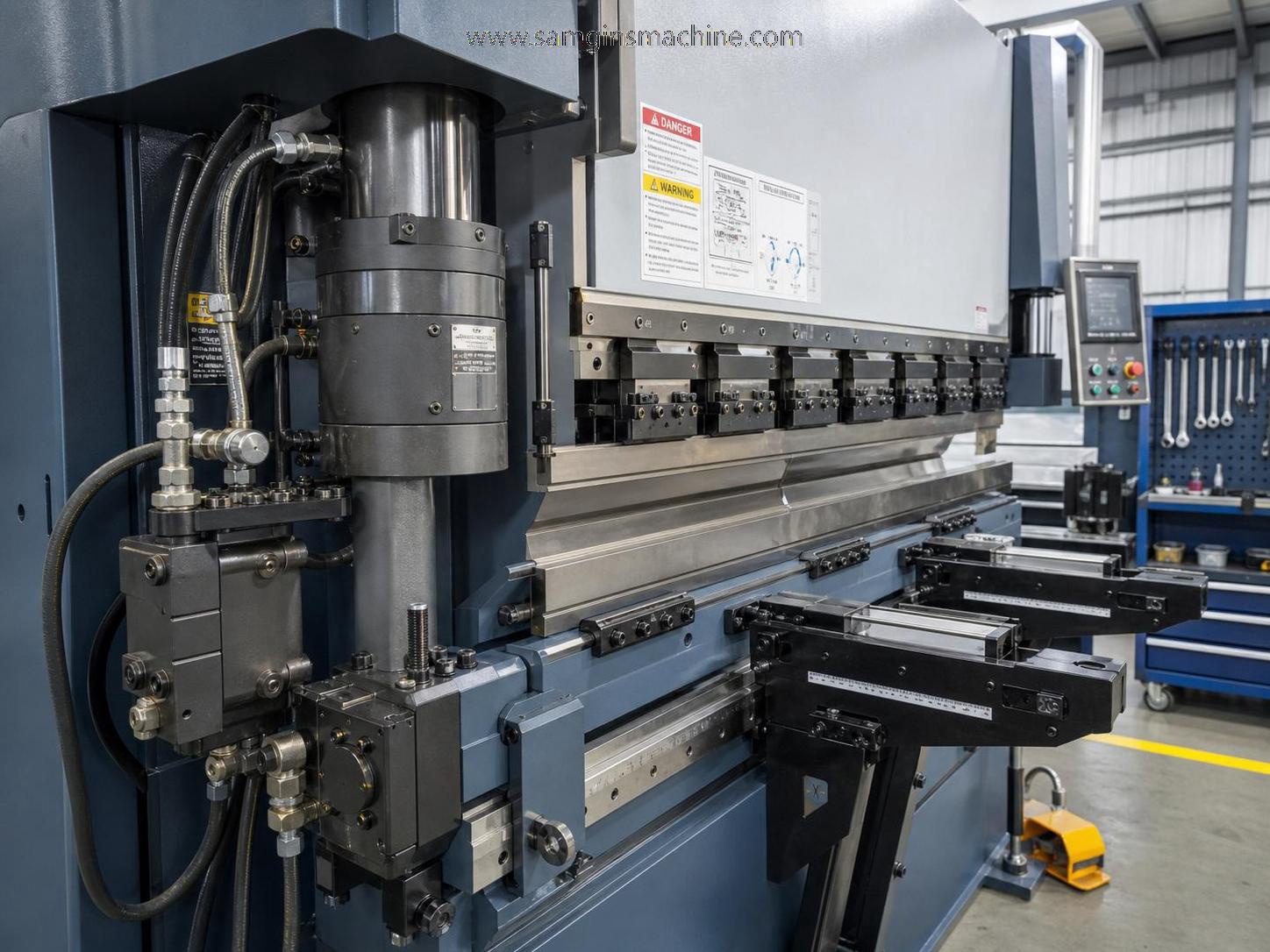
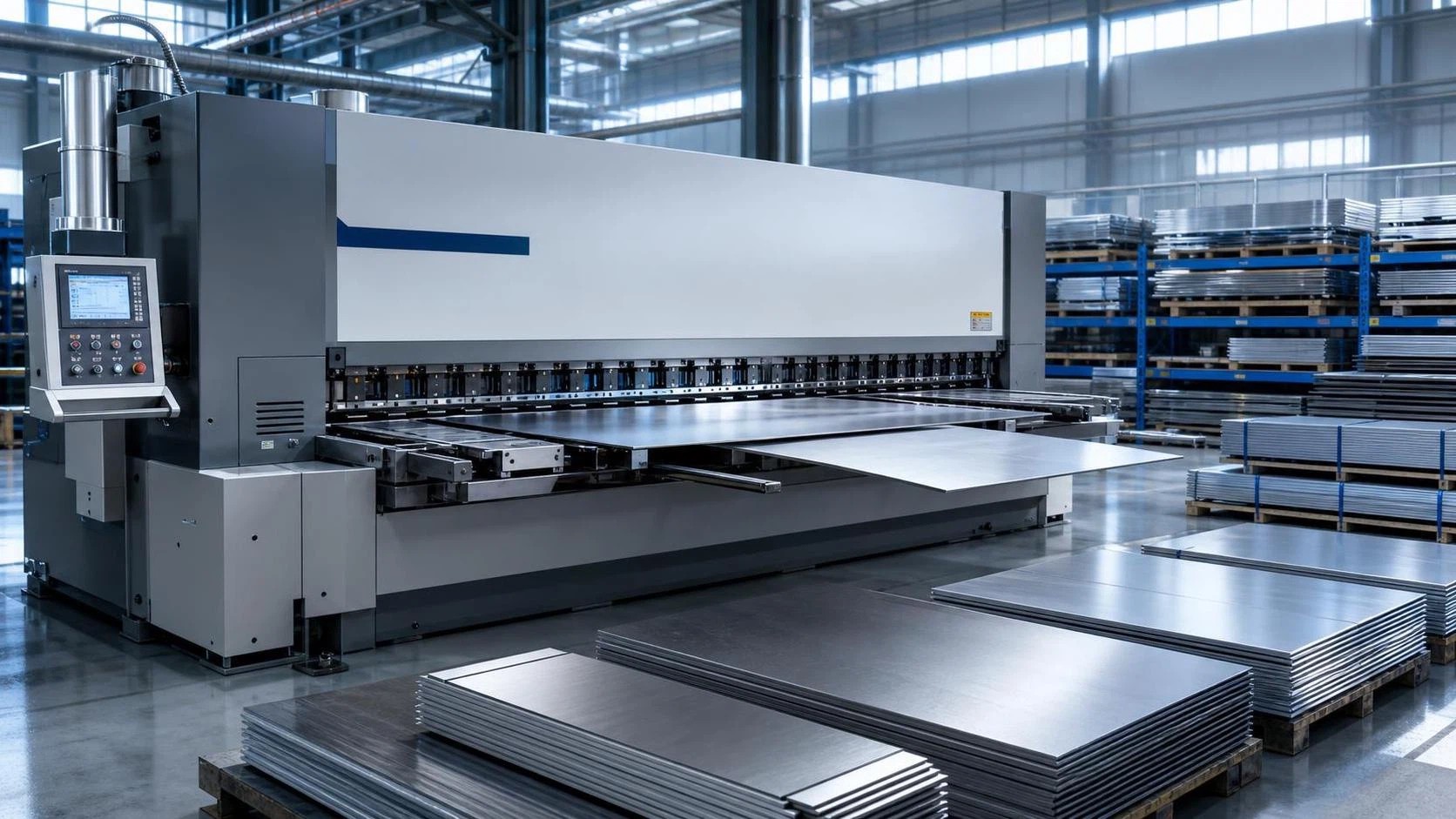
Swing Beam Hydraulic CNC Shear Explained: Key Working Principles, Applications, and Selection Essentials
What A Swing Beam Hydraulic CNC Shear Is
A swing beam hydraulic CNC shear is a plate and sheet cutting machine designed to make straight-line cuts by driving the upper blade in an arcing motion around a pivot point. Hydraulic cylinders provide the cutting force, while the CNC system controls critical functions such as backgauge positioning, stroke setting, cut count, and program storage. In practical factory use, it is valued for stable performance, fast setup, and a structure that is easier to maintain than many more complex cutting systems.
This machine is widely used in metal fabrication shops processing carbon steel, stainless steel, aluminum, and similar materials within the machine's rated thickness and tensile strength. It is commonly selected for blanking panels, cabinet parts, duct sections, structural plates, machine covers, and many other rectangular or strip components that require consistent edge quality before bending, welding, or assembly.
The term CNC in swing beam hydraulic CNC shear does not mean the machine performs freeform cutting like laser or plasma equipment. Instead, it means key motion elements are digitally controlled for repeatability. Operators can store dimensions, sequence batch jobs, and reduce manual positioning errors. This matters in B2B production because consistency across shifts and across different operators often has more financial impact than peak cutting speed alone.
From an industrial standards perspective, buyers typically evaluate blade material, frame rigidity, hydraulic stability, backgauge repeatability, electrical safety, and compliance with common quality and machinery requirements in the destination market. Wuxi Samgins positions this type of equipment within a broader metalworking portfolio, which is useful for buyers who want shearing, bending, drilling, welding, and cutting equipment from one coordinated supply base.
How The Working Principle Supports Production
The cutting action of a swing beam hydraulic CNC shear begins when the sheet is aligned against the front supports and located by the backgauge. The hold-down system secures the workpiece to reduce lifting or movement during the cut. Once the cycle starts, hydraulic pressure drives the upper blade downward in a swinging path relative to the fixed lower blade. The material is separated by shearing force generated between the two blades.
Blade clearance is a key technical variable. If the clearance is too small, blade wear rises and burr risk can increase on some materials. If it is too large, the cut edge can degrade, and deformation may become more visible. A well-configured swing beam hydraulic CNC shear allows operators to match clearance, stroke length, and cutting sequence to material thickness and grade, which helps protect both blade life and part quality.
The CNC control improves process discipline. Instead of relying entirely on handwheel adjustment and operator memory, the machine can repeat backgauge distances and cutting steps more accurately over long production runs. For batch production, this reduces measuring time between cuts and lowers the chance of dimension drift. In many factories, this is where a CNC shear creates value: not by replacing all downstream inspection, but by making the process more predictable and less dependent on individual habit.
Hydraulic drive systems also contribute to the machine's appeal. Compared with purely mechanical shears, hydraulic systems generally offer smoother motion, adjustable force behavior, and reliable operation across varied plate thicknesses. When key hydraulic, servo, and CNC components come from established imported brands, as emphasized by Wuxi Samgins, buyers often gain better long-term stability, easier spare-part planning, and more confidence in continuous operation.
Main Types And Where Swing Beam Fits
Within the sheet metal shearing category, buyers usually compare manual shears, mechanical shears, hydraulic swing beam shears, and hydraulic guillotine shears. Manual and simple mechanical equipment may be sufficient for low-volume or thin-sheet tasks, but they are rarely the preferred choice when buyers need high repeatability, better operator ergonomics, and programmable positioning. Hydraulic systems become more attractive as thickness, width, and production discipline requirements increase.
A swing beam hydraulic CNC shear is often chosen for its practical balance between cost, usability, and performance. It is frequently considered easier to operate and maintain than more advanced alternatives while still delivering strong productivity for standard plate cutting. For many general fabrication businesses, this makes it a sensible first CNC shearing investment, especially when the production mix includes repeated rectangular parts rather than highly varied heavy-plate work.
Guillotine shears, by comparison, move the upper blade in a more vertical path and are often favored for applications demanding tighter control over certain edge and geometry factors, especially on thicker or more demanding materials. That does not make one design universally better. The decision depends on material range, tolerance expectations, part geometry, daily volume, maintenance capability, and budget. A buyer comparing machines only by nominal thickness capacity may miss the real operational differences.
In a broader production line, a swing beam hydraulic CNC shear often works upstream of press brakes, welding stations, edge milling machines, deburring equipment, or rolling machines. Because Wuxi Samgins supplies shearing machines together with CNC press brakes, rolling machines, welding systems, drilling machines, and cutting machines, the company can support buyers building an integrated fabrication workflow instead of purchasing isolated machines that may be harder to coordinate later.
Who Uses It And Why It Matters
Typical users of a swing beam hydraulic CNC shear include sheet metal fabricators, steel structure manufacturers, enclosure and cabinet producers, HVAC duct shops, agricultural equipment factories, transport body builders, and workshops serving general industrial maintenance. In these environments, straight cutting remains a high-frequency operation, and even small gains in setup speed or dimensional consistency can improve output across an entire shift.
The machine is especially suitable for buyers whose parts follow repeatable dimensions and whose production plans involve moderate to high batch quantities. If operators repeatedly cut strips, blanks, side panels, gussets, reinforcement plates, and similar profiles, the CNC backgauge function becomes commercially important. It shortens non-cutting time and reduces scrap caused by incorrect manual stops.
In the manufacturing and processing machinery sector, the importance of a swing beam hydraulic CNC shear is not limited to cutting itself. The accuracy of the first blank influences downstream bending angles, weld fit-up, assembly efficiency, and final visual quality. Poor shearing can create burrs, dimensional mismatch, and rework that later appears in press brake, welding, or painting stations. This is why experienced buyers evaluate the machine as part of the whole process chain rather than as a standalone cost item.
Wuxi Samgins has a broad equipment range spanning welding manipulators, welding rotators, H-beam lines, fiber laser cutting machines, press brakes, rolling machines, drilling machines, and shearing machines. For a B2B buyer, that matters because many projects combine plate preparation, structural fabrication, and welding automation. A supplier familiar with these adjacent processes is often better positioned to discuss practical matching between the shear and the rest of the workshop layout.
Selection Essentials Buyers Should Check
The first selection factor is material range. Buyers should define not only maximum thickness and width, but also the material grades they process most often. Carbon steel, stainless steel, and aluminum behave differently, and tensile strength directly affects cutting force requirements. A machine sized only for occasional peak thickness may underperform if the everyday workload includes higher-strength material close to its limit. Clear production data is more useful than broad assumptions.
The second factor is dimensional repeatability. Backgauge travel, positioning accuracy, stop stability, and controller usability all influence whether the machine supports real batch efficiency. Buyers should ask how programs are stored, how quickly dimensions can be changed, whether operators can edit jobs easily, and how the machine behaves after extended repetitive use. A swing beam hydraulic CNC shear that saves time only on paper but frustrates operators in real use will not deliver expected return.
The third factor is structural and component quality. Frame rigidity, blade holder design, hydraulic sealing quality, electrical cabinet layout, and the origin of key hydraulic, servo, and CNC components have direct impact on operating stability. Wuxi Samgins highlights the use of world-famous imported brands for key components, which is relevant for buyers seeking longer service life and more dependable precision in daily production rather than focusing only on the purchase price.
The fourth factor is integration and support. Buyers should confirm power requirements, operator safety configuration, spare blade availability, documentation quality, installation scope, and after-sales response. For export projects, familiarity with ISO9001 systems and EU CE machinery and LVD expectations is useful. Wuxi Samgins states compliance with these frameworks and emphasizes support from design and manufacturing through after-sales service, which can reduce project uncertainty for overseas customers.
Applications, Standards, And Global Project Context
A swing beam hydraulic CNC shear is commonly applied in steel service and fabrication environments where straight cuts feed press braking, seam welding, frame assembly, and plate rolling. Typical sectors include storage tanks, pipelines, structural steel, machine enclosures, electrical cabinets, vehicle components, construction support parts, and workshop-made industrial accessories. In these settings, the machine contributes most when it is linked to a disciplined production sequence and proper material handling.
For international buyers, application suitability also intersects with market access and plant standards. The machine itself must align with common safety expectations, while the supplier should understand how the shear fits into broader customer requirements for fabrication quality, electrical conformity, maintenance documentation, and operator training. Wuxi Samgins notes export experience of more than 10 years and familiarity with codes such as ASME and API in related industries, which can be useful when the sheared parts flow into regulated tank, pressure-related, or structural projects.
The company references customers such as URALSTANKOIMPORT, MD Calbah Industries Pty Ltd, Ersay International Transport, Zein Steel Industries Co. LLC, PT.Cahaya mas Cemerlang, Estructuras Metalicas Girders Chile Limitada, and Lincoln Electric-MENA. These names should be read as export project references rather than universal proof for every application, but they do indicate exposure to different industrial environments and buyer expectations across regions.
Where a buyer is planning a fuller workshop upgrade, the swing beam hydraulic CNC shear is often best evaluated together with recommended companion equipment such as a CNC press brake, plate rolling machine, edge milling machine, welding rotator, or welding robot. This is one area where Wuxi Samgins has a practical advantage: it can discuss not only the shearing stage, but also how cut blanks move into bending, welding, drilling, and finishing operations without creating avoidable bottlenecks.
Maintenance, Service Life, And Future Trends
A swing beam hydraulic CNC shear should be maintained on a routine schedule based on operating hours, material type, and production intensity. Daily checks usually include blade condition, hydraulic leaks, hold-down behavior, backgauge movement, lubrication points, and basic machine cleanliness. At longer intervals, buyers should review hydraulic oil condition, seal wear, electrical connections, fastener security, and calibration of the backgauge and cutting settings. Preventive maintenance is less expensive than production stoppage caused by drifting accuracy or unplanned component failure.
Blade management deserves special attention. Even a strong machine will underperform if blades are dull, chipped, or incorrectly adjusted. Buyers should confirm blade material, edge regrinding practice, spare availability, and the technical guidance provided for setting blade clearance by material and thickness. For many factories, a disciplined maintenance checklist similar in importance to press brake maintenance planning can significantly reduce downtime and protect part quality across the entire sheet metal line.
Looking ahead, the future trend for this equipment category is not necessarily radical reinvention, but smarter usability and better production visibility. Buyers increasingly expect more intuitive controllers, easier recipe management, servo-efficient backgauge systems, remote diagnostics, and better compatibility with connected workshop planning. Energy efficiency, operator safety, and faster setup across mixed jobs are also becoming more important selection drivers.
At the same time, the market still values robust fundamentals: rigid frames, stable hydraulics, reliable imported key components, and service support that continues after shipment. That is why many buyers continue to compare a swing beam hydraulic CNC shear not only by brochure features but by the supplier's real manufacturing depth, export communication quality, and ability to support installation, commissioning, spare parts, and process advice over the machine's working life.
Total Cost Of Ownership And ROI Thinking
The purchase price of a swing beam hydraulic CNC shear is only the starting point. Total cost of ownership includes freight, installation, operator training, power consumption, hydraulic oil service, blade maintenance, spare parts, downtime risk, and scrap generated by poor repeatability. A cheaper machine can become expensive if it causes frequent resets, unstable cut quality, or long delays when technical support is needed. Serious buyers should compare lifecycle cost, not just quotation totals.
Return on investment usually comes from four areas: reduced labor time per batch, lower scrap, smoother downstream bending and welding, and higher machine uptime. If the CNC backgauge reduces repeated measuring, and if stable hydraulic performance lowers rework, the savings accumulate quickly in medium-volume production. For factories moving from manual or older shearing equipment, the operational discipline gained from digital control is often a major part of the payoff.
Buyers should also evaluate supplier scope when calculating value. If the same supplier can support shearing, bending, welding, and other fabrication stages, coordination cost may decrease during procurement, commissioning, and later service. Wuxi Samgins benefits here because its product range covers many of the adjacent machines used in structural steel, tank, pipeline, and sheet metal factories, allowing a more unified equipment planning approach.
A practical buying conclusion is this: choose the swing beam hydraulic CNC shear that fits your material mix, daily batch profile, required repeatability, and service expectations. The best commercial decision is rarely the most advanced specification on paper. It is the machine that maintains reliable output, integrates cleanly into your production flow, and is backed by a supplier capable of supporting the equipment long after delivery.
search
Recommended Products
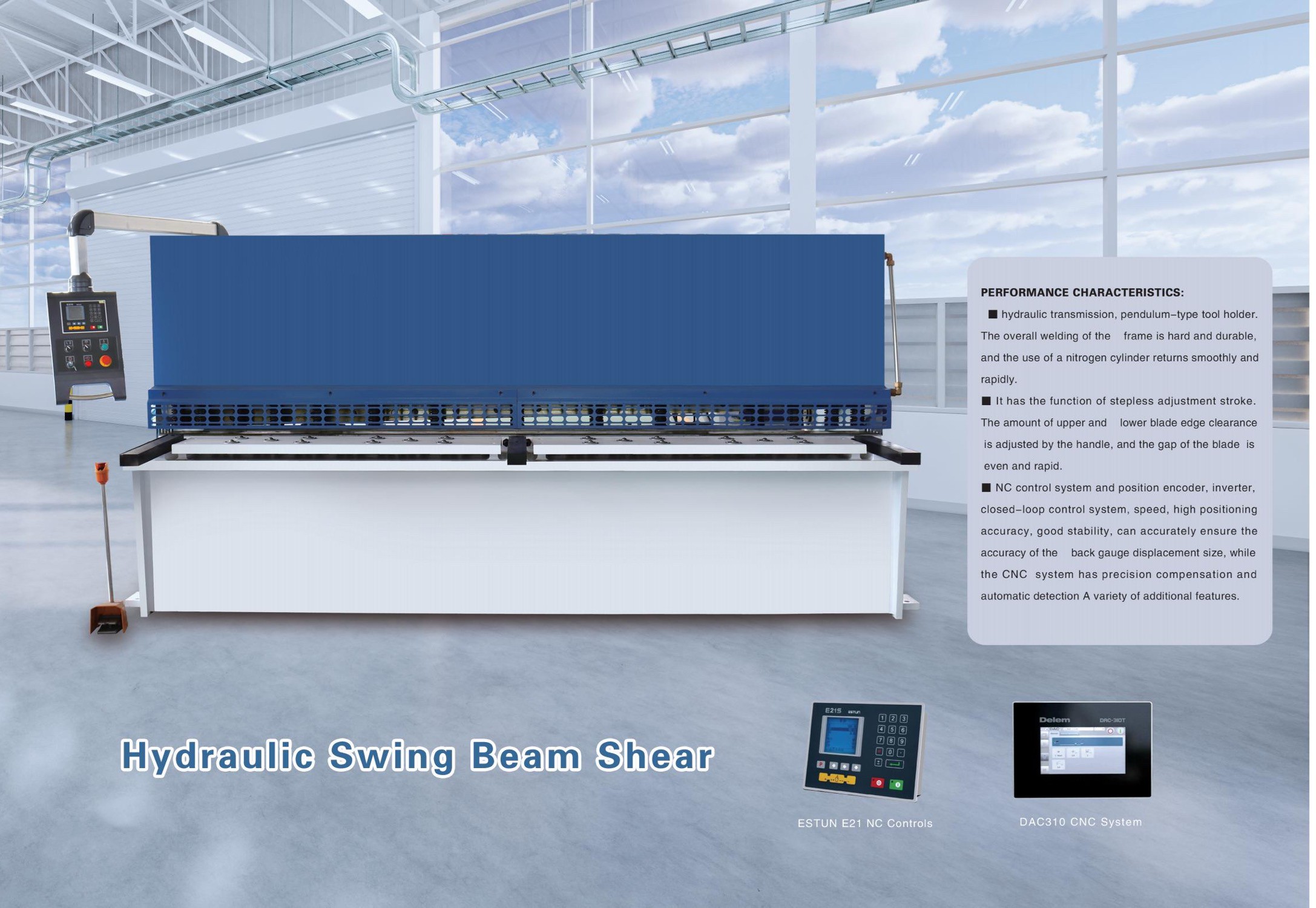
 Hydraulic Swing Beam ShearA shearing machine is a piece of equipment that uses a blade performing reciprocating linear motion to cut sheet metal. It operates with a moving upper blade and a fixed lower blade, set at an appropriate clearance, to apply shearing force to metal sheets of varying thicknesses. This force causes the material to fracture and separate along the required dimensions.
Shearing machines belong to the category of forging machinery and are primarily used in the metal processing industry. Their products are widely applied across numerous sectors, including aviation, light industry, metallurgy, chemical engineering, construction, shipbuilding, automotive, power generation, electrical appliances, and decoration, providing essential specialized machinery and complete equipment for these fields.![星星1]()
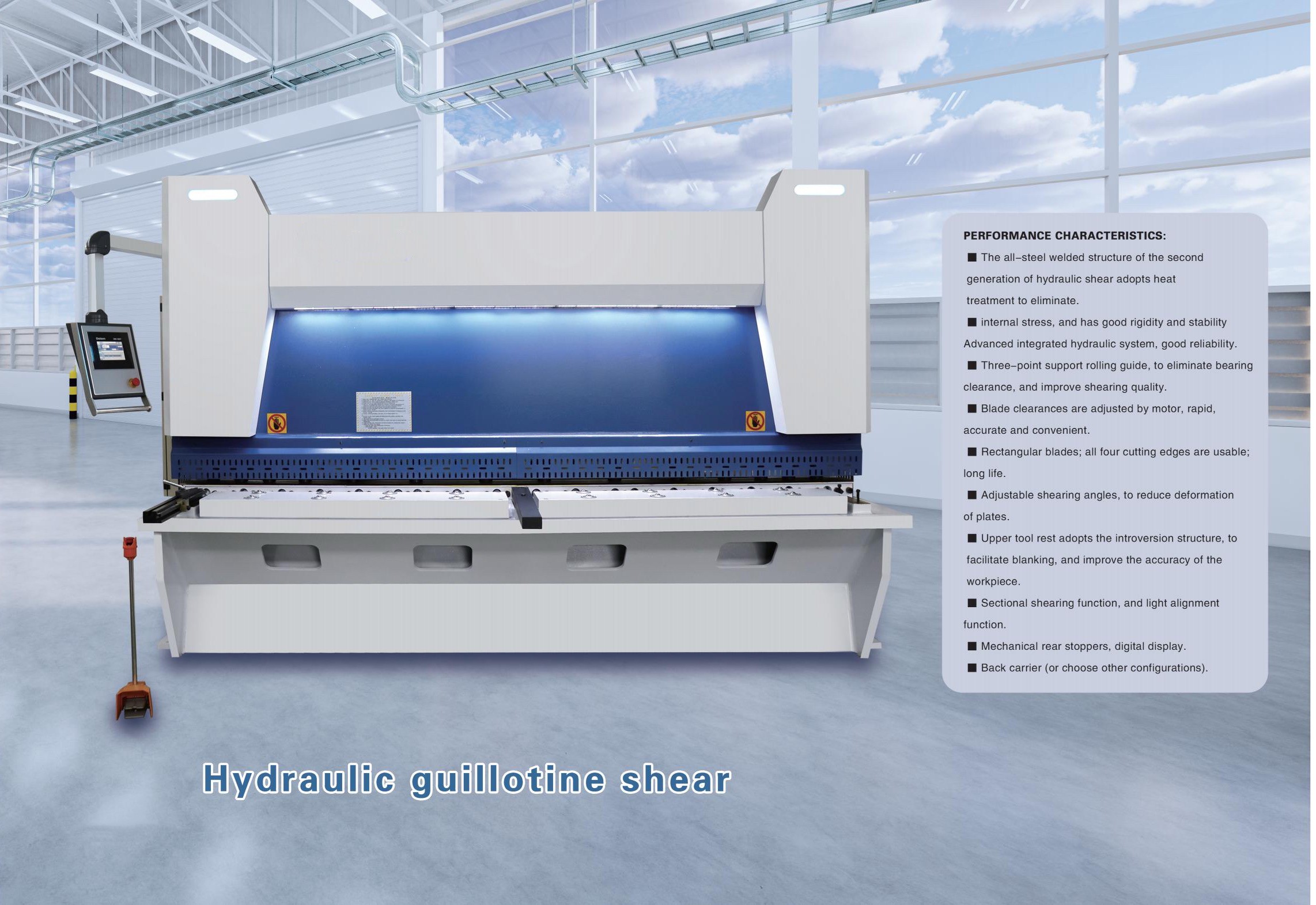
 Hydraulic guillotine shearA shearing machine is a machine that uses one blade to perform reciprocating linear motion to shear the sheet metal. It relies on the moving upper blade and the fixed lower blade, with a reasonable blade gap, to apply shear force to various thicknesses of metal sheets, causing the sheets to break and separate according to the required dimensions. Shearing machines belong to a type of forging machinery and are mainly used in the metal processing industry. The products are widely applicable to industries such as aviation, light industry, metallurgy, chemical industry, construction, shipbuilding, automobiles, power, electrical appliances, and decoration, providing the necessary specialized machinery and complete equipment.
![星星1]()

Send Us A Message
Send us a Message
A dedicated person will follow up on your needs one-on-one and provide personalized customized solutions according
to your needs.
Get In Touch
We look forward to hearing from you for in-depth communication on how to fulfill your mixing requirements.