




Laser Welding Equipment and Machines: Key Differences Between Disk, Fiber, and Direct-Diode Lasers for Thin-Gauge Stainless Steel Seam Welding
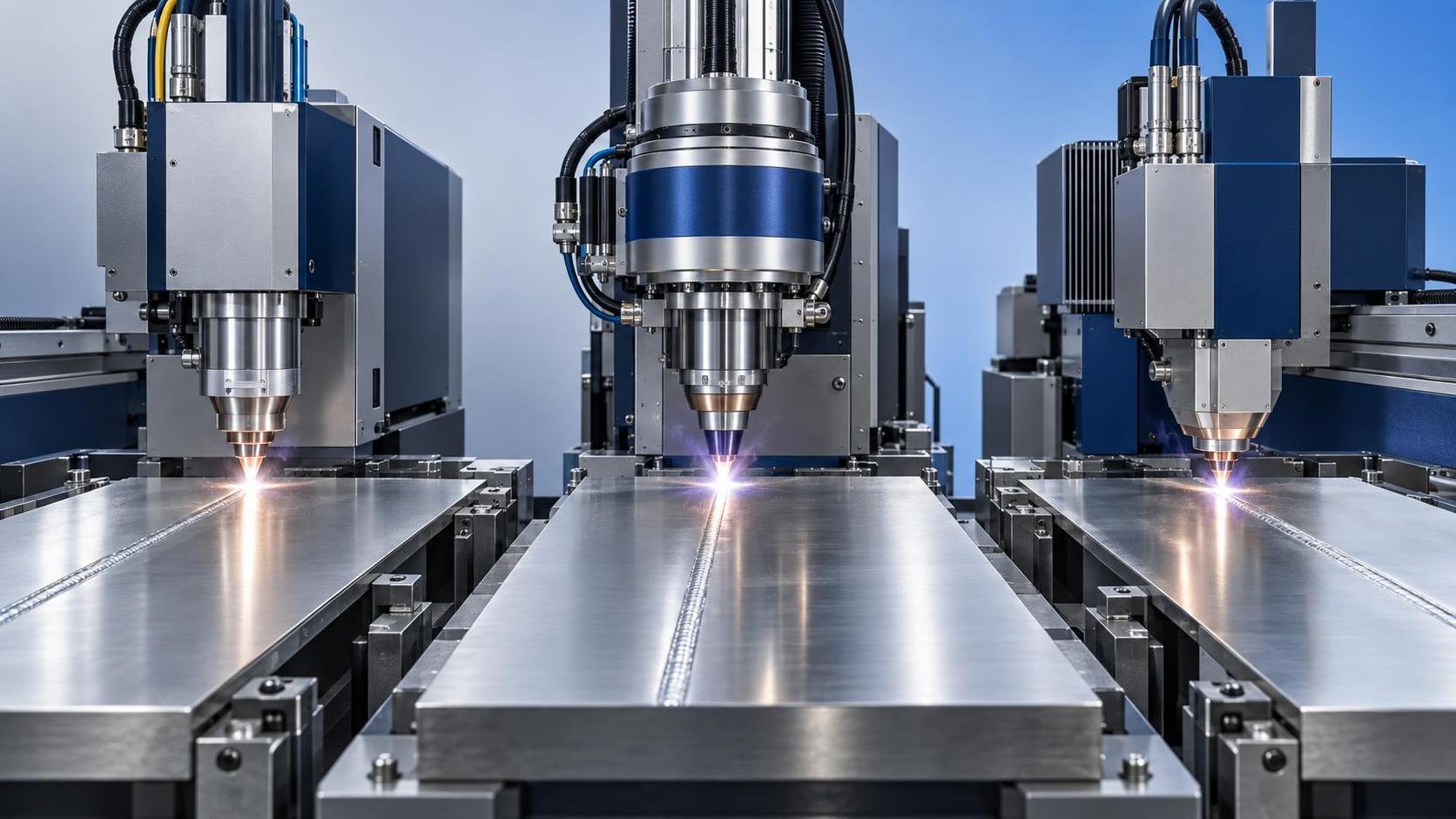
Selecting the right Laser Welding Equipment and Machines for thin-gauge stainless steel seam welding isn’t about choosing the highest power or newest label—it’s about matching beam physics to material behavior. Technical evaluators routinely face inconsistent penetration, spatter, or joint distortion when welding 0.5–2.0 mm austenitic stainless steels—especially in continuous seam applications like heat exchanger tubes, food-grade enclosures, or precision instrumentation housings. These issues rarely stem from operator error alone; they trace directly to how each laser source interacts with stainless steel’s high reflectivity, low thermal conductivity, and narrow liquidus–solidus range.
The three dominant industrial sources—disk, fiber, and direct-diode lasers—deliver identical nominal power on paper, but their optical properties produce measurably different outcomes in real-world thin-gauge seam welds. Wuxi Samgins International Trade Co., Ltd., an ISO9001- and CE-certified supplier with over a decade of field deployment data across Southeast Asia, Europe, and the Americas, observes consistent performance boundaries across these technologies—not theoretical limits, but repeatable thresholds observed during validation testing on production-grade 304 and 316L sheets.
Beam Quality and Power Stability: Where Theory Meets Thin-Gauge Reality
Stainless steel absorbs near-infrared (NIR) light poorly below 1 µm—especially at room temperature. At 1070 nm (fiber), absorption starts around 12–15%. At 1030 nm (disk), it’s marginally higher (~14–17%). Direct-diode lasers operating at 9xx nm (e.g., 940 nm) push absorption to 20–24% under clean, oxide-free conditions. But absorption alone doesn’t guarantee weld quality. Beam quality (M²) governs focusability and depth-to-width ratio—critical for controlling heat input in thin sections.
Fiber lasers typically achieve M² < 1.1, enabling spot diameters down to 20–30 µm. Disk lasers operate at M² ≈ 1.2–1.4—still excellent, but with slightly larger focal spots and lower peak intensity. Direct-diode systems currently deliver M² > 20–50, meaning their “beam” is inherently multimode and less focusable. This isn’t a flaw—it’s a trade-off. Diode lasers compensate with higher absorption and superior wall-plug efficiency, but require wider focal spots (100–300 µm) and slower traverse speeds to avoid burn-through.
Thermal Interaction and Process Window
Thin-gauge stainless steel has minimal thermal mass. Excess energy density causes vaporization, keyhole instability, or excessive melt pool turbulence—leading to porosity or micro-cracking. Too little energy yields incomplete fusion or cold lap. The practical process window—the range of power, speed, and focal position that produces full-penetration, spatter-free seams—is narrower than most technical datasheets imply.
- Fiber lasers excel where narrow, deep seams are required (e.g., hermetic tube welding). Their high brightness enables stable keyhole mode even at 1–2 kW, but demand precise joint fit-up (< 0.05 mm gap) and strict surface cleanliness. Any oxide layer or minor contamination triggers reflection spikes and arc-like disturbances.
- Disk lasers offer broader tolerance for minor surface variation due to slightly lower peak intensity and smoother power delivery. They maintain stable conduction-mode welding up to ~1.8 kW on 1.0 mm 304—ideal for cosmetic seam sealing where minimal HAZ and no backside oxidation matter.
- Direct-diode lasers operate almost exclusively in conduction mode for thin stainless. No keyhole means no spatter, no plasma shielding issues, and lower sensitivity to gap or misalignment. However, achieving full penetration in 1.5 mm material requires ≥ 3 kW and careful beam shaping—often using line-focused optics rather than point focus.
Integration Readiness and System-Level Constraints
Technical evaluation extends beyond the laser source itself. Beam delivery, motion control, seam tracking, and real-time monitoring must align with the laser’s physical behavior. Fiber lasers integrate seamlessly with standard galvo scanners and robotic arms—but their sensitivity to back-reflection demands robust isolators and frequent maintenance of protective windows. Disk lasers require more complex cooling infrastructure and larger footprints, limiting retrofit options in space-constrained lines. Direct-diode systems simplify cooling (lower waste heat) and eliminate fiber coupling losses, but their beam geometry often necessitates custom collimation and focusing optics—adding lead time and calibration complexity.
For shops producing structural components requiring both precision seam welds and downstream identification—such as tower sections, pressure vessel skirts, or modular HVAC ductwork—the integration path matters. Seam integrity and part traceability are interdependent. A system that delivers optimal weld parameters but lacks native marking capability introduces secondary handling, alignment errors, and potential rework. That’s why many evaluators now assess laser welding platforms alongside complementary processes like punching and marking—especially when fabricating steel plates destined for assembly into larger subassemblies.
In such cases, integrated solutions reduce cycle time without compromising precision. For example, the CNC Punching And Marking Machine For Steel Plates allows simultaneous punching and alphanumeric marking on the same steel plate in one setup—eliminating repositioning between welding and identification steps. Its servo-driven X/Y axes (±0.05 mm repeatability), rolling-ball worktable, and TEKLA-compatible NC1 file support ensure alignment consistency across fabrication stages—even when weld seams later serve as datum references for hole patterns.
Material-Specific Considerations Beyond Laser Type
Stainless steel grade, surface condition, and shielding gas selection interact strongly with laser choice:
- 304L and 316L behave similarly under laser irradiation, but 316L’s molybdenum content increases viscosity in the melt pool—slightly widening the acceptable speed range for fiber lasers.
- Mill-scale or annealed surfaces reduce absorption by 3–5 percentage points versus pickled or electropolished finishes—making direct-diode’s higher base absorption more advantageous in uncleaned production environments.
- Helium shielding improves penetration depth but raises cost; argon-nitrogen mixes suppress nitrogen pickup in 316L while maintaining stable arc-free welding—particularly important with disk and fiber sources where plasma formation is more likely.
Decision Framework for Technical Evaluators
Ask not “which laser is best?” but “what failure modes can’t be tolerated—and which source constrains them most reliably?”
- If seam consistency across variable surface conditions is paramount—and post-weld grinding is unacceptable—prioritize disk lasers for their stability in conduction mode.
- If maximum throughput on tight-tolerance joints (≤0.1 mm gap) is critical—and surface prep is controlled—fiber lasers deliver the narrowest HAZ and highest travel speeds.
- If minimizing spatter, eliminating backside discoloration, and reducing gas consumption are primary goals—and seam width can exceed 0.8 mm—direct-diode offers compelling operational economics despite wider focus requirements.
No single source dominates all thin-gauge stainless steel seam welding applications. The optimal choice emerges from mapping process constraints—not laser specifications—to actual production conditions. Wuxi Samgins supports this mapping with application-specific test protocols, not generic power charts, ensuring engineers validate performance on their own materials, fixtures, and joint geometries before committing to system integration.
search
Products Navigation
Send Us A Message