




MGH Hydraulic Swing Beam Shear: What Impacts Operating Cost Most?
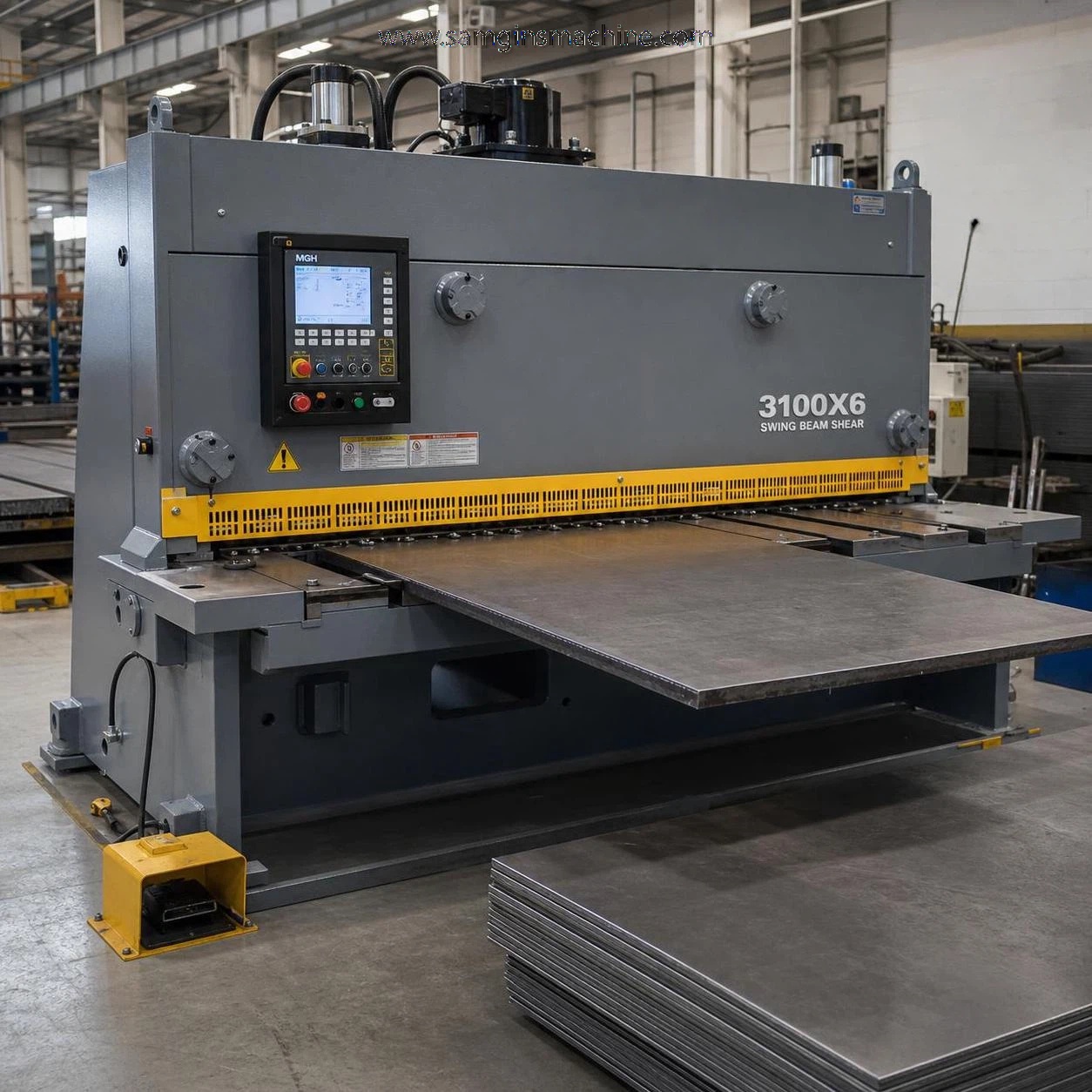
MGH Hydraulic Swing Beam Shear: What Impacts Operating Cost Most?
For finance approvers evaluating an mgh hydraulic swing beam shear, the purchase price is only the beginning. Real operating cost is shaped by energy use, blade life, maintenance frequency, downtime risk, and long-term cutting stability. Understanding which factors drive expenses most can help your team compare suppliers more accurately, control total cost of ownership, and make a smarter equipment investment.
If you are signing off on capital equipment but do not run the machine yourself, here is the practical way to look at it: the lowest quotation rarely delivers the lowest annual cost. On swing beam shears, the expensive mistakes usually come from underestimating how much poor blade life, unstable clearance, or one week of unplanned stoppage can cost once production starts. That is where most budgets get hit.
Start with the cost line that usually matters most: downtime
In many sheet metal shops, lost production hours outweigh differences in power consumption or even routine maintenance. A shear that stops because of hydraulic leakage, electrical faults, blade chipping, backgauge inaccuracy, or poor spare parts support can become the most expensive machine on the floor, even if it looked attractive on the quotation sheet.
This is the first check I would use in procurement review: ask each supplier what the expected wear parts list is, what the recommended service intervals are, and how quickly they can ship parts to your region. If that answer is vague, operating cost is still unknown. For buyers serving export markets or tight contract schedules, that uncertainty is a financial risk, not a technical detail.
- Ask for the standard spare parts package and what is included in commissioning support.
- Check whether hydraulic seals, valves, electrical components, and blades are standard market items or supplier-specific parts.
- Confirm remote support hours and whether English technical documentation is available.
- If the supplier cannot define lead time for critical parts, budget for a higher downtime reserve.
Blade life is where cheap machines often become expensive
Finance teams often compare only the initial blade set, but ongoing blade cost is driven by cut quality, machine rigidity, clearance consistency, and the materials your plant actually processes. If your production includes stainless steel, thicker plate, or mixed batches with frequent setup changes, blade wear can accelerate fast when the frame, hold-down system, or adjustment system is not stable enough.
A useful question for suppliers is not simply, “What blade material do you use?” Ask what range of material thickness and tensile condition the quoted machine is intended for, and how blade clearance is set in daily operation. Manual adjustment is not automatically bad, but it does mean your cost control depends more heavily on operator discipline. In plants with frequent personnel changes, that matters.
When blade life is poorly managed, cost shows up in three places at once: blade replacement, scrap from rough edges or burrs, and rework in the next process. That is why a low-priced shear can quietly add cost to bending, welding, painting, or assembly.
Energy use matters, but usually less than people expect
Power consumption should be checked, especially for plants with high utilization or high local electricity rates. But in many buying decisions, energy is not the largest cost driver unless the machine runs continuously across multiple shifts. For a finance approver, the right question is whether the hydraulic system is efficiently designed for the duty cycle you expect, not whether one quoted motor rating looks slightly lower on paper.
Request the machine’s installed power, recommended operating conditions, and any available information on idle versus active consumption. Some suppliers can provide this clearly; some cannot. If not available, treat projected energy savings claims cautiously and mark them as 【待核实】 instead of building a payback model around them.
Also check whether your usage profile is realistic. A machine processing short batches with many operator pauses will not perform economically in the same way as one running long, repetitive cuts.
Cutting stability affects more downstream cost than many quotations show
This point is often missed in approval meetings because it is harder to see in a price table. A shear with inconsistent cut quality creates hidden cost in sorting, deburring, fit-up, and dimensional correction. If the cut edge quality drifts as the machine warms up, or if repeatability depends too much on operator judgment, production cost rises outside the shearing department.
That matters even more if the cut blanks move into automated or semi-automated lines. Shops that also run welding cells or seam automation know this well. For example, if your fabricated parts later feed equipment such as a Longitudinal seam welding machine, poor blank consistency can create alignment problems, extra tack work, or cosmetic defects downstream. The shear’s operating cost is then no longer confined to the shear itself.
This is why serious buyers ask for cutting samples on actual material grades and thicknesses when possible. Not polished showroom samples. Your material, your tolerances, your expected edge condition.
Maintenance frequency is a budget item, not just a service issue
Routine maintenance on an MGH hydraulic swing beam shear is normal. The problem is when the machine design makes routine work too frequent, too specialized, or too dependent on the original supplier. Hydraulic oil management, lubrication points, blade setting, electrical inspection, seal replacement, and backgauge calibration all consume labor hours. If your plant has a lean maintenance team, the administrative cost of keeping the machine healthy becomes real very quickly.
A practical approval checklist should include these questions:
Operator dependency can quietly inflate total cost
Two shears can have similar nominal capacity and very different real-world operating cost because one is forgiving and the other is not. If the control layout, backgauge setting, blade clearance adjustment, and safety interlocks are awkward, output quality becomes highly operator-dependent. In stable teams, that may be manageable. In factories with turnover, new shifts, or multi-product work, it becomes an avoidable cost source.
Ask how long the supplier expects a new operator to take before running standard work reliably. You may not get a precise answer, but the discussion itself is revealing. A supplier that understands production will talk about setup logic, training, material handling, and error points. A supplier that only repeats brochure specs usually cannot help you control labor-related cost after delivery.
Do not separate machine cost from material flow
An mgh hydraulic swing beam shear may be economical on paper and still underperform in your plant if loading, unloading, stacking, or part transfer are inefficient. This is especially relevant where sheets are large, cycle time is short, or labor cost is rising. A machine that requires more manual repositioning or creates more handling delay can erase the saving you thought you gained at purchase.
For finance review, look at the full process cell. Include operator count, average setup frequency, expected scrap handling, and whether the cut parts move into bending, machining, or welding. Manufacturers with broader fabrication experience, including companies supplying CNC cutting systems, welding automation, milling machines, lathes, and plate processing equipment, usually evaluate this better because they see the machine as part of a line rather than an isolated asset. That broader view often leads to a more accurate cost forecast.
Supplier discipline is part of operating cost control
This is not a soft factor. It changes cost. If the supplier has structured production control, documented quality procedures, and export experience, the chance of receiving a machine with unresolved assembly issues tends to be lower, although each case still needs verification. For international buyers, ISO9001-based management and CE-related compliance claims should be reviewed through actual documents, scope, and machine configuration rather than accepted at face value.
Wuxi Samgins International Trade Co., Ltd., for example, presents itself as a supplier of fabrication and metalworking equipment with export experience across Southeast Asia, Europe, the Americas, and Oceania, and states that production and design are organized according to ISO9001 quality system certification and EU CE standards. That kind of background can be useful in supplier screening, but the finance side should still ask for machine-specific documentation, parts commitments, and after-sales terms before assigning value to it.
What to ask before you approve the purchase
- What is the estimated annual wear-parts budget based on our material mix?
- Which failures stop production completely, and what are the replacement lead times?
- Can the machine hold cut quality across the thickness range we actually run, not just its maximum rating?
- What maintenance tasks must be done in-house, and which require supplier support?
- How much operator training is included, and what language is the documentation in?
- What downstream processes are sensitive to cut edge quality and dimensional repeatability?
If you can get clear answers to those six questions, you are already ahead of many purchasing decisions.
The short version is this: the biggest operating cost drivers on an MGH hydraulic swing beam shear are usually downtime, blade-related expense, process instability, and labor dependency. Energy use matters, but it is often not the first number that breaks the budget. Approve the machine that gives you predictable output, serviceable components, realistic support, and stable cutting over time. That is normally the one with the lower total cost of ownership, even when its quoted price is not the lowest.
search
Products Navigation
Send Us A Message