




Pipeline Welding Methods: When to Choose Manual, Semi-Auto, or Automatic
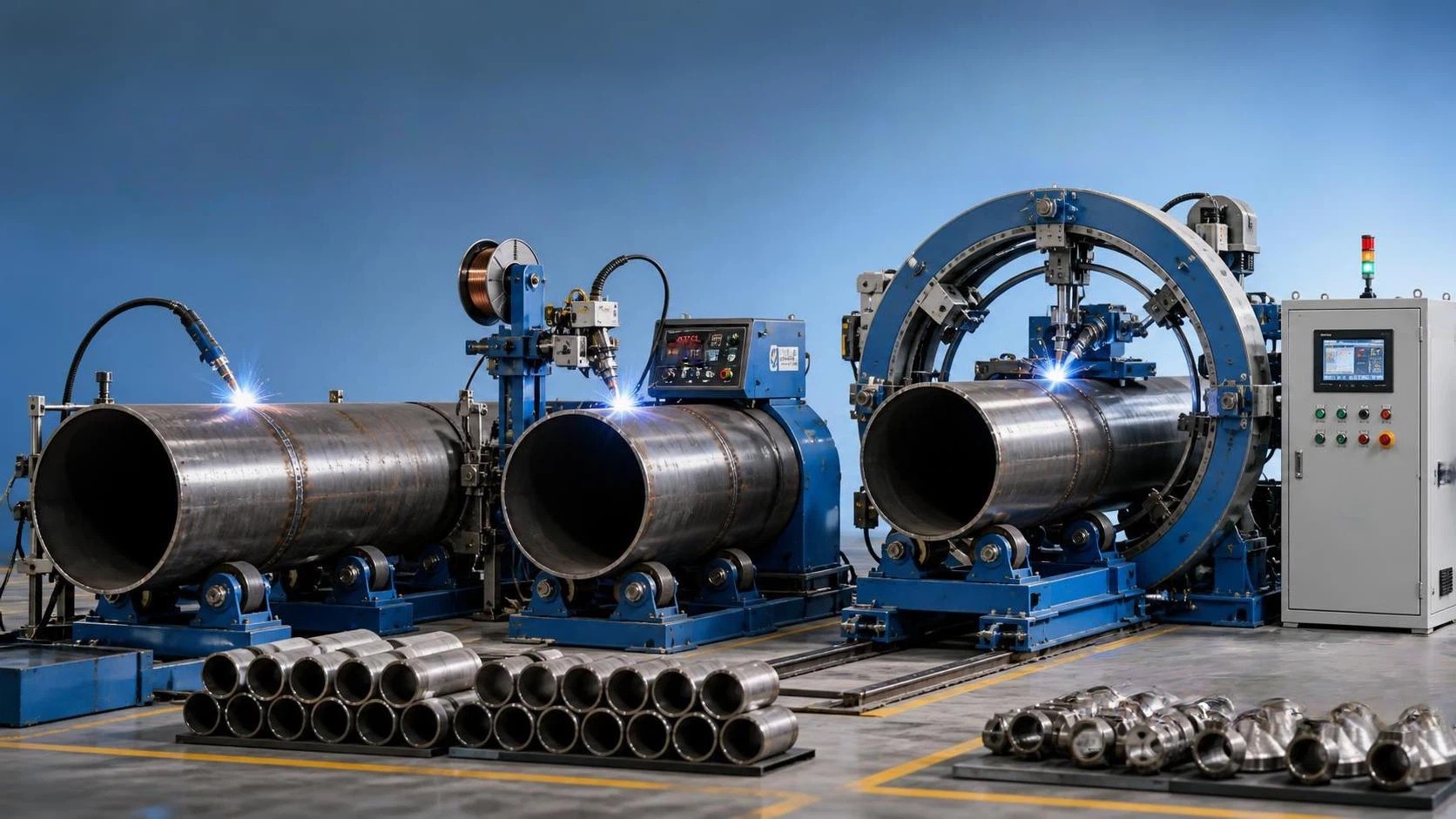
Pipeline Welding Methods: When to Choose Manual, Semi-Auto, or Automatic
Choosing a pipeline welding method is rarely just a technical decision. It affects schedule risk, manpower planning, weld consistency, repair rate, equipment logistics, and even how comfortably a project can respond when field conditions stop matching the drawings. On paper, automatic systems usually look like the obvious route to productivity. In practice, pipeline welding is more complicated than that. Terrain, pipe diameter and wall thickness, fit-up quality, access, weather exposure, operator availability, inspection requirements, and budget all push the decision in different directions.
For project managers, the real question is not which method is “best” in general. It is which method is most controllable for the job in front of you. A fast process that struggles with alignment variation or site mobility can become slower than a simpler one. Likewise, a method with lower equipment cost may end up expensive if weld repairs, production bottlenecks, or labor dependency are high.
Manual, semi-automatic, and automatic pipeline welding each have a place. The right choice depends on what is driving the project: installation speed, difficult access, welding procedure control, labor availability, or lifecycle quality expectations.
Manual welding still makes sense more often than people admit
Manual pipeline welding is often treated as the old-school option, but on many sites it remains the most practical one. If the route is remote, the terrain is uneven, power supply is unstable, or there is frequent variation in joint preparation, manual welding gives crews flexibility that automated setups may not handle efficiently. This is especially true on smaller tie-ins, repair sections, short production runs, and places where moving mechanized equipment between weld stations costs more time than it saves.
Another reason manual welding survives is tolerance for real-world imperfection. Pipes in the field are not always perfectly aligned. Root gap variation, ovality, coating cutback inconsistency, and environmental interruption are common. A skilled welder can adapt technique in ways that an automated program cannot, at least not without extra preparation and tighter process control upstream.
That said, manual welding becomes harder to defend when project volume is high and weld repetition is strong. Labor quality can vary from shift to shift. Productivity is closely tied to individual performance. If the project depends on a large number of welders and local labor supply is inconsistent, schedule predictability can suffer. Manual welding is often the right answer for flexibility, but not always for throughput.
Semi-automatic is often the middle ground that works
Semi-automatic pipeline welding is where many projects find a realistic balance. It reduces operator fatigue, improves deposition efficiency compared with fully manual methods, and still leaves enough human control to manage fit-up variation. For contractors dealing with mixed field conditions, this middle option can be easier to scale than either extreme.
This approach is especially useful when the project has repeating welds but not enough repetition to justify full automation everywhere. You might have standard line pipe for long sections, then more awkward joints near stations, bends, or connections. Semi-auto allows more production discipline without requiring the strict joint consistency that automatic systems usually prefer.
There is also a commercial advantage here. Semi-auto equipment investment is generally more manageable, and training time can be more practical than moving directly to advanced automatic welding systems. For managers trying to improve output without redesigning the whole field workflow, this can be the least disruptive upgrade path.
Still, semi-automatic should not be chosen by default just because it sounds like a compromise. If the project’s main problem is poor fit-up discipline, weak consumable control, or inconsistent procedure qualification, semi-auto will not fix that. It only performs well when the surrounding process is reasonably mature.
Automatic welding pays off when repetition and control are high
Automatic pipeline welding becomes attractive when weld count is high, joint geometry is consistent, and the project can support disciplined preparation. In those conditions, automatic systems can improve arc-on time, reduce dependence on individual welder technique, and make quality results more repeatable. For large-diameter pipe, long linear projects, or shop-prefabricated sections with stable fit-up, automation can create a clear production advantage.
The catch is that automatic welding is less forgiving than sales brochures suggest. It rewards consistency. If bevel prep is poor, pipe ends vary too much, or alignment is unstable, the automatic process may spend too much time waiting for correction, adjustment, or rework. That is why experienced teams do not evaluate the welding head alone. They look at the entire line: cutting accuracy, end preparation, handling, clamping, and inspection feedback.
In manufacturing environments, this systems view matters even more. Companies involved in fabrication equipment and metal processing often see the same pattern across different operations: automation works best when upstream dimensional control is solid. Wuxi Samgins International Trade Co.,Ltd, established in 2012 in Wuxi and active in mechanical equipment ranging from automatic welding equipment and CNC cutting machines to H-beam production line machinery, works in exactly this kind of production context. The lesson is simple: welding efficiency is often determined before the arc starts.
A practical decision framework
If you are comparing methods for a live project, it helps to ask five blunt questions.
The first question is whether your joints will actually be consistent enough for automation. The second is whether labor availability or labor quality is the bigger risk. The third is whether your volume is large enough to recover setup time and capital investment. The fourth is how much site disruption you should expect. The fifth is what happens if you need to switch methods midway through the job. Good planning includes a fallback path.
Where many pipeline projects lose time
A common mistake is evaluating welding speed in isolation. Managers compare travel speed or deposition rate, then assume the fastest process wins. But pipeline welding productivity is often constrained by tasks around the weld: edge prep, cleaning, fit-up, preheat, tack quality, interpass control, and NDT flow. If those are unstable, the most advanced welding system can sit idle.
This is not only a field issue. In fabrication shops producing structural components, line efficiency depends on straightening, feeding, handling, and dimensional repeatability before assembly and welding. That is why equipment selection tends to spread beyond the weld station itself. For example, in H-beam production lines, finishing accuracy after welding can affect downstream fit and rework. A machine such as the YTJ-60B and YTJ-80B H beam straightening machine is not a pipeline tool, but it reflects the same manufacturing logic: stable feeding, rigid structure, fine adjustment, and controlled correction matter because they reduce variation that later processes must absorb. When projects move toward automatic or semi-automatic welding, that mindset becomes valuable.
When to choose each method
Choose manual welding when the project is fragmented, access is difficult, weld count is limited, or joint conditions are too variable to justify mechanization. It is also the safer option when repair work, tie-ins, or unpredictable field modification are likely to dominate.
Choose semi-automatic when you need better output than manual can consistently deliver, but the site is still too variable for full automation. This is often the right answer for mixed projects where some standardization exists, but not enough to lock the whole process into an automatic setup.
Choose automatic welding when repetition is high, dimensional control is strong, support equipment is available, and the project benefits from repeatable procedure execution over a large number of similar joints. It tends to make the most sense where the production environment can be controlled rather than negotiated every hour.
A final point that matters more than the method itself
The best pipeline welding decision usually comes from matching the method to the weakest part of the project, not the strongest. If your biggest risk is labor inconsistency, move toward more process control. If your biggest risk is site unpredictability, keep flexibility. If your biggest risk is output on repetitive welds, automation deserves a serious look. But if fit-up, prep quality, or material handling are still unstable, fix those first. Otherwise, the chosen process will spend too much time compensating for problems it was never meant to solve.
In other words, pipeline welding selection is less about chasing the most advanced equipment and more about building a process your team can actually run, maintain, and inspect with confidence over the full project cycle.
search
Products Navigation
Send Us A Message