




Press Brake Market Trends in 2026: Automation and Cost Pressure
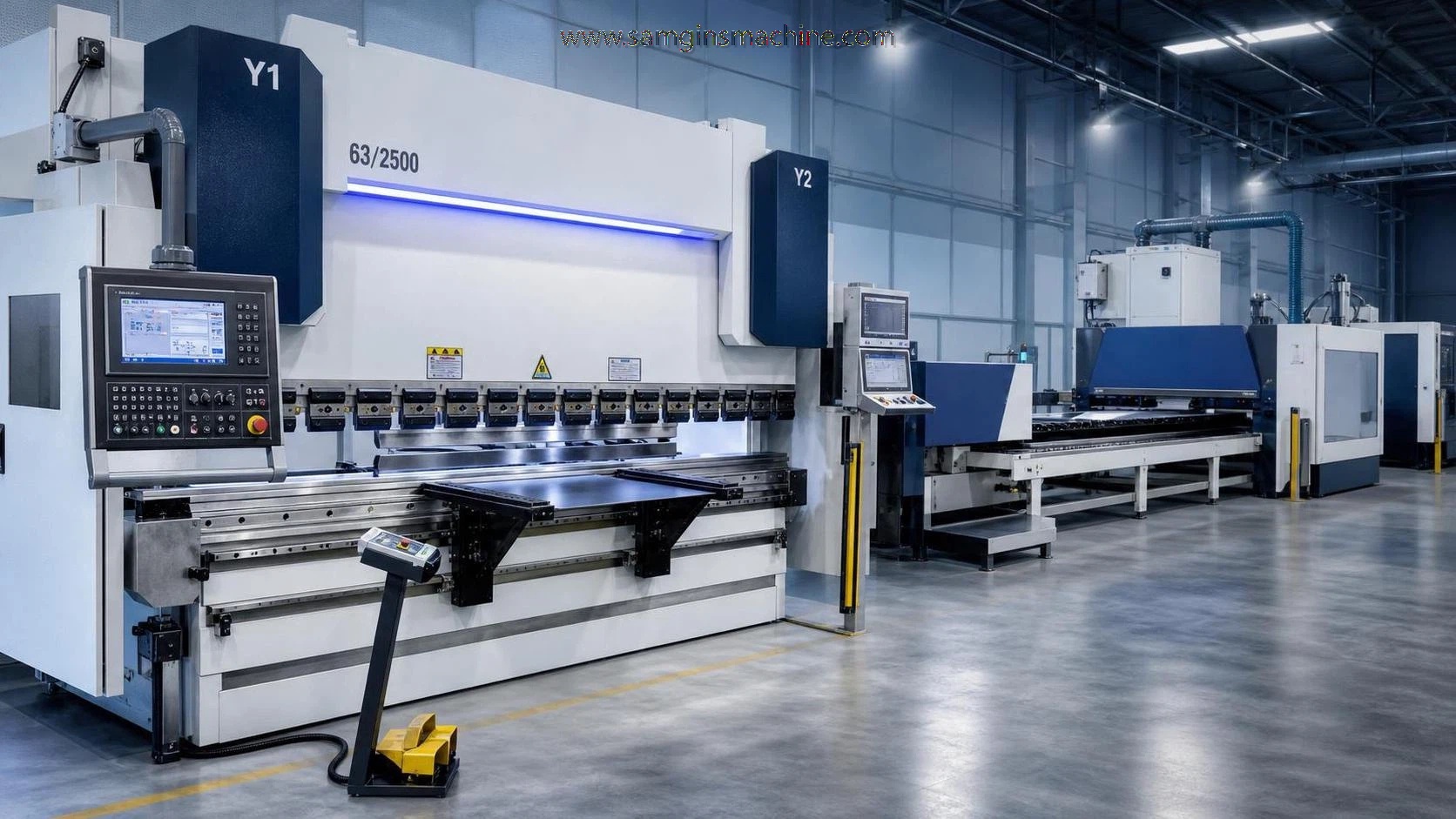
Press brake demand is shifting from capacity to total operating value
The press brake market in 2026 is no longer defined by tonnage alone.
What matters now is how a press brake performs under tighter labor supply, thinner margins, and rising quality expectations.
That shift is changing buying behavior across metal fabrication, structural steel processing, and general machinery production.
In practical terms, equipment decisions are being judged against output stability, programming speed, energy use, maintenance burden, and payback visibility.
This is especially relevant in export-oriented supply chains, where delivery reliability and repeatable part accuracy often matter more than a headline machine specification.
For companies active across Southeast Asia, Europe, the Americas, and Oceania, the market is sending a clear signal.
A competitive press brake setup now has to support both cost control and process modernization at the same time.
Why automation has moved from optional upgrade to market baseline
The strongest signal in the press brake market is the broadening definition of automation.
It no longer refers only to robotic loading on very large production lines.
It now includes offline programming, automatic tool setup support, angle correction, backgauge precision, operator guidance, and faster job changeover.
This matters because labor constraints are not limited to headcount.
They also involve skill gaps, training time, error rates, and the difficulty of maintaining consistent performance across shifts.
A modern press brake with better control integration reduces dependence on individual operator experience.
That creates a more predictable process, which is exactly what cost-sensitive production now requires.
Another reason automation is accelerating is product mix volatility.
Small batches and frequent design revisions are common in sheet metal work.
Under those conditions, a press brake that cuts setup time can outperform a larger machine with weaker digital workflow support.
Recent demand signals behind this move
- More interest in CNC press brake systems with intuitive controls and remote diagnostics.
- Greater attention to tooling compatibility and faster switching between part programs.
- Stronger preference for automation features that improve first-pass yield.
- Higher value placed on machine uptime than on maximum rated capacity.
Cost pressure is changing the way press brake investments are evaluated
The second force shaping the press brake market is persistent cost pressure across materials, energy, labor, and financing.
This pressure does not always push buyers toward the lowest-priced press brake.
More often, it pushes them toward equipment with a clearer lifetime cost structure.
That means decision criteria are expanding beyond purchase price.
Downtime exposure, spare parts access, servo efficiency, tooling life, software usability, and after-sales support are gaining weight in every comparison.
The market is also rewarding machines that fit into broader production coordination.
Bending does not happen in isolation.
It sits between cutting, edge preparation, welding, finishing, and assembly.
When one step becomes more precise or more automated, neighboring equipment must keep pace.
This is why experienced machinery suppliers with broad product coverage are gaining relevance.
Companies such as Wuxi Samgins International Trade Co.,Ltd, established in 2012 in Wuxi, are positioned in this wider context.
Their portfolio spans bending machines, laser cutting systems, welding robots, shearing machines, leveling equipment, lathes, milling machines, and H-beam line solutions.
That broader process view helps explain why cost pressure is increasingly analyzed at line level, not just at single-machine level.
Where cost pressure is most visible
The impact is spreading beyond the bending station
One of the more important developments in 2026 is that press brake performance is being judged by what happens before and after bending.
If cut edges are inconsistent, bend quality becomes harder to stabilize.
If surfaces are poorly prepared, downstream welding or coating can add hidden cost.
That is why equipment planning is becoming more connected.
In steel fabrication workshops, bridge building, and heavy machinery production, upstream surface preparation can influence later forming and assembly efficiency.
A practical example is the use of Shot blasting machine systems for steel structural parts, steel sheets, billets, and aluminum profiles.
When surface scale, rust, and residue are removed earlier, coating quality improves and corrosion resistance becomes more stable.
That does not replace the value of a press brake.
It shows how the market is moving toward coordinated equipment decisions across the fabrication chain.
This broader view is becoming common among suppliers operating under ISO9001 systems and EU CE-oriented design standards.
What the market now expects from a competitive press brake
The press brake itself is also being redefined.
Buyers increasingly expect a machine to combine mechanical reliability with software usability and easier integration into existing workflows.
This has several implications for machine specification and supplier evaluation.
- Control systems should shorten setup time, not add training burden.
- Backgauge accuracy and repeatability must support consistent part output over long runs.
- Tooling support should fit mixed production, not only high-volume repetition.
- Service response should be credible across export markets and local operating conditions.
- Compliance with recognized quality and safety standards adds confidence to long-term use.
More worth noting is the growing emphasis on maintainability.
A press brake that performs well in a demonstration but is difficult to maintain under daily production loses ground quickly.
The 2026 market is less forgiving of hidden ownership costs.
This is where application differences start to matter more
Not every press brake application is changing at the same pace.
In sheet metal environments with frequent part variation, programming speed and setup consistency often dominate the decision.
In structural fabrication, larger workpieces, handling complexity, and downstream welding coordination play a bigger role.
For export-focused operations, documentation quality, standard compliance, and service continuity may weigh as heavily as machine performance.
That is why broad catalog comparisons can be misleading.
A suitable press brake in one workshop may underperform in another because the production logic is different.
Recent market behavior suggests that better outcomes come from mapping the machine to the actual process bottleneck.
Sometimes that bottleneck is forming speed.
Sometimes it is setup frequency, angle correction, material variability, or uneven upstream preparation.
The difference is important because it changes what return on investment really means.
A more useful way to judge 2026 equipment decisions
The current press brake market rewards disciplined evaluation rather than fast comparison.
A practical review should begin with process data, not brochures.
Look at setup time, batch change frequency, operator dependency, reject rates, energy profile, and service exposure.
Then compare those realities against machine features and supplier capability.
For some operations, a more automated press brake will justify its premium quickly.
For others, the stronger decision may be a balanced machine with reliable controls and lower maintenance complexity.
The same logic applies to supporting equipment.
For example, a roller-type system such as the Q034-based surface preparation solution can support continuous operation, compact layout planning, and lower maintenance intensity in steel processing environments.
That kind of adjacent equipment decision influences the effectiveness of the full metalworking chain, including bending quality expectations.
What to monitor next
- Whether automation features reduce actual setup and correction hours.
- How press brake uptime compares with planned production rhythm.
- Whether upstream cutting and surface quality are limiting bend consistency.
- How standard compliance and service structure affect export reliability.
- Which costs remain hidden after the initial machine quotation.
The next move is to align technology choices with real production pressure
The direction of the press brake market in 2026 is becoming easier to read.
Automation is gaining ground because it addresses labor variability and quality consistency.
Cost pressure is intensifying because margins leave less room for downtime, waste, and slow setup.
Together, these forces are pushing equipment decisions toward measurable operating value.
The most useful next step is to review where bending performance is being limited today, then compare that against automation depth, ownership cost, and upstream process readiness.
A better press brake decision in this market starts with a clearer view of the full fabrication process, not just the machine at its center.
search
Products Navigation
Send Us A Message