




Pro Welding Equipment and Accessories: Why IP65-Rated TIG Torches Matter in High-Humidity Offshore Fabrication Environments
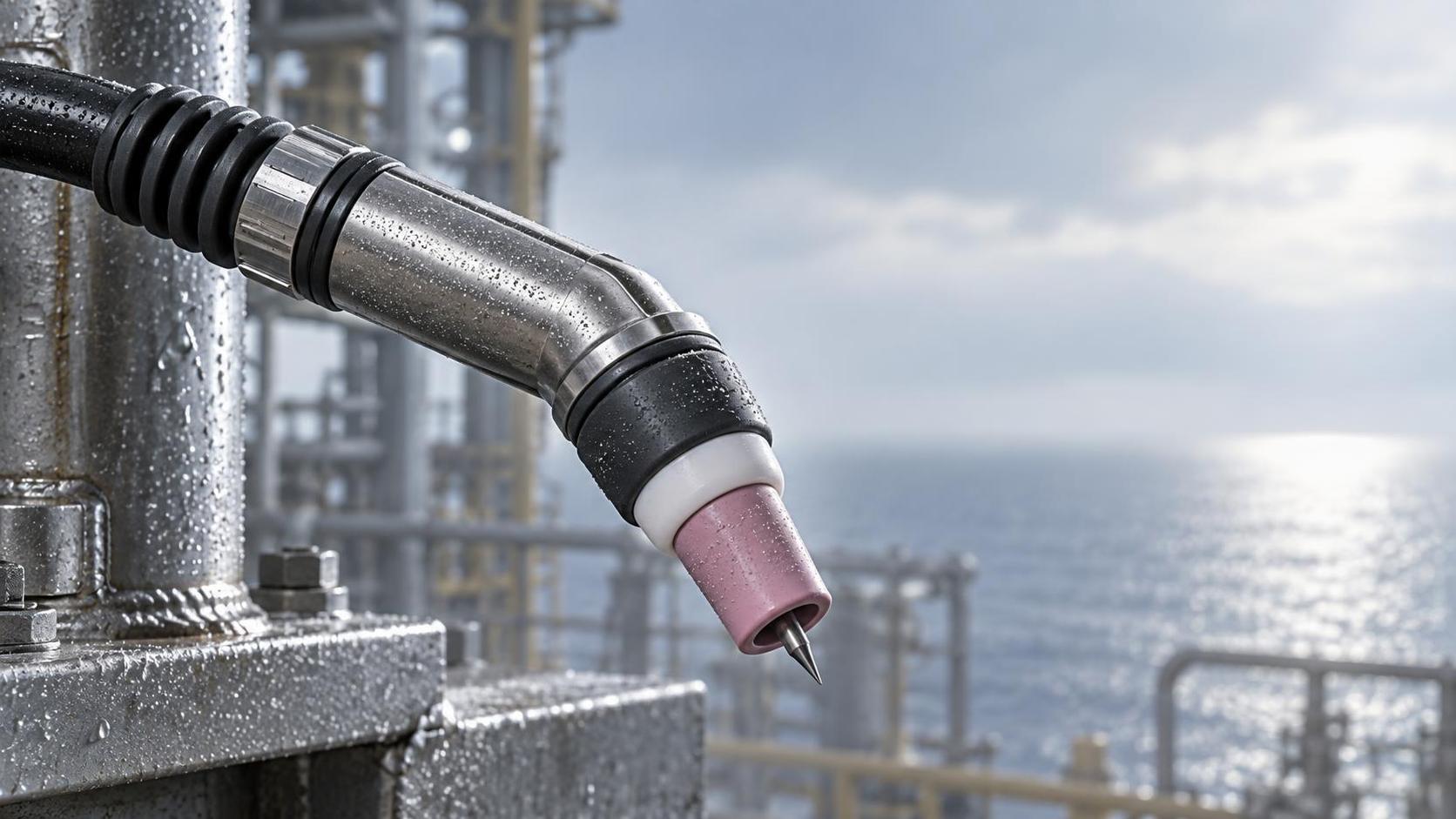
Why IP65-Rated TIG Torches Are Non-Negotiable in Offshore Fabrication — Not Just “Nice to Have”
If you’re a quality control or safety manager overseeing welding operations on offshore platforms, vessel hulls, or subsea module fabrication, you’ve likely seen arc instability, premature torch failure, or inconsistent weld penetration after just a few shifts—especially during monsoon season or in tropical coastal yards. It’s not operator error. It’s not poor gas shielding. It’s often something far more basic: the TIG torch itself wasn’t built for the environment.
Standard industrial TIG torches—many rated IP20 or IP44—are designed for controlled shop floors: dry air, stable temperature, minimal salt exposure. Offshore fabrication is the opposite. Humidity routinely exceeds 90% RH. Salt aerosols settle on every surface, including internal torch components. Condensation forms inside cooling channels overnight. And when operators trigger the arc, moisture-laden insulation paths create micro-arcing, voltage drop, and erratic current delivery—directly undermining weld bead consistency, root fusion, and mechanical property repeatability.
IP65 Isn’t About “Water Resistance”—It’s About Arc Stability Under Real-World Stress
IP65 doesn’t mean “waterproof.” It means dust-tight (6) and protected against low-pressure water jets from any direction (5). That distinction matters. In offshore settings, the real threat isn’t immersion—it’s salt-laden mist, condensation buildup, and repeated wash-down cycles used to remove corrosive deposits. An IP65-rated torch seals critical interfaces: the collet body, gas nozzle assembly, and cable entry point. More importantly, it uses conformal-coated electronics, corrosion-resistant copper alloys, and sealed ceramic insulators that resist tracking—even when surface films form.
But here’s what many spec sheets omit: IP65 certification applies only to the torch *as supplied*. Add an aftermarket gas lens kit, replace the back cap with a non-certified variant, or use a generic water-cooling hose without proper O-ring sealing—and you’ve broken the enclosure integrity. QA teams must verify full-system compliance—not just component-level ratings.
Where Failure Actually Happens — And Why It Escapes Routine Inspection
Most failures aren’t catastrophic. They’re subtle—and they bypass standard visual or functional checks:
- Internal corrosion of the tungsten holder: Not visible without disassembly; causes gradual arc wander and inconsistent electrode alignment.
- Capillary blockage in gas passages: Salt crystallization restricts argon flow, lowering effective shielding at the weld pool—leading to porosity that only shows up in radiography or bend testing.
- Dielectric breakdown in trigger switches: Moisture-induced leakage currents reduce trigger sensitivity over time, forcing operators to increase amperage to maintain arc initiation—distorting heat input and distorting HAZ profiles.
These issues rarely trigger immediate downtime. They erode process capability indices (Cpk) incrementally. A weld that passes RT today may fail tensile testing six months later due to hydrogen-assisted cracking accelerated by inconsistent shielding—traceable back to torch degradation, not base material.
Integration Matters More Than Rating Alone
An IP65 torch is only as reliable as its integration into the broader welding system. Consider power source compatibility: high-frequency start circuits generate electromagnetic noise that can interfere with nearby PLC-controlled equipment—like pipe bending systems used in structural module assembly. The NC hydraulic pipe bending machine, for example, relies on precise servo positioning and real-time self-diagnostics. If arc instability from a compromised torch introduces electrical noise into shared grounding paths, it can disrupt memory recall of bend programs or cause false fault alarms—slowing production without triggering an obvious root cause.
Similarly, cooling system design affects longevity. Air-cooled IP65 torches handle humidity well but struggle above 150A continuous duty. Water-cooled variants offer higher capacity—but require closed-loop chillers with corrosion-inhibiting glycol mixtures. Using tap water or unfiltered coolant voids the IP65 rating over time, as mineral deposits compromise seal integrity.
What to Verify Before Procurement — Beyond the Label
Don’t rely on marketing claims. Ask suppliers for:
- Third-party test reports showing IP65 validation under cyclic humidity (IEC 60068-2-30) and salt mist (IEC 60068-2-11), not just static immersion.
- Material certifications for internal conductors—look for oxygen-free copper with ≥99.95% purity and passivated stainless steel housings (e.g., AISI 316L), not generic “stainless steel.”
- Service life data under simulated offshore conditions—not lab-rated hours, but field-relevant metrics like “cycles before collet wear exceeds 0.05mm” or “mean time between cleaning intervals at 85% RH.”
Also confirm thermal management: torches rated IP65 but lacking thermal runaway protection (e.g., integrated thermistors that cut power at 120°C) risk insulation breakdown during extended high-amperage passes—common in thick-section ship plating.
When IP65 Isn’t Enough — And What Comes Next
For ultra-critical applications—such as welding duplex stainless steels for subsea manifolds or titanium piping in LNG modules—IP65 may be insufficient. Some fabricators now specify IP67-rated torches (temporary immersion protection) or mandate dual-seal designs with nitrogen purge ports to exclude ambient moisture entirely. These are niche solutions, however, and carry trade-offs: increased weight, higher cost, and reduced flexibility in tight-access welds.
The pragmatic threshold remains IP65—for most offshore structural, piping, and module work. But its value isn’t in meeting a checkbox. It’s in sustaining repeatable arc characteristics across environmental swings—so your QA protocols don’t have to compensate for equipment drift. That directly supports ISO 3834-2 compliance, ASME Section IX PQR validation, and API RP 2A-WSD structural integrity requirements.
Ultimately, selecting Pro Welding Equipment and Accessories for offshore work isn’t about maximizing specs. It’s about minimizing variables that undermine weld integrity—starting with the tool that delivers energy to the joint. If your current torches require cleaning every two shifts—or if weld rejection rates rise predictably with humidity spikes—IP65 isn’t an upgrade. It’s the baseline.
search
Products Navigation
Send Us A Message