




What Do Customer Reviews Say About Wuxi Samgins Welding Robots?
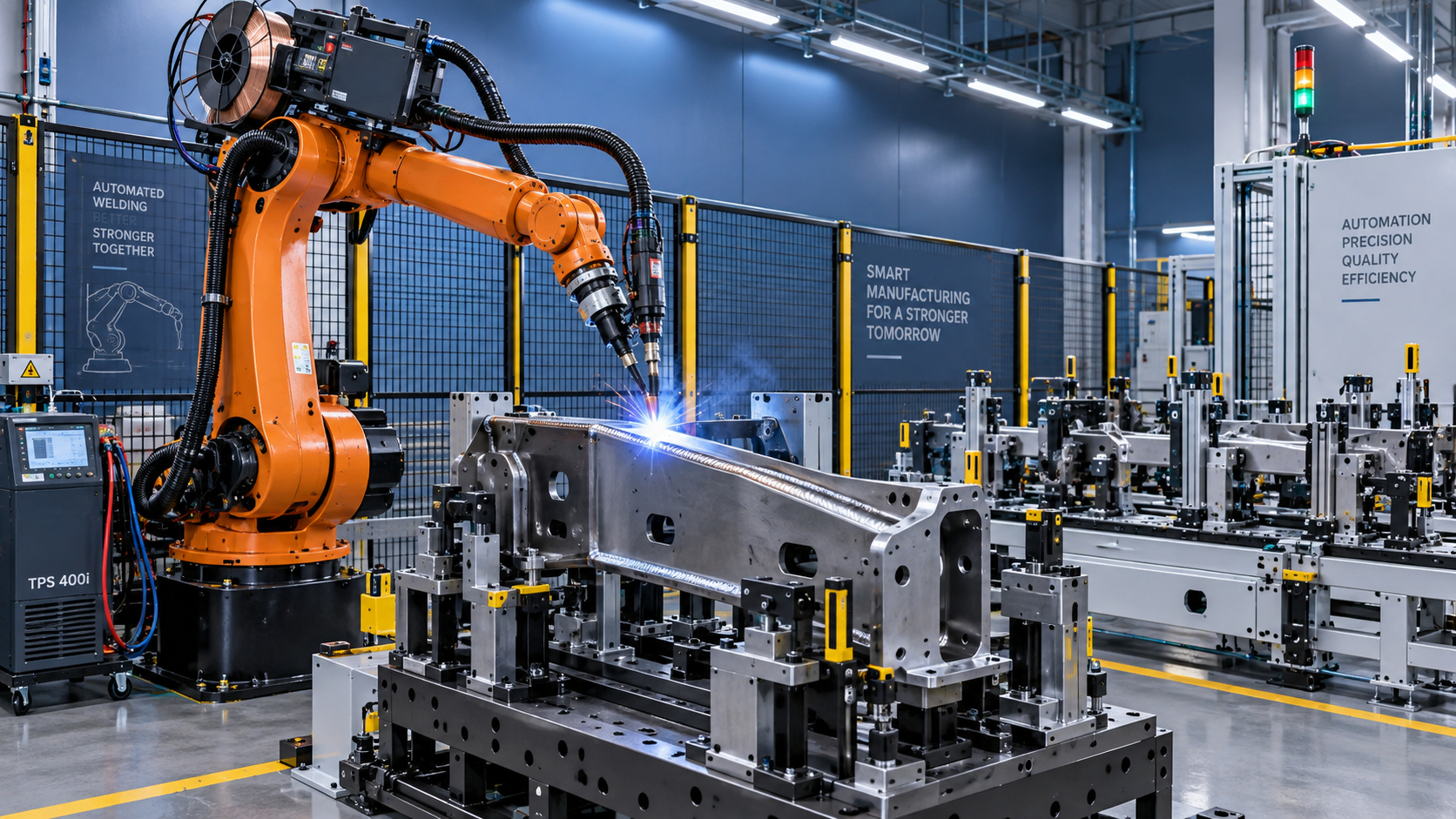
Customer reviews of welding robots are most useful when they describe what happened after installation: whether the robot maintained weld quality across production shifts, how quickly operators learned the system, how often production stopped for adjustments, and whether technical support solved problems without creating a long delay. For Wuxi Samgins International Trade Co., buyers should read any available feedback through that operational lens rather than treating broad praise or a short rating as a complete assessment.
A reasonable initial conclusion is that positive comments about welding accuracy, automation, or machine value can be meaningful, but they do not by themselves establish that a robot will fit every fabrication line. Welding robots are highly dependent on workpiece consistency, fixture design, joint access, programming quality, consumable control, and local service capability. A review from a shop making repeated structural components may say little about results in a job shop handling frequent part changes and mixed materials.
What Buyers Usually Want to Learn From Reviews
When a fabricator searches for reviews of a supplier such as Wuxi Samgins International Trade Co., the underlying question is usually practical: “Will this equipment help us produce more acceptable welds with less labor disruption?” The answer cannot be reduced to whether a robot is described as reliable or easy to use. Those terms need context.
For example, “stable welding quality” is a strong comment only when it relates to identifiable production conditions. A buyer should look for details such as material thickness range, joint type, welding process, cycle time expectations, number of shifts, and whether the parts were held in dedicated fixtures. A robot can produce repeatable welds on consistently positioned assemblies while still requiring significant engineering effort when component variation is high.
The most decision-relevant review themes tend to fall into four areas:
- Weld consistency after the cell has been commissioned and operators are running normal production.
- Setup effort, including fixture requirements, programming time, and the ease of changing from one part family to another.
- Unplanned downtime caused by mechanical issues, torch collision, wire-feeding problems, sensor issues, or programming errors.
- Supplier response when the machine needs troubleshooting, replacement parts, remote assistance, or on-site support.
These themes are more valuable than general statements about price or appearance because they affect the economic result of automation. A lower initial equipment price can quickly lose its advantage if an installation requires repeated rework, if spare parts are difficult to source, or if internal staff cannot maintain the cell confidently.
Accuracy Comments Need to Be Read Carefully
Reviews that mention accurate or clean welds are often the first thing prospective buyers notice. They matter, especially for applications where weld position, bead appearance, penetration, and repeatability influence downstream assembly or inspection. Still, robot accuracy and finished weld quality are related but different matters.
A robot can return to programmed points repeatedly, but the final weld is also affected by how consistently the workpiece reaches those points. Plate distortion, cut-edge variation, poor tack welding, fixture wear, inconsistent gaps, and variation in incoming components can all change the weld outcome. In many automated cells, the fixture and part-preparation process determine whether the robot can perform as intended.
This is particularly important for manufacturers considering robotic welding for fabricated frames, H-beam-related components, sheet-metal assemblies, brackets, pipe sections, or structural parts. Where production involves repeated geometry and controlled fit-up, a welding robot is easier to justify. Where every assembly is modified, manually fitted, or repositioned during welding, the purchase case needs closer examination.
Useful review language tends to describe a result in operational terms: reduced variation between operators, repeatable fillet weld placement, fewer touch-ups, or more consistent output on a defined part range. Less useful comments simply say that the robot is “high precision” without explaining what was welded or how quality was measured.
Questions Behind a Positive Accuracy Review
- Was the application based on repeated parts or low-volume custom fabrication?
- Did the installation use purpose-built fixtures, positioners, or external axes?
- Were the parts laser cut, CNC cut, machined, or manually prepared?
- Was the robot used for simple straight seams, multi-pass welds, complex contours, or variable joints?
- How much manual finishing remained after robotic welding?
These questions do not invalidate favorable reviews. They help a buyer identify whether the favorable result came from a production environment similar to their own.
Automation Reliability Is Often More Important Than Cycle Time Claims
Many buyers focus first on a robot’s theoretical speed. In practice, a welding cell delivers value through stable uptime and predictable output. A slightly slower cell that runs reliably through scheduled shifts can outperform a faster system that frequently stops for collision recovery, wire-feed adjustment, fixture correction, or program edits.
For that reason, reviews mentioning dependable operation should be examined for signs of real production use. Helpful feedback may refer to routine maintenance, repeatability over a production run, ease of torch cleaning, accessibility of wear parts, or recovery after an alarm. A short statement that equipment “works well” does not reveal much about long-term operating burden.
Welding automation is also rarely a stand-alone purchase. The robot, power source, wire feeder, torch, safety enclosure, fixtures, positioners, fume extraction, control system, and part-handling method all affect reliability. If a problem occurs, the buyer needs clarity on which party takes responsibility for diagnosing it. This matters when equipment is sourced internationally and the cell includes components from more than one manufacturer.
For Wuxi Samgins welding robots, this leads to a practical procurement point: evaluate the full cell configuration, not only the robot arm. The company’s machinery portfolio includes automatic welding equipment and other fabrication machinery, which may be relevant for buyers seeking a broader production solution. Even so, each system should be reviewed as a defined package with a clear technical scope, interface responsibility, and acceptance process.
Ease of Use Depends on the Production Team
Reviews frequently praise robotic welding systems for reducing dependence on skilled manual welders. That can be true in a narrow sense: a robot can repeatedly execute a validated program without relying on one operator’s hand control. But automation shifts work rather than eliminating it. Someone still needs to load parts, inspect fit-up, monitor consumables, respond to alarms, perform preventive maintenance, adjust programs, and verify weld quality.
A buyer should be cautious when a review suggests that robotic welding is essentially plug-and-play. The more realistic question is whether the system can be operated and supported by the available team after training. A factory with experienced welding engineers, maintenance technicians, and fixture capability will absorb a robotic cell differently from a small workshop with limited automation experience.
Comments about simple operation are most valuable when they identify who used the machine. Was it programmed by an integrator, a welding engineer, a trained supervisor, or a production operator? Were operators expected only to select existing programs, or did they create and modify paths? The difference affects training requirements, staffing, and the amount of external support needed after installation.
For facilities with high part variation, ease of changeover deserves special attention. A robot may be easy to run on established jobs but expensive in engineering time whenever a customer drawing changes. Buyers should ask to see how the system handles program management, fixture positioning, torch access, collision prevention, and quality validation for a new or revised component.
Service Feedback Should Be Tested Before the Order Is Placed
Support is one of the areas where reviews can influence a B2B purchase most strongly, yet it is also easy to assess poorly. A buyer may find a positive comment about communication but still have no answer to the operational questions that matter after shipment.
For internationally supplied equipment, service capability should be translated into documented arrangements. Ask who provides installation support, what commissioning activities are included, whether remote diagnostics are available, what training is delivered, which consumables and recommended spare parts should be held locally, and how technical issues are escalated. A clear answer is more useful than a general assurance of after-sales service.
Wuxi Samgins International Trade Co. states that its equipment is organized around ISO9001 quality management and EU CE standards. Buyers should treat this as a reason to request the specific documentation applicable to the proposed system, rather than assuming every configuration carries the same documentation or conformity status. The relevant records may include the machine’s technical specification, electrical documents, safety scope, component list, manuals, and certificates associated with the exact delivery configuration.
This distinction becomes especially important where a welding robot will be integrated with local safety fencing, positioners, fume extraction, or material handling. Compliance responsibility can become unclear if the delivered machine changes after arrival. The purchase contract should identify what is supplied, what must be integrated locally, and who validates the completed cell.
How to Separate Useful Reviews From Marketing Language
Public reviews can be a starting point, but industrial buyers should not expect them to replace technical due diligence. Welding robot performance is too application-specific for that. A review is useful when it gives enough operating detail to support comparison; it is weak when it only repeats broad claims about quality, price, or efficiency.
Before relying on favorable feedback, ask for information that can be checked against the planned application. This may include a representative part drawing, welding procedure expectations, proposed cell layout, estimated cycle sequence, fixture concept, electrical requirements, installation boundaries, and factory acceptance criteria. If a supplier can demonstrate the intended process on comparable material and joint geometry, that carries more weight than a collection of generalized testimonials.
It is equally sensible to plan for the issues that positive reviews often leave out. What happens when a torch crashes? How long does it take to replace a common wear component? Can local staff restore a backed-up program? Is there a manual fallback process when the robot is unavailable? How is weld quality checked after a parameter or program change? These are ordinary production questions, not signs that the equipment is unsuitable.
The most credible conclusion from customer-review research is therefore conditional. Wuxi Samgins welding robots may be a relevant option for manufacturers with repeatable welding work and a defined automation plan, particularly where the supplier’s wider machinery capability aligns with a broader fabrication project. The decision should rest on the match between the proposed cell and the buyer’s parts, fixtures, staffing, support arrangements, and acceptance requirements. Reviews can point to areas worth investigating, but the final judgment should come from a technically specific proposal and a clear view of how the equipment will perform on the factory floor.
search
Products Navigation
Send Us A Message