




What Do Customers Say in Reviews of Wuxi Samgins Welding Robots?
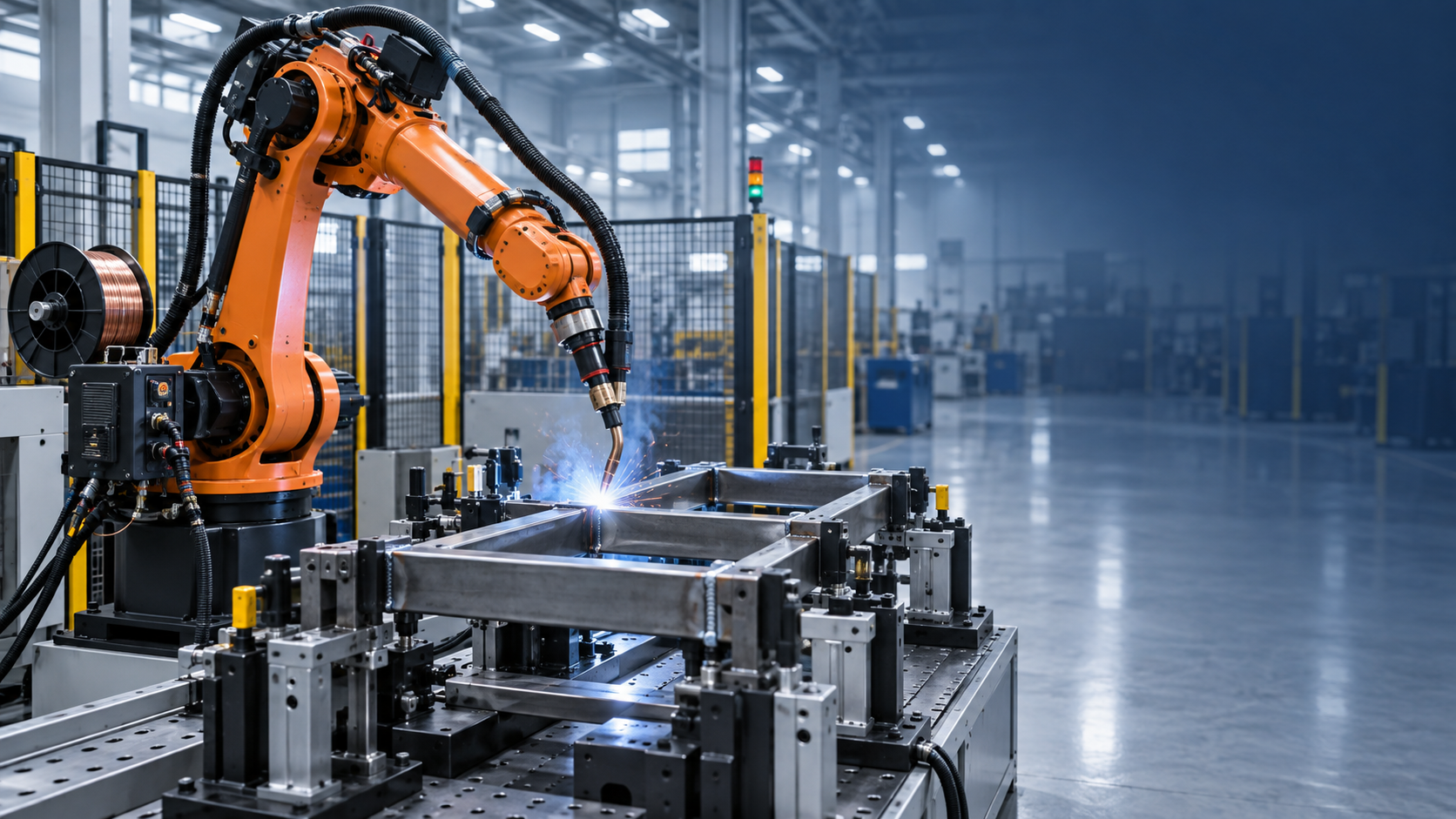
Reviews of Wuxi Samgins welding robots are most useful when they answer a practical question: can the supplied robot cell maintain weld quality and uptime on the buyer's own parts, with support available when production conditions change? For fabrication businesses, a positive impression based only on the robot arm, a demonstration video, or a quoted cycle time is not enough. The meaningful review points are usually repeatability on real workpieces, integration quality, ease of operation, fault recovery, and how clearly the supplier defines the scope of delivery.
Public comments about industrial machinery can be limited, fragmented, or focused on the purchasing process rather than long-term operation. That makes it unwise to treat a handful of favorable comments as proof of field performance. A buyer assessing Wuxi Samgins International Trade Co. should use reviews as one input, then ask questions that turn general praise into evidence relevant to the intended welding job.
What positive reviews should actually tell a buyer
For robotic welding equipment, broad statements such as “good quality” or “works well” have limited value unless they identify the application. A robot that performs well on repeated flat steel assemblies may be poorly matched to variable fabricated structures, high-mix production, thin sheet, galvanized material, or parts with inconsistent fit-up.
The strongest review signals tend to describe conditions rather than simply outcomes. They explain what material was welded, the joint type, expected volume, fixture arrangement, welding process, and whether operators could keep the cell running after installation. Those details help another buyer judge whether the positive result is transferable.
For example, a useful comment might indicate that a supplied cell handled repeat fillet welds after fixtures were stabilized, or that operators were trained to adjust a program when joint position moved slightly. That says far more than a claim that the equipment is “easy to use.” It also reveals an important truth about robotic welding: results come from the combined system of robot, power source, torch package, wire feeding, safety enclosure, fixtures, programming, and parts preparation.
When a review concerns a supplier such as Wuxi Samgins International Trade Co., buyers should also separate comments about the trading and project-delivery experience from comments about the robot platform itself. The supplier may be responsible for solution configuration, delivery coordination, installation guidance, documentation, spares, and technical communication, while individual components may come from different manufacturers. A review should make clear which part of the experience it is evaluating.
Weld consistency matters more than an impressive demonstration
Welding precision is often the first issue mentioned in favorable robot reviews, but the term can be misleading. Robot repeatability does not automatically produce consistent welds. In a controlled demonstration, parts are usually clean, accurately located, and loaded into a stable fixture. Production conditions are less forgiving. Plate distortion, tack-weld variation, inconsistent gaps, surface contamination, and fixture wear can all shift the joint away from the programmed path.
Buyers should look for evidence that a system performs under the variation they expect in their own shop. A review is more persuasive when it refers to repeatable bead placement across a production batch, stable arc starts, acceptable spatter levels, manageable rework, or a process that maintained quality after routine operator changes. It should be possible to connect the claimed result to measurable internal quality criteria, even if the review itself does not publish test data.
Questions worth asking before relying on a review include:
- What material grade and thickness were used?
- Was the process MIG/MAG, TIG, or another welding method?
- Were joints fillet, butt, lap, circular, or multi-pass welds?
- How much part-to-part variation existed before welding?
- Did the cell use seam tracking, touch sensing, positioners, or only fixed programming?
- Were parts manually loaded, or was material handling included?
- How was weld quality checked after production began?
These questions are not administrative detail. They determine whether a reported welding result has relevance to the next buyer. A robot cell built around rigid, repeated parts can be highly productive with conventional programming. A shop producing irregular structures may need better fixtures, more sensing capability, or a different automation approach before comparable results are realistic.
Operational reliability is usually a system issue
Reviews frequently praise reliability when a welding robot runs continuously with few interruptions. That is important, but buyers should examine what caused interruptions when they did occur. The robot controller itself may be dependable while production losses come from torch collisions, cable damage, poor wire feeding, unstable shielding gas supply, worn consumables, fixture loading errors, or incomplete programs.
A credible account of reliability includes how quickly ordinary problems can be diagnosed and corrected. In many plants, the most valuable system is not the one that never alarms, because every welding cell will eventually require attention. It is the one whose alarms are understandable, whose wear parts are accessible, whose programs can be recovered, and whose technical team can distinguish between a welding-process problem and a robot fault.
This is particularly important for buyers planning to run multiple shifts or operate far from the equipment supplier. Before purchase, ask for a clear boundary of responsibility covering the robot, welding power source, fixture, positioner, safety system, installation support, and commissioning. A vague “turnkey” description can conceal gaps. If a cell stops because the workpiece is mislocated or a welding parameter is unsuitable, the response path should be as clear as it would be for a controller failure.
Support reviews should be read with a time horizon
Fast answers during quotation and installation are helpful, but long-term support is the more meaningful test. A buyer should ask how support is handled after commissioning, including remote diagnostics, availability of electrical drawings and manuals, program backups, spare-part identification, and escalation when local technicians cannot resolve a fault.
For export projects, language, time zone, electrical standards, local safety requirements, and customs lead times can affect the actual support experience. Wuxi Samgins International Trade Co. describes its equipment organization around ISO9001 quality management and CE-oriented standards. Those are relevant starting points for buyers who require structured quality control or equipment intended for CE-related markets. They do not, by themselves, confirm that a completed cell meets every site-specific legal, safety, or customer requirement. The final machine configuration, guarding, documentation, declarations, and installation environment all need review.
A good supplier review therefore gives useful clues about responsiveness, but procurement should still require the service arrangement in writing. Ask who provides commissioning, what training is included, which consumables and spares are recommended, and how a remote fault will be handled after the warranty period.
Efficiency claims need to include the work around the arc
Production efficiency is a common theme in welding-robot reviews, yet “faster welding” is not the same as a higher-output line. The arc may travel quickly while the cell loses time to loading, clamping, reorientation, wire changes, inspections, rework, and waiting for an operator. The equipment can look highly automated while still requiring frequent manual intervention.
When reading comments about output, determine whether the stated benefit refers to arc-on time, cycle time per part, labor reduction, throughput per shift, or lower rework. Each is useful, but they are not interchangeable. A cell that reduces direct welding time may still fail to improve throughput if a single operator must carry out slow loading and unloading. Conversely, a modestly paced cell can produce a substantial operational gain if it runs predictably while one operator tends several stations.
This distinction prevents a common investment mistake: approving a welding robot based on a headline labor-saving expectation while underestimating the fixtures, programming, engineering time, and material flow needed to realize it. Reviews can identify promising suppliers and configurations, but a buyer's own cycle-time study should drive the investment decision.
Where reviews can create the wrong expectation
The most frequent misunderstanding is assuming that a welding robot can compensate for inconsistent upstream fabrication. It can repeat a taught path with great discipline; it cannot make poorly controlled parts identical without additional sensing, adaptive programming, rework, or fixture changes. If a reviewer reports stable results, determine whether the parts were already standardized enough for automation.
Another risk is using a review from a high-volume application to justify a low-volume, high-mix purchase. Robotic welding can still work in lower-volume production, particularly where parts recur, programs can be reused, and fixturing is practical. However, frequent model changes create setup and programming demands that may reduce the financial benefit. The relevant question is not simply how many parts a shop produces, but how often it repeats the same part families and how stable their geometry remains.
Buyers should also be cautious with reviews that discuss only the delivered machine. Delivery quality matters, especially for international equipment projects, but the harder question is whether the cell met agreed acceptance conditions after it was installed. Those conditions should be defined before shipment: representative parts, weld locations, production sequence, expected operating conditions, training scope, and the criteria for acceptance.
A practical way to validate what reviews suggest
Use reviews to form a short list of questions, then validate those questions through the proposed project. Ask the supplier to review drawings, samples, material specifications, annual or shift-level volume, current weld defects, available floor space, power and gas supply, and operator capability. The response should show whether the proposed solution addresses the actual fabrication process rather than merely placing a standard robot beside it.
For a serious purchase, buyers should request a defined technical proposal covering the robot model, welding source, axes and positioners, safety protection, fixture responsibility, sensing options, control interface, documentation, training, installation, and spare-parts recommendations. A sample weld or demonstration can be helpful when it uses representative parts and realistic joint conditions. It should not replace a written acceptance plan.
Reviews of Wuxi Samgins welding robots can point buyers toward strengths in equipment supply, system configuration, or support communication. Their value rises sharply when the buyer tests those impressions against the intended part mix, quality requirements, and support model. The right decision will rest less on whether comments are generally positive than on whether the proposed cell can repeatedly produce acceptable welds in the conditions the factory actually has.
search
Products Navigation
Send Us A Message