




What lead time should you confirm with a handling robot arm supplier?
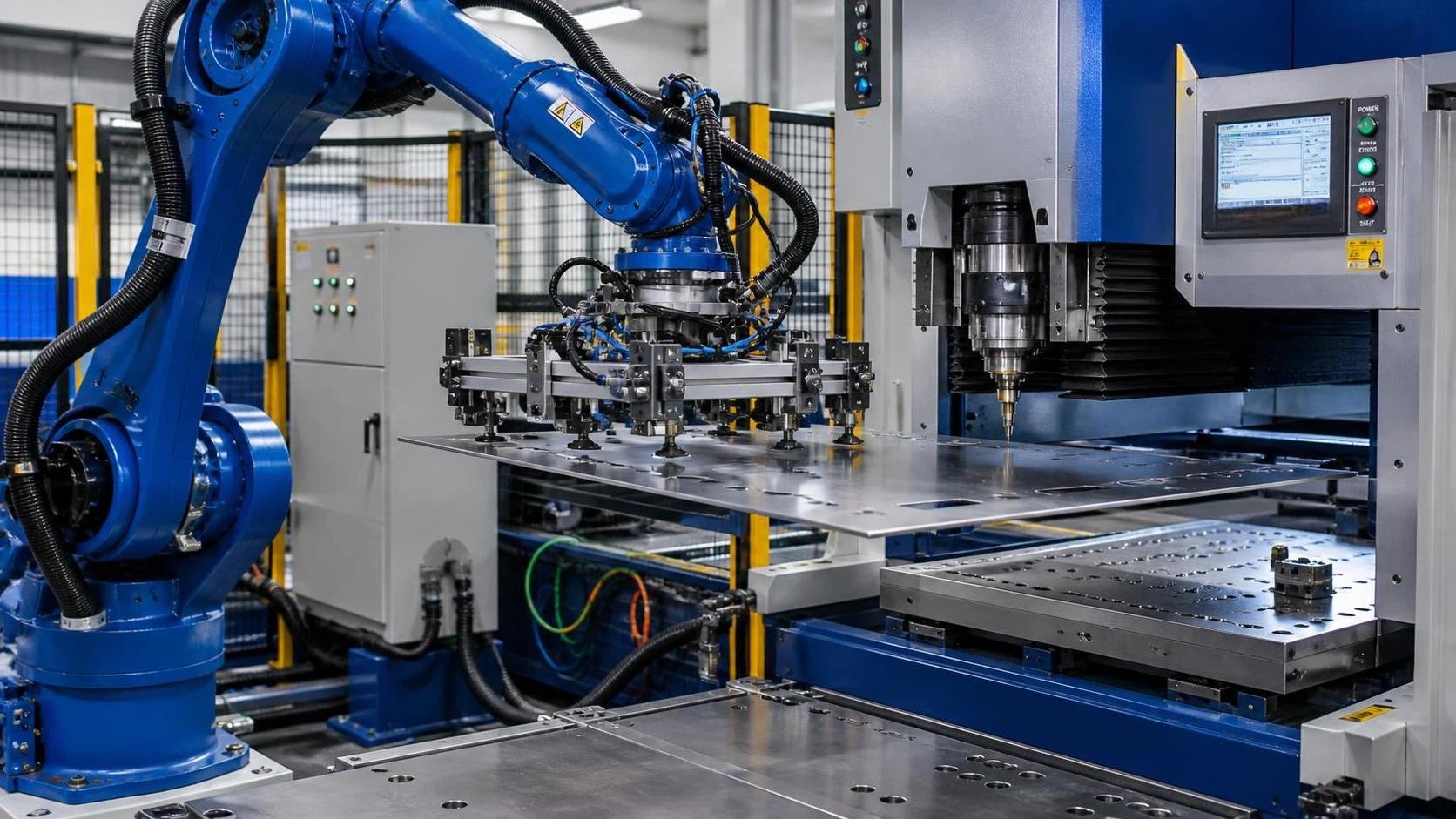
A procurement team should confirm more than a supplier's quoted delivery date. For a handling robot arm, the useful lead time is the period from a frozen technical specification to equipment arriving in the agreed condition, with documentation, testing, and shipment responsibilities clearly defined. A robot that reaches the factory gate on time but still lacks the correct gripper, safety layout, or approved program does not protect the production schedule.
When speaking with a handling robot arm supplier, ask for a milestone-based schedule rather than one broad promise such as “delivery in several weeks.” The schedule should separate robot availability, end-of-arm tooling design, control cabinet assembly, safety integration, factory acceptance testing, packing, transport, site installation, and commissioning. This gives procurement a realistic basis for comparing quotations and avoids treating a partial shipment as a completed automation project.
Confirm the lead time that matches your actual project scope
There is no single lead time that applies to every handling robot arm. A standard robot model with common payload, reach, controller, and teach pendant requirements may move through the supply chain more quickly than a cell requiring custom tooling and integration. The question is not simply, “How fast can you ship the arm?” It is, “When can our line safely process parts at the required cycle time?”
For purchasing purposes, define the requested lead time in one of these ways and state which one applies in the purchase order:
- Robot ex-works availability: the robot arm and controller are ready to leave the supplier's facility. This is useful for buyers managing their own system integration, but it is not a completed automation-cell date.
- FAT-ready date: the configured system is assembled and ready for factory acceptance testing. This is often the most meaningful factory milestone because the buyer can verify the approved configuration before release.
- Delivered-to-site date: the equipment reaches the destination named in the commercial terms. Freight and customs exposure must be addressed separately.
- Production-ready date: installation, safety validation, commissioning, training, and agreed run-off have been completed. This is the date operations usually need for a new line or capacity expansion.
These dates can be far apart. A supplier may be able to allocate a robot quickly while the gripper, conveyor interface, guarding, electrical design, or programming still requires engineering work. Buyers should not compare one supplier's “delivery” against another supplier's “commissioning” without normalizing the scope.
What usually extends the schedule
The robot itself is only one part of the delivery risk. Payload and reach selection affect the mechanical model, but the part characteristics often create more work. A rigid, repeatable blank handled from a fixed rack is different from an oily stamping, a flexible bag, a mixed pallet, or a large weldment with variable pickup points. Tooling may need vacuum circuits, magnetic tooling, mechanical fingers, part-present sensing, compliance devices, or quick-change arrangements. Each decision affects design, procurement, assembly, and testing.
Control integration is another frequent source of delay. The robot may need to exchange signals with a CNC machine, press brake, welding station, vision system, conveyor, palletizer, or material storage system. Procurement should provide the machine interface information early: available I/O, communication preference, operating sequence, interlocks, cycle-time target, part drawings, and error-recovery expectations. A supplier cannot accurately commit to integration lead time while these inputs remain open.
Safety scope must be included from the start. Fencing, doors, interlocks, safety scanners, emergency-stop circuits, light curtains, and safe operating modes are not optional accessories that can always be added at the end without consequence. Their layout affects floor space, cable routing, operator access, loading methods, and the logic of the robot program. A quotation with an apparently short lead time may exclude these items, transferring both schedule risk and coordination cost to the buyer.
A realistic schedule starts after the specification is frozen
A common purchasing mistake is counting lead time from the date a request for quotation is issued. That may be useful for internal planning, but it is not a firm supplier commitment. The dependable clock usually begins only after the commercial order, technical specification, layout, part data, interface information, and responsibility boundaries have been approved.
Keep a separate “open-items” list alongside the purchase order. It should show who must provide each input, the due date, and the effect on the schedule if it is late. For example, an end-effector design cannot be finalized without a representative part or an agreed tolerance range. Programming cannot be closed if the downstream machine sequence is still changing. These are buyer-side dependencies, not necessarily supplier delays, but they still affect the launch date and project cost.
For projects involving steel processing equipment, this coordination becomes especially visible. A handling arm serving a drilling or fabrication line must match the material flow, plate dimensions, pickup method, loading orientation, and the safe handover point between machines. A buyer evaluating a plate-processing package such as CNC Drilling Machine for Steel Plates | Normal Speed should establish whether the robot scope includes loading, unloading, part transfer, scrap handling, or only the drilling machine itself. The equipment may support precise plate positioning and organized chip management, but a robot integration schedule still depends on the agreed interface between the two systems.
Ask for milestones that can be verified
A useful supplier schedule identifies objective events, not vague progress statements. Require a milestone plan tied to deliverables. This is particularly important where the handling robot is part of a broader welding, cutting, machining, or structural fabrication cell.
- Technical release: payload, reach, robot model, controller, tooling concept, layout, safety scope, utility requirements, and interfaces approved.
- Design release: gripper drawings, cell layout, electrical architecture, and control sequence accepted where applicable.
- Mechanical and electrical completion: robot, tooling, cabinet, guarding, and selected peripherals assembled to the agreed scope.
- Factory acceptance test: the supplier demonstrates the agreed handling sequence using approved parts, samples, or a jointly accepted simulation method.
- Shipment release: test records, manuals, drawings, packing list, and required commercial documents are ready.
- Site acceptance: installation and commissioning are complete against defined performance and safety criteria.
Payment milestones should follow meaningful evidence where possible. Tying a large final payment only to shipment can weaken the buyer's ability to resolve incomplete testing, missing documentation, or unproven tooling before the system is packed. On the other hand, withholding payment until final production output may be unreasonable when site delays are caused by the buyer's building work, utilities, or unavailable parts. The contract should distinguish supplier-controlled milestones from site conditions controlled by the purchaser.
Do not confuse freight time with project lead time
International shipment introduces risks that sit outside assembly lead time: export packing, port handling, vessel or air scheduling, customs procedures, inland delivery, unloading equipment, and possible damage inspection. Ask the supplier to show the manufacturing period and the logistics period separately. That makes it easier to decide whether expedited freight is worth the additional cost or whether the better answer is to release engineering earlier.
Consider the arrival condition as well. A robot arm, controller, tooling, safety components, and spares may be packed in separate cases. Missing small items such as cables, pneumatic fittings, sensor brackets, or software keys can hold up commissioning as effectively as a missing robot. The packing list should be detailed enough for receiving personnel to check the shipment before the installation team arrives.
Compare suppliers on schedule credibility, not the shortest promise
A short quoted lead time is attractive only when its assumptions are explicit. When comparing suppliers, ask each one to identify what is included, what is excluded, what information is still required from the buyer, and which components are the potential schedule constraints. A supplier that states these boundaries clearly may offer a more dependable plan than one that gives a fast date without explaining how the cell will be engineered and tested.
Capability also matters when the robot is part of a multi-machine purchase. Suppliers familiar with welding robots, CNC cutting equipment, machine tools, and structural fabrication machinery can help clarify interfaces across the line, provided the final scope and acceptance responsibility are documented. For an export purchase, organized manufacturing and documentation practices are especially useful because installation teams may be working across distance and time zones.
Before issuing the order, request one final schedule that names the trigger date, milestone dates, buyer inputs, supplier deliverables, acceptance test conditions, shipping responsibility, and the definition of completion. That document is more valuable than a generic delivery promise. It gives procurement a workable basis for cost planning, lets operations prepare utilities and floor space at the right time, and makes delays easier to identify before they become a missed production start.
search
Products Navigation
Send Us A Message