




When does a welding robot deliver a return on investment
When Does a Welding Robot Deliver a Return on Investment?
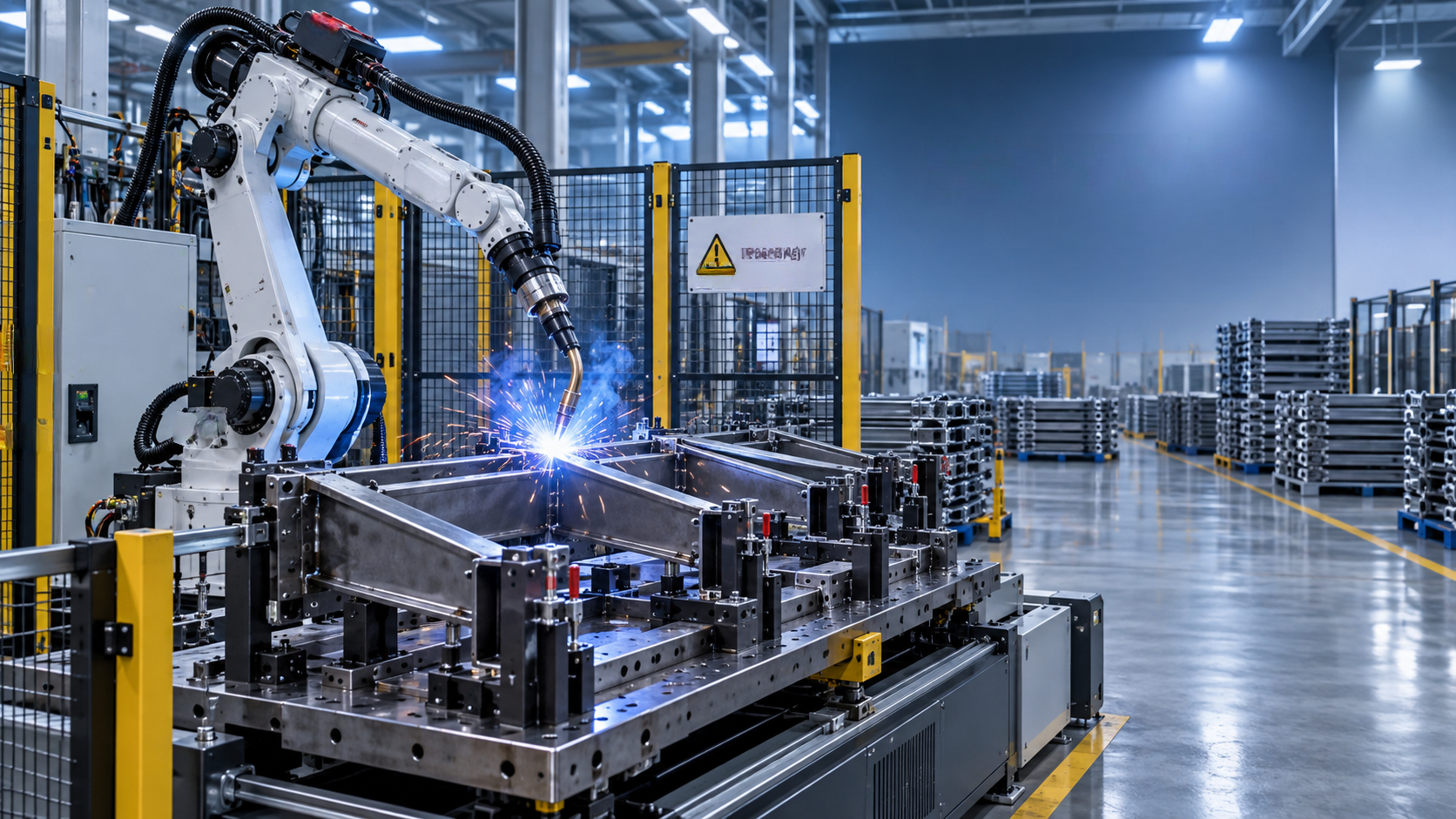
For manufacturing leaders, a welding robot delivers a return on investment when measurable production gains exceed equipment, integration, training, and operating costs within an acceptable period.
The decision is not simply whether automation is modern or impressive. It depends on production volume, part consistency, labor availability, quality requirements, and future capacity plans.
What Business Leaders Are Really Evaluating
Most decision makers are not asking whether a welding robot can weld. They are asking whether it can improve profitability, delivery performance, and operational resilience.
A robot investment becomes compelling when manual welding creates a business constraint, such as missed delivery dates, inconsistent quality, expensive overtime, or limited production capacity.
Labor shortages are often an important trigger. Skilled welders remain essential, but relying exclusively on scarce manual labor can restrict sustainable business growth.
Customer expectations also influence the decision. Buyers increasingly expect consistent weld appearance, traceable quality, shorter lead times, and dependable capacity for repeat orders.
For management teams, the objective is rarely to eliminate welders. A stronger goal is assigning skilled people to complex work while automating repeatable welding tasks.
That distinction matters because successful automation projects improve how labor is used. They do not simply transfer a difficult manual process to a robot.
The strongest business case combines several benefits: greater output, lower rework, better planning reliability, improved safety, and reduced dependence on overtime or temporary labor.
When only one potential benefit is considered, the projected return may look weak. When the full operating impact is measured, the opportunity often becomes clearer.
Start with Throughput, Not Equipment Price
The purchase price is visible, but it should not dominate the analysis. Throughput determines whether the welding robot can create enough additional productive capacity.
Calculate the current number of parts welded per shift, including realistic delays for material handling, setup, inspection, breaks, repairs, and changeovers.
Then estimate the robotic cycle using actual weld length, travel speed, part loading time, fixture changes, torch cleaning, and expected operator intervention.
A robot cell does not need to operate continuously to generate value. Even one well-selected repetitive welding process can remove a serious production bottleneck.
For example, a fabricator producing repeat brackets, frames, cabinets, or structural subassemblies may gain capacity without adding another manual welding shift.
Capacity gains are especially valuable when demand is growing but floor space, recruiting capability, or skilled labor supply prevents a conventional expansion.
However, promised cycle time should be tested against real production conditions. Supplier demonstrations using ideal parts may not reflect practical handling and fit-up variability.
Ask for a cycle-time study based on representative drawings, materials, weld positions, tolerances, batch sizes, and quality standards from your own operation.
How to Calculate Welding Robot ROI
A practical ROI calculation should compare annual financial benefits with total project costs. Avoid relying on labor savings alone, because automation creates several value streams.
Begin with the fully loaded manual welding cost. Include wages, overtime premiums, benefits, supervision, consumables, rework time, quality inspection, and recruitment expense.
Next, calculate expected robotic operating costs. These normally include power, wire, gas, preventive maintenance, programming support, replacement consumables, and cell supervision.
The annual benefit may include labor redeployment, increased output, reduced scrap, lower rework, fewer warranty claims, lower overtime, and improved on-time delivery.
Additional contribution margin from higher sales capacity should be included only when the company has credible demand for the additional production volume.
For a simple payback estimate, divide total installed project cost by expected annual net benefit. Many manufacturers use this as an initial screening measure.
Total installed cost includes more than the robot. It may include welding power sources, safety guarding, fixtures, positioners, tooling, integration, programming, and commissioning.
Decision makers should also model a conservative case. Lower utilization, slower ramp-up, or higher fixture expense can materially change the payback period.
A robust business case should show best-case, expected-case, and conservative-case outcomes. This makes approval decisions more credible and exposes critical assumptions early.
Quality Improvement Can Be More Valuable Than Labor Savings
In many fabrication operations, inconsistent weld quality costs more than management initially recognizes. Rework disrupts schedules, consumes skilled labor, and delays shipment.
A welding robot can repeat programmed paths, travel speeds, torch angles, and weld parameters with high consistency when parts are properly located and prepared.
This consistency is especially valuable for components requiring repeat weld geometry, controlled heat input, visual uniformity, or reliable performance in downstream assembly.
Quality benefits should be quantified using existing data. Review repair rates, rejected parts, customer complaints, nonconformance reports, inspection time, and warranty claims.
Do not assume automation automatically corrects poor upstream processes. A robot will repeatedly expose problems with part variation, inaccurate fixtures, gaps, and poor fit-up.
That is why fixture design is central to robotic welding success. Repeatable part location allows the programmed weld path to remain accurate between cycles.
Improved quality also supports commercial value. Reliable welding performance can strengthen customer confidence when bidding for repeat production or higher-specification work.
Where quality failures carry safety, certification, or contractual risk, even a modest reduction in defects can justify a larger portion of the investment.
Which Production Conditions Create the Best ROI?
High-volume, repetitive production usually provides the fastest return because programming and fixture costs are spread across many identical or similar parts.
Moderate-volume operations can also benefit when product families share common weld types, material thicknesses, fixtures, or robot programs with limited adjustment.
Low-volume, highly customized fabrication is more challenging, but it is not automatically unsuitable. Flexible tooling and offline programming may improve feasibility.
The best candidates typically have stable designs, manageable part sizes, predictable fit-up, repeated weld seams, and enough batch volume to reduce changeover impact.
Parts with numerous manual adjustments, severe dimensional variation, or frequent engineering changes usually require more preparation before robotic welding becomes economical.
Weld accessibility matters as well. A robot can only deliver reliable performance when its torch can reach joints without collisions or awkward orientations.
Consider the entire material flow. Slow loading, unsafe unloading, difficult clamping, or unavailable components can limit cell utilization despite fast robotic welding.
Businesses should prioritize products where welding is the constraint, rather than choosing parts merely because they appear visually simple or easy to automate.
Equipment Capability Must Fit the Actual Work
Robot selection should follow a process review, not a catalog comparison. Reach, payload, repeatability, mounting options, environmental conditions, and integration requirements all matter.
For combined production tasks, a multipurpose platform may support handling, welding, or cutting applications, allowing manufacturers to configure capacity around changing operational needs.
The Multipurpose Handing Robot BR20iB-20 provides six-axis motion, a 2102 mm maximum reach, and a 20 kg wrist payload for applicable automated processes.
Its stated repeatability of plus or minus 0.08 mm can support consistent repetitive movements, provided fixtures, workpieces, and welding parameters are equally controlled.
Ground, hoisting, and side-mounting options can help engineering teams adapt the robot cell to available floor space and material-flow constraints.
The robot body is rated equivalent to IP65, with specified operation from 0 to 45 degrees Celsius and 20 to 80 percent relative humidity without condensation.
These specifications should be assessed alongside weld power source compatibility, torch package routing, safety systems, external axes, positioners, and local service capabilities.
The right configuration is not necessarily the largest robot. It is the solution that handles the target parts efficiently while leaving room for future production needs.
Integration and Ramp-Up Determine the Real Payback
Many ROI projections fail because they treat the robot as a standalone purchase. In practice, integration determines whether expected performance becomes daily production reality.
A complete cell may require safety fencing, interlocks, fume extraction, wire feeding, torch cleaning, part-present sensing, fixtures, and operator access planning.
Programming time should be budgeted realistically. Initial programs are only the beginning; teams need procedures for product changes, fault recovery, and parameter optimization.
Operator training is equally important. Operators need confidence loading parts, selecting programs, identifying faults, checking weld quality, and maintaining safe cell operation.
Maintenance planning should begin before installation. Preventive inspections, spare consumables, torch care, cable management, and backup procedures reduce avoidable downtime.
Commissioning should include acceptance criteria that both supplier and buyer understand. These may cover cycle time, weld quality, uptime targets, safety validation, and training completion.
Run a pilot using a representative product family before expanding automation. A successful first cell builds internal capability and produces reliable data for later investment decisions.
Management should expect a learning period. Early weeks may include tuning fixtures, refining programs, and improving loading methods before stable output is achieved.
Common Mistakes That Delay a Welding Robot Return
The most common mistake is automating an unstable process. Robots are highly repeatable, but they cannot compensate indefinitely for inconsistent components and poor preparation.
Another mistake is assuming every manual welding job should be automated. Complex repair work and very low-volume custom work may remain better suited to skilled welders.
Some companies underestimate fixture cost. Accurate and durable fixtures are essential capital items, not optional accessories that can be added after installation.
Others overestimate labor savings by assuming headcount reductions that never occur. Redeploying welders can still create value, but it should be measured honestly.
Ignoring utilization is another frequent error. A welding robot with excellent cycle time delivers little return when it waits for materials, operators, or production orders.
Weak demand forecasting can distort the business case. Additional capacity only has financial value when orders, delivery commitments, or strategic growth opportunities support it.
Finally, selecting a supplier solely on initial price can create long-term problems. Application engineering, commissioning support, documentation, training, and service responsiveness matter greatly.
Build a Decision Framework Before Approving Capital
Before approving a welding robot project, define the production problem in measurable terms. Identify current bottlenecks, labor constraints, quality losses, and delivery risks.
Collect baseline data for at least several representative production periods. Include parts completed, direct labor hours, rework, scrap, downtime, overtime, and missed shipments.
Select candidate parts based on repetition, margin, quality risk, weld accessibility, and production demand. Do not select only the easiest part for demonstration.
Request a detailed proposal that separates robot hardware, welding equipment, fixtures, safety systems, installation, programming, training, and optional future upgrades.
Review the proposal with production, engineering, quality, maintenance, finance, and safety stakeholders. Cross-functional involvement prevents hidden requirements from appearing late.
Set operational targets for the first six months. Useful measures include cell utilization, weld repair rate, cycle-time performance, downtime, throughput, and labor redeployment.
Use these targets to manage the implementation after purchase. ROI is not achieved at installation; it is achieved through consistent, productive daily operation.
Conclusion: When Is the Investment Justified?
A welding robot delivers a return on investment when it solves a real operational constraint and produces measurable gains in output, quality, labor flexibility, or delivery reliability.
The strongest opportunities involve repeatable parts, stable demand, controlled fit-up, suitable fixtures, and a clear plan for integrating equipment into daily production.
For business leaders, the essential question is not whether automation can replace a welding task. It is whether it improves the economics of the entire manufacturing process.
Evaluate total installed cost, conservative utilization, quality impact, labor strategy, and ramp-up requirements together. That discipline turns a welding robot from capital expenditure into productive capacity.
search
Products Navigation
Send Us A Message