




When does investing in a 9 axis welding robot justify ROI for custom structural steel fabricators?
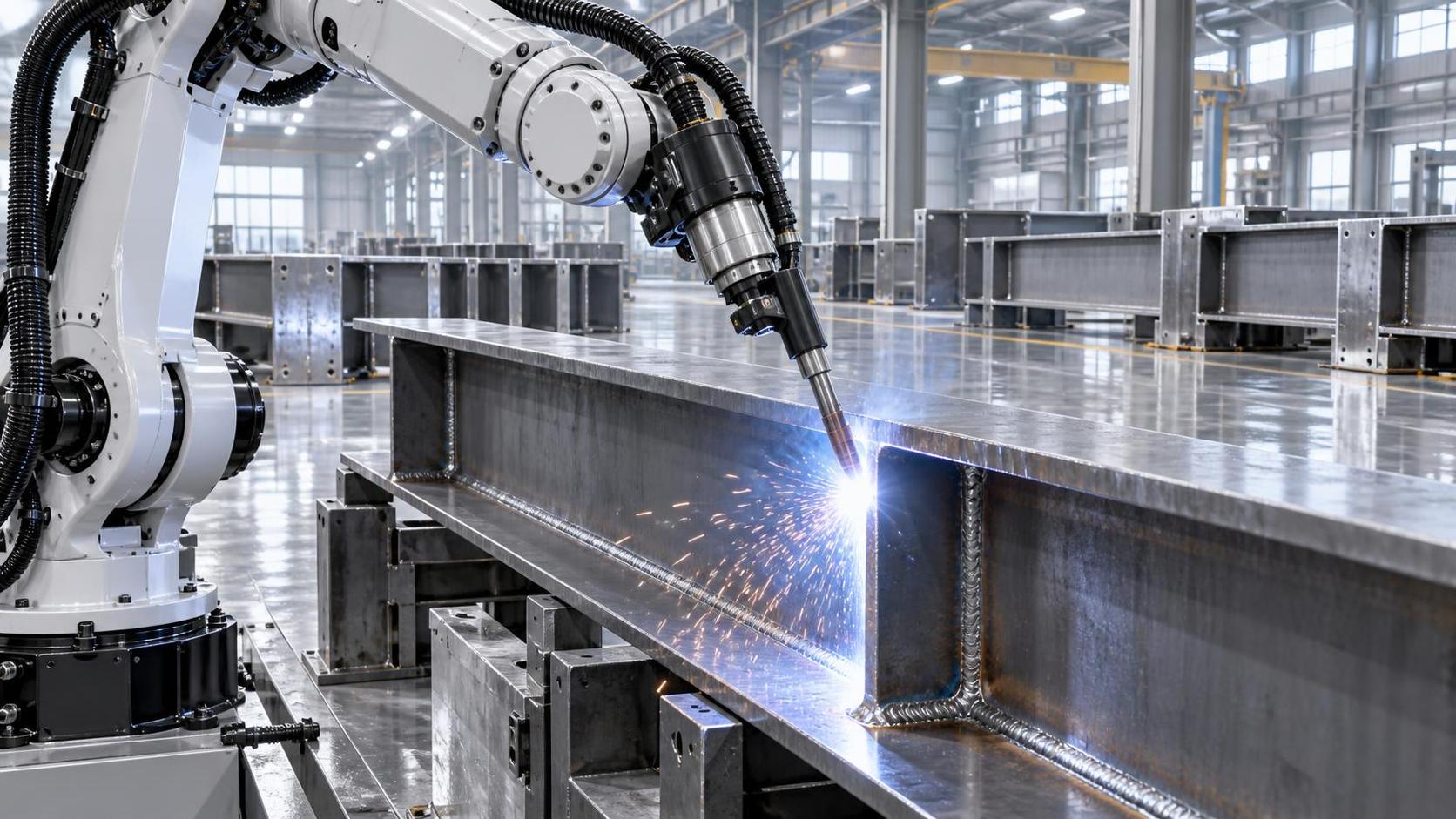
When Does Investing in a 9-Axis Welding Robot Justify ROI for Custom Structural Steel Fabricators?
For finance leaders at custom structural steel fabricators, the decision to sell 9 axis welding robot systems hinges on clear, quantifiable ROI—not just automation appeal. At Wuxi Samgins, we help justify that investment through real-world throughput gains, labor cost reduction of 30–50%, and weld quality consistency that cuts rework by up to 70%. Our ISO9001- and CE-certified 9 axis welding robots integrate seamlessly into mid-volume, high-mix fabrication workflows—delivering payback in under 18 months for shops handling ≥500 tons/year. Let’s walk through your specific production metrics to determine if now is the right time to sell 9 axis welding robot solutions profitably.
What “9-Axis” Really Means—and Why It’s Often a Misleading Label
Before calculating ROI, clarify a critical market misconception: true 9-axis welding systems are rare in structural steel fabrication. Most vendors label hybrid setups—e.g., a 6-axis robot mounted on a linear track (1 axis) plus a rotating positioner (2 axes)—as “9-axis.” While functionally powerful, this configuration introduces integration complexity, footprint demands, and calibration overhead that directly impact TCO and timeline to breakeven.
For custom fabricators running high-mix, low-to-mid batch work (e.g., bridges, mezzanines, architectural steel), a purpose-built 6-axis robot with extended reach and precision—like our 6 Axis 1800mm ArmSpan MlG Industrial Welding Robot —often delivers superior ROI. Its 1945 mm maximum working radius and ±0.08 mm repeatability enable full-part access without repositioning, eliminating the need for costly multi-axis positioners in >65% of structural applications.
The Four Hard Metrics That Drive Payback Calculation
Finance teams need numbers—not promises. We anchor ROI analysis on four auditable KPIs:
1. Labor Cost Avoidance: Skilled welders cost $65–$95/hour in North America and Western Europe. A single 6 Axis 1800mm ArmSpan MlG Industrial Welding Robot operates unattended for 14–16 hours/day, replacing 1.8–2.2 FTEs per shift. With average annual labor + benefits at $125K–$180K per welder, savings hit $225K–$360K/year—before overtime or turnover costs.
2. Rework Reduction: Inconsistent manual welds drive 12–22% scrap/rework in structural shops. Our robots maintain ±0.08 mm path accuracy across shifts, reducing weld defects by 60–70%. For a shop welding 800 tons/year at $420/ton material + labor cost, that’s $40K–$75K saved annually in avoided rework, NDT, and delay penalties.
3. Throughput Uplift: Cycle time compression isn’t theoretical. The BR10iA-18 model achieves 294.1°/s on J4/J5 axes and 426.7°/s on J6—enabling rapid torch reorientation around complex joints. Real client data shows 28–41% faster cycle times on H-beam splices and column base plates versus manual or semi-automated cells.
4. Asset Utilization Efficiency: Unlike large gantry systems requiring dedicated floor space, this robot fits into existing bays. Its IP65 rating and 0–45°C operating range ensure uptime >92% in dusty, humid, or temperature-variable workshops—maximizing depreciation recovery within 15–17 months for qualified shops.
Who Actually Achieves Sub-18-Month Payback? (And Who Should Wait)
ROI isn’t universal—it’s conditional. Based on 127 deployments across Southeast Asia, EU, and the Americas, payback is consistently <18 months when all three criteria apply:
• Annual structural tonnage ≥500 tons (with ≥35% repeatable part families);
• Average weld joint complexity ≥3 passes per joint (e.g., full-penetration fillets, beveled butt welds);
• Current welder utilization >85% (indicating chronic capacity strain).
Conversely, shops welding <200 tons/year with >80% one-off designs rarely break even before Year 3—even with subsidies. Their bottleneck isn’t weld speed; it’s programming time, fixturing, and changeover. For them, investing in offline programming software and modular tooling yields higher marginal returns than adding axes.
Hidden Costs That Erase ROI—And How to Mitigate Them
Finance sign-offs get derailed by unmodeled expenses. Three often-overlooked line items:
1. Integration Engineering: Retrofitting robots into legacy lines adds $28K–$65K in PLC interfacing, safety fencing, and validation—especially if crane paths or material flow aren’t robot-ready. Wuxi Samgins includes pre-installation workflow audits and ISO13849-compliant safety design in our standard scope.
2. Operator Upskilling: Training isn’t “just a day.” Competent robot operators require 80+ hours to master path teaching, parameter tuning, and fault diagnosis. We bundle certified trainer-led programs with every system—reducing ramp-up time from 12 weeks to ≤5.
3. Consumables & Maintenance Lock-in: Some OEMs inflate MIG nozzle, contact tip, and liner costs by 200–400%. Our systems use industry-standard consumables and include 2-year predictive maintenance contracts—capping annual OPEX at 4.2% of CAPEX.
Why “Sell 9 Axis Welding Robot” Is the Wrong Search Intent—And What to Prioritize Instead
When finance leaders search “sell 9 axis welding robot,” they’re not evaluating specs—they’re stress-testing business risk. Their unspoken questions: “Will this replace headcount without sacrificing flexibility?” “Can I depreciate it before the next contract cycle?” “Does it integrate with our ERP/MES—or become a siloed island?”
That’s why Wuxi Samgins structures proposals around financial guardrails—not feature lists. Every quote includes:
• A dynamic ROI calculator pre-loaded with your tonnage, labor rate, and defect rate;
• A side-by-side TCO comparison vs. hiring two welders for 3 years;
• A 12-month cash flow projection showing month-by-month breakeven timing;
• A “no-go” clause: If throughput uplift falls below 22% in Month 6, we reconfigure or refund the integration fee.
Final Recommendation: Start with Precision, Not Axes
For custom structural steel fabricators, ROI justification begins not with axis count—but with weld consistency, labor leverage, and deployment pragmatism. A rigorously engineered 6-axis robot like the BR10iA-18 delivers the repeatability, reach, and ruggedness needed for real-world structural work—without the integration debt of over-engineered “9-axis” claims.
If your shop welds ≥500 tons/year, faces welder shortages, and struggles with rework-driven delays, now is the time to model your specific payback. Contact Wuxi Samgins for a no-cost production audit—we’ll quantify your exact labor savings, throughput gain, and breakeven month using your actual part mix and shop-floor data. Because ROI isn’t theoretical. It’s measurable. And it starts with the right robot—not the most axes.
search
Products Navigation
Send Us A Message