




When is a custom handling robot arm better than a standard model?
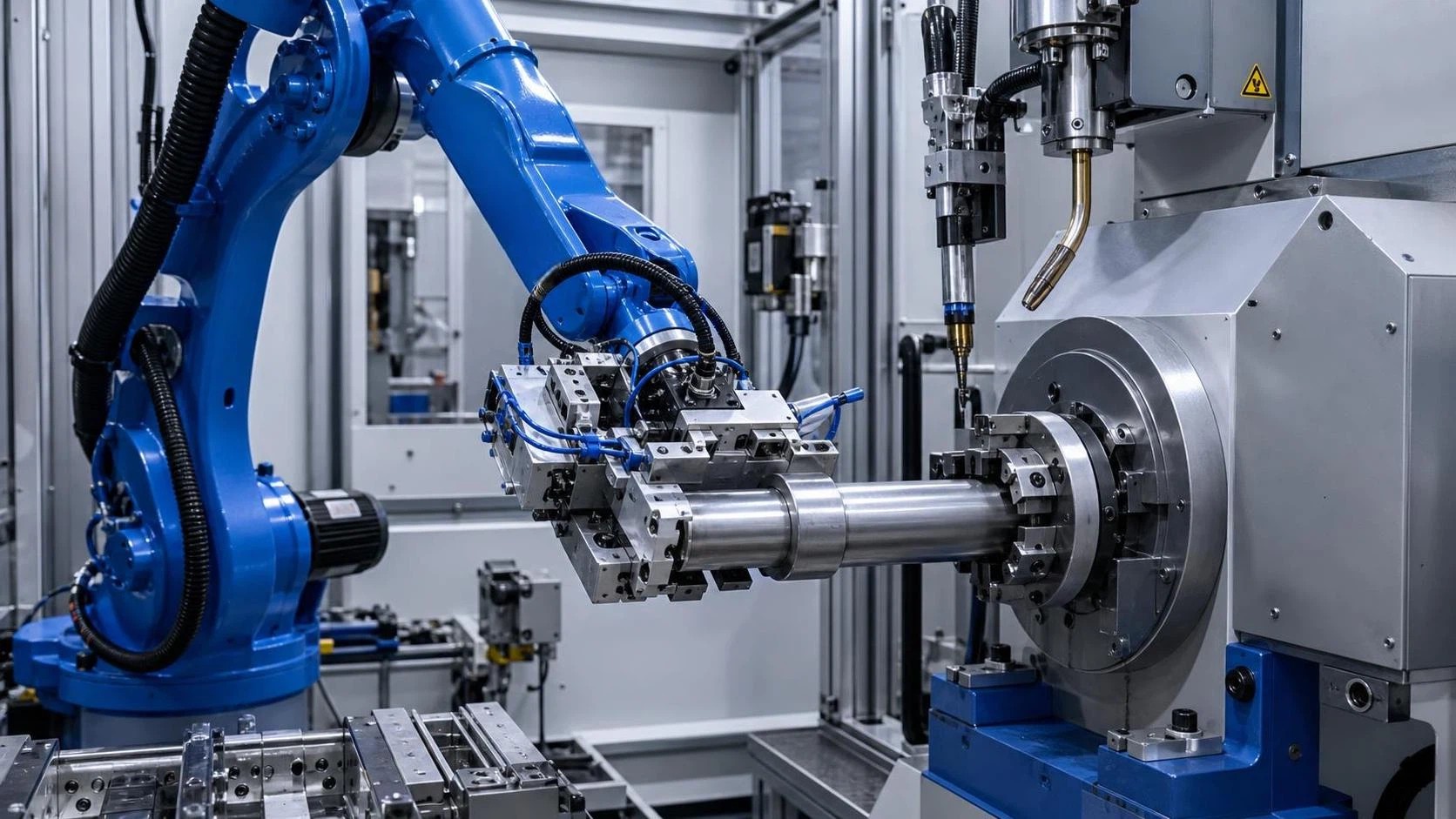
When Is a Custom Handling Robot Arm Better Than a Standard Model?
For technical evaluators, choosing between a standard model and a custom handling robot arm depends on more than payload and reach.
Complex part geometries, limited floor space, specialized end-effectors, cycle-time targets, and integration with CNC, welding, or material-handling equipment can change the decision.
A tailored solution is justified when it removes a measurable production constraint that a standard robot cannot solve economically or reliably.
The right question is not whether customization is technically possible. It is whether customization improves throughput, quality, safety, uptime, or total operating cost enough to justify engineering effort.
Start With the Actual Handling Problem
A standard robot is often the correct baseline when parts are consistent, loads are predictable, workstations are open, and commercially available grippers meet process requirements.
Custom design becomes more valuable when the handling task includes several difficult conditions at the same time rather than one minor exception.
Technical evaluators should map the full movement sequence before comparing robot catalogs. A robot specification alone does not describe the complete application.
Document where the part is picked, how it is presented, whether orientation changes, where it is placed, and what accuracy is required.
Include expected part variation, surface condition, center-of-gravity movement, tooling interference, operator access, and the time required for each handoff.
This workflow analysis frequently reveals that the limitation is not nominal payload. It may be wrist moment, cable routing, fixture clearance, or gripper recovery after a failed pick.
For example, a metal fabrication cell may need to transfer cylindrical assemblies between cutting, fitting, welding, and inspection positions without damaging prepared edges.
A standard six-axis robot may provide sufficient reach, yet still require a custom arm arrangement, auxiliary axis, or dedicated end-effector to complete that sequence reliably.
Customization should therefore be considered an application-engineering decision, not simply a request for a nonstandard robot body.
When Part Geometry Makes Standard Tooling Inadequate
Part geometry is one of the strongest reasons to specify a custom handling robot arm. Irregular, flexible, sharp, polished, hot, or unstable workpieces create risks conventional grippers may not address.
Standard pneumatic grippers work well for simple profiles with repeatable gripping surfaces. They become less dependable when dimensions, seam locations, surface coatings, or balance points vary.
Custom tooling can combine mechanical jaws, vacuum cups, magnetic elements, compliant supports, sensors, and part-presence verification within one controlled handling interface.
The design should support the part at structurally suitable locations. Gripping a thin sheet, pipe end, unfinished weld zone, or machined datum can introduce distortion or defects.
Long workpieces need particular attention because apparent payload does not account fully for inertia and bending behavior during acceleration, deceleration, and directional changes.
Evaluators should calculate the effective load case using part mass, gripper mass, offset center of gravity, wrist torque, acceleration, and emergency-stop forces.
A robot rated for the workpiece weight may still be unsuitable if the load extends far from the wrist flange or creates excessive rotational inertia.
Custom handling is also appropriate when multiple part families must run through the same cell. Adjustable fingers, quick-change interfaces, recipe-controlled positions, and vision guidance can reduce changeover labor.
However, flexibility should be designed around defined product families. Trying to build one universal gripper for unrelated parts often produces a slow, expensive, and difficult-to-maintain system.
When Space, Access, or Equipment Layout Controls the Design
Floor space is commonly underestimated during early robot selection. Reach drawings may show theoretical access, but they do not fully represent guards, cable tracks, fixtures, maintenance zones, and operator pathways.
A custom solution is often better in compact cells where the robot must reach around a CNC machine door, welding positioner, conveyor, or material rack.
The arm may require an elevated pedestal, inverted mounting, wall mounting, rail travel, or a seventh axis to access every required location without reducing safety clearance.
These changes can improve reachability while allowing a smaller robot to perform work that would otherwise require a larger, more costly model.
Accessibility matters beyond production motion. Technicians must be able to replace gripper components, inspect hoses, reset faults, and service the robot without dismantling adjacent equipment.
Cell simulation should examine collision envelopes for the robot, workpiece, tooling, fixtures, protective fencing, and humans during setup and recovery operations.
Reach studies should also test worst-case scenarios, including maximum part size, alternate loading direction, manual intervention, and fixture tolerance accumulation.
In heavy fabrication workshops, layout decisions may involve rotating pipe or vessel assemblies. The robot path must remain synchronized with the workpiece position and rotation state.
For this environment, a Lead screw welding rotator can support controlled rotation of cylindrical workpieces while the robotic cell manages loading, tending, or related handling steps.
When Cycle Time Requires More Than a Faster Robot
Cycle-time pressure is another valid reason for customization, but buying a faster arm is rarely the complete answer.
Handling time includes part detection, gripping, confirmation, travel, orientation, placement, machine communication, clamp release, and fault recovery. Improving one motion may not improve cell output.
A custom handling robot arm can reduce nonproductive time through integrated tooling, optimized approach paths, parallel actions, automatic adjustment, and better fixture presentation.
For instance, a gripper can close while a rotary axis moves into position, provided the risk assessment and interlocks allow the coordinated motion.
Cycle studies should use realistic assumptions for acceleration limits, settling time, machine door cycles, sensor delays, and process handshakes.
Do not compare vendor demonstrations with actual production requirements without accounting for part mass, environmental conditions, and the repeatability needed at placement.
High-speed handling can magnify problems with flexible components, loose packaging, welding spatter, and unstable loads. A shorter theoretical cycle is not useful if it creates frequent rejects or stops.
Technical evaluators should identify the bottleneck first. If welding, machining, curing, or inspection controls takt time, handling customization should focus on reliability and unattended operation instead of excessive speed.
The best justification is a documented reduction in bottleneck time, changeover time, operator waiting time, or recovery time following normal process variation.
When Integration Determines Whether Automation Works
A robot arm rarely works alone in a manufacturing environment. Its value depends on dependable integration with production machines, fixtures, safety systems, and manufacturing execution controls.
Customization is justified when the interface requirements exceed the standard input-output signals normally provided by an off-the-shelf robot package.
Common integration needs include CNC machine tending, welding power-source control, barcode tracking, vision inspection, conveyor indexing, pallet identification, and automatic tool changing.
The robot controller must exchange clear status signals with connected equipment. Each system should know when it can start, when it is busy, when it is safe, and when intervention is needed.
Define the handshake sequence before procurement. Ambiguous signals are a common source of commissioning delays and intermittent production faults.
A custom cell may include part-orientation sensors, force feedback, laser seam tracking, or vision systems where positioning error cannot be controlled by fixtures alone.
These technologies should solve a stated variation problem. Adding sensors without a calibration plan, cleaning method, and recovery logic can make a simple cell unnecessarily fragile.
For welding applications, the robot and rotating equipment must coordinate direction, speed, and start position. Stable workpiece rotation supports consistent access and repeatable weld presentation.
Rotators with stepless frequency-conversion speed regulation can be useful when cylindrical components require controlled positioning during butt welding or vessel fabrication.
Evaluate Accuracy, Repeatability, and Process Tolerance Separately
Robot repeatability is frequently confused with absolute accuracy. Repeatability indicates how consistently the robot returns to a taught position, while accuracy reflects how closely that position matches the intended coordinate.
A standard robot may offer adequate repeatability for repetitive fixture-based loading. Customization becomes more relevant when incoming part positions vary or the process has narrow tolerance limits.
Evaluate the complete tolerance stack, including robot repeatability, fixture error, gripper compliance, part variation, thermal movement, calibration error, and machine location uncertainty.
If the allowable process window is tighter than the combined tolerance stack, the cell needs better locating, sensing, calibration, or adaptive correction.
A custom end-effector can provide passive compliance to protect parts during insertion. It may also include locating pins or spring-loaded supports to improve repeatability at the handoff point.
Vision guidance is appropriate when presentation varies significantly, but it should be selected according to lighting, surface reflectivity, cycle time, and the precision truly required.
Force sensing can help with delicate insertion or contact-sensitive work. It is not a substitute for poor fixture design or an unclear mechanical datum strategy.
Technical buyers should request acceptance criteria expressed in measurable production terms, such as placement tolerance, successful pick rate, orientation accuracy, and maximum allowable recovery time.
Consider Safety, Environment, and Maintainability Early
Customization is often necessary when the operating environment creates conditions outside the intended range of a general-purpose standard robot installation.
Heat, welding spatter, abrasive dust, oil mist, humidity, sharp material edges, and electromagnetic interference can affect robot cables, sensors, grippers, and control reliability.
A tailored solution may require protective covers, heat shielding, specialized cable routing, sealed components, or a remote mounting position for sensitive electronics.
Safety design must include normal production, loading, setup, cleaning, fault recovery, and manual jogging. The most hazardous condition is often not the automated cycle itself.
Risk assessment should determine guarding, interlocked access points, safety scanners, emergency stops, safe-speed modes, and procedures for clearing dropped or mislocated parts.
Maintainability deserves equal attention. A custom solution should use available components where practical and provide clear access to wear items, valves, sensors, and tooling adjustments.
Ask suppliers for preventive-maintenance intervals, recommended spare parts, diagnostic capability, documentation, and remote support options before making a final selection.
International projects should also confirm applicable electrical, machinery, and safety requirements. CE-related documentation may be relevant for equipment entering European markets.
Calculate Value Through Total Cost, Not Purchase Price
A custom handling robot arm generally has a higher initial cost because it requires mechanical engineering, controls programming, tooling design, simulation, testing, and commissioning.
That higher price is justified only when the system produces a better lifetime result than a standard model with acceptable peripheral equipment.
Build the business case around total cost of ownership. Include capital expenditure, integration labor, installation time, operator training, tooling changes, maintenance, energy, downtime, scrap, and anticipated product life.
Quantify benefits using conservative data. Useful measures include labor hours removed, output increase, reduced handling damage, lower rework, improved machine utilization, and reduced safety exposure.
Also estimate the cost of poor reliability. A robot cell that needs frequent operator attention may consume the expected labor savings and interfere with scheduling.
Compare at least three alternatives: a standard robot with basic tooling, a standard robot with customized tooling and integration, and a fully customized robotic handling solution.
In many cases, the middle option offers the strongest return. The robot body remains proven and serviceable, while the process-critical tooling and controls are tailored to the application.
Custom hardware should not be selected merely because it looks sophisticated. The preferred design is the simplest configuration that consistently meets defined production requirements.
A Practical Decision Framework for Technical Evaluators
Choose a standard model when the part is stable, accessible, repeatable, compatible with standard grippers, and supported by a simple fixture and predictable workflow.
Move toward customization when two or more critical constraints involve difficult geometry, restricted access, high variation, tight cycle targets, sensitive surfaces, or complex equipment integration.
Request a feasibility review that includes layout drawings, payload and inertia calculations, cycle-time analysis, collision simulation, safety concept, and proposed recovery strategy.
Ask the supplier to identify assumptions explicitly. These should include part dimensions, weight range, incoming orientation, machine interfaces, utility requirements, and expected hourly production volume.
Whenever possible, test representative parts rather than ideal samples. Production parts reveal surface contamination, dimensional spread, burrs, weld distortion, and balance variation that catalog data cannot show.
Define factory acceptance testing and site acceptance testing before the build begins. Both should use agreed parts, agreed production conditions, and measurable pass-fail criteria.
The specification should state who owns mechanical design, controls integration, safety validation, installation support, training, and future modifications.
This structured approach prevents a common mistake: selecting a robot from a catalog first, then attempting to force a difficult manufacturing process around its limitations.
Conclusion
A custom handling robot arm is better than a standard model when it resolves a proven production constraint that affects capacity, quality, safety, or operating cost.
It is especially valuable for complex geometries, constrained layouts, specialized gripping, coordinated handling with fabrication equipment, demanding cycle times, and high process variation.
Technical evaluators should begin with the real part flow, quantify the full load and tolerance conditions, and assess integration requirements before comparing robot models.
The most effective choice is not necessarily the most customized system. It is the solution that delivers repeatable production performance with clear maintenance access, safe recovery procedures, and defensible lifetime value.
search
Products Navigation
Send Us A Message