




What does a handling robot arm with CE certification actually confirm?
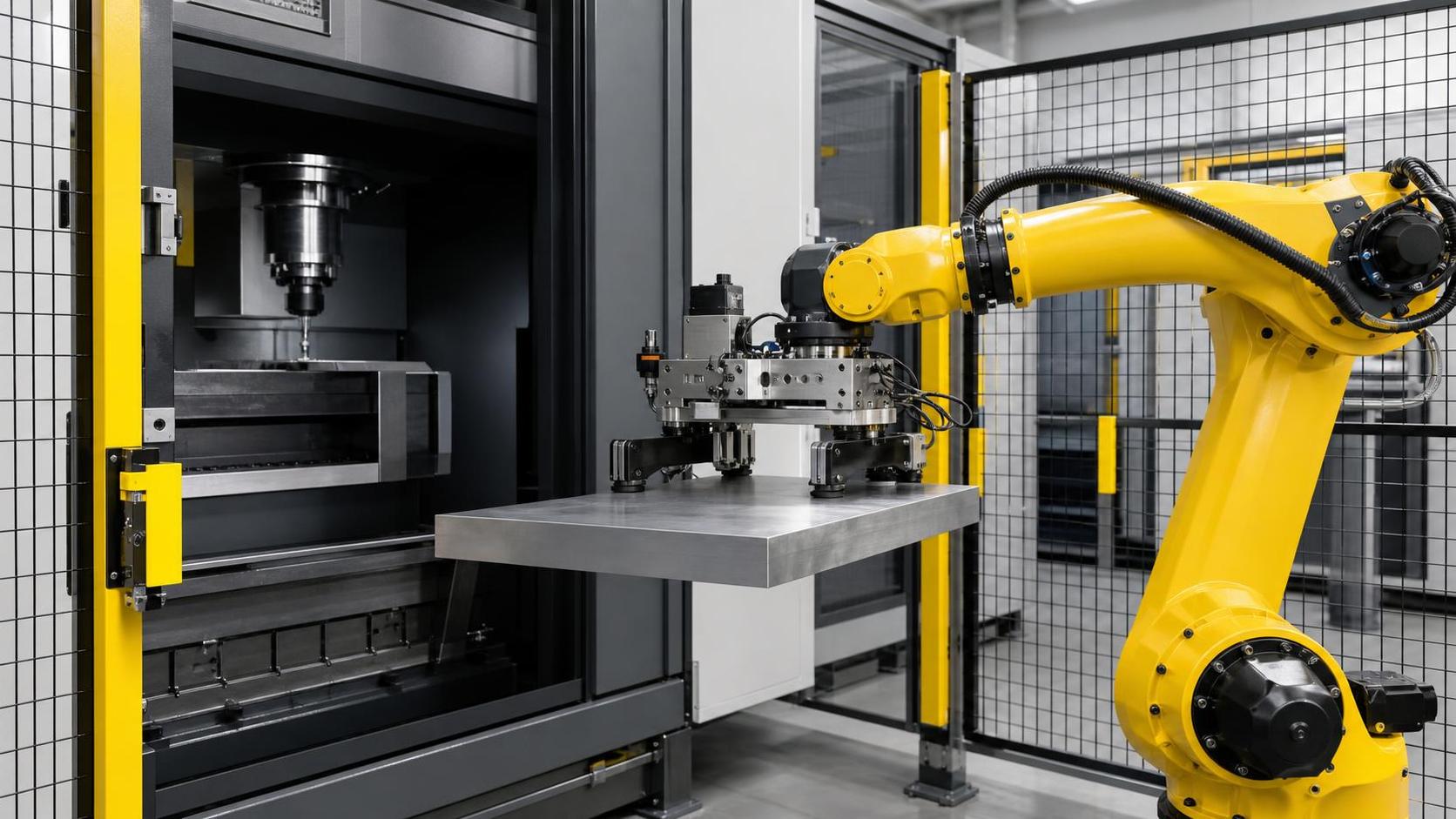
CE certification on a handling robot arm confirms that the manufacturer has declared the equipment conforms to the applicable European Union requirements for safety, health, and environmental protection before it is placed on the EU market. For a quality or safety manager, that is meaningful evidence, but it is not a blanket approval of every future application, tooling choice, or factory installation.
The practical distinction matters. A robot arm may carry a CE mark and still become non-compliant when fitted with a new gripper, placed beside an unguarded conveyor, programmed for a different payload, or integrated into a larger automated cell without a new assessment of the combined system. CE marking applies to the product configuration and intended use defined by the responsible economic operator. It does not remove the integrator's responsibility for the completed installation.
What the CE mark is intended to confirm
A handling robot arm with CE certification should be supported by a conformity assessment process covering the hazards that apply to that machine. Depending on its design and supplied equipment, this commonly involves machinery safety requirements as well as electrical, electromagnetic compatibility, and potentially other applicable EU legislation. The exact legal framework depends on the date the product is placed on the market and the equipment supplied with it, so buyers should focus less on a generic claim of “CE compliant” and more on the declaration and technical scope behind it.
For a conventional industrial robot, the assessment should address foreseeable risks associated with motion, crushing, shearing, trapping, unexpected start-up, electrical energy, control-system failures, maintenance access, and misuse that can reasonably be anticipated. The result should be reflected in the machine's protective measures: defined operating modes, safeguarded space, emergency stop arrangements, enabling controls where applicable, clear residual-risk information, and instructions for installation and use.
CE marking is based largely on manufacturer responsibility. It is not automatically equivalent to a certificate issued by an independent laboratory, and it should not be treated as proof that an outside organization has inspected the robot cell at the buyer's site. A supplier may use third-party testing or certification as supporting evidence, but the core document a buyer needs is the EU Declaration of Conformity from the responsible manufacturer or authorized representative.
The documents that should accompany the robot
The CE label on the robot body is only the visible end of the process. Before accepting a robot arm, request the documentation package and compare it with the actual delivered configuration. At minimum, the package should include a Declaration of Conformity, operating and maintenance instructions in the required language for the destination market, identification of the manufacturer or responsible EU economic operator, model and serial-number traceability, and the applicable legislation or standards referenced by the declaration.
Instructions deserve more scrutiny than they often receive. They should state the arm's payload and reach limits, permitted mounting orientations, environmental conditions, installation requirements, cable-routing rules, emergency-stop and protective-stop interfaces, maintenance precautions, and restrictions on end effectors. A manual that covers only basic start-up while leaving safeguarding, residual risks, or integration interfaces vague does not give the safety team enough material to validate the intended application.
For a robot supplied as part of a cell, clarify whether the paperwork covers the complete assembly or only separate components. A robot arm, controller, safety scanner, fence, conveyor, gripper, and loading station may each have individual CE documentation, yet the assembled line still requires an assessment of hazards created by their interaction. The documents should identify who assumes responsibility for that completed machinery or partially completed assembly.
What CE certification does not confirm
CE marking does not prove that the arm is suitable for every handling task. Payload is only one part of suitability. A large, offset, flexible, sharp, hot, oily, or unstable workpiece can create forces and hazards that are absent from the robot's nominal payload rating. Gripper mass, pneumatic lines, sensor brackets, cable dress packs, acceleration, stopping distance, and the center of gravity all affect whether the programmed operation remains within safe limits.
It also does not confirm that a production rate is safe. Increasing speed or reducing dwell time changes the kinetic energy available during a collision and can alter the required separation distances around the cell. Likewise, a collaborative operating mode should not be assumed merely because a robot can be configured for collaboration. The safe use of collaborative functions depends on the particular tool, workpiece, motion path, contact conditions, safeguards, and risk assessment. A sharp-edged metal blank or a powered gripper can invalidate assumptions that might be acceptable for a low-risk handling task.
CE marking should not be confused with a guarantee of process quality either. The mark addresses applicable regulatory conformity, not whether the robot will maintain a required positional tolerance, cycle time, uptime level, or surface-protection standard in a specific process. Those are separate acceptance criteria and should be stated in the purchase specification.
The integration boundary is where most questions arise
In manufacturing, the robot is often purchased to feed or unload another machine. That is the point at which the scope of CE responsibility needs to be written down. Consider a robot loading heavy plate into an edge-preparation process such as a Heavy Edge Milling Machine. The robot supplier may provide a CE-marked arm and controller. The milling-machine supplier may provide CE-marked equipment. Once the two are linked through a loading fixture, interlocked guards, safety signals, and automated sequences, the combined process introduces additional hazards: workpiece drop, gripper release, access to the cutter area, collision with machine structures, restart after a fault, and unexpected movement during clearing or maintenance.
The party that designs or substantially modifies that integrated cell must evaluate those combined hazards. In many projects, that role sits with the system integrator. In others, the end user becomes responsible because it selects the gripper, builds the fixture, writes the robot program, and connects the machines. Contracts should name the responsible party before installation begins. Leaving the question until commissioning commonly produces gaps in guarding, documentation, and validation.
Quality managers should also distinguish between a robot delivered with a finished application and a robot supplied for later integration. A supplier may provide partial documentation for components intended to be incorporated into another machine, while the final cell requires completion by the integrator. That is not inherently a problem, provided the status is explicit and no one mistakes component-level documentation for a completed-cell declaration.
Safety functions need functional evidence, not just a checklist
A review of the robot's safety architecture should move beyond confirming that an emergency-stop button exists. Ask how the emergency stop behaves across the robot controller, gripper, external axes, conveyors, and connected machine tools. Determine whether a protective device stops the hazardous motion that a person can reach, whether restart requires a deliberate action after a guard opens, and whether safety signals are monitored for faults rather than treated as ordinary control signals.
Functional safety claims should be tied to the actual system design. A safety-rated monitored stop, speed limitation, gate interlock, scanner field, or safe torque off function may be available in the robot controller, but it only protects the cell when correctly configured, wired, validated, and maintained. A purchased option is not the same as a validated protective function.
- Verify that safety inputs and outputs are documented and match the installed wiring.
- Confirm the stop category and restart behavior for each foreseeable access scenario.
- Check whether the gripper retains or safely releases a part after loss of power, air, or vacuum.
- Review the safe position or safe-speed logic used for teaching, recovery, and manual intervention.
- Test interlocks, emergency stops, protective devices, and fault recovery during site acceptance under controlled conditions.
For heavy parts, retained energy needs particular attention. A stopped robot can still present a hazard if a suspended workpiece remains held by vacuum, magnetic force, or a mechanical gripper. The risk assessment should consider what happens during power loss, pressure loss, controller failure, and manual recovery. A safe state for the arm may not be a safe state for the workpiece.
How to review a supplier claim before purchase
A supplier's statement that a robot is “CE certified” is a starting point for due diligence, not the end of it. Request the declaration before issuing the purchase order, then compare its model designation, options, controller version, and intended-use description with the quotation. A declaration that applies to a base arm may not cover an added seventh axis, custom gripper, special control cabinet, or machine interface.
It is also sensible to preserve these records with the machine acceptance file. The file should include the declaration, manuals, safety circuit drawings, risk assessment for the completed cell, validation records, programmed limits, change-control records, and training evidence. This supports both internal audits and later troubleshooting when a fixture, program, or production requirement changes.
Changes after commissioning can change the compliance position
A handling robot arm is rarely static throughout its service life. New grippers, higher payloads, revised pallet patterns, different materials, extended reach, external axes, altered guard openings, and software changes can each affect the original risk assessment. The question is not whether every minor adjustment requires a complete re-certification exercise. The question is whether the change introduces hazards, increases exposure, defeats a protective measure, or moves the system outside the supplier's intended-use limits.
For example, a robot that transfers stable fabricated components may need a substantially different safety review when reassigned to handle long metal plates. The part can protrude beyond the arm's swept envelope, obstruct a scanner, deflect during acceleration, or strike a guard even when the robot flange follows the same path. A higher-capacity edge milling setup, including systems designed for plate thicknesses well beyond standard handling ranges, can make that mismatch more pronounced. The cell assessment must account for the actual workpiece envelope, not just the arm's catalog dimensions.
CE certification therefore confirms an important foundation: the declared product has been assessed against applicable requirements in its defined configuration. It does not transfer the full safety case of an automated handling process to the robot manufacturer. For quality and safety teams, the reliable approach is to verify the declaration and documentation, define the boundary of the supplied system, validate safety functions on the installed cell, and treat significant operational changes as a reason to revisit the assessment.
search
Products Navigation
Send Us A Message