




Which Space Frame Welding Machine Fits Steel Structure Fabrication Best?
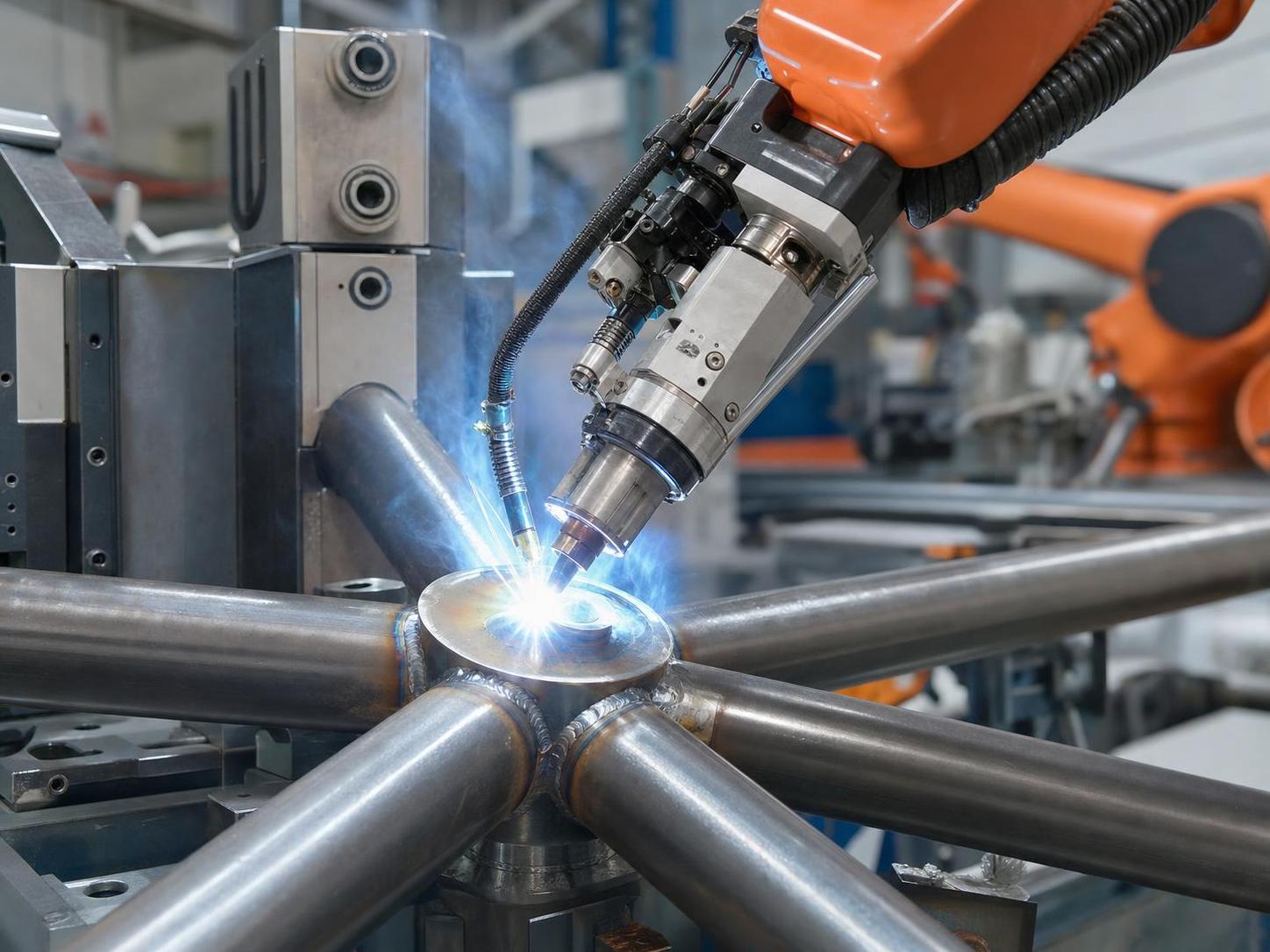
Start with the job, not the machine label
If you are choosing a Space frame welding machine for steel structure fabrication, the fastest way to make a bad decision is to buy by model name alone. In real workshops, the right machine is the one that matches your member sizes, joint types, throughput target, and the skill level on the floor. A machine that looks advanced on paper can still slow production if it takes too long to set up, struggles with fit-up variation, or forces operators to spend extra time correcting weld seams.
For most operators, the practical question is simple: will this equipment help you produce repeatable joints with less rework? That means you need to check arc stability, positioning method, adjustment range, fixture behavior, and how the machine deals with the actual steel sections you fabricate every day.
Check what kind of space frame work you actually run
Before comparing brands or automation options, list the jobs that dominate your schedule. Operators often work across more than one structure type, but one category usually drives the machine choice:
- Round tube nodes with repeated angles
- Square tube or rectangular tube assemblies
- Mixed steel structures where space frame parts are only one part of the workload
- Heavy sections that need stronger handling and more stable positioning
This matters because some welding systems are efficient only when part geometry is highly consistent. If your shop changes section size and angle all day, flexibility is usually worth more than maximum cycle speed. If your parts are standardized, a more automated setup pays back faster.
Look at joint consistency before you look at welding speed
A machine can advertise high output, but if the joint gap changes from piece to piece, that speed does not mean much. Space frame fabrication lives or dies on fit-up. Poorly prepared tube ends, uneven bevels, and inconsistent cut angles force operators to compensate during welding, and that usually leads to heat distortion, undercut, or extra filling.
So your checklist should begin upstream:
- Are the tube ends cut accurately enough for repeatable root condition?
- Do bevel angles stay consistent across batches?
- Does the machine fixture hold the parts without shifting during tack and full weld?
- Can the operator adjust torch position quickly when actual fit-up is slightly off?
If those answers are weak, the welding machine will spend its life covering for preparation problems. In shops that process carbon steel, stainless steel, or aluminum parts for related fabrication work, a stable beveling step can remove a surprising amount of downstream trouble. That is where equipment such as Pipe Cutting & Beveling Machine becomes relevant: one-pass straight, inclined, or U/V/K bevel preparation with automatic clamping and controlled feed helps operators hand over more consistent edges to welding, especially when joint quality matters more than pushing pieces through by hand.
Match automation level to operator reality
This is where many buying decisions go wrong. Fully automatic equipment sounds attractive, but it only works well when your part library, loading method, and programming discipline are already mature. Otherwise, operators end up stopping the line to correct alignment, reteach paths, or override defaults.
A practical way to compare options is this:
If your team still depends on frequent manual correction, jumping straight to the highest automation tier is usually premature. In that case, a machine with reliable positioning, good parameter memory, and simple operator controls often performs better than a more complex system that the shop cannot fully support.
Verify section range and rotation capability
Space frame members do not all behave the same under welding. Thin-wall tubes need more controlled heat input. Heavier sections need stronger workholding and smoother rotation. If the machine cannot rotate the workpiece steadily, bead quality becomes operator-dependent very quickly.
When you check the machine, focus on the working range that affects operation:
- Minimum and maximum tube diameter or section size
- Permitted workpiece weight on the fixture or rotator
- Rotation smoothness at low speed for root pass control
- Whether repositioning is needed for multi-angle joints
A common mistake is checking only the largest section the machine can hold. In practice, the smaller and thinner parts often reveal the real control quality, because that is where overheating and mismatch show up first.
Pay attention to fixture design and access around the joint
Operators care about access more than brochures do. On a space frame node, the problem is not just holding the member. The machine has to let the torch approach the joint cleanly without the clamp blocking the weld path or forcing awkward repositioning.
A usable fixture should do three things well: locate the part repeatedly, resist movement during welding, and still leave enough clearance for the torch and any cleaning or inspection step. If a setup looks rigid but takes too long to load, your cycle time disappears before arc start.
Check whether the machine supports your welding process, not just steel thickness
Different shops prefer different processes depending on structure type, weld position, and finishing requirement. The machine should fit the process you actually use, whether that is MIG/MAG for productivity, TIG for cleaner control on special applications, or a robotic arc welding setup for repeated geometry.
Do not assume compatibility based only on power source. Ask how parameter adjustment works in operation. Can operators store recipes by material and joint type? Can travel speed and torch angle be fine-tuned without digging through complicated menus? A good answer here reduces scrap more than a long feature list does.
Inspect the full handling chain around the welding station
The best Space frame welding machine can still become the bottleneck if loading, cutting, beveling, or unloading is slow. Steel structure fabrication is connected work. Operators feel the benefit only when the whole chain stays balanced.
For example, if your shop also handles pressure vessels, boilers, shipbuilding parts, or heavy machinery components, edge preparation quality often decides whether the welding station runs smoothly. A milling-based beveling process with automatic feed, edge detection, and angle adjustment from 0° to 90° can be useful where consistent groove shape matters. Standard capacity around 6–80mm and heavy-duty options up to 6–400mm are not directly about space frames, but they become relevant in mixed-production shops that want cleaner handoff into welding and less secondary grinding.
Make maintenance and fault recovery part of the buying decision
Operators do not need a machine that is impressive only when everything is perfect. They need one that recovers quickly after wire feed trouble, fixture wear, sensor drift, or parameter mistakes. That is why maintenance access deserves a hard look during evaluation.
- Can consumables be changed without dismantling half the working area?
- Are common fault messages clear enough for floor-level troubleshooting?
- Can alignment points and wear parts be checked during routine maintenance?
- Is the control system simple enough for shift-to-shift consistency?
A machine with slightly lower top speed but easier maintenance will often deliver more useful production time over a month.
Use a short trial checklist before final selection
If you can test the equipment, do not run ideal samples only. Bring parts that reflect real workshop variation. That is where the machine shows its character.
- Run at least one common section size and one awkward size.
- Check setup time from part loading to first acceptable weld.
- Watch whether the fixture still holds alignment after heat input builds.
- Inspect weld appearance and consistency, not just whether fusion is achieved.
- Ask the operator to repeat the cycle after a parameter change.
That last point matters. A machine that only one senior technician can run smoothly is not a strong production solution.
Choose the machine that removes your current bottleneck
There is no universal best answer. For some shops, the right choice is a flexible semi-automatic setup that handles changing member geometry without wasting time. For others, a CNC or robotic system makes sense because part prep, fixture repeatability, and batch size are already under control.
If you are making the decision from the operator side, rank your checks in this order: fit-up consistency, fixture access, section range, process control, and maintenance practicality. After that, look at cycle speed. That sequence usually leads to a machine that works in day-to-day steel structure fabrication, not just in a sales presentation.
search
Products Navigation
Send Us A Message