




Space Frame Welding Machine Basics: Key Components, Process, and Output
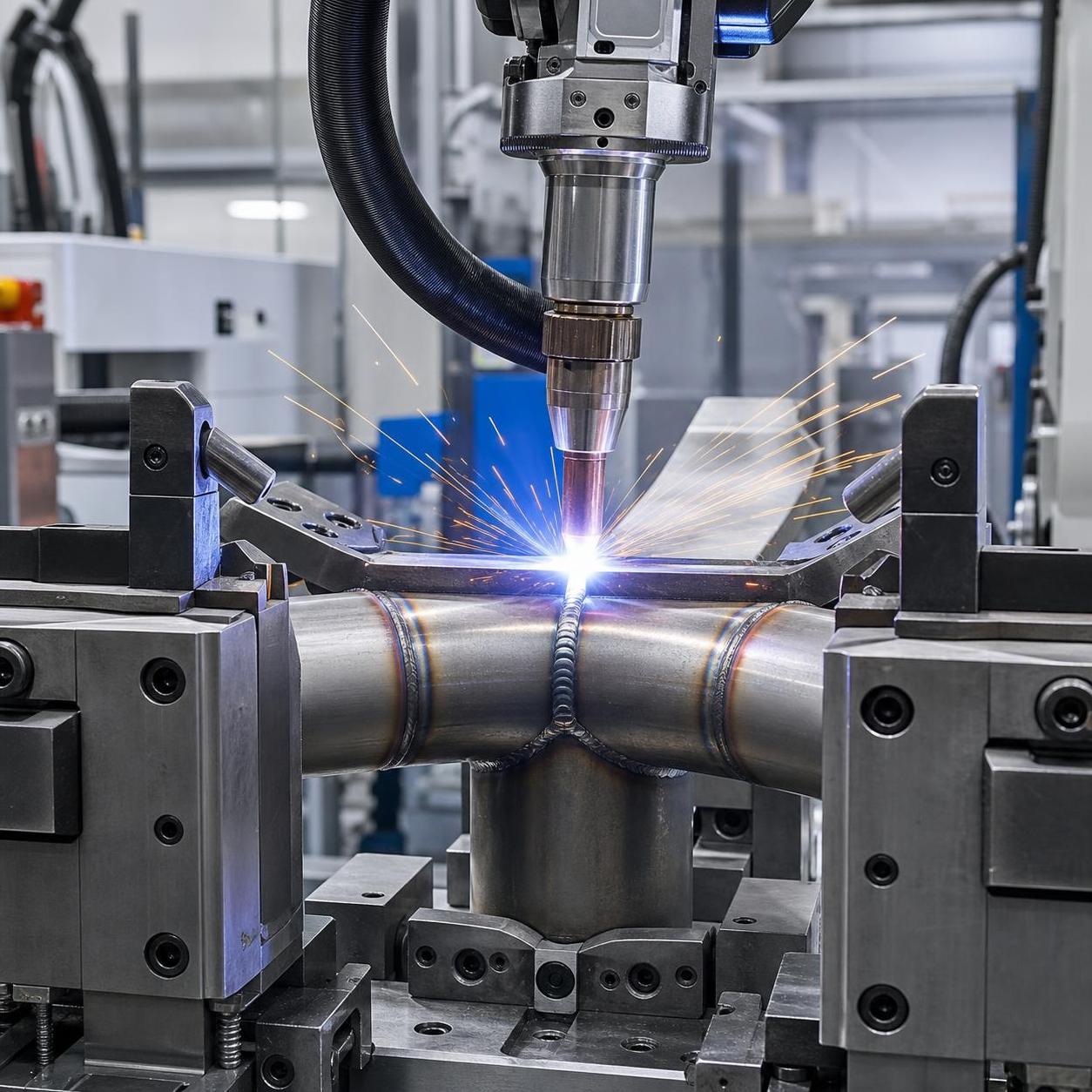
What should you understand first about a space frame welding machine?
Start with its job: a space frame welding machine is built to join tubular or profile members at repeatable angles and positions, so the finished frame keeps its geometry from one unit to the next. That matters because space frames depend on joint accuracy. A small error at one node can multiply across the whole structure and create fit-up problems later during assembly.
In practical terms, this type of equipment is less about making a single weld bead and more about controlling the entire joint-making cycle. It helps hold parts, position the torch, maintain travel consistency, and reduce variation caused by manual handling. For anyone researching equipment, that is the real baseline: you are evaluating a system for joint consistency, not just a welding head.
A good machine also improves workshop rhythm. When fixture setup, indexing, and welding movement are organized in one process, operators spend less time correcting alignment and more time producing usable parts.
Which components have the biggest effect on performance?
Buyers often focus on the power source first, but the most important parts are usually the ones that control positioning. If the frame members are not held correctly, even a strong welding unit cannot deliver stable results.
- Fixture and clamping system: This keeps the workpiece in the intended location and prevents movement from heat input.
- Positioning or rotation unit: Many space frame joints need the torch and workpiece to stay in the best welding orientation throughout the cycle.
- Welding torch assembly: Torch stability, angle control, and travel path directly affect bead shape and penetration consistency.
- Control system: This manages motion, sequencing, and parameter repeatability. It is what turns a set of mechanical parts into a production tool.
- Feeding and alignment features: These become more important when production volume rises and operators need shorter setup time.
When comparing machines, ask where dimensional repeatability actually comes from. If the answer is vague, that is a warning sign. Joint quality depends on how accurately the system locates and supports the members before the arc even starts.
How does the welding process usually flow from loading to finished joint?
The sequence is usually straightforward, but each stage affects the next one. In most workshops, the process follows this logic:
- Load and locate the frame members in the fixture.
- Check fit-up at the node or connection area.
- Clamp the parts to control movement during heat input.
- Run tack welding or a positioning step if required.
- Execute the programmed weld path, often with controlled rotation or repositioning.
- Unload the welded assembly and inspect the joint appearance and alignment.
The weak point is usually fit-up, not the arc itself. If cut ends are inconsistent, gaps vary, or part geometry shifts in the clamp, the machine will simply repeat those problems efficiently. That is why researchers should look at the machine together with upstream preparation steps such as cutting, coping, and forming.
What kind of output can you realistically expect?
Output is not only about how many joints per hour a machine can weld. A more useful way to think about output is to separate it into three layers: quantity, consistency, and rework rate. A machine that produces fast but leaves frequent alignment correction or weld repair is not truly high output.
If you are reviewing equipment for research rather than immediate purchase, this is the right question to ask suppliers: what part of the cycle is automated, and what part still depends on manual correction? That answer tells you more than any headline claim about productivity.
Is a space frame welding machine only useful for high-volume production?
Not necessarily. High volume makes automation easier to justify, but repeatability can matter just as much in medium-volume work or projects with strict dimensional requirements. If the same node types appear again and again, even moderate production can benefit from mechanized welding.
Where the fit becomes less favorable is highly mixed production with constant geometry changes and very low repetition. In that case, setup time can eat into the productivity gain. The right evaluation is not “manual versus automatic” in the abstract. It is “how often does this joint repeat, how tight is the geometry tolerance, and how expensive is rework?”
What should be checked before welding starts?
Three things usually decide whether the weld goes smoothly: part preparation, fixture condition, and joint access. People sometimes jump straight to current and speed settings, but those are downstream decisions.
- Are the member ends cut to the intended geometry?
- Does the fixture hold the parts without forcing them into a distorted position?
- Can the torch reach the weld path without awkward angles or collision risk?
- Will heat input pull the joint out of alignment if the clamp sequence is wrong?
This is also where related equipment matters. In metal fabrication, upstream forming affects downstream welding more than many first-time buyers expect. For example, when heavy plate components need rolling before they become part of a structure, equipment such as Mechanized bending machine with 3 roller can be relevant because it bends sheet materials into controlled shapes and handles cylindrical, conical, arc-shaped, or partial-section workpieces. For thicker plates of 50 mm or more, the added fixed idler rollers beneath the two lower rollers help reduce span and improve workpiece accuracy, which makes later fit-up more predictable.
Where do quality problems usually come from?
Most repeat problems come from a short list of causes. Poor part matching is one. Inconsistent clamping is another. Heat distortion follows close behind. These issues can look like welding defects, but the root cause often sits in preparation or fixturing.
A useful way to diagnose trouble is to separate visual weld quality from structural repeatability. If the bead looks acceptable but the assembled frame drifts out of position, the machine may be welding consistently while the locating method is weak. If the geometry is stable but bead appearance varies, then torch path, travel speed, or arc stability may need attention.
That distinction saves time. Otherwise, teams keep adjusting welding parameters when the real problem is fixture accuracy or upstream part variation.
How can a researcher tell whether one machine is better suited than another?
Look beyond the sales description and compare the machine against the actual joint family you need to produce. A suitable system should match part shape, access angle, expected repetition, and required alignment stability.
The most useful questions are practical:
- What range of member sizes can the fixture hold without improvised shimming?
- How is the weld path controlled when joint geometry changes?
- What setup work is needed between one frame type and the next?
- Which part of quality depends on operator skill, and which part is built into the machine?
For research-stage readers, that last question is especially important. It tells you whether the machine’s value comes from real process control or simply from moving manual work into a different station.
Does the surrounding production line matter as much as the welding machine itself?
Yes. A space frame welding machine performs inside a chain of preparation steps, not in isolation. If cutting accuracy is unstable, if formed parts vary, or if the shop handles components roughly between stations, welding quality will be harder to stabilize. That is why experienced buyers review the full route from material preparation to final inspection.
This is also where suppliers with broader fabrication equipment knowledge can be useful. A company dealing in automatic welding systems, CNC cutting equipment, bending and rolling machines, and related machine tools is often in a better position to discuss process matching across the line rather than treating the weld station as a stand-alone purchase.
What is the best takeaway for someone still in the learning stage?
Judge a space frame welding machine by the joints it must repeat, the fit-up quality it can tolerate, and the amount of correction work it removes from the shop. That gives you a clearer picture than focusing only on welding speed or automation level. If the machine controls positioning well, works with stable upstream preparation, and keeps finished frames consistent, it is doing the job that matters.
For anyone comparing options, begin with the node geometry, fixture logic, and production flow. Those three points reveal most of the real answer long before the machine is powered on.
search
Products Navigation
Send Us A Message