




Manual vs Automatic Space Frame Welding Machine: Which Delivers Better ROI?
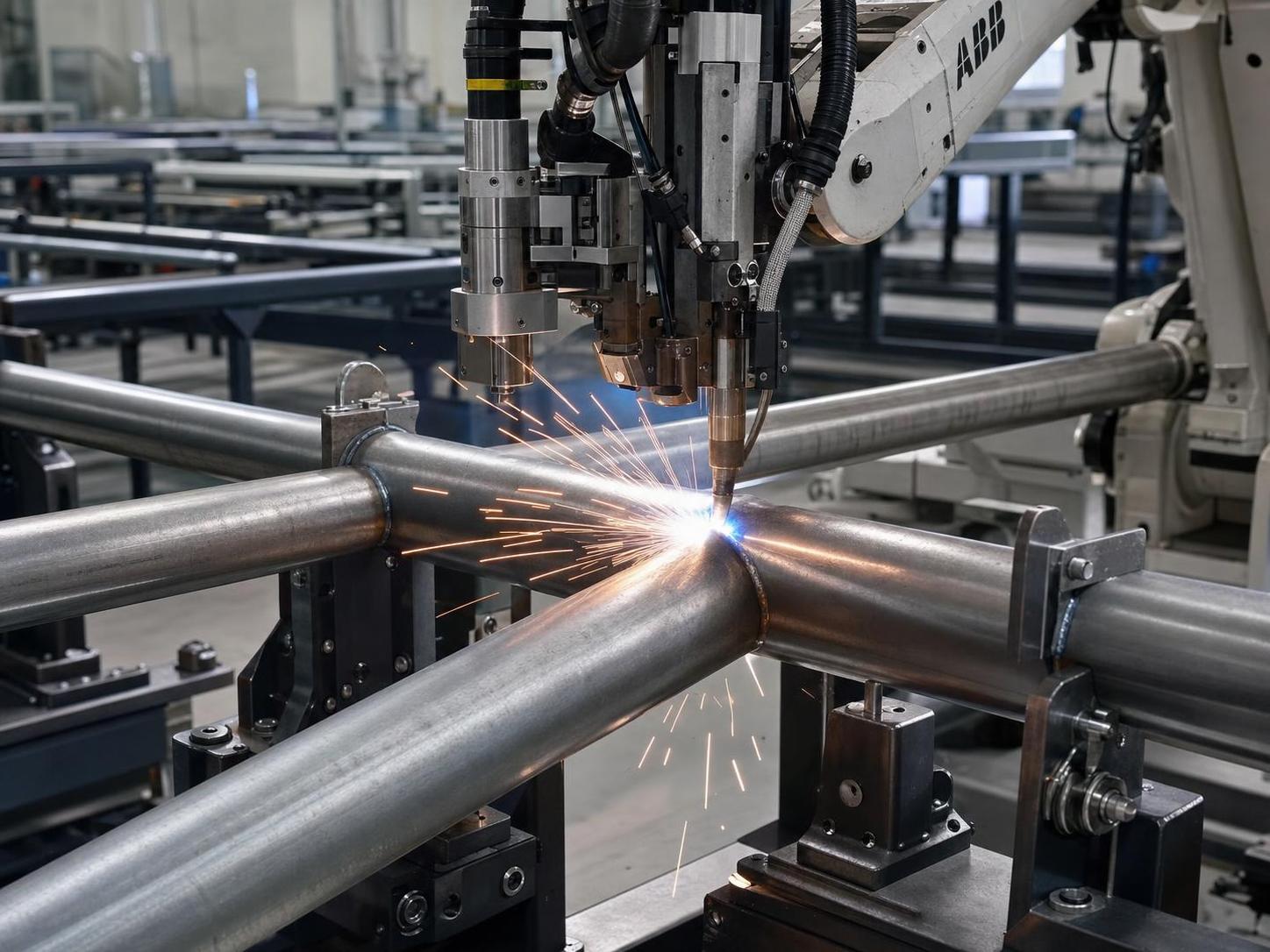
Which choice usually gives better ROI: a manual or automatic space frame welding machine?
In most factories, the better return does not come from the cheaper machine. It comes from the setup that matches output volume, quality tolerance, labor availability, and rework risk.
A manual Space frame welding machine often makes more sense when production is low, frame designs change often, and skilled welders are already in place. The investment is lighter, changeover is simpler, and you are not paying for automation that sits idle.
An automatic Space frame welding machine usually delivers stronger ROI when orders are repetitive, lead times are tight, and weld consistency directly affects downstream fit-up, inspection, or delivery. The upfront price is higher, but automation can cut cycle time, reduce dependence on individual operators, and lower the hidden cost of correction work.
That is the real decision point: not “Which machine costs less?” but “Which one earns back its cost faster under our production conditions?”
What costs should be included in an ROI comparison?
Many buyers compare only purchase price and miss the bigger operating picture. For a fair comparison, look at total production cost per finished frame, not machine price alone.
You should also include fixture cost, floor space, power use, maintenance parts, and the financial effect of delivery delays. In welded structure production, late shipment can erase the savings from a lower machine price very quickly.
When does a manual space frame welding machine make more financial sense?
Manual equipment is often the better buy for smaller manufacturers or job shops handling mixed orders. If your production schedule changes week to week, flexibility matters more than maximum output.
It tends to be the right fit when:
- Batch sizes are small or irregular.
- Frame dimensions or node layouts change frequently.
- You already have stable, experienced welders.
- Capital expenditure is tight and payback must start with low upfront risk.
- You need a backup line or a supplementary station rather than a main production cell.
A common mistake is assuming manual always means cheap. If the part geometry is difficult and inspection failure is expensive, manual welding can become the costly option over time. The purchase is cheaper. The output is not always cheaper.
Where does automation usually pay for itself faster?
Automation starts to look strong when the same type of frame is produced again and again. Repetition is what allows a machine to turn speed and consistency into margin.
If you are quoting projects with strict delivery dates, labor shortages, or demanding fit-up accuracy, an automatic Space frame welding machine may reduce operational risk more than a spreadsheet first suggests. The value is not only faster welding. It is also more predictable throughput, easier scheduling, and fewer quality surprises at the end of the line.
This becomes even more relevant when welding is only one part of a larger fabrication flow. For example, if your plant also processes connection plates, flanges, or structural steel components, smoother upstream machining helps automated welding perform as intended. That is where equipment like High Speed CNC Drilling Milling Machine for Steel Plates fits naturally into the discussion. For steel plates up to 100 mm thick, with automatic positioning, drilling, tapping, milling capability, and automatic chip removal, it supports more stable part preparation before welding. Better-prepared parts usually mean fewer alignment delays later.
How do I estimate payback without guessing?
Use your own production numbers from a typical three- to six-month period. That gives a much more useful answer than any generic benchmark.
- Calculate average monthly output by frame type.
- Measure labor hours per finished unit, not just arc time.
- Add rework hours, scrap material, and inspection rejects.
- Estimate setup and changeover time by order mix.
- Compare total cost per good unit under manual and automatic scenarios.
- Divide the additional investment by monthly savings to estimate payback months.
The key phrase here is good unit. If one option produces more pieces but also more repair work, the headline output number is misleading.
Is weld quality really that different between manual and automatic systems?
It can be, but only if the process around the machine is stable. Automation does not magically fix poor joint design, inaccurate material preparation, or weak fixturing.
Manual welding may deliver excellent quality in the hands of a strong operator, especially on variable structures. The problem for managers is repeatability. When quality depends too much on individual technique, production planning becomes fragile.
Automatic welding generally gives better consistency when these conditions are under control:
- Part dimensions stay within tolerance.
- Fixtures hold the frame securely and repeatably.
- Welding parameters are validated for the joint type.
- Material prep is consistent from batch to batch.
If those basics are not in place, buyers often blame the machine for problems caused upstream.
What operational risks do buyers underestimate?
Two risks show up repeatedly in purchasing decisions.
The first is underutilization. An automatic line can be a poor investment if real order volume is too low or too unstable. A machine with strong capacity but weak loading will stretch payback far beyond expectation.
The second is process mismatch. Some companies buy for speed, then discover their bottleneck is actually in cutting, drilling, plate prep, or fixture turnaround. In that case, welding automation alone will not fix the output problem. You need to map the full workflow before signing the order.
This is why procurement teams should review not just the welding station, but the whole production chain: incoming material condition, part prep accuracy, clamping method, inspection points, and maintenance response time.
What should decision-makers ask a supplier before buying?
Ask questions that expose real production fit, not just brochure strengths.
- What frame types and joint ranges is the machine designed to handle?
- What input tolerances are required for stable welding performance?
- How long does changeover take between different specifications?
- Which consumables and wear parts need regular replacement?
- What operator skill level is needed for setup, production, and troubleshooting?
- What documents are available for installation, training, and maintenance?
If your facility already runs other fabrication equipment, it also helps to ask how the welding machine integrates with adjacent processes. A supplier with experience across automatic welding equipment, CNC cutting, machining, and steel structure production usually understands that ROI is shaped by the line, not a single machine in isolation.
So which one should you buy?
Choose manual when your order mix is variable, your batch size is modest, and flexibility matters more than peak throughput. Choose automatic when your production is repeatable enough to keep the machine busy, and when labor cost, delivery pressure, or weld consistency is already hurting margin.
A good purchasing decision starts with three numbers: monthly volume by frame type, total labor hours per good unit, and the current cost of rework. Once those are clear, the better ROI choice usually stops being a debate and starts looking obvious.
search
Products Navigation
Send Us A Message