




Why Stainless Steel Tube Bending Machines Need Different Tooling and Process Control
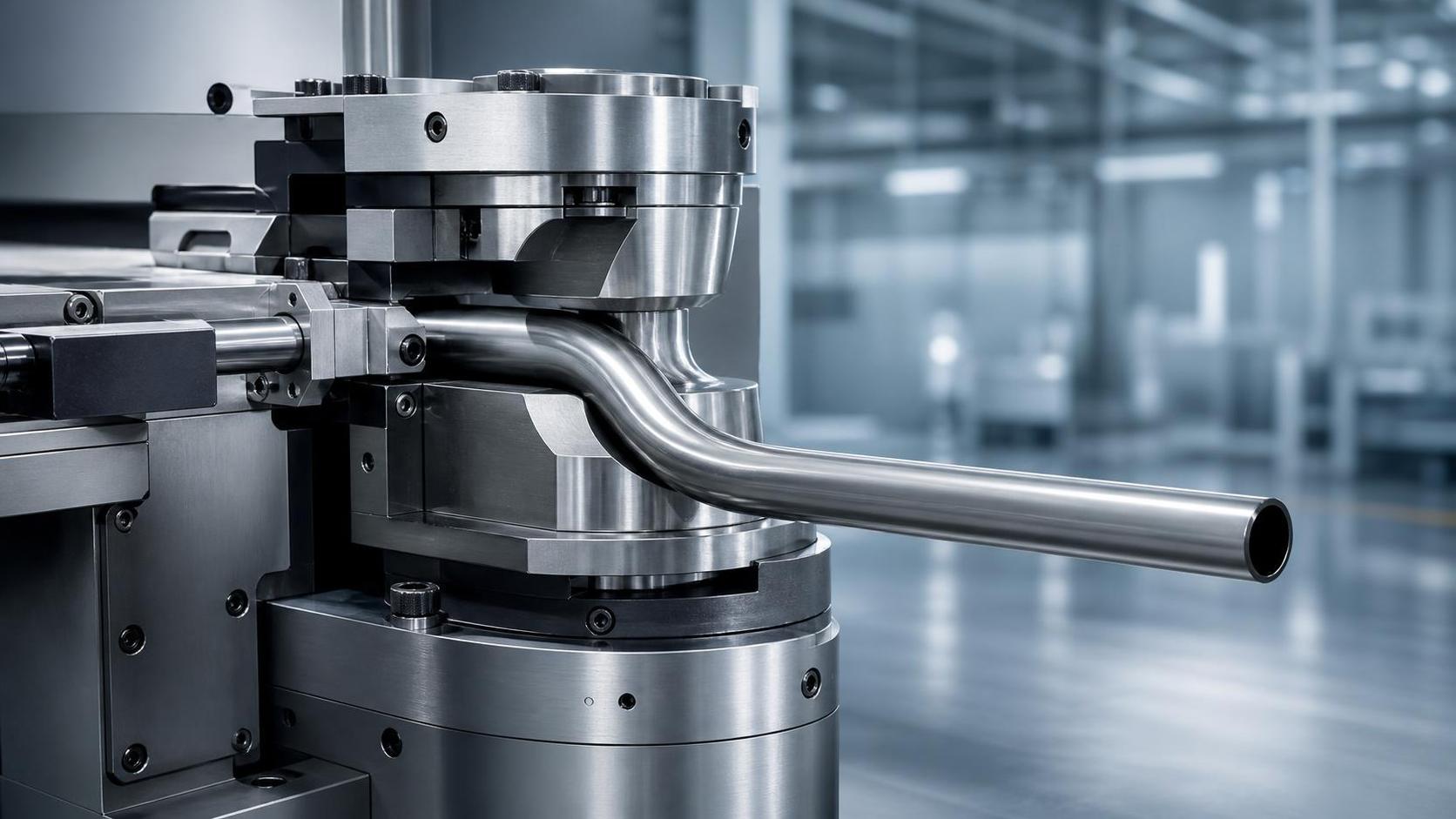
Choosing a stainless steel tube bending machine is only the visible part of the decision. The harder part is understanding why stainless steel rarely behaves like carbon steel once the tube enters the bend zone. On paper, both are “tubes,” both can be rotary draw bent or roll bent, and both may fit the same nominal diameter range. In production, though, stainless steel usually asks more from the machine, the tooling, and the operator or programmer.
That difference matters most when the job is not just to make a bend, but to make the same bend repeatedly without flattening, wrinkling, scoring, or drifting out of tolerance. For fabricators supplying food equipment, architectural components, heat exchangers, automotive tubing, or clean-process pipe assemblies, “almost right” is often scrap.
Why stainless steel is less forgiving in bending
Stainless steel has a combination of strength, work hardening tendency, and springback that changes the whole bending setup. Compared with mild steel, it generally resists deformation more strongly and then tries harder to recover after the bend force is released. That is why a bend angle that looks correct under load may open up once the tube comes out of the tooling.
The problem is not only angle recovery. As stainless steel work-hardens, the material in the bend area can become less cooperative from one part to the next if lubrication, clamping pressure, or feed consistency changes. A setup that seemed stable during the first five pieces can start showing wall thinning on the outside radius or slight ripples on the inside radius after a longer run.
This is where many buyers underestimate the importance of tooling. They compare machine tonnage, control system, or tube diameter capacity, but not the details of bend die geometry, pressure die material, mandrel selection, or wiper die tuning. With stainless, those details are often what separate a production machine from a machine that simply can bend a sample.
Tooling cannot be treated as a generic accessory
A stainless steel tube bending machine usually needs tooling designed around surface protection and deformation control. Stainless is more prone to showing marks, especially on polished, decorative, or sanitary tubing. Tool hardness, contact finish, and fit-up become more important than they might be on structural carbon steel tube where cosmetic defects are less critical.
In practice, the bend die groove must support the tube correctly without over-constraining it. Too loose, and the tube can shift or ovalize. Too tight, and galling or surface pickup becomes more likely. Pressure dies, clamp dies, and mandrels also need to be selected with the bend radius, wall thickness, alloy condition, and finish requirement in mind. A thin-wall stainless tube with a tight centerline radius may need a very different mandrel and wiper arrangement than a heavier wall industrial tube of the same outside diameter.
This is also why shops that are successful with mixed-material work rarely rely on one “universal” tooling philosophy. They may standardize machine platforms, but they do not standardize all tooling settings across stainless, aluminum, and mild steel. Stainless does not reward that shortcut for long.
Springback is the obvious issue, but not the only one
Most people familiar with tube bending already know that stainless steel springs back more. What gets missed is how springback interacts with the rest of the process. If the tooling is slightly worn, lubrication starts to vary, or the tube lot has a small change in mechanical properties, the springback compensation may no longer be enough. The machine may still repeat perfectly, but the part result shifts because the material response changed.
That is why process control matters just as much as machine capability. A reliable setup usually depends on controlling at least these variables:
- tube outside diameter and wall thickness consistency
- material grade and condition
- bend radius relative to tube size
- mandrel position and type
- wiper die entry and edge condition
- lubrication type and application consistency
- clamp pressure and pressure die assist
- machine axis repeatability and program correction logic
When one of these is unstable, stainless tends to reveal it quickly. Mild steel may still produce an acceptable part under the same variation. Stainless often will not.
Surface finish changes the tooling conversation
For decorative or hygienic stainless applications, bending is not just about geometry. Surface finish can be the deciding factor. A tube intended for visible architectural use or for food-processing assemblies may be rejected for drag lines, clamp marks, or slight die pickup even if the angle and radius are correct.
This is where tooling materials and maintenance discipline matter more than brochures usually suggest. Clean tooling, polished contact surfaces, correct lubricants, and sensible die-change routines reduce cosmetic defects. Shops that process stainless regularly often keep certain tool sets reserved for higher-finish materials rather than mixing them with rougher production jobs. It adds some handling discipline, but it prevents a lot of avoidable rework.
The broader point is familiar across metal forming equipment. Companies that work across bending, cutting, welding, and finishing tend to see that material behavior does not stay isolated in one operation. A tube that is scratched in bending can become harder to clean, polish, weld, or inspect later. Suppliers with wider equipment experience, including those handling CNC cutting machines, welding systems, deburring machines, and pipe benders, often look at these handoff issues more realistically because they have seen where production bottlenecks actually show up.
Thin-wall stainless tubing is where the process gets demanding fast
If the tube has a relatively thin wall and the bend radius is tight, the setup margin becomes narrow. The outside wall wants to thin, the inside wants to wrinkle, and the cross-section wants to flatten. At that point, the machine alone does not “solve” the job. It becomes a balance of mandrel support, wiper die condition, pressure die assistance, lubrication, and feed timing.
A common mistake in equipment selection is assuming that if a machine is CNC-controlled, stainless tube bending is automatically stable. CNC control helps with repeatability, but it does not remove the need for material-specific tooling and setup knowledge. In some jobs, a small adjustment in mandrel extension or pressure die force can matter more than adding another layer of software compensation.
What buyers should compare beyond machine specifications
When evaluating a stainless steel tube bending machine, machine capacity tables are only a starting point. Buyers doing early research are usually better served by asking practical questions:
- What stainless grades are expected most often?
- Are the parts cosmetic, pressure-bearing, structural, or sanitary?
- What wall thickness and bend radius combinations are actually required?
- Will the supplier provide tooling recommendations based on real tube data, not just nominal size?
- How is springback compensation handled during trial production?
- What support is available for setup debugging if wrinkling or marking appears?
These questions tend to expose whether the solution is being engineered around the application or simply quoted from a catalog range.
This matters especially for manufacturers sourcing from internationally active machinery suppliers. A company such as Wuxi Samgins International Trade Co., Ltd., based in Wuxi near Shanghai, works across multiple categories of fabrication equipment rather than only one machine type. That kind of product coverage can be useful when a buyer needs to think beyond a standalone bender and consider upstream cutting, downstream welding, deburring, or line integration. It does not remove the need for technical verification, but it usually leads to more grounded conversations about process compatibility.
Process discipline matters across the workshop, not only at the bender
One useful way to think about stainless tube bending is to treat it like other precision forming operations: the machine is important, but stable results come from the whole process window. That is true whether the shop is bending tubes or cold-forming threads. For example, in standard parts or hardware production, equipment such as the Z28-250 thread rolling machine also depends on controlled material behavior, proper tooling geometry, and process consistency. Its cold rolling approach, with a maximum rolling pressure of 260KN and multiple spindle speeds from 16 to 90 r/min, shows the same basic lesson: metal forming quality is usually won through controlled contact conditions, not just machine power.
That comparison is not to say tube bending and thread rolling are interchangeable processes. They are not. But buyers who understand one precision forming process often make better decisions in another, because they know that tooling wear, lubrication, setup repeatability, and material variation are never side issues.
A few common misunderstandings worth clearing up
One misunderstanding is that a stronger machine automatically handles stainless better. In reality, excessive force without the right tooling can simply produce faster damage: more marking, more galling, and more distortion.
Another is that successful sample bending guarantees easy mass production. Stainless jobs that look clean in short trials may still develop variability over longer runs if tooling heat, lubricant breakdown, or tube lot variation was not considered during testing.
There is also a tendency to treat all stainless tubing as one category. But the actual response can differ depending on grade, hardness condition, finish, and tube manufacturing route. That is why final bend process confirmation usually needs real production material, not just a generic substitute.
What a sensible decision looks like
A sensible buying or engineering decision usually starts with the part requirement, not with the machine model. If the application involves tight-radius thin-wall bends, visible finish standards, or strict fit-up tolerances, then the stainless steel tube bending machine should be evaluated together with tooling design, trial methodology, and support capability. If the parts are simpler, the process window may be wider, but stainless still deserves its own setup logic rather than a copied mild-steel recipe.
The main takeaway is straightforward: stainless steel demands different tooling and tighter process control because its material behavior exposes weak assumptions very quickly. If a supplier can explain how they handle springback, surface protection, thin-wall support, tooling matching, and repeatability over a production run, that is usually a better sign than a long list of generic machine features. In stainless tube bending, the details are not extras. They are the process.
search
Products Navigation
Send Us A Message