




Hydraulic Shearing Machine Price in 2026: A Practical Guide to Models, Pricing Differences, and Industry Selection Tips
What Hydraulic Shearing Machine Price Really Means In 2026
Hydraulic shearing machine price is not simply the number shown on a quotation. In industrial purchasing, it reflects the machine frame design, cutting thickness, blade length, hydraulic stability, backgauge accuracy, electrical configuration, safety system, and the supplier's ability to deliver parts, commissioning, and long-term support. Two machines with similar cutting capacity can have very different real value when production consistency and downtime risk are compared.
In 2026, buyers are also paying closer attention to total project suitability. A shearing machine used in a steel fabrication workshop has different requirements from one used in HVAC duct production, shipbuilding, tank manufacturing, or general sheet metal processing. Because of that, hydraulic shearing machine price should be evaluated against output targets, operator skill level, maintenance conditions, and the quality expectations of downstream welding or forming processes.
For B2B buyers, the practical question is not only how much a machine costs to purchase, but whether it can cut the required material accurately, repeatedly, and safely over years of use. That is why a lower initial quote may still become the higher-cost option if blade wear is faster, hydraulic leakage appears early, or spare parts support is weak.
This topic matters especially for export buyers comparing Chinese, local, and regional suppliers. A useful price comparison must include machine specification, production standard, control system level, packing method, installation scope, training support, and warranty terms. Without those details, hydraulic shearing machine price comparisons are often misleading.
How A Hydraulic Shearing Machine Works And Why It Affects Price
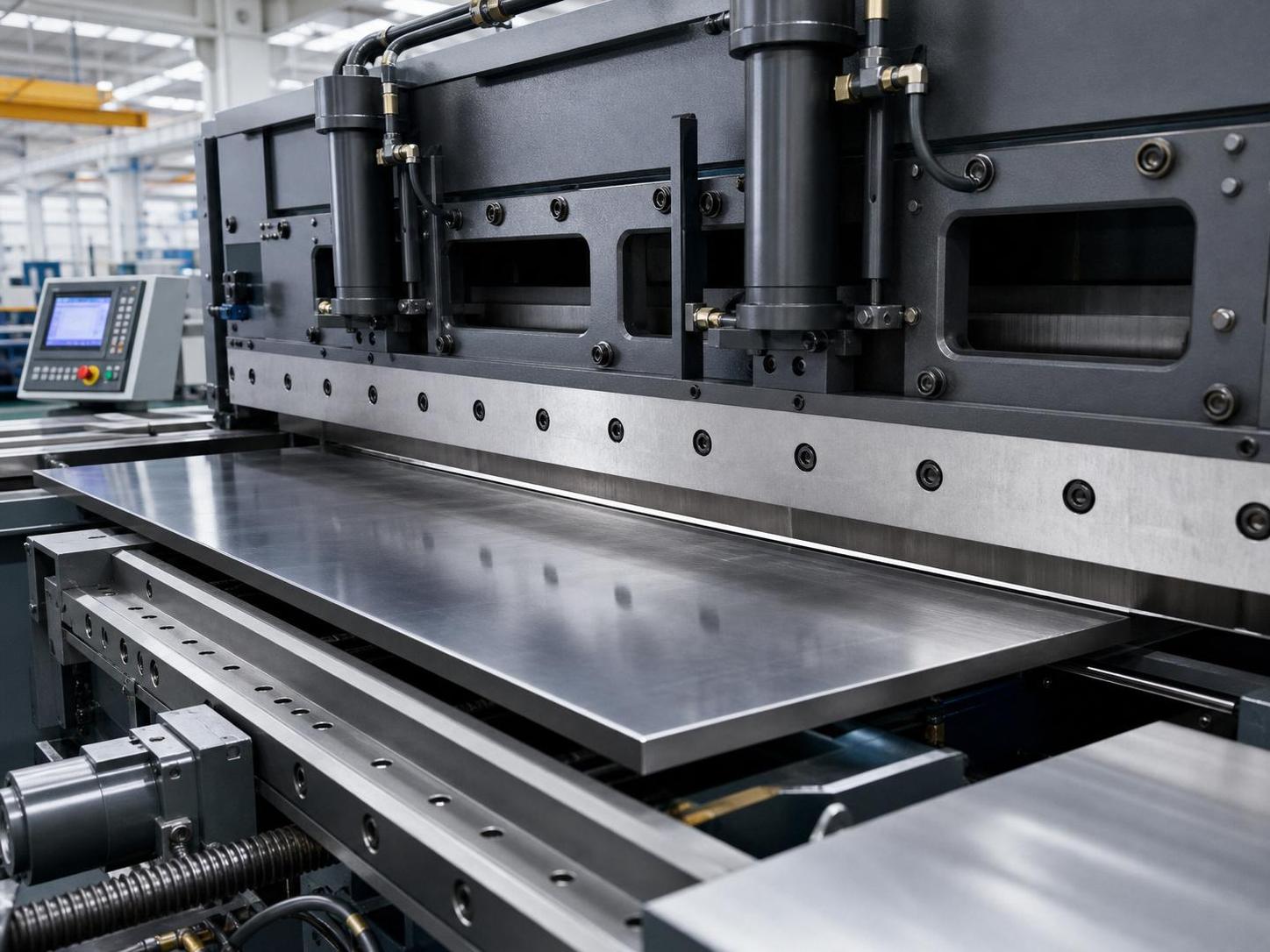
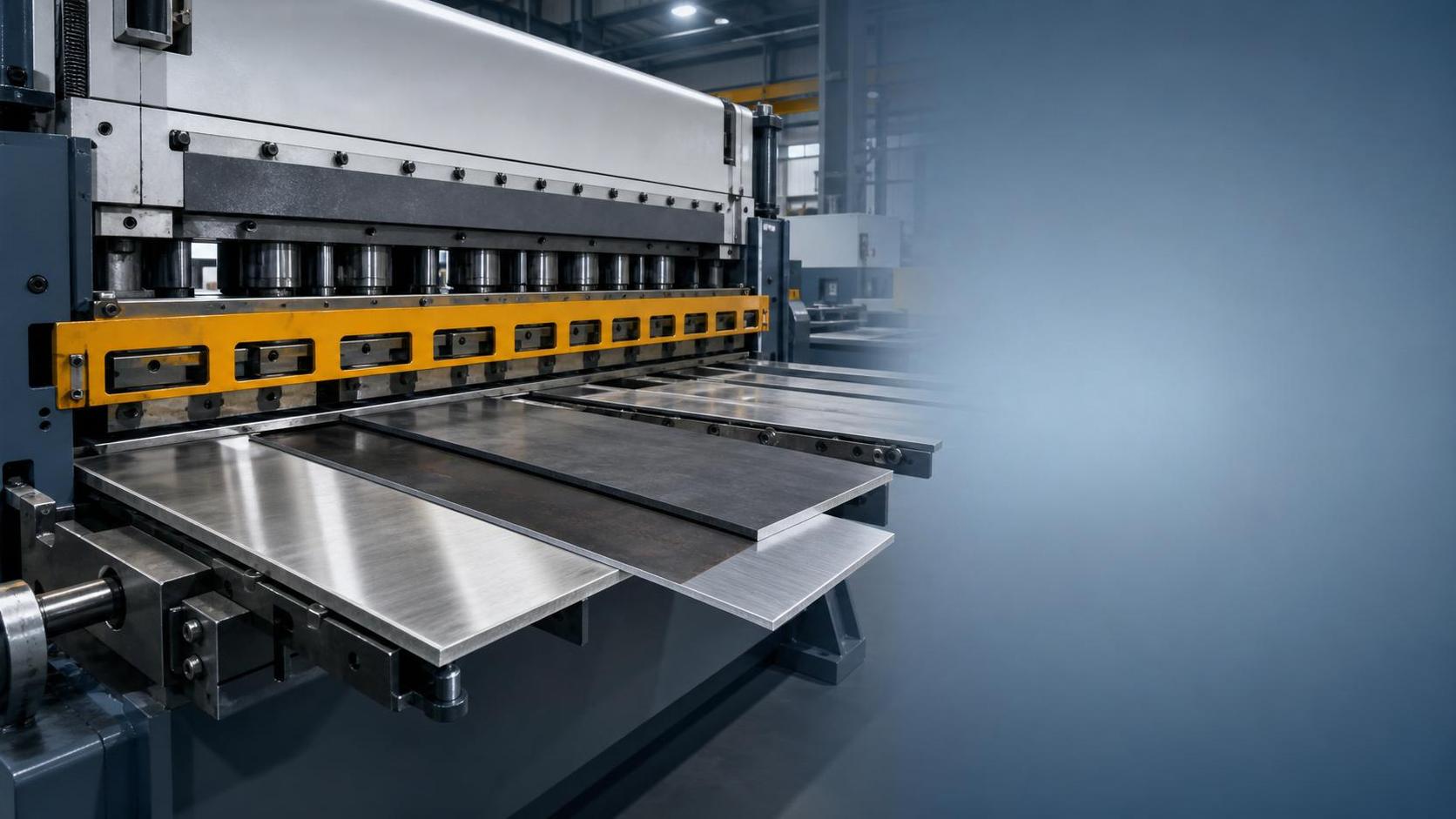
A hydraulic shearing machine cuts sheet or plate by driving the upper blade downward against a fixed lower blade. The hydraulic system supplies force through cylinders, while the frame absorbs load and keeps blade alignment stable. Cutting quality depends on blade clearance, hold-down pressure, ram movement accuracy, and the rigidity of the machine body.
Different technical arrangements directly influence hydraulic shearing machine price. Swing beam designs are commonly used for general sheet cutting and often offer a practical balance between cost and performance. Guillotine shears usually provide stronger guidance, better cutting geometry for thicker material, and more precise blade gap control, which can increase pricing but also improve results for demanding applications.
Control system level also matters. Entry-level machines may use basic manual backgauge positioning, while more advanced models add NC or CNC control for repeat cuts, programmable dimensions, higher operator efficiency, and reduced setup error. As production volume rises, buyers often find that a higher hydraulic shearing machine price is justified by lower scrap rates and more stable throughput.
Component selection has a similar effect. Hydraulic valves, seals, motors, and electrical parts from recognized brands usually improve service life and consistency. Wuxi Samgins emphasizes imported key hydraulic, servo, and CNC components on relevant equipment lines, which is an important value point for buyers who prioritize precision, machine stability, and long operating cycles over the lowest entry quote.
Main Machine Types And Typical Price Differences
The most common categories influencing hydraulic shearing machine price are swing beam shears, guillotine shears, and CNC-configured hydraulic shears. Swing beam models are widely chosen for routine carbon steel and stainless sheet work because they are structurally practical and often more budget-friendly for medium-duty applications. They are common in fabrication shops, maintenance workshops, and general manufacturing plants.
Guillotine hydraulic shears are often preferred when buyers need cleaner performance on thicker plates, longer machine life under heavier duty cycles, or more refined adjustment of blade clearance and cutting angle. Their higher structural and control requirements usually push hydraulic shearing machine price upward, but they may reduce distortion and improve dimensional repeatability for more demanding production lines.
CNC and automation options create another major price layer. Motorized backgauge systems, front support arms, sheet support devices, pneumatic rear supports, light curtains, automatic blade gap adjustment, and touchscreen programming all add cost. However, in operations with repeated batch production, these options can shorten setup time significantly and reduce dependence on highly experienced operators.
Buyers should also compare machine size, not just type. A 4 mm machine and a 16 mm machine belong to very different cost brackets because the frame, cylinders, blade system, motor power, and shipping requirements all increase with capacity. That is why hydraulic shearing machine price should always be discussed together with cutting thickness, material type, tensile strength, and working length.
Who Should Buy Which Configuration
Small and medium sheet metal processors usually focus on mild steel sheet, stainless sheet, and occasional aluminum jobs. For these users, a standard hydraulic shear with reliable backgauge positioning and stable blade performance is often sufficient. Their target is usually to balance hydraulic shearing machine price with simple operation, low maintenance complexity, and acceptable cut quality for downstream bending or welding.
Heavy fabrication companies, pressure vessel shops, steel structure plants, and energy equipment manufacturers typically need thicker plate capacity, stronger frame rigidity, and more robust hydraulic systems. In these environments, machine uptime and dimensional repeatability are more important than the lowest purchase price. A better-built machine often protects productivity across multiple shifts and reduces rework in fit-up and welding.
Export-oriented manufacturers and contract fabricators also benefit from higher control precision. When a buyer must meet strict drawing tolerances or maintain stable part quality for international clients, hydraulic shearing machine price should be measured against process reliability. Incorrect cut size at the shearing stage can create expensive downstream issues in press brake forming, edge milling, seam welding, or assembly.
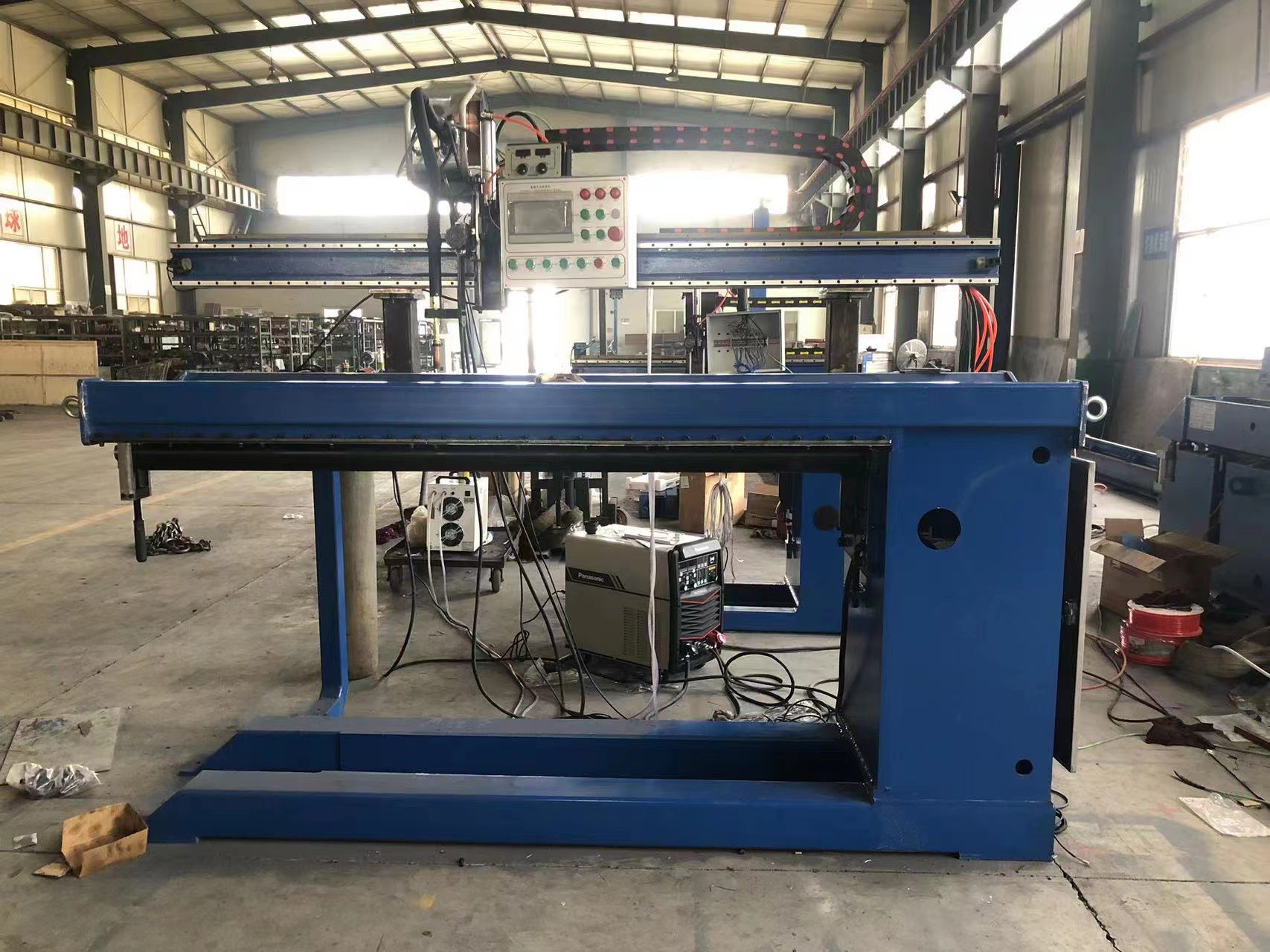
For buyers building broader production capability, the supplier's wider equipment portfolio matters. Wuxi Samgins sells shearing machines alongside press brakes, plate rolling machines, plate leveling machines, edge milling machines, CNC cutting equipment, and longitudinal seam welding machine solutions. That makes it easier for factories planning integrated sheet and plate processing lines to source compatible equipment with coordinated technical support.
Selection Standards Buyers Should Compare Before Requesting A Quote
The first selection standard is material reality. Buyers should define not only thickness but also material type, width, tensile condition, and production frequency. Carbon steel, stainless steel, galvanized sheet, and aluminum behave differently during cutting. Without this information, hydraulic shearing machine price discussions become too generic to support a sound purchasing decision.
The second standard is tolerance expectation. If the machine feeds into precision bending, seam welding, tank shell preparation, or visible finished products, buyers should request details on backgauge repeatability, blade material, ram guidance, and blade clearance adjustment method. A cheaper machine may still work for rough blanks, but it may not be the right choice for tight dimensional control.
The third standard is duty cycle and maintenance environment. A machine used occasionally in a repair workshop is different from one running all day in a fabrication line. Buyers should ask about hydraulic system cooling behavior, lubrication points, blade replacement convenience, electrical cabinet protection, and spare parts lead time. These factors influence real hydraulic shearing machine price over the life of the machine, not just on the day of purchase.
The fourth standard is compliance and export suitability. Wuxi Samgins states that its machines comply with ISO9001 quality system requirements and EU CE Machinery and LVD directives, and the company highlights more than 10 years of export experience. For overseas buyers, this matters because documentation, safety expectations, and communication quality can materially affect installation speed, customs handling, and long-term operating confidence.
How Much The Total Ownership Cost Really Includes
A realistic hydraulic shearing machine price assessment includes more than the machine body. Buyers should count tooling and blade costs, shipping, insurance, customs duty, local unloading, foundation work where needed, operator training, commissioning support, and future replacement parts. In some projects, logistics and service costs can be substantial enough to change supplier ranking.
Energy use and scrap reduction also matter. A well-configured machine with stable hydraulic response and accurate backgauge control can reduce rejected parts and improve sheet utilization. Over time, these gains affect the true return on investment more than minor differences in initial hydraulic shearing machine price. This is especially important for factories processing expensive stainless steel or high-volume repetitive parts.
Maintenance cost should be discussed early. Buyers should confirm blade sharpening intervals, seal replacement practice, hydraulic oil recommendations, sensor reliability, and the availability of remote troubleshooting. Wuxi Samgins positions its after-sales support around long-term warranty service and full-cycle support from design and manufacturing to technical assistance, which can reduce uncertainty for overseas users managing installation from a distance.
From an ROI perspective, the best purchase is usually the machine that matches production requirements without large unused capacity. Overbuying raises capital cost and operating expense, while underbuying creates bottlenecks, unstable cut quality, and faster wear. Buyers should compare at least three scenarios: current demand, expected growth in two to three years, and the likely material mix of future orders.
Application Scenarios, Case Relevance, And Global Buying Considerations
Hydraulic shearing machines are widely used in steel structure fabrication, pressure vessel preparation, agricultural equipment, transport components, electrical enclosures, HVAC ducting, and general sheet metal production. In many of these sectors, shearing is the first shaping process, so cut accuracy influences every downstream step. That is why hydraulic shearing machine price should be linked to the full production chain rather than judged as an isolated purchase.
For companies producing tanks, shells, or welded structures, machine coordination is especially important. Plate shearing often works alongside edge milling, rolling, and longitudinal seam welding machine processes. A supplier with experience across those adjacent machines can offer more useful guidance on part flow, tolerance matching, and production layout. This is one of the practical advantages of working with a broad-line manufacturer such as Wuxi Samgins.
The company's customer list includes buyers such as URALSTANKOIMPORT, MD Calbah Industries Pty Ltd, Zein Steel Industries Co.LLC, BatysMunaiGazZhabdyktary LLP, PT.Cahaya mas Cemerlang, Estructuras Metalicas Girders Chile Limitada, and Lincoln Electric-MENA. These references suggest experience serving varied industrial and geographic markets, which is useful when buyers need export packaging, communication across time zones, and familiarity with project-based machine supply.
Global buyers should still verify application details carefully. The best quotation process includes drawing review, material confirmation, voltage and safety specification, operator language needs, spare parts list, and acceptance criteria. When those items are clarified early, hydraulic shearing machine price becomes easier to interpret and less exposed to hidden cost or scope gaps later.
Future Trends In Hydraulic Shearing Machine Price And Buying Strategy
In 2026, buyers are increasingly expecting better control integration, easier maintenance access, improved safety functions, and stronger documentation support. As a result, hydraulic shearing machine price is being shaped not only by steel and component cost, but also by automation features, software usability, and the supplier's ability to support remote troubleshooting and global service coordination.
Another trend is the move toward line thinking rather than single-machine thinking. Fabricators want shearing, bending, cutting, welding, and finishing equipment that fit together operationally. Suppliers with experience in complementary equipment such as welding rotators, H-beam lines, CNC plasma or fiber laser cutting machines, press brakes, and plate rolling systems are often better positioned to recommend a machine that fits future expansion, not just today's isolated requirement.
Sustainability pressure is also affecting buying behavior. While buyers still focus on price, they are paying more attention to machine longevity, hydraulic efficiency, reduced scrap, and repairability. In practical terms, this means the lowest hydraulic shearing machine price may lose appeal if it creates more material waste, unstable quality, or shorter service intervals.
For a sound 2026 purchasing strategy, buyers should prepare clear production data, compare at the specification level, and ask suppliers to explain where each cost difference comes from. When a supplier can link machine design, component quality, export experience, and after-sales capability to the actual job requirement, the price discussion becomes more transparent and commercially useful.
search

Send Us A Message
Send us a Message
A dedicated person will follow up on your needs one-on-one and provide personalized customized solutions according
to your needs.
Get In Touch
We look forward to hearing from you for in-depth communication on how to fulfill your mixing requirements.