




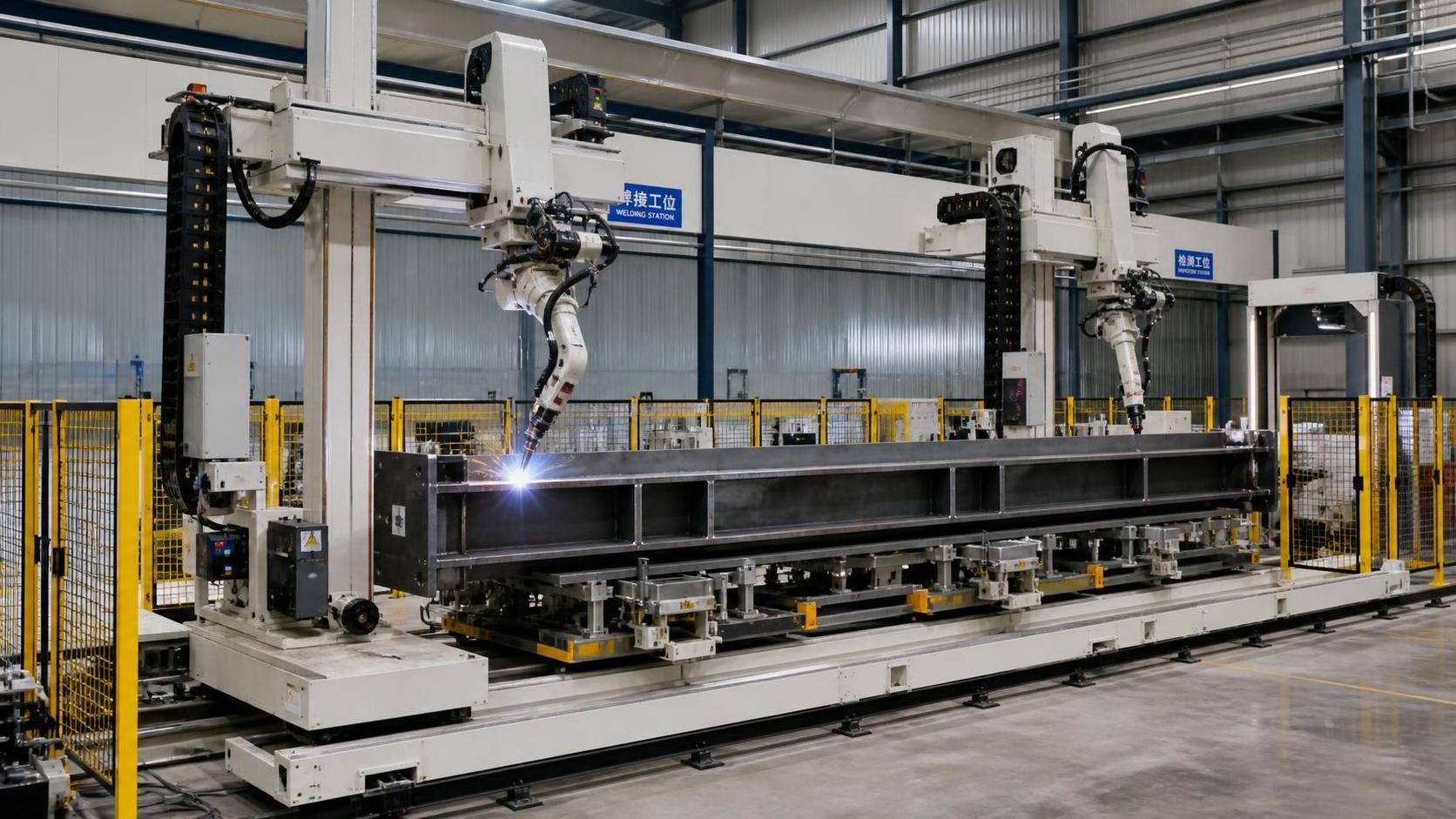
Welding Robot Machine: The Complete Guide to Types and Applications
What Is A Welding Robot Machine?
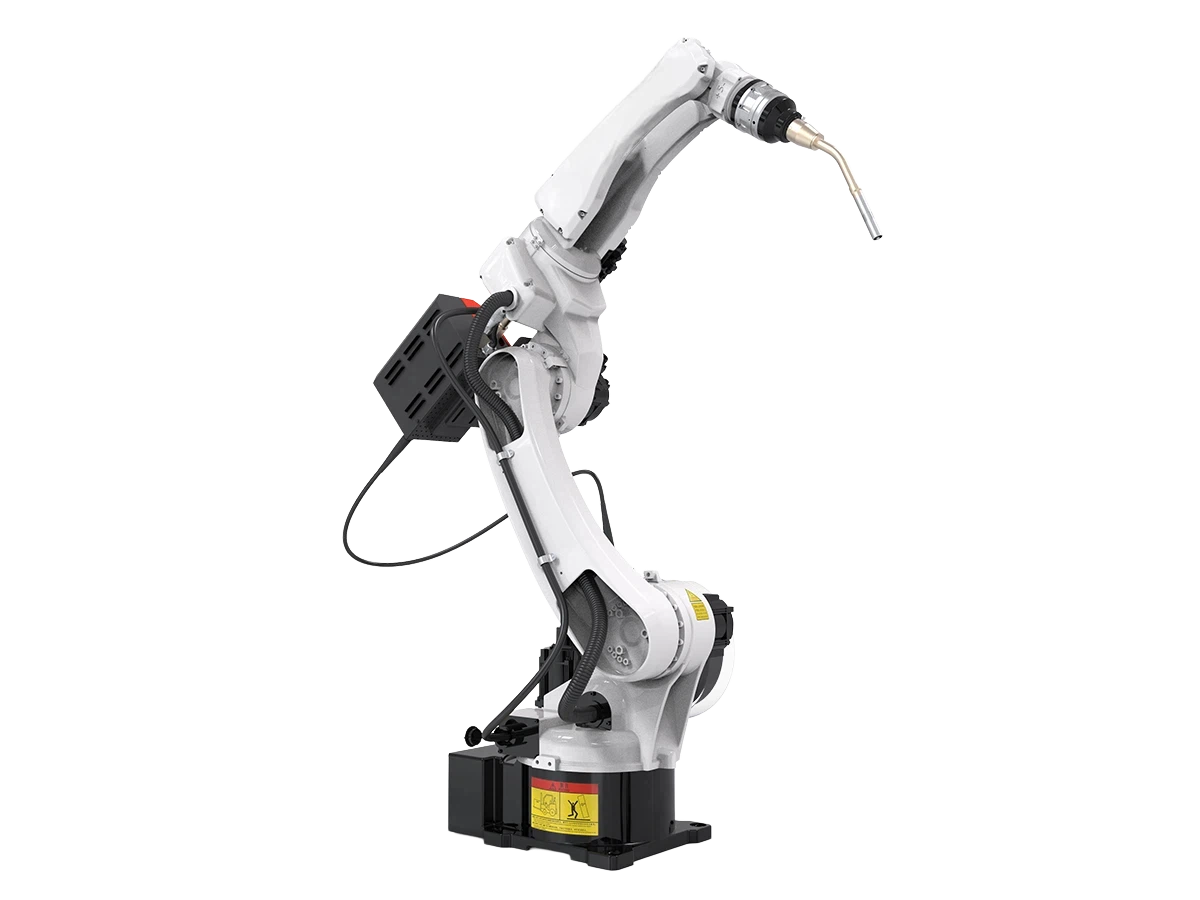
A welding robot machine is an automated system that moves a welding tool along programmed paths to join metal components. A typical installation combines an industrial robot, controller, welding power source, torch or other welding tool, fixtures, and safety equipment. Depending on the process, it may also include wire feeding, shielding gas, sensors, and equipment that moves the workpiece. The complete installation is often called a robotic welding cell.
The robot controls tool position, orientation, and travel speed while the welding equipment supplies the energy and filler material required by the selected process. A controller coordinates these functions with positioners or external tracks when they are included. Weld quality still depends on joint design, material preparation, fit-up, process parameters, and inspection. Automation improves repeatability only when the surrounding production process is controlled.
Unlike a fixed welding machine dedicated to one seam, a programmable robot can serve different parts within its reach and payload limits. It is particularly useful when joint locations are accessible, parts can be held consistently, and the production volume justifies programming and tooling. For irregular assemblies or highly variable fit-up, additional sensing, adaptive procedures, or manual welding may remain necessary.
How Robotic Welding Works
A typical cycle starts with an operator or handling system loading prepared parts into a fixture. The robot then follows a taught or offline-programmed path, establishes the weld, and moves at the specified speed and angle. The controller may synchronize the robot with a rotating positioner to maintain access to the joint. After welding, the cell releases the assembly for inspection and downstream operations.
For arc welding, common processes include gas metal arc welding, often called MIG or MAG welding, and gas tungsten arc welding, commonly called TIG welding. Process selection depends on material, thickness, quality requirements, productivity, and access. Parameters such as current, voltage, wire feed speed, travel speed, and shielding gas must be established through suitable welding procedures. A robot executes those parameters; it does not replace procedure qualification where required.
Sensors can help locate joints or monitor the process, but their effectiveness depends on the application. Touch sensing may establish a starting position, while laser-based seam tracking can follow certain joint variations during welding. Torch cleaning, wire cutting, and tool-center-point checks can reduce interruptions and positioning errors. Before specifying these options, identify the actual sources of variation and confirm that each sensor can operate reliably in the intended environment.
Main Types And Configurations
Articulated arc welding robots are widely used for fabricated assemblies because multiple joints allow the torch to approach seams from different directions. A six-axis arm is a common configuration, but reach, payload, wrist access, and cable routing vary by model. Compact cells suit smaller repeatable components, while larger installations can combine the robot with tracks or coordinated positioners to reach longer or more complex workpieces.
A seven-axis or nine-axis welding robot configuration may extend movement through additional robot or external axes, depending on the supplier's design. Extra axes can improve access to long seams and reduce repositioning, but their arrangement matters more than the total axis count. Buyers should request a clear axis diagram and confirmation of which movements are coordinated during welding, including travel limits, payload, and collision clearances.
Other automated options include dedicated longitudinal seam machines, welding manipulators, and rotator-based installations. These may be better suited to repeated straight seams or cylindrical vessels than a general-purpose robot. Resistance spot welding robots and laser welding systems serve different joint designs and production needs. Compare the complete process and fixture arrangement, not just the robot arm, when choosing between flexible and dedicated automation.
Applications And Industry Standards
Typical users include steel structure fabricators, tank and pressure-equipment manufacturers, pipe processors, sheet metal factories, and contract manufacturers. Robotic cells can handle repeatable fillet welds, multi-pass joints, and accessible seams on frames or assemblies. Tanks and large pipes often need coordinated rotation or support, while structural components may require long travel and robust fixtures. The best application is one where joint access and part consistency support a predictable cycle.
Wuxi Samgins offers welding robots alongside welding positioners, rotators, manipulators, long seam machines, and H-beam production equipment. Its stated customization capabilities include seven-axis and nine-axis welding robot configurations and heavy-duty rotators. This range can help buyers discuss robot motion and workpiece handling as part of the same project. Confirm the proposed equipment, integration responsibilities, and acceptance criteria for the specific parts before placing an order.
Market access and welding obligations depend on the destination, machine configuration, and end product. Wuxi Samgins states that its machines comply with the ISO 9001 quality system and applicable EU CE Machinery and Low Voltage Directive requirements; buyers should request the relevant declarations and documentation for the supplied configuration. ASME or API requirements may apply to particular welded products, so verify the governing code, procedure qualification, inspection, and traceability requirements for each project.
How To Select A Welding Robot Machine
Begin with representative drawings, material grades, thicknesses, joint types, weld sizes, annual volume, and the required production rate. Include the largest and smallest parts, fixture datums, allowable distortion, and inspection requirements. Ask the supplier to review torch access at every critical joint, including start and stop positions. A reach simulation or sample weld trial can reveal obstructions and cycle-time assumptions before the cell layout is finalized.
Evaluate payload with the torch, cables, and any mounted accessories included. Check whether a positioner can safely support the fixture and workpiece at the required center of gravity, rotation speed, and orientation. For long components, compare track length and coordinated movement against floor space and loading access. Also agree on tolerances for incoming parts: excessive gaps or inconsistent joint locations can undermine an otherwise capable system.
Specify the controls and interfaces needed for production, including program storage, power-source communication, fault reporting, and compatibility with existing handling equipment. Review guarding, interlocks, emergency stops, fume extraction, and maintenance access as a complete cell. Request a written scope covering installation, operator training, spare parts, warranty terms, and service response arrangements. Availability of technical support and replacement components can be as important as the initial machine specification.
Installation Quality Control And Maintenance
A practical project sequence is application review, layout approval, equipment manufacture or integration, factory acceptance, site preparation, installation, and production validation. Factory acceptance should use agreed representative parts and fixtures where possible. Define measurable criteria for weld appearance, dimensional results, cycle time, safety functions, and documentation. Site readiness typically includes suitable power, grounding, ventilation, floor conditions, material flow, and utilities specified by the equipment supplier.
Quality control starts before the robot welds. Establish material identification, joint preparation, fit-up limits, fixture checks, and approved welding parameters. Inspect completed welds using methods appropriate to the product and governing code, which may include visual inspection and specified nondestructive testing. Record defects and rework by part and program so the team can distinguish robot positioning issues from upstream variation or unsuitable process settings.
Follow the equipment manufacturers' maintenance schedules rather than assuming a universal interval. Routine checks commonly cover torch consumables, cable condition, wire feed, gas delivery, guarding, and fixture wear; periodic tasks may include calibration, lubrication, and inspection of external axes. Back up programs and controller settings after approved changes. Wuxi Samgins states that it provides technical and after-sales support; confirm warranty duration, exclusions, and local service arrangements in the contract.
Ownership Cost Return And Future Trends
Total ownership cost includes the robot and power source, fixtures, positioners, guarding, extraction, installation, programming, and operator training. Ongoing costs include consumables, shielding gas, electricity, maintenance, spare parts, software support, and downtime. Allow for part changeovers and the engineering time needed to introduce new products. A lower initial quotation may not be the lowest-cost choice if necessary tooling, safety equipment, or commissioning is excluded.
Estimate return on investment using a documented baseline: current labor and consumable costs, throughput, scrap, rework, and available production hours. Compare those figures with a realistic automated cycle that includes loading, inspection, cleaning, and changeovers. Divide the total project investment by the estimated annual net savings to obtain a simple payback period. Test the result against lower utilization and additional maintenance, and avoid treating quoted robot speed as complete cell output.
Future developments are likely to emphasize easier programming, improved sensing, production data collection, and better coordination between robots and workpiece handling equipment. These tools can reduce setup effort or improve visibility, but they do not eliminate the need for sound fixtures and qualified welding procedures. When planning an upgrade, prioritize interfaces, serviceability, and expansion options that address a defined production need. Share representative part information with Wuxi Samgins to request a configuration and quotation for review.
search
Recommended Products
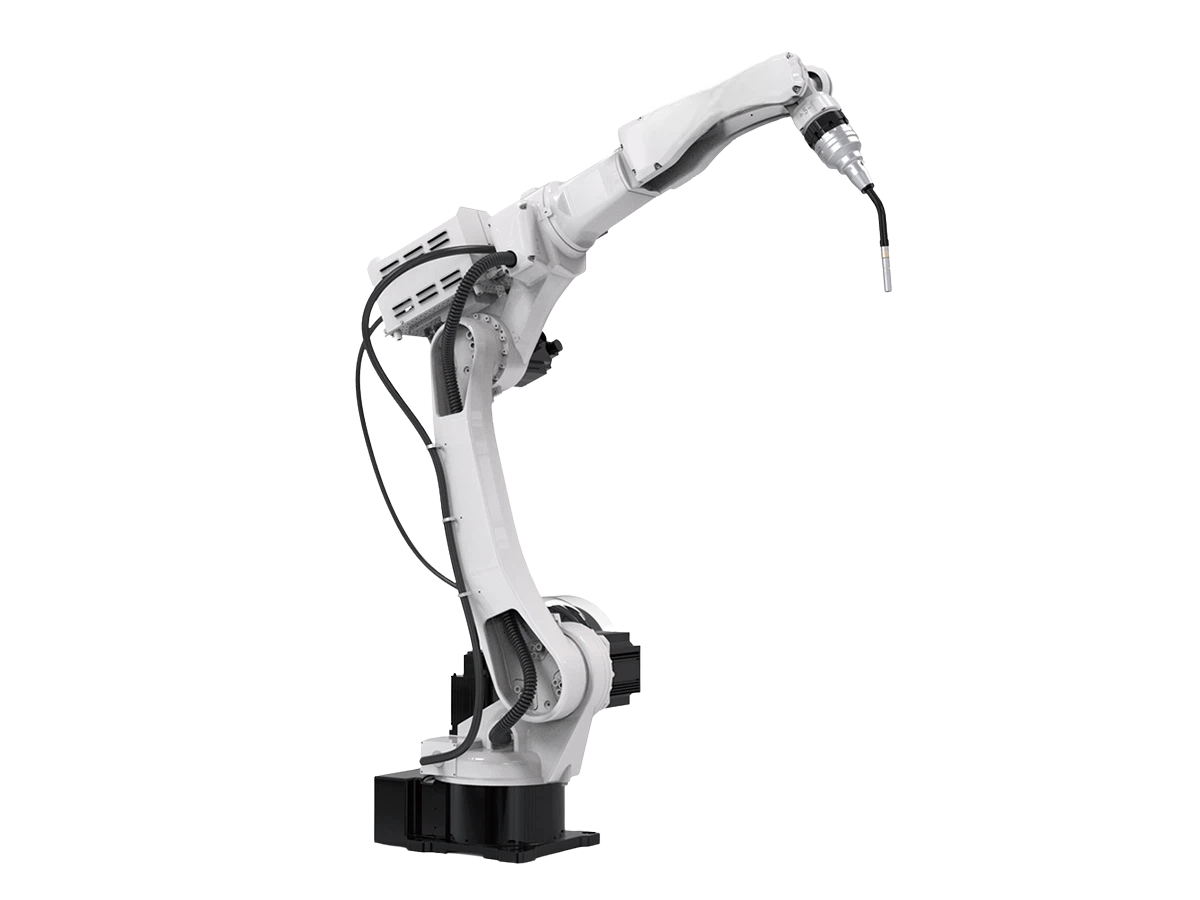
 6 Axis 2000mm ArmSpan MlG Industrial Welding RobotThis welding robot is designed for reliable arc welding in harsh production environments, featuring a long reach, stable repeatability, and flexible installation.
![星星1]()
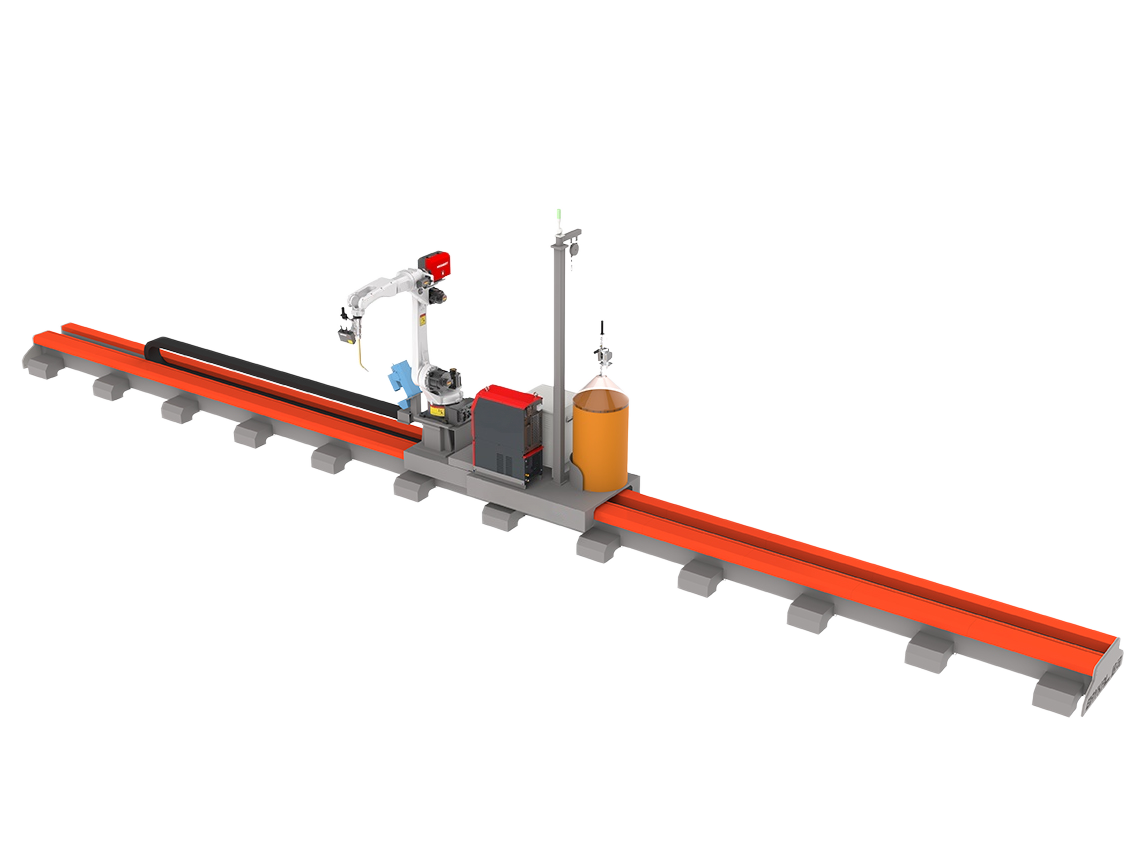
 Cantilever type welding robot BR-2010A Pro/DG12Explore the BR-2010A Pro/DG12 cantilever welding robot for long workpieces, automated arc tracking, and efficient CNC welding.
![星星1]()
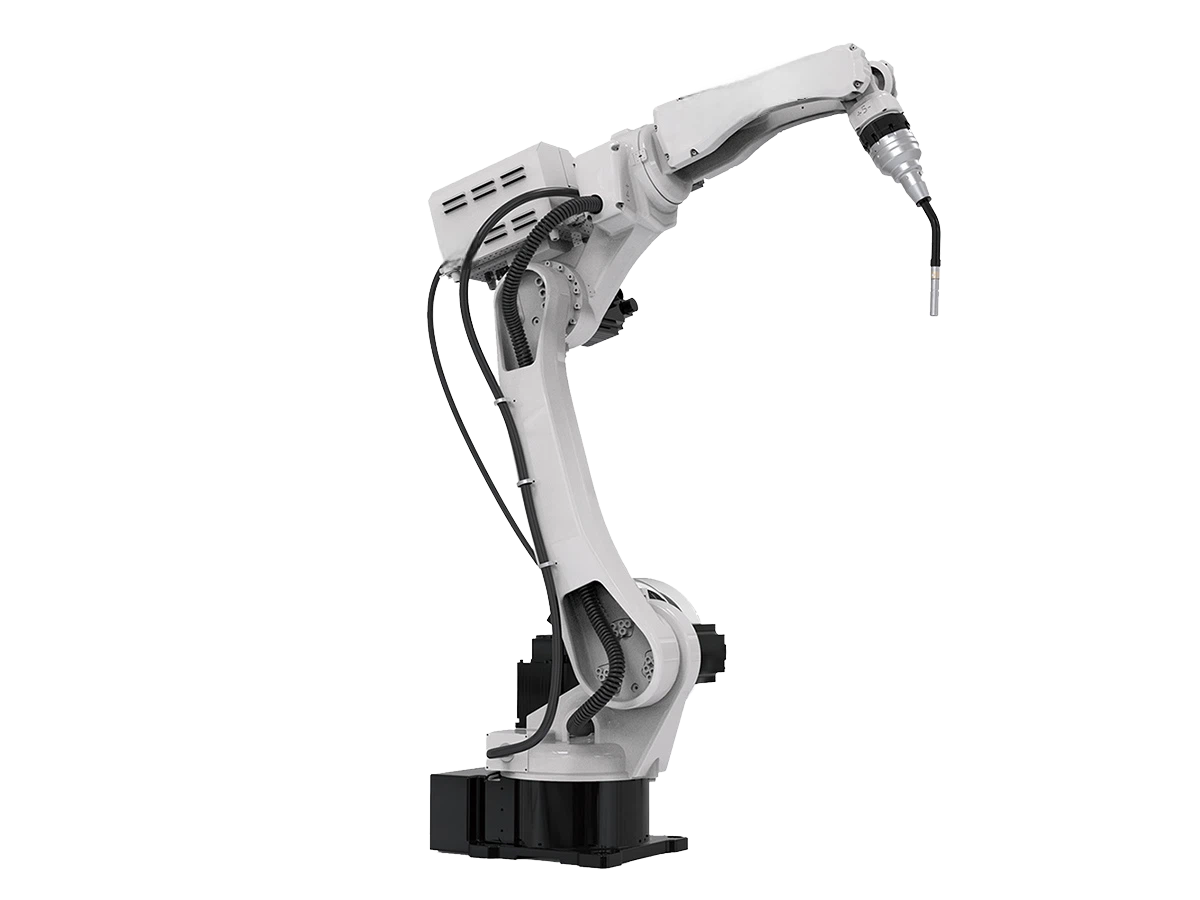
- 6 Axis 1800mm ArmSpan MlG Industrial Welding RobotThe welding robot with 1945mm reach, 6kg payload and ±0.08mm repeatability for consistent automated welding.
![星星1]()
- 6 Axis 1500mm ArmSpan Industrial Welding RobotWith a maximum reach of 1594 mm, the robot is well suited to medium-scale welding cells where coverage matters.
![星星1]()

Recommended blogs
- How robotic welding and automation improve repeatability in batch productionSep 30, 2026Robotic Welding and Automation improve batch production repeatability through controlled fixtures, weld parameters, and material preparation—reducing rework and improving throughput.
- How to Choose a Laser Cutting Machine for Sheet Metal WorkJul 12, 2026Laser cutting machine selection for sheet metal starts with material, thickness, and workflow. Learn how to compare speed, quality, automation, and total cost with confidence.
- 3-roll vs 4-roll plate rolling machines: which leaves a shorter flat end?Nov 17, 20263 roll vs 4 roll plate rolling machine: discover which typically leaves shorter flat ends and how to choose the right machine for your production needs.
- Can a 4-roll plate rolling machine form a cone?Nov 17, 20264-roll plate rolling machines for complex applications can form cones with the right setup. Explore capacity limits, tooling and practical tips for accurate results.
- How do adjustable bottom carrier rollers support plate rolling?Nov 17, 2026Explore how a 3 roller plate rolling machine with adjustable bottom carrier rollers supports plate handling, improves process stability and fits your fabrication needs.
Send Us A Message
Send us a Message
A dedicated person will follow up on your needs one-on-one and provide personalized customized solutions according
to your needs.
Get In Touch
We look forward to hearing from you for in-depth communication on how to fulfill your mixing requirements.