




Bending Machine vs Press Brake: What Fits Sheet Metal Jobs
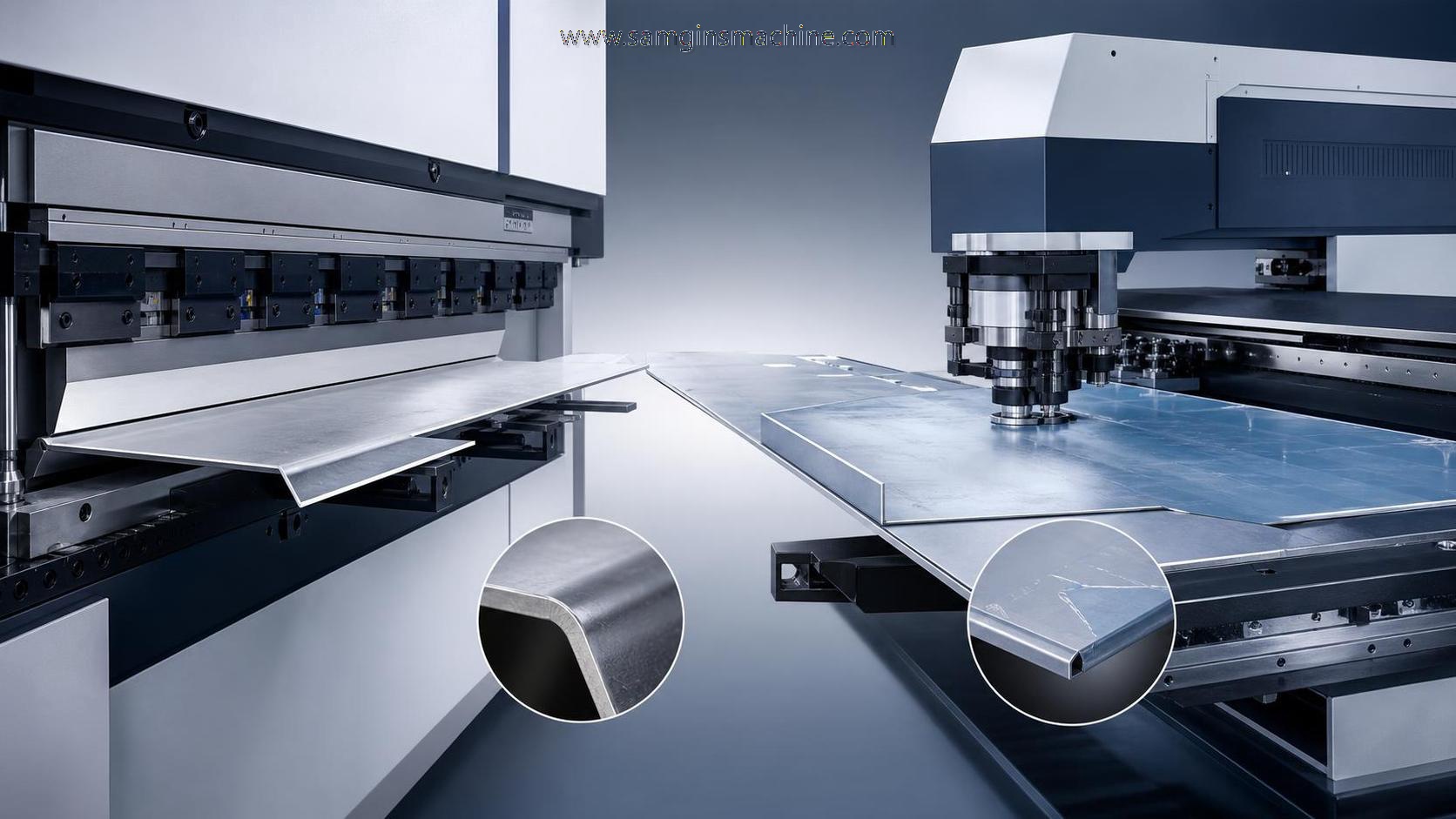
Choosing between a Bending machine and a press brake is rarely a simple naming issue. It affects part accuracy, production speed, tooling cost, floor planning, and the reliability of downstream assembly.
In sheet metal work, the right decision depends on material range, bend complexity, batch size, and how the line connects cutting, edge preparation, welding, and finishing. That is why this comparison matters in real projects.
Why the distinction matters on the shop floor
Many buyers use the two terms loosely, but the operating logic is not the same. A press brake forms metal through a punch and die system. A Bending machine may use different clamping and folding methods.
That difference changes how force is applied, how operators set up tooling, and how easily large panels can be handled. For thin sheet work, this can decide whether production stays efficient or becomes adjustment-heavy.
It also matters for project timing. A poor fit often leads to more trial bends, scrap, slower first-article approval, and extra rework before welding or surface treatment begins.
Core understanding of a Bending machine and a press brake
A press brake is usually the default choice for high-force bending jobs. It is well suited to air bending, bottoming, and coining, especially when multiple bend angles and repeatable precision are required.
A Bending machine, especially a folding type, clamps the sheet and bends the flange by moving a beam. This approach often reduces marking and can simplify handling of wide or finished panels.
Simple parts may run well on either platform. Once geometry becomes more sensitive, machine architecture starts to matter more than name alone.
Where each process tends to perform better
- Press brake: tighter radius control, complex bend sequences, heavier forming force, broader tooling options.
- Bending machine: large sheet handling, cleaner surfaces, faster setup for simple folds, lower risk of cosmetic damage.
- Both: productive when material, tooling, and operator programming are matched to the part mix.
What the industry is paying attention to now
The current focus is no longer only tonnage or bed length. Buyers look at labor availability, programming speed, part consistency, and how machines fit automated or semi-automated production cells.
Material variation is another concern. Stainless steel, aluminum, coated sheet, and mixed-thickness orders make a flexible Bending machine strategy more valuable than a single headline capacity figure.
There is also stronger pressure on total process quality. If bending creates burr-sensitive edges, angle variation, or surface marks, later stages such as fit-up, robotic welding, and finishing become less stable.
This is why experienced equipment suppliers now discuss entire fabrication flow, not isolated machines. Wuxi Samgins International Trade Co.,Ltd has built its offering around that broader view, covering bending, cutting, milling, welding, rolling, leveling, and deburring equipment for global markets.
Its manufacturing and supply background, supported by ISO9001-oriented production control and EU CE standards, reflects what many buyers now expect: machine performance backed by process reliability.
A practical comparison for sheet metal jobs
The easiest way to compare a Bending machine and a press brake is to follow the part itself. Look at geometry, sheet size, surface requirements, lot size, and downstream tolerance sensitivity.
This comparison is most useful when tied to actual production mix. A machine that looks stronger on paper can still be slower in practice if setup time dominates output.
Where process flow changes the equipment decision
Bending is rarely a standalone operation. It sits between cutting and assembly, and sometimes between edge milling, beveling, and welding preparation in heavier fabrication environments.
For example, storage tanks, pressure vessels, and structural sections may require both formed parts and accurately prepared weld edges. In such workflows, edge quality can be as critical as bend quality.
That is where complementary equipment becomes relevant. A solution like Beveling & Milling Edge For Heavy Tank fits naturally into heavy plate processing before fit-up and welding.
It can process carbon steel, stainless steel, and aluminum plates, while forming straight, inclined, U, V, and K bevels in one pass. That reduces secondary grinding and stabilizes weld preparation.
Its feed speed ranges from 0.13 to 1.0 m/min. Standard thickness capacity reaches 6–80mm, while heavy-duty non-pressure beam versions can handle 6–400mm.
In other words, the best Bending machine decision often comes from evaluating the complete fabrication route, not only the bend station.
Typical job types and better-fit choices
Small brackets, cabinets, channels, and mixed-batch precision parts often favor the press brake. Tool variety and programmable control make it easier to manage changing part geometry.
Large doors, panels, covers, and appearance-sensitive parts often suit a Bending machine well. The folding action can improve handling and reduce visible marking on coated or polished material.
For thicker plate fabrication, the choice becomes more nuanced. Force capacity may push the project toward a press brake, but process sequencing with rolling, edge milling, and welding preparation may shift the broader equipment plan.
Signals that a Bending machine may be the better option
- Large sheet formats are difficult to control manually on a press brake.
- Finished surfaces must stay clean with minimal tool marks.
- Part families share similar folds and benefit from quick setup.
- Operator efficiency matters as much as raw tonnage.
Key checks before making the final selection
A sound decision usually comes from a short list of measurable checks. These should be done before comparing prices.
- Map actual part sizes, not only average dimensions.
- Separate simple repeat work from mixed complex work.
- Check required bend angles, radii, and cosmetic standards.
- Estimate setup time across one week of real orders.
- Review how bending affects welding, assembly, and finishing.
- Confirm service support, training, and spare parts response.
The last point is often underestimated. A capable Bending machine brings value only when programming, maintenance, and process support are available over the life of the line.
A balanced way to move forward
Bending machine versus press brake is not a contest with one permanent winner. The better choice depends on the jobs being produced, the finish expected, and the rest of the fabrication chain.
When reviewing options, start with part families, material range, daily output targets, and edge-to-assembly requirements. Then compare machine style, tooling logic, and process compatibility in the same framework.
That approach makes equipment selection more defensible, helps protect ROI, and reduces the risk of buying a Bending machine that looks versatile but does not truly fit the work ahead.
search
Products Navigation
Send Us A Message