




CNC Metal Laser Cutting Machine Cost Breakdown: Power, Gas, and Maintenance
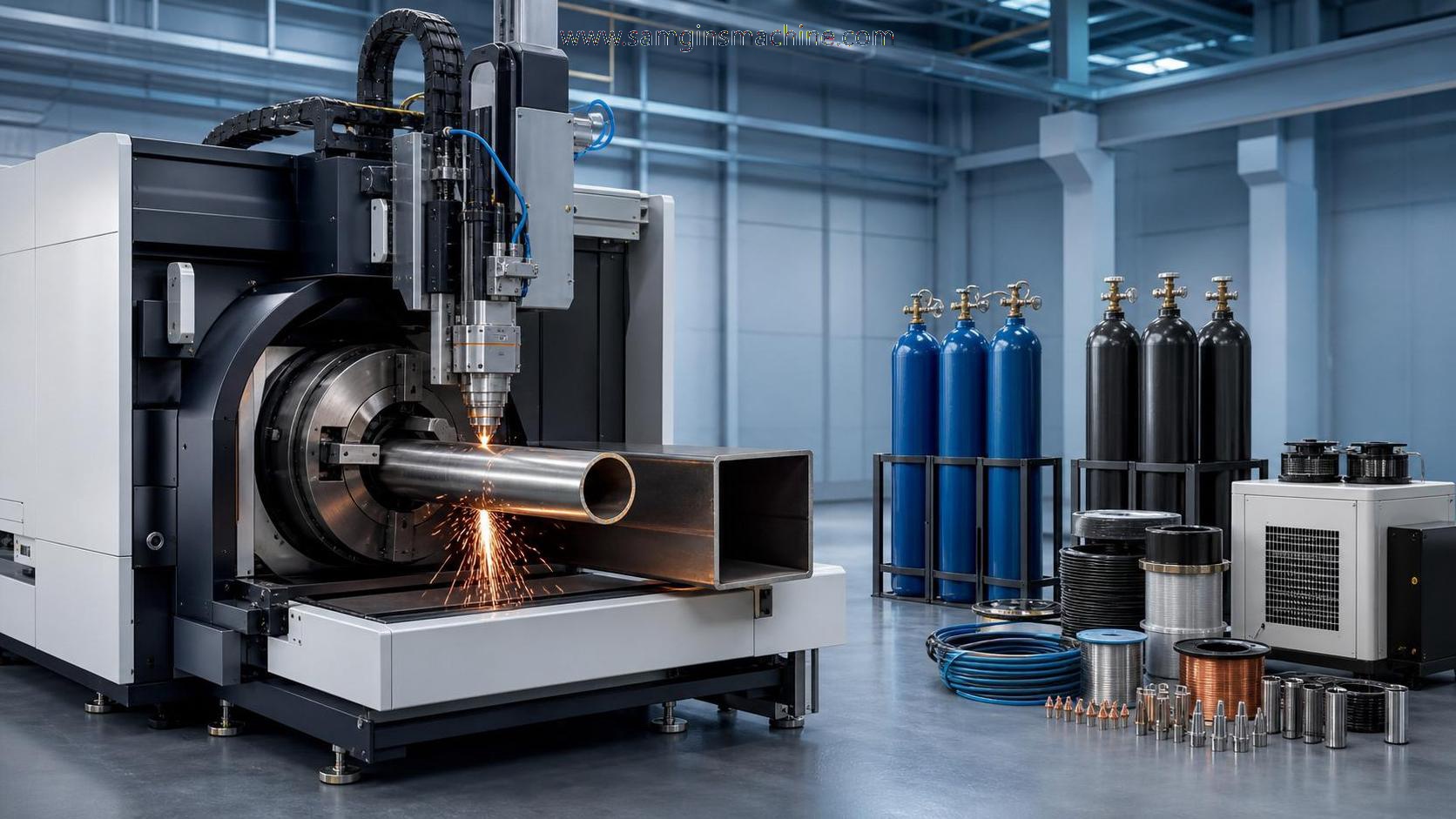
CNC Metal Laser Cutting Machine Cost Breakdown: Power, Gas, and Maintenance
For finance teams reviewing a Cnc metal laser cutting machine, sticker price is only the starting point.
Real ownership cost comes from daily electricity use, assist gas consumption, service frequency, spare parts, and production efficiency.
That is where many budget assumptions become inaccurate.
A low-priced machine can become expensive if it draws too much power, wastes gas, or stops often for maintenance.
A higher-spec unit may deliver lower cost per part if uptime, precision, and nesting efficiency are stronger.
This guide breaks down the main cost drivers behind a Cnc metal laser cutting machine and shows how to compare them in procurement.
Look Beyond the Purchase Price
The first quotation usually includes the machine body, laser source, cutting head, control system, and standard accessories.
However, procurement decisions should separate capital cost from operating cost.
In practical terms, total cost of ownership usually includes five areas:
- Initial equipment price
- Power consumption during operation
- Assist gas use by material and thickness
- Routine maintenance and replacement parts
- Productivity losses from downtime, setup, and scrap
This broader view gives a much clearer ROI model.
It also helps explain why two similar-looking Cnc metal laser cutting machine quotations can perform very differently over three to five years.
Power Cost: The Most Visible Operating Expense
Electricity is often the first recurring cost buyers calculate, but it is frequently underestimated.
Actual power draw is not limited to the laser source.
A Cnc metal laser cutting machine also uses power for chillers, drives, extraction, controls, compressors, and auxiliary systems.
What changes the electricity bill
- Laser source wattage
- Photoelectric conversion efficiency
- Shift length and duty cycle
- Idle time between jobs
- Local industrial electricity rates
Fiber systems usually have a clear advantage here.
With photoelectric conversion efficiency around 30%, they generally outperform older CO2 solutions in energy use.
That difference matters more in high-volume production.
For example, a pipe-focused system with 3000W, 4000W, or 6000W laser options may fit different output targets without forcing the same utility burden.
In short, higher power is not automatically higher value.
The right question is whether the extra wattage reduces unit cost enough to justify the extra energy demand.
Gas Cost: Often the Biggest Hidden Variable
Assist gas is one of the least stable inputs in a Cnc metal laser cutting machine budget.
It varies by material, wall thickness, quality requirement, pressure setting, and cutting speed.
That means two factories processing similar tonnage can still report very different monthly gas bills.
Common assist gases and their cost impact
- Oxygen: lower direct gas cost, common for carbon steel, but may affect edge oxidation.
- Nitrogen: cleaner edges, often preferred for stainless steel, but usually more expensive.
- Compressed air: lower-cost option in some applications, but quality depends on system design and process tolerance.
Gas efficiency is also tied to nozzle condition, focus accuracy, and programming quality.
Poor parameter control increases gas waste and raises scrap risk at the same time.
This is why finance reviews should ask for gas consumption assumptions by part family, not only by machine model.
In actual operations, the cleanest gas strategy is the one matched to your product mix, not the one that looks cheapest per cylinder.
Maintenance Cost: Small Items Add Up Fast
Maintenance is where low quotes often recover margin.
A Cnc metal laser cutting machine with cheaper upfront pricing may require more frequent service, slower support, or higher spare-part dependency.
Typical maintenance cost items
- Protective lenses and nozzles
- Ceramic rings and seals
- Lubrication and guideway upkeep
- Chiller servicing
- Pneumatic chuck inspection
- Software and control system support
Response time matters as much as part price.
A low-cost spare part is still expensive if the machine stops for two shifts waiting for it.
That is especially true for tube processing lines, where one machine can feed several downstream steps.
Look closely at warranty scope, service network, training, and availability of standard components from recognized brands.
Those details usually predict maintenance cost better than broad marketing claims.
Productivity Has Direct Cost Value
Operating cost is not only about what the machine consumes.
It is also about how much finished output each hour delivers.
A faster and more precise Cnc metal laser cutting machine can lower labor cost, cut rework, and shorten lead times.
Productivity indicators worth checking
- Maximum cutting speed and stable production speed
- Positioning accuracy and repeat positioning accuracy
- Setup time between part changes
- Automatic loading or feeding options
- CAD/CAM integration and nesting efficiency
For tube fabrication, this point becomes even more important.
A system built for 20-240mm round or square tube, 6000mm length, and workpiece loads up to 300kg supports a wider production range.
If it also reaches positioning accuracy of ±0.01mm and cutting speeds above 100m/min, the cost-per-part equation improves quickly.
One example is the Pipe cnc fiber laser cutting machine, which is designed for high-speed tube processing and CAD/CAM-linked production.
A Simple Cost Comparison Framework
When comparing suppliers, use a structure that converts technical data into financial impact.
This type of comparison removes a lot of guesswork.
It also makes supplier discussions more concrete and easier to defend internally.
Questions Worth Asking Before Approval
A strong procurement process for a Cnc metal laser cutting machine should test assumptions early.
- What is the expected power draw under our real production mix?
- Which gas will we use most, and what is the hourly consumption estimate?
- Which consumables need regular replacement, and how often?
- How quickly can technical support and spare parts arrive?
- What output gain will automation options actually create?
- What is the estimated cost per part after six and twelve months?
These questions help separate attractive quotations from financially sound investments.
They also reduce the risk of buying capacity that looks impressive but remains underused.
Final Decision Point
The best Cnc metal laser cutting machine is rarely the cheapest one on the quotation sheet.
It is the machine that balances purchase cost with lower electricity use, controlled gas consumption, manageable maintenance, and dependable output.
That balance is what protects margins over time.
Suppliers with broad mechanical equipment experience, structured production control, and export-ready quality systems can make that evaluation more reliable.
Wuxi Samgins International Trade Co.,Ltd has focused on machinery sales since 2012 and supplies laser cutting, welding, milling, forming, and beam production equipment to global markets.
For buyers reviewing tube applications, a closer look at process range, power configuration, and service support is usually where the real savings appear.
Build the approval case around total operating cost, then validate it with real production data before final purchase.
search
Products Navigation
Send Us A Message