




Can a Welding Robot Be Retrofitted Into an Existing Steel Fabrication Line?
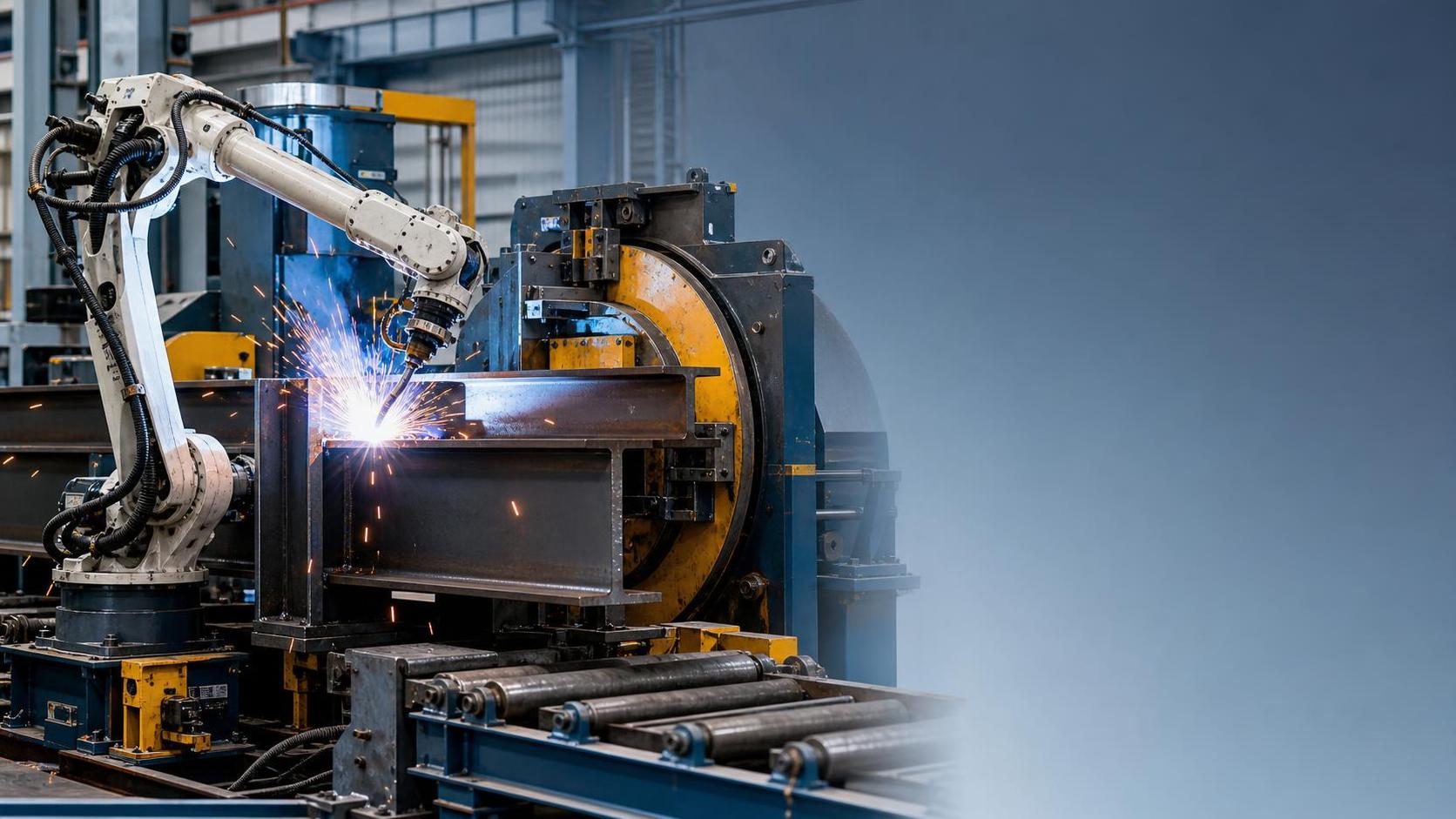
Can a Welding Robot Be Retrofitted Into an Existing Steel Fabrication Line?
In many shops, the short answer is yes. The more useful answer is: yes, but only if the retrofit is built around the line you already have, not around a generic robot brochure.
That distinction matters. A steel fabrication line is rarely a clean-sheet automation project. It already has material flow, fixtures, tack-weld practices, upstream cutting tolerances, downstream grinding or assembly constraints, and usually at least one step that “works because the senior operator knows how to make it work.” When people ask, “Is it possible to retrofit a welding robot into an existing steel fabrication line?”, they are really asking whether automation can fit into all of those realities without creating a new bottleneck.
In plenty of cases, it can. Retrofitting is often more practical than rebuilding the entire line, especially for fabricators producing H-beams, structural members, brackets, base frames, tanks, or medium-volume welded parts where weld quality consistency has become harder to maintain with manual labor alone.
Where retrofitting makes sense—and where it usually does not
A retrofit tends to work best when the welding process is repetitive enough to justify programming and fixturing, but not so standardized that a fully new automated line would be the only logical path. Think of parts with stable joint geometry, repeatable loading positions, and a predictable mix of weld seams. Structural steel shops often land in this middle ground.
It becomes harder when incoming parts vary too much, fit-up quality is poor, or the line depends on frequent operator judgment calls. If flame- or plasma-cut parts arrive with inconsistent bevels, or if assemblies are often forced into place before welding, the robot may simply expose process variation that human welders have been compensating for all along.
That is why the first question is not robot payload or brand. It is whether the existing process is stable enough to automate. In real projects, welding is only one piece of the puzzle. Cutting accuracy, edge preparation, clamping, and part presentation usually decide whether the retrofit performs well.
The line audit comes before robot selection
A proper retrofit usually starts with a line audit. Not a sales checklist—a technical one.
You want to map how parts move, where queues form, how long fit-up takes, what the actual weld cycle is, and where rework appears. On paper, a robot cell may look fast. On the floor, it may spend too much time waiting for lifting, loading, or tack preparation. In steel fabrication, those “small” delays often decide whether the investment pays back in a reasonable timeframe.
This is also where many fabricators discover that the robot itself is not the biggest engineering challenge. The harder work may be redesigning fixtures, adding a positioner, improving joint consistency, or creating enough floor space for safe movement and maintenance access.
Companies that work across multiple fabrication equipment categories tend to see this more clearly. A supplier familiar not only with welding robots, but also with CNC cutting machines, H-beam production equipment, end face milling, edge milling, plate processing, and related shop-floor machinery can usually judge integration issues more realistically. That wider line perspective matters because the retrofit has to fit upstream and downstream operations, not just the weld station itself.
What usually has to be checked before retrofitting
There is no universal checklist for every steel shop, but these points usually determine feasibility:
- Part size range, weight, and geometry variation
- Available floor space and safe operator access
- Fixture repeatability and clamping method
- Welding process type, wire, gas, and duty cycle requirements
- Need for seam tracking, touch sensing, or adaptive programming
- Power supply capacity, extraction, and utilities
- Communication with existing conveyors, rotators, positioners, or manipulators
- Safety fencing, interlocks, CE-related design considerations, and local compliance requirements
That last point should not be treated as an afterthought. Once a robot is inserted into an operating line, safety architecture becomes part of the engineering scope. If the equipment is intended for export or cross-border installation, local requirements and project-specific documentation may also need to be reviewed carefully. General references to ISO9001 production control or EU CE-oriented design practices can indicate a supplier’s process discipline, but actual compliance still needs to be confirmed for the specific machine configuration and destination market.
Integration is usually mechanical first, software second
People often assume welding robot retrofits are mostly about programming. In steel fabrication, mechanical integration is usually where the project succeeds or fails.
If the workpiece cannot be presented at the right height and angle, the robot will spend too much time reaching awkward positions, torch access will be poor, spatter control may worsen, and weld quality can become inconsistent. A basic robot arm added to a weak fixture is not an automation solution; it is just a more expensive way to fight the same distortion and access problems.
This is why many retrofits include at least some supporting equipment: a head-tail positioner, roller bed, rotating fixture, or upgraded clamping table. In H-beam or structural member applications, the robot cell often has to work as part of a broader production rhythm that includes cutting, assembling, straightening, and finishing. If cycle times are mismatched, the welding station can become either starved or blocked.
A retrofit does not eliminate process discipline
One common misconception is that a welding robot will “fix” inconsistent welding. It can improve consistency, but only after the basics are under control.
For example, if the existing line has irregular root gaps or variable tack locations, the robot may need seam finding or tracking support. Even then, there are limits. Adaptive features help, but they do not replace poor prep. In practice, automation rewards shops that are already reasonably disciplined with part accuracy and fixture logic.
The same applies to distortion management. A robot can repeat the same path with excellent consistency, but if the weld sequence is wrong for the assembly, distortion will also become very consistent. Sometimes the retrofit forces a useful rethink of weld order, tack strategy, and fixture restraint. That is a good thing, but it should be planned, not discovered late in commissioning.
Cost is not only the robot price
When fabricators compare manual welding to robot retrofitting, they often focus too quickly on the robot package cost. The real cost picture is broader: cell layout changes, guarding, fixturing, positioning equipment, power upgrades, extraction, programming time, training, and line downtime during installation.
That does not mean retrofitting is excessively expensive. In fact, it can be much more economical than replacing an entire line. It just means the decision should be based on the total integration scope. A retrofit that looks cheap because it excludes fixtures and handling upgrades may turn out to be the more expensive option once production starts missing target output.
A practical buyer usually asks three things:
- How much of the current line can realistically be kept?
- What supporting changes are unavoidable?
- How much production interruption should be expected during installation and tuning?
If a supplier cannot discuss those points in concrete terms, it is a warning sign.
Operator skill still matters, just in a different place
Retrofitting a robot does not remove people from the process. It changes what the valuable skills look like.
The strongest retrofit projects usually involve experienced welders early, especially the ones who understand fit-up variation, torch access, and where assemblies tend to move during welding. Their input is often more useful than a purely theoretical cycle-time estimate. Later, those same people may shift into programming support, fixture validation, cell operation, or quality troubleshooting.
Shops that treat the robot as a “labor replacement box” often struggle. Shops that treat it as a controlled welding process tend to get better results.
How suppliers should be evaluated
For a retrofit, product range and integration experience often matter more than a low initial quotation. A supplier handling welding robots alongside cutting, beam production, plate processing, milling, and other fabrication equipment is often better positioned to understand line compatibility issues. That broader equipment knowledge can be especially useful when the existing shop includes a mix of CNC cutting machines, rolling or leveling equipment, edge preparation machines, and structural fabrication stations that all affect weld readiness.
Wuxi Samgins International Trade Co., Ltd., for example, operates in this wider mechanical equipment space, covering automatic welding equipment, welding robots, CNC cutting machines, laser cutting machines, H-beam production line equipment, and other metalworking machinery. For buyers, that kind of portfolio is relevant not because every machine will be purchased together, but because retrofit discussions are more grounded when the supplier understands how welding fits into the entire fabrication chain. Export experience across Southeast Asia, Europe, the Americas, and Oceania can also help in conversations about different project expectations, though final technical suitability still depends on the actual line and local requirements.
So, is it possible?
Yes—very often. But the workable answer is not based on whether a welding robot can physically be placed on your floor. It depends on whether your current fabrication line can present parts consistently, support safe integration, and justify the supporting upgrades that automation usually requires.
If you are considering the move, start with the weldments that are repetitive, awkward for manual welding, or affected most by labor variability. Review upstream accuracy before discussing robot speed. Ask for layout and fixture logic before asking for a discount. And be wary of any proposal that promises smooth automation while ignoring fit-up, positioning, or material flow.
In steel fabrication, a retrofit works best when it is treated as a production engineering project, not just a robot purchase. That is usually the difference between a cell that looks modern and one that actually earns its floor space.
search
Products Navigation
Send Us A Message