




Collaborative Welding Robots and Cobots: When to Choose Force-Limited Arms vs. Speed-Scaled Safety Zones for Small-Batch Aerospace Welding
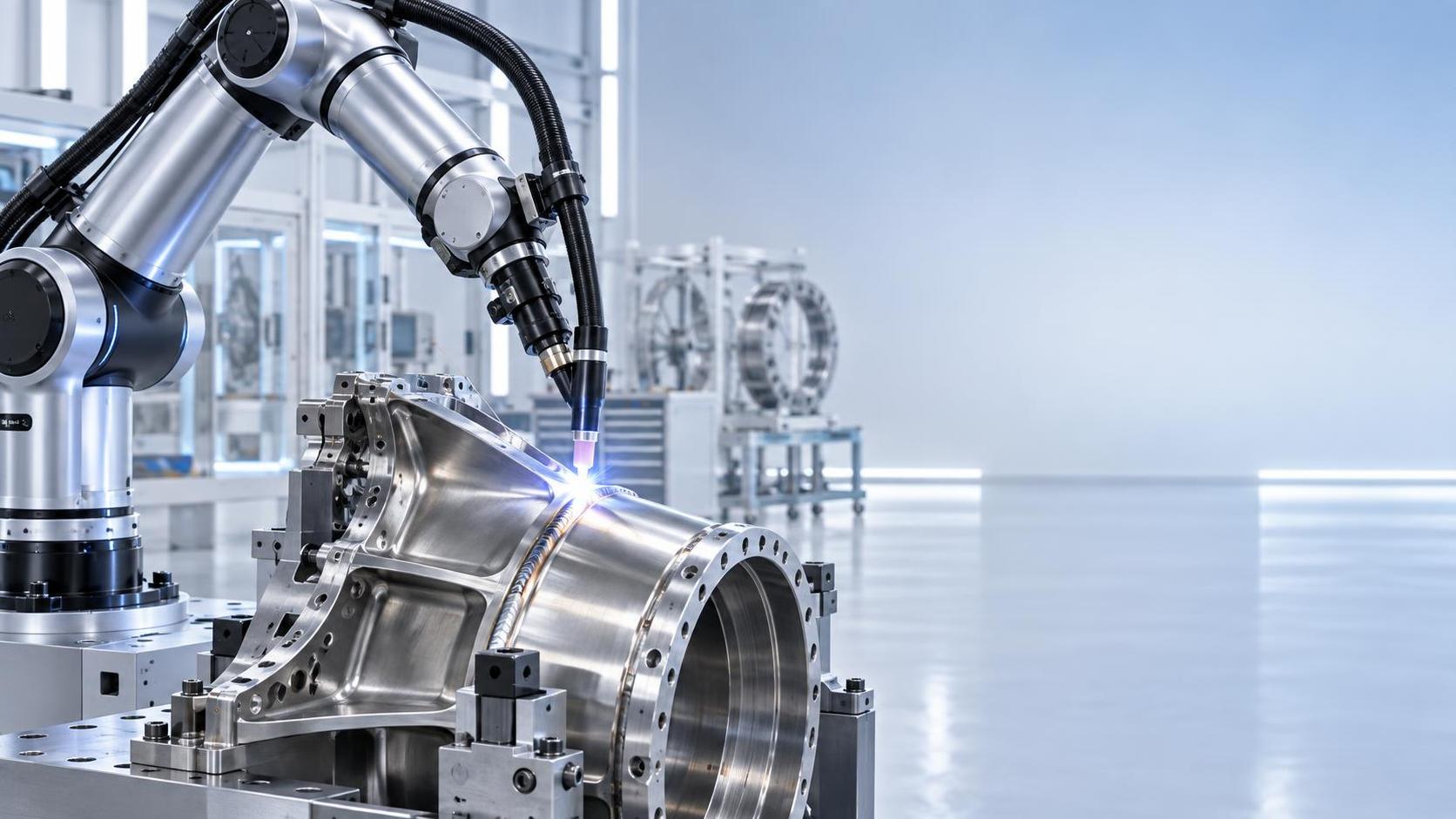
Collaborative Welding Robots and Cobots: When to Choose Force-Limited Arms vs. Speed-Scaled Safety Zones for Small-Batch Aerospace Welding
For aerospace manufacturers tackling small-batch, high-precision welding tasks, selecting the right automation solution is critical. Collaborative Welding Robots and Cobots offer compelling flexibility—but choosing between force-limited arms and speed-scaled safety zones demands deep technical insight. At Wuxi Samgins International Trade Co., Ltd., we support engineers and technical evaluators with ISO9001- and CE-compliant robotic welding systems tailored for aerospace-grade repeatability and safety. This article compares functional trade-offs, risk mitigation strategies, and real-world integration considerations—helping you make a data-driven decision aligned with your production scale, regulatory requirements, and human-robot collaboration goals.
Why This Choice Matters More in Aerospace Than Any Other Sector
Aerospace welding isn’t just about joint integrity—it’s about certifiable traceability, micro-defect tolerance below 0.1 mm, and zero non-conformance in safety-critical assemblies. Unlike high-volume automotive lines, small-batch aerospace shops often run mixed-material (titanium, Inconel, aluminum) welds with frequent part-change cycles. Here, cobot selection directly impacts cycle time consistency, operator intervention frequency, and audit readiness. A misaligned safety architecture can delay FAA/EASA certification—or worse, introduce undetected process drift.
Force-Limited Arms: Precision at the Cost of Speed and Payload
Force-limited collaborative arms (e.g., Universal Robots UR10e, Techman TM5-900) rely on embedded torque sensors and real-time joint current monitoring to halt motion upon detecting contact exceeding preset thresholds (typically ≤150 N). For aerospace applications involving thin-walled titanium tubing or delicate fixture-mounted wing ribs, this is ideal: operators can manually reposition parts mid-cycle without disabling safety protocols.
However, force limitation imposes hard constraints. Peak payload rarely exceeds 12 kg—insufficient for heavy tungsten inert gas (TIG) torches with water-cooled cables or dual-wire feed systems common in high-deposit aerospace welds. Moreover, dynamic stiffness drops significantly above 300 mm/s, increasing positional variance during arc initiation. We’ve observed ±0.35 mm path deviation at 450 mm/s on 6-mm-thick Ti-6Al-4V—exceeding ASME BPVC Section IX tolerances for Class 1 welds.
Speed-Scaled Safety Zones: Where Throughput Meets Certified Collaboration
Speed-scaled safety zones (SSSZ), implemented via laser scanners (e.g., SICK microScan3) or 3D time-of-flight cameras paired with industrial robots (e.g., FANUC CRX series), define dynamic buffer areas around the robot. As an operator enters Zone B (0.5–1.5 m), robot speed reduces proportionally; entry into Zone A (<0.5 m) triggers full stop. Crucially, this architecture preserves full payload capacity (up to 25 kg) and maintains trajectory fidelity up to 1,200 mm/s—enabling high-speed seam tracking on large airframe components.
The trade-off? SSSZ requires rigorous zone mapping, environmental validation (e.g., dust, reflective surfaces), and integration with PLC-level safety logic. But for aerospace integrators already using ISO 13857-compliant cell layouts, SSSZ delivers superior ROI: one Tier-1 supplier reduced weld rework by 37% after replacing force-limited cobots with SSSZ-equipped KUKA KR1000 Titan units on landing gear subassemblies.
Integration Realities: Fixture Design, Path Planning, and Human Workflow
Neither architecture works in isolation. Force-limited arms demand low-inertia tooling and passive fixtures—no pneumatic clamps that could rebound unpredictably. SSSZ systems require unobstructed scanner line-of-sight and calibrated floor markings; even temporary oil spills or stray grounding cables invalidate safety validation.
Path planning differs fundamentally. Force-limited cobots excel with offline-programmed, teach-point trajectories where minor manual correction is expected. SSSZ setups thrive with adaptive seam tracking—especially when paired with our Gantry CNC plasma cutting machine, which pre-cuts aerospace-grade alloys with ±0.2 mm accuracy, minimizing fit-up variance before welding. That precision upstream directly reduces the need for real-time path correction—making SSSZ more robust over long cycles.
Regulatory Alignment: Beyond ISO/TS 15066
ISO/TS 15066 defines collaborative operation limits—but aerospace mandates go further. FAA AC 20-189A requires documented hazard analysis per DO-178C principles for any software-controlled safety function. SSSZ architectures inherently generate timestamped zone-entry logs and velocity profiles, simplifying traceability. Force-limited arms, while simpler mechanically, often lack native audit trails for torque threshold resets or sensor recalibration events—requiring custom middleware that adds validation overhead.
CE marking under Machinery Directive 2006/42/EC also favors SSSZ: its layered safety (scanners + emergency stops + safe torque off) satisfies PL e (Performance Level e) requirements out-of-the-box. Force-limited arms typically cap at PL d unless augmented with redundant sensing—a cost and complexity penalty few small-batch shops justify.
When to Choose Which—A Decision Matrix for Technical Evaluators
Choose force-limited arms only if: (1) batch size averages <5 units/month per part family; (2) welds are short (<300 mm), low-heat-input TIG or pulsed-MIG on thin sections (<2 mm); (3) operators routinely perform tactile joint verification mid-process; and (4) your QA system accepts manual calibration logs over automated event logging.
Select speed-scaled safety zones when: (1) you process ≥10 unique part numbers monthly; (2) weld lengths exceed 500 mm or involve multi-pass sequences; (3) you require repeatable torch-to-work distance within ±0.15 mm; or (4) your facility already deploys certified safety PLCs (e.g., Siemens FailSafe, Rockwell GuardLogix). In these cases, SSSZ delivers measurable gains in first-pass yield and audit efficiency—not just theoretical safety compliance.
Conclusion: Match Architecture to Process Rigor, Not Just “Collaboration” Buzzwords
“Collaborative Welding Robots and Cobots” isn’t a monolithic category—it’s two distinct engineering paradigms with divergent strengths. For aerospace technical evaluators, the choice hinges not on marketing labels but on quantifiable process requirements: payload needs, positional tolerance budgets, regulatory documentation depth, and fixture interoperability. Force-limited arms suit ultra-low-volume, high-touch scenarios; speed-scaled safety zones deliver verifiable performance at scale without compromising aerospace-grade repeatability.
At Wuxi Samgins, we equip both architectures with ISO 9001-certified control interfaces and CE-compliant safety integration packages—ensuring your selected solution meets not just operational needs, but certification gateways. Because in aerospace, collaboration isn’t about proximity—it’s about provable, auditable, and repeatable precision.
search
Products Navigation
Send Us A Message