




Top 5 Cobot Welding Robot Manufacturers in North America (2024): Capabilities, Payload Limits & Integrated TIG/MIG Support
Top 5 Cobot Welding Robot Manufacturers in North America (2024): Capabilities, Payload Limits & Integrated TIG/MIG Support
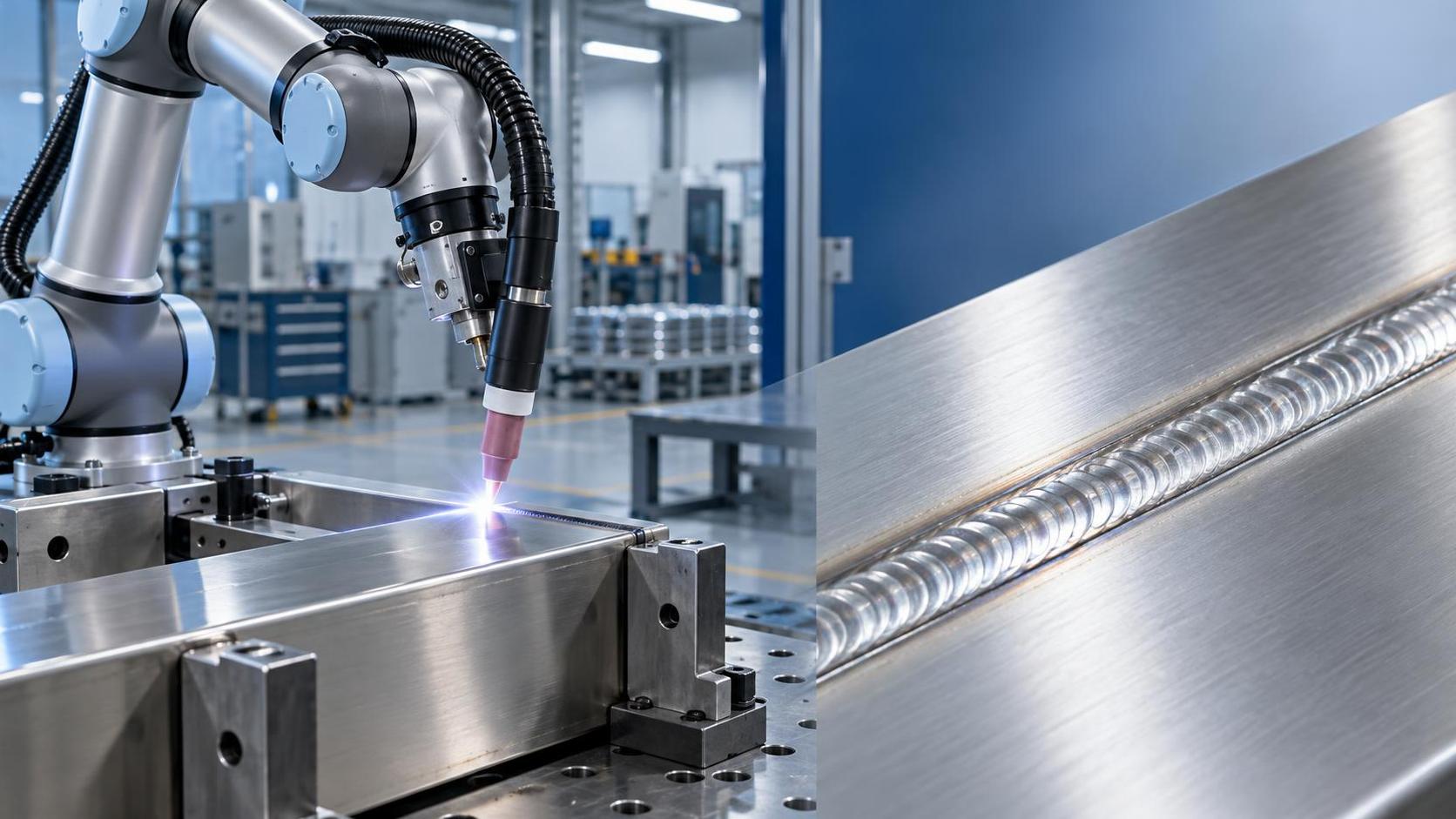
When procurement teams in North America begin evaluating cobot welding robot manufacturers, they’re rarely just comparing specs on a datasheet. They’re weighing trade-offs: safety versus speed, flexibility versus repeatability, integration effort versus long-term ROI. And increasingly—especially for job shops and mid-volume fabricators—they’re asking whether collaborative robots can truly handle the thermal demands, material variability, and process consistency required in real-world TIG and MIG welding applications.
That’s why this 2024 review doesn’t rank by marketing reach or booth size at IMTS—it ranks by *operational readiness*. We assessed five North American–based cobot welding robot manufacturers not just on payload limits or software interfaces, but on how seamlessly their systems integrate with common shop-floor realities: joint tracking accuracy on uneven seams, thermal management during extended weld cycles, compatibility with standard gas delivery and wire feed systems, and—critically—whether their hardware and support infrastructure meet ISO9001-aligned quality rigor and CE-compliant safety protocols. These are the same standards Wuxi Samgins International Trade Co., Ltd. adheres to across its full line of automatic welding equipment and CNC machinery, including its Gantry CNC plasma cutting machine, which routinely handles conductive metals from carbon steel to titanium with ±0.2 mm precision.
**1. Universal Robots (UR) – The Integration Catalyst**
Based in Odense, Denmark—but with deep North American engineering, distribution, and application support—the UR series remains the benchmark for ease of deployment. Their e-Series cobots offer up to 15 kg payload, with certified welding kits supporting both MIG and TIG via third-party end-effectors (like those from Hypertherm or Fronius). What sets UR apart isn’t raw power—it’s the ecosystem. Their PolyScope interface allows welders without robotics experience to teach paths using teach pendants or even tablet-based gesture control. For procurement professionals prioritizing fast ramp-up and minimal retraining, UR delivers. But be mindful: native arc-start reliability and seam tracking fidelity still often require add-on vision systems—adding cost and complexity.
**2. Techman Robot Inc. (TM Robot) – Vision-First, Weld-Ready**
Headquartered in Taiwan but operating major U.S. integration hubs in Michigan and California, TM Robot embeds 2D/3D vision directly into its cobot controller—a rare advantage. Their TM series (up to 18 kg payload) ships with built-in seam tracking algorithms optimized for thin-gauge stainless and aluminum. Unlike many competitors that treat vision as an optional module, TM engineers it into motion planning logic, reducing lag between detection and correction. This matters when welding variable-fit assemblies or parts with minor distortion—common scenarios where offline programming fails. Procurement teams valuing consistent first-pass yield over theoretical max payload will find TM compelling.
**3. Acieta (U.S.-based integrator & OEM partner)**
Acieta doesn’t manufacture cobots—but they *specialize* in making them weld-ready. Based in Sioux Falls, South Dakota, they design, validate, and commission turnkey cobot welding cells using UR, TM, or Rethink platforms—then back them with U.S.-based service, spare parts, and weld process validation. Their strength lies in bridging the gap between robotic capability and fabrication reality: optimizing torch angles for corner joints, validating shielding gas coverage in open-bay environments, and calibrating wire feed response to match specific alloy behavior. If your team lacks in-house robotics expertise—or needs documented process compliance for aerospace or medical subcontracting—Acieta offers tangible risk reduction.
**4. Ready Robotics – The Software Layer That Changes Everything**
Baltimore-based Ready Robotics takes a different approach: they don’t sell arms—they sell *orchestration*. Their Forge/OS platform runs on top of existing cobots (UR, TM, even legacy industrial robots), abstracting welding parameters into intuitive workflows. Instead of scripting G-code or tuning PID loops, users configure weld schedules via drag-and-drop logic blocks: “If material = aluminum → reduce voltage by 12% → activate post-flow gas for 1.8 sec.” This dramatically lowers the skill barrier for process engineers—not just programmers. For procurement teams managing mixed-material production (e.g., structural steel + aluminum enclosures), Ready’s flexibility in rapid reconfiguration is hard to replicate.
**5. Hikrobot (North American channel partners)**
Though headquartered in Hangzhou, Hikrobot’s growing U.S. presence—including certified system integrators in Ohio and Texas—makes them a pragmatic choice for budget-conscious buyers needing robust TIG capability. Their CR series cobots (10–16 kg payload) feature dual-redundant torque sensing and IP65-rated joints—critical for shop-floor durability near grinding or plasma stations. More importantly, their TIG packages include integrated high-frequency start suppression and pulse-width modulation fine-tuned for non-ferrous materials. While less dominant in marketing than UR or TM, Hikrobot’s value shines in repeatable, low-maintenance setups where uptime—not flashy demos—drives ROI.
One recurring theme across all five? *No cobot welds alone.* Success hinges on how well the robot integrates with upstream and downstream processes—from nesting and cutting to fixturing and post-weld inspection. Which brings us back to practicality: if you’re sourcing cobots for a facility already running plasma or flame-cut parts, consider how easily your chosen system interfaces with cut-part geometry data. Wuxi Samgins’ Gantry CNC plasma cutting machine, for example, outputs DXF files optimized via FastCAM—data that feeds directly into many cobot path-planning tools. That kind of interoperability isn’t incidental—it’s procurement leverage.
Also worth noting: payload limits matter less than *effective payload under thermal load*. A 12 kg cobot may sag slightly after 20 minutes of continuous MIG on 6 mm steel—not because of mechanical failure, but due to motor heating and encoder drift. Manufacturers who publish thermal derating curves (not just static payload charts) demonstrate deeper process understanding. Likewise, “integrated TIG/MIG support” means more than mounting brackets—it means validated gas flow profiles, arc initiation stability across voltage ranges, and torch cooling compatibility.
Finally, remember that certification isn’t decorative. ISO9001 isn’t just about paperwork; it reflects how consistently a supplier manages design changes, component traceability, and field issue resolution. CE marking signals adherence to electromagnetic compatibility and functional safety standards—non-negotiable when cobots share space with human welders. Wuxi Samgins’ alignment with both frameworks isn’t incidental—it’s evidence of supply chain discipline that translates directly into field reliability.
So before signing an MOQ or approving a capital request: ask for weld logs—not brochures. Request footage of actual parts welded on your material, with your joint type, using your shielding gas. Verify service response SLAs—not just warranty terms. Because in 2024, the best cobot welding robot manufacturer isn’t the one with the flashiest demo. It’s the one whose systems survive Monday morning—when the shop floor gets real.
search
Products Navigation
Send Us A Message