




Cobot Robot Welding Safety Checklist: ISO/TS 15066 Compliance for Human-in-the-Loop Welding Cells
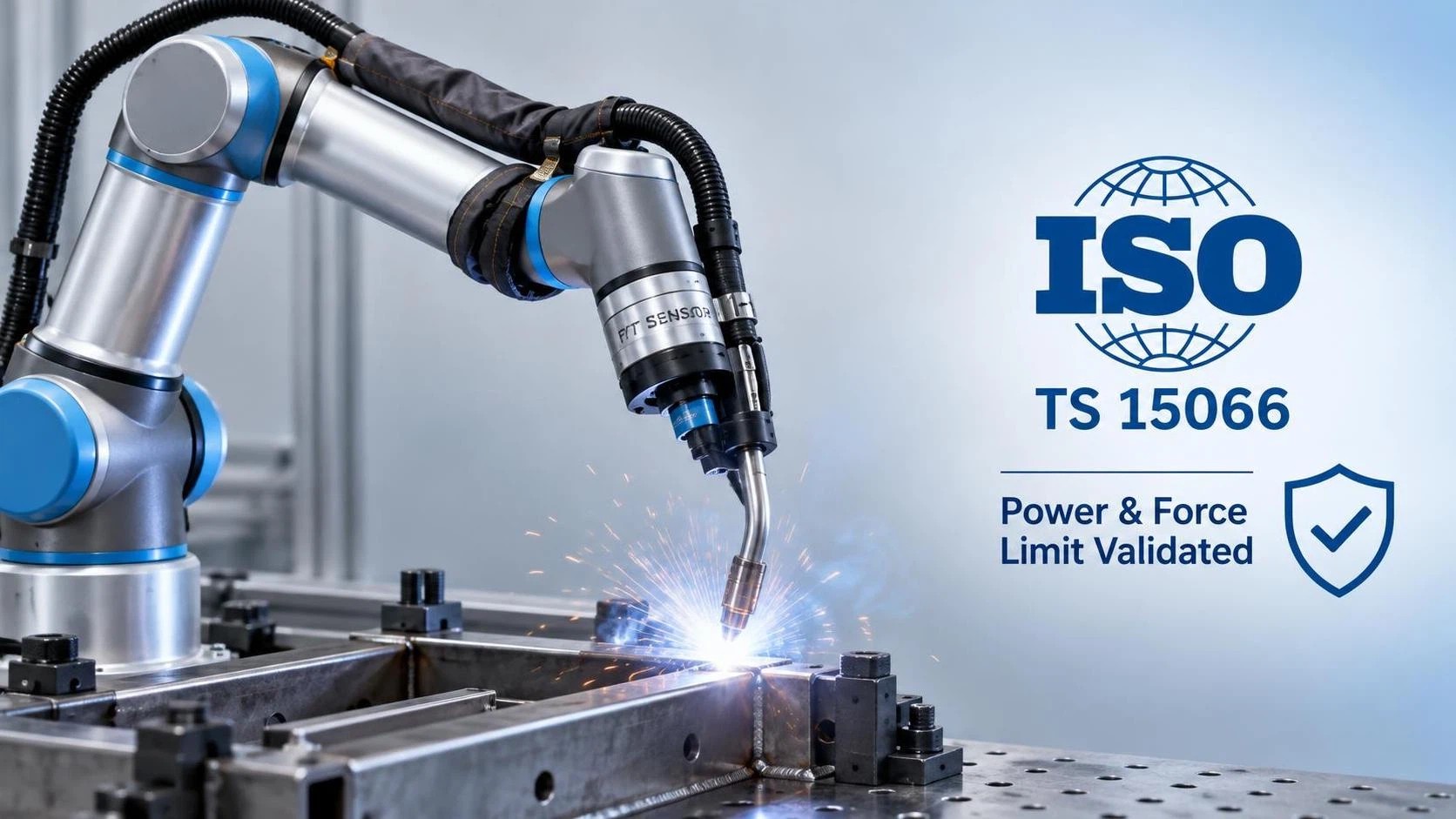
Cobot Robot Welding Safety Checklist: ISO/TS 15066 Compliance for Human-in-the-Loop Welding Cells
Ensuring safety in human-in-the-loop cobot robot welding cells is no longer optional—it’s a regulatory and operational imperative. This Cobot Robot Welding Safety Checklist aligns with ISO/TS 15066, the global benchmark for collaborative robot safety, helping quality control and safety managers systematically verify risk assessments, power/force limits, safeguarding measures, and human-robot interaction protocols. Developed by Wuxi Samgins—a trusted supplier of ISO9001- and CE-certified welding robots and automated welding equipment—this checklist empowers manufacturing teams to deploy cobots confidently, compliantly, and without compromise on worker safety or production efficiency.
Why This Checklist Matters to Quality & Safety Managers
For QC and safety professionals, cobot welding isn’t just about speed or repeatability—it’s about verifying that every shared workspace meets enforceable safety thresholds. Unlike traditional industrial robots, cobots operate without full perimeter guarding, meaning their force, speed, and contact behavior must be validated *before* commissioning—and re-verified after any process change, maintenance, or layout adjustment. ISO/TS 15066 defines precise limits for transient and quasi-static forces, pressure distribution, and effective mass—all tied directly to human tissue tolerance data. Skipping this step doesn’t just risk noncompliance; it exposes your team to preventable injury and your company to liability, downtime, and audit failure.
The 7-Point Verification Framework (Aligned to ISO/TS 15066 Clauses)
1. Collaborative Operation Mode Confirmation
Verify that the cobot is operating *only* in a certified collaborative mode (hand-guiding, speed-and-separation monitoring, power-and-force limiting, or safety-rated monitored stop)—not as a repurposed industrial robot. Check firmware version, safety controller logs, and OEM documentation for explicit ISO/TS 15066 validation reports.
2. Power & Force Limit Validation
Measure actual contact forces using calibrated force/torque sensors at all potential interaction points—including tool flange, end-effector, cable routing paths, and even weld spatter guards. ISO/TS 15066 mandates ≤140 N peak force for upper limbs and ≤150 N for lower limbs during quasi-static contact. Transient impact must stay below 350 N for ≤0.1 s. Record test conditions: speed, payload, orientation, and surface hardness.
3. Effective Mass & Collision Energy Calculation
Don’t rely on nominal robot mass. Calculate effective mass per ISO/TS 15066 Annex C—factoring in tooling, workpiece inertia, acceleration profiles, and kinematic coupling. For welding cobots carrying heavy torches or positioners, effective mass often exceeds static specs by 2–3×. Use measured deceleration curves—not theoretical models—to compute kinetic energy at typical approach speeds (≤250 mm/s).
4. Risk Assessment Documentation Audit
Confirm your risk assessment follows ISO 12100 and explicitly references ISO/TS 15066 clauses. It must identify *all* foreseeable hazards—not just pinch points—but also arc flash exposure, fume inhalation near operator breathing zones, electromagnetic interference with pacemakers, and secondary motion from part ejection or fixture failure. Document mitigation hierarchy: elimination > engineering controls > administrative controls > PPE.
5. Safeguarding Layer Integrity Check
Even in collaborative mode, layered safeguards are essential. Validate that light curtains (e.g., Type 4) maintain ≥300 mm minimum distance per ISO 13855, that safety mats meet EN ISO 13856-1, and that emergency stop circuits are hardwired—not software-only—with ≤20 ms response time. Crucially, confirm that safety-rated monitored stop (SRMS) is activated *before* entering the collaborative zone—not after.
6. Human-Robot Interaction Protocol Review
Assess how operators enter, monitor, and intervene during welding cycles. Are start/stop sequences intuitive? Is torch repositioning done via teach pendant or hand-guiding—and does the system enforce safe speed reduction before enabling guidance? Does the cobot pause automatically if an operator’s hand enters the welding envelope *during* arc-on? These behaviors must be logged, tested, and signed off by both safety and production leads.
7. Maintenance & Change Control Verification
Every hardware modification (e.g., new torch, altered cable routing), software update, or cell reconfiguration triggers re-validation. Confirm your maintenance log includes ISO/TS 15066-specific entries: updated force measurements, revised risk assessment annexes, and proof of recalibrated safety sensors. Wuxi Samgins’ CE-certified welding robots include built-in diagnostic interfaces that simplify this traceability—ensuring compliance remains auditable across product lifecycles.
Where Precision Drilling Supports Welding Integrity—And Safety
Weld quality starts *before* the arc strikes. Dimensional inaccuracies in H-beam flanges or web holes can force excessive robot path correction, increasing cycle time, thermal distortion, and unintended collisions. That’s why integrating high-accuracy pre-welding processes—like our H beam 3D drilling machine—is a proactive safety enabler. With ±0.1 mm hole positional accuracy across three axes and servo-controlled feed for all three spindles, it ensures consistent fit-up for robotic welding fixtures. Stable, repeatable part geometry reduces cobot motion variability—lowering dynamic force risks and simplifying ISO/TS 15066 validation. Its post-weld artificial aging treatment and heavy-duty roller guides further guarantee long-term dimensional stability—minimizing unexpected deviations that could compromise safety protocols.
Practical Implementation Tips for Your Team
Start with a “baseline” validation on one representative cell—not all at once. Use OEM-provided test kits (e.g., KUKA’s KRC4 Safety Configurator or FANUC’s CRX Force Validation Tool) to generate compliant configuration files. Train QC staff—not just engineers—to perform annual spot checks using portable force gauges and laser distance meters. Store all validation records digitally with timestamps, signatures, and version-controlled PDFs. Finally, integrate cobot safety verification into your existing ISO 9001 internal audit schedule—treating it as core to quality management, not a standalone safety task.
Conclusion: Safety Is a Measurable, Maintainable Process—Not a One-Time Checkbox
This checklist isn’t a compliance formality—it’s your frontline defense against preventable incidents and production disruption. For quality and safety managers, ISO/TS 15066 compliance means moving beyond “it looks safe” to “we’ve measured, documented, and verified every boundary condition.” By anchoring each verification point to real-world testing, clear ownership, and traceable records, you transform cobot welding from a potential liability into a demonstrably safer, more reliable, and auditable production asset. Wuxi Samgins supports this rigor with fully certified equipment, technical documentation aligned to EU Machinery Directive 2006/42/EC, and application engineering expertise focused on integrated safety-by-design—not retrofitting. When safety and precision are engineered together from the start, human-in-the-loop welding becomes not just possible, but predictable, productive, and protected.
search
Products Navigation
Send Us A Message