




Cylinder Seam Welding Machine Selection: Wall Thickness, Diameter, and Joint Accuracy
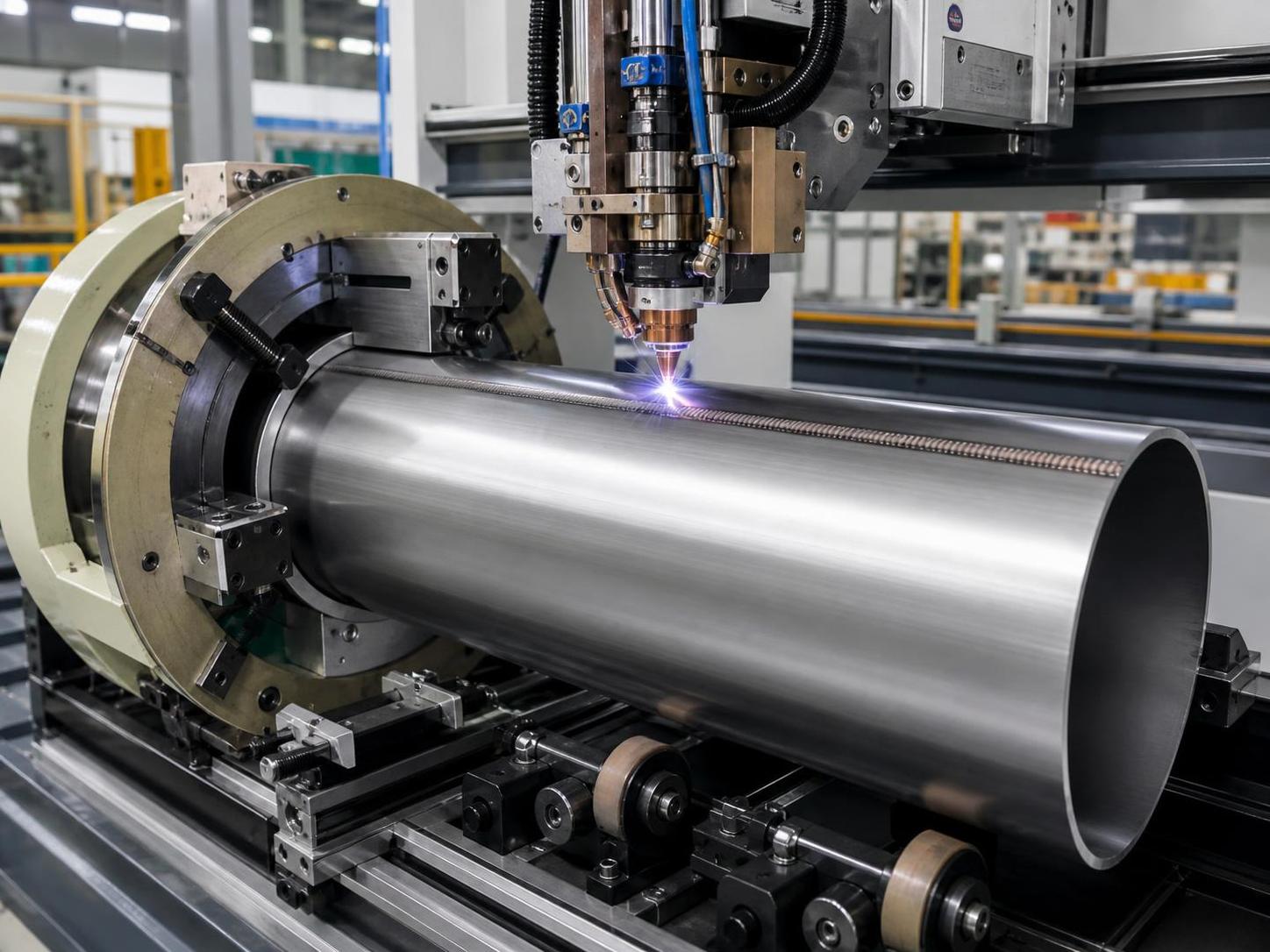
Choosing a cylinder seam welding machine is rarely a simple equipment comparison. For project managers responsible for pressure vessels, storage tanks, ducts, rolled shells, or pipe-related fabrication, the machine has to fit the job mix, the quality standard, and the production schedule at the same time. In practice, three variables drive most selection mistakes: wall thickness, cylinder diameter, and joint accuracy. If any one of them is underestimated, the result is usually unstable weld formation, excessive fit-up time, rework, or a line that never reaches its planned output.
The difficulty is that these factors do not act independently. A machine that handles a certain thickness range may not maintain the same quality on large diameters. A system that looks productive on paper may lose its advantage when joint preparation is inconsistent. That is why selection should begin with the fabrication reality of the project, not with the nominal machine specification.
Why wall thickness is the first filter, but not the only one
Most buyers start by asking what thickness range the cylinder seam welding machine can handle. That is necessary, but incomplete. Wall thickness affects heat input, penetration behavior, clamping requirements, distortion risk, and the power reserve needed for continuous welding. The same machine may perform well on thin stainless shells but struggle on thicker carbon steel sections when duty cycle, edge condition, or required penetration changes.
For thin-wall work, the main risk is often burn-through, misalignment visibility, and heat distortion rather than insufficient power. Machines for this range need stable travel speed, reliable torch tracking, and clamping systems that do not introduce marking or local deformation. When the shell is used in visible or hygienic applications, bead consistency can matter as much as structural soundness.
For medium and heavy wall cylinders, the problem shifts. Penetration stability becomes more sensitive to root gap variation, and the machine frame, seam tracking, and fixture rigidity become more important. A machine that is nominally rated for thicker plate but cannot hold alignment across the full seam length may create more downstream repair than a lower-speed but more stable unit.
Project teams should therefore separate thickness discussion into at least four practical questions:
- What is the normal production thickness, not just the maximum occasional thickness?
- What material family is involved: carbon steel, stainless steel, aluminum, or alloy materials?
- What joint preparation method will be used before welding?
- Is single-pass productivity or low-distortion quality the main priority?
This matters because machine selection based on peak capability often leads to overinvestment. If 80% of production is in a narrow thickness band, the best choice is usually the machine optimized for that band, with a clear plan for outlier jobs. Buying for extremes can increase capital cost without improving actual project delivery.
Diameter range affects more than workpiece loading
Diameter is often treated as a simple dimensional parameter, but in cylinder seam welding it directly influences positioning accuracy, seam accessibility, rotation or support method, and consistency of pressure along the joint. Small-diameter cylinders bring different challenges from large shells, even when wall thickness is identical.
Small diameters are less forgiving in fit-up. The curvature is tighter, so edge mismatch, ovality, and torch access become more critical. If the machine’s clamping and backing arrangement is not designed for this geometry, the result may be unstable root formation or inconsistent seam appearance. In some cases, the limiting factor is not the welding head but the loading and alignment system.
Large-diameter cylinders create another set of issues. The shell may be more difficult to keep straight along the full seam line, especially if rolling accuracy is inconsistent. On long seams, slight variation in shell roundness can translate into changing gap conditions. The machine needs sufficient support length, fixture adaptability, and seam tracking stability. Otherwise, the welding process becomes overly dependent on operator intervention.
For project managers, the key question is not simply “What is the maximum diameter?” but “Within what diameter range can the machine maintain quality and takt time without exceptional setup effort?” Those are very different questions. Many projects lose efficiency because the selected equipment can physically process the part, but only after repeated manual correction.
This is where upstream forming quality starts to affect welding economics. If rolled shells or profiles vary too much, seam welding performance suffers regardless of welding power source quality. In fabrication environments where cylinders, rings, or curved structural components are produced in the same workflow, forming precision can determine whether the welding cell operates predictably. Equipment such as a Profile bender, especially when it offers digital displacement readout and deformation control, can reduce dimensional variation before the seam ever reaches the welding station. That does not replace seam welding capability, but it changes the quality baseline the welding machine has to work with.
Joint accuracy is often the real bottleneck
In many workshops, machine inquiries focus on welding current, travel speed, and automation level, while the true production bottleneck is joint accuracy. A cylinder seam welding machine can only compensate for limited inconsistency in edge preparation, straightness, and tack quality. Once variation exceeds that range, even a sophisticated system becomes a rework generator.
Joint accuracy should be evaluated in three layers.
The first is geometric accuracy before welding: shell roundness, edge straightness, bevel consistency, and mismatch level. The second is assembly accuracy: root gap control, tack placement, and clamping stability. The third is dynamic accuracy during welding: the ability of the machine to maintain torch-to-joint relationship as the workpiece expands thermally or shifts under load.
For project execution, this is important because the machine cannot be selected in isolation from process discipline. If upstream rolling, cutting, and fit-up are variable, the project may need a machine with stronger seam tracking, adaptive controls, or more robust fixturing rather than simply higher speed. The cheapest machine can become the most expensive option when joint variability is high.
It is also important to distinguish cosmetic accuracy from code-critical accuracy. For pressure-retaining products, acceptance criteria may be governed by applicable standards or customer specifications, and those requirements can be significantly stricter than visual appearance alone. Where compliance is involved, the machine should support repeatable procedure execution rather than rely on highly skilled manual correction. Relevant code requirements vary by product and market; ASME, EN, or customer-specific standards may apply depending on the application, and exact requirements should be confirmed case by case.
Automation level should match variation level
A common misconception is that higher automation automatically means lower risk. In reality, automation pays back best when part consistency is already under control. If the workshop produces standardized cylinders with stable thickness, repeat diameters, and consistent joint prep, a higher-automation cylinder seam welding machine can improve throughput and reduce dependence on operator skill.
If production is highly mixed, with frequent diameter changes and variable shell quality, a fully automated system may spend too much time in setup, calibration, and exception handling. In that scenario, a more flexible machine with easier adjustment and better operator access may produce better project results.
Project managers should review the production profile in operational terms:
- Batch size and frequency of changeover
- Share of repeat products versus custom jobs
- Availability of trained operators and welding engineers
- Required documentation and traceability level
- Expected ramp-up time after installation
A technically advanced machine that depends on perfect input conditions may not be the right choice for a workshop still improving rolling accuracy, edge preparation, and handling discipline.
Fixture design and backing system deserve more attention than they usually get
When evaluating machine quotations, buyers often compare welding source brand, control interface, and speed range, but give less attention to fixture design. That is a mistake. For cylinder seam welding, fixture quality often determines whether the weld is repeatable across shifts and batches.
The backing system must suit the material, thickness, and weld process. Clamping force has to be sufficient without distorting thin-wall sections. Support length must match the product dimensions. If the line handles both short shells and long cylinders, fixture adaptability becomes critical. Poor fixture design tends to show up as inconsistency that operators are forced to “manage” manually, which defeats the value of automation.
This is also where installation planning matters. A machine with strong nominal capability may require more floor space, more stable foundations, or different loading arrangements than the project originally assumed. For export-oriented fabrication shops, layout compatibility can affect commissioning time as much as equipment performance.
Selection mistakes usually come from process isolation
The most expensive selection errors happen when the welding machine is evaluated as a standalone asset. In reality, seam welding quality is downstream of cutting, edge milling, rolling, tack assembly, and part handling. If those stages are unstable, the welding machine is forced into a compensating role it was never designed to play.
This is why experienced project teams review the whole shell-making chain. If edge preparation is poor, the answer may be process improvement before machine upgrade. If rolled geometry is inconsistent, investment in forming precision may release more value than buying a faster welder. In some fabrication lines, upstream bending and rolling equipment with better control over deformation can materially improve welding yield. A modern profile and section forming system that supports pre-bending, coiling, and rounding in one cycle, while maintaining around ±0.1 mm forming precision under suitable conditions, can reduce mismatch and setup correction in later joining stages. The point is not to add equipment indiscriminately, but to understand where dimensional instability is entering the line.
How project managers should compare suppliers
Supplier comparison should go beyond technical brochures. For this class of machinery, the useful questions are operational:
- What thickness-diameter combinations has the supplier actually delivered for similar applications?
- What assumptions are built into the quoted welding speed?
- How much joint variation can the system tolerate before manual intervention is needed?
- What fixture change parts are required for different diameters?
- What acceptance test method will be used before shipment?
- What local service, commissioning, and training support is available?
It is also wise to request sample references based on similar products rather than generic industries. A machine used for thin stainless ventilation shells is not automatically a good benchmark for thicker petrochemical cylinders. Application similarity matters more than broad category claims.
Documentation should also be reviewed carefully. If CE marking, ISO-related quality procedures, or customer-specific documentation are required, the supplier’s ability to support these should be verified in advance rather than assumed. Exact conformity scope should always be checked against the delivered machine configuration and destination market requirements.
The right choice is the machine that protects delivery, not just welding speed
For project managers, the best cylinder seam welding machine is usually not the one with the highest published speed or the widest theoretical range. It is the one that fits the real production window: the actual wall thickness mix, the true cylinder diameter range, and the achievable level of joint accuracy in the workshop.
If thickness is the dominant challenge, prioritize heat control, rigidity, and penetration stability. If diameter variation is the issue, focus on fixture adaptability and seam positioning consistency. If joint accuracy is weak, look hard at upstream process capability before expecting the welding machine to solve it alone.
Selection becomes much more reliable when the machine is judged as part of the manufacturing chain rather than as an isolated purchase. That is the decision logic that reduces rework, protects schedules, and supports a more predictable return on capital.
search
Products Navigation
Send Us A Message