




When Does an Automatic Welding Manipulator Improve Weld Consistency and Output?
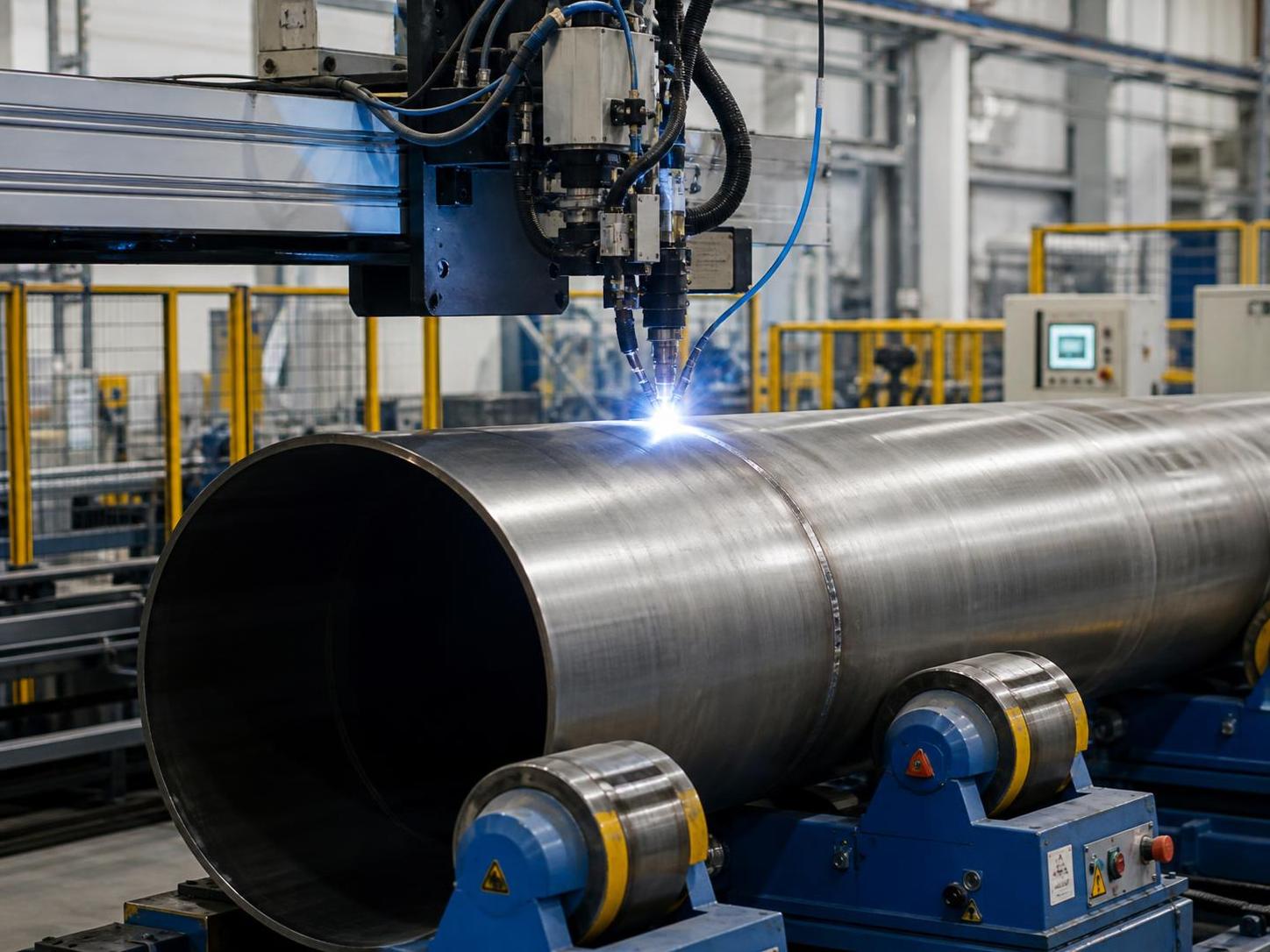
For manufacturers focused on higher weld quality, repeatable accuracy, and faster production, a china automatic welding manipulator can be a practical upgrade. As welding demands grow in volume, complexity, and consistency, the right manipulator helps reduce operator variation, improve arc stability, and support continuous output. Understanding when this equipment delivers the greatest value is essential for enterprise decision-makers seeking better efficiency and long-term competitiveness.
The question is not whether automation is “better” than manual welding in general. Most production leaders already know that automation can improve repeatability. The real decision is narrower and more important: at what point does an automatic welding manipulator materially improve output, lower quality risk, and justify the operational change?
That threshold usually appears when welding performance is being limited less by welding parameters themselves and more by inconsistency in torch positioning, workpiece handling, operator fatigue, and repeated setup time. In those conditions, a manipulator is no longer just a piece of equipment. It becomes a process-control tool.
Where weld inconsistency usually starts in real production
In many fabrication shops, inconsistent weld quality does not come from poor procedure qualification alone. It comes from cumulative variation on the shop floor. Travel speed drifts between operators. Arc length changes over long seams. Large cylindrical workpieces are repositioned too often. Fit-up quality may be acceptable, but maintaining a stable welding angle across the full length of the seam becomes difficult.
This is especially visible in pressure vessels, boilers, structural cylinders, storage tanks, and large-diameter pipe sections. On these jobs, the technical welding method may already be mature, yet rejection rates remain stubborn because execution is unstable. Common symptoms include:
- visible variation in bead appearance from one section to another;
- inconsistent penetration on long longitudinal seams;
- higher repair rates at circumferential joints;
- slower throughput caused by repeated lifting, turning, and alignment;
- strong dependence on a few highly experienced welders.
When these issues persist, adding more labor often does not solve the root problem. It may even increase variation if production expands faster than process discipline. This is where an automatic welding manipulator begins to make commercial sense.
When a welding manipulator has the clearest business case
A manipulator improves weld consistency and output when the operation has enough repetition, enough seam length, or enough part size that positional control becomes a constraint. Decision-makers should look for several practical triggers.
Long, repeatable weld paths. If the same weld geometry is repeated across batches, automation delivers more value because setup learning is reused. This applies to longitudinal seams on shells, circumferential seams on vessels, and pipe welding where joint access is predictable.
Large or heavy workpieces. Once components become difficult to rotate, reposition, or hold at the correct angle manually, weld quality often suffers before management notices it in the data. In such cases, mechanized movement contributes as much to quality as the welding head itself.
Quality requirements that leave little room for operator variation. Industries serving energy, pressure equipment, infrastructure, or export projects often face stricter inspection expectations. Even if product standards differ by market, customer expectations for visual uniformity and low repair rates are rising globally.
Production bottlenecks at handling rather than arc-on time. Some factories assume they need a faster welding process, but the real delay is in loading, turning, aligning, and rechecking. A manipulator can improve effective output by reducing non-welding time.
Labor constraints. When experienced welders are difficult to recruit or retain, process stability becomes a strategic issue. A manipulator does not remove the need for welding expertise, but it reduces dependence on constant manual correction.
Why consistency improves: not just automation, but controlled motion
Weld consistency improves when torch travel, joint positioning, and workpiece rotation become more stable than what manual handling can reliably provide over a full shift. This matters because many weld defects are not isolated events. They are process deviations that build gradually: slight torch drift, uneven seam presentation, vibration, and inconsistent rotational speed.
An automatic welding manipulator addresses these issues by keeping the weld zone in a controlled relationship to the torch. In practical terms, that means:
- more stable torch angle and stand-off distance;
- more uniform travel speed across long seams;
- reduced interruptions during circumferential welding;
- less heat input variation caused by manual repositioning;
- more repeatable bead formation from batch to batch.
For management, the value is not only better-looking welds. It is more predictable process capability. That matters when quoting jobs, planning capacity, and estimating rework risk.
Output gains often come from fewer stops, not higher theoretical speed
One common misconception is that output improvement mainly comes from faster welding speed. In reality, the largest gains often come from process continuity. A production line that stops less frequently can outperform a nominally faster process with poor coordination.
In vessel and pipe fabrication, handling interruptions are costly. Every manual repositioning step adds crane time, waiting time, and alignment risk. Once a manipulator is integrated with suitable workpiece support, the seam can remain in a more favorable welding position for longer periods. That reduces idle time and helps maintain arc-on rate.
This is why manipulators are often evaluated together with rotating support equipment. For cylindrical parts, a properly matched Self aligning welding rotator can be more important than many buyers initially expect. If the workpiece cannot rotate smoothly and remain stable under load, the manipulator alone will not deliver consistent circumferential welding performance. In heavy fabrication, motion coordination is the real productivity lever.
Applications where the return is usually strongest
The return on investment is generally strongest in operations with cylindrical or elongated weldments and repeatable welding programs. Typical examples include:
- butt welding of large-diameter pipes;
- pressure vessel and boiler fabrication;
- tank manufacturing;
- circumferential and longitudinal seam welding on rolled shells;
- subassemblies that require controlled rotation and stable torch travel.
In these environments, even moderate gains in first-pass yield can have an outsized financial effect. Repair welding consumes labor, delays delivery, and introduces additional distortion risk. If inspection failures occur late in the process, the cost multiplies quickly.
The strongest case is usually not a low-mix job shop with highly irregular parts and unpredictable fixturing. It is a manufacturer with recurring product families, stable dimensions, and enough annual welding volume to benefit from standardization.
What decision-makers should evaluate before approving the investment
Too many automation purchases are justified by broad promises rather than production evidence. A better approach is to examine five decision variables.
Part mix and repeatability. If every workpiece is different, setup engineering may consume the expected gains. If 60% to 80% of welding hours come from repeatable geometries, the case becomes much stronger.
Joint type and access. Manipulators add value where welding orientation can be controlled and maintained. Complex joints with frequent manual intervention may limit benefits unless upstream fixturing is improved.
Handling integration. The manipulator should not be assessed as a standalone item. Rotation, fit-up, loading, and unloading determine actual output. For cylindrical fabrication, support systems with self-aligning capability can simplify adaptation to varying diameters. Depending on model selection, workpiece load can range from 5 tons to 200 tons, with speed control options such as electromagnetic or frequency-conversion control available in the market. Those are meaningful only if matched to real production loads and dimensional ranges.
Quality cost baseline. If a factory does not know its current rework rate, welding repair hours, or defect patterns, it cannot make a disciplined automation decision. Management should quantify scrap, repair, inspection delays, and throughput loss before purchase.
Workforce readiness. Automation changes job content. It requires programming discipline, fixture consistency, and maintenance response. Shops that underestimate training needs often underuse the equipment.
Implementation risks that reduce expected gains
The most frequent failure is not equipment malfunction. It is poor process matching.
A manipulator will not compensate for unstable fit-up, poor edge preparation, or uncontrolled distortion. If joint gap variation is already excessive, automation may simply reproduce defects more consistently. This is why upstream process capability matters as much as the manipulator itself.
Another risk is under-specification. Buyers sometimes select equipment based on current minimum requirements rather than realistic production growth. If future vessel diameters, wall thicknesses, or workpiece weights increase, the original system may become a bottleneck. Over-specification, however, also has a cost in footprint, energy use, and capital allocation. The decision should follow a three- to five-year production forecast, not a single urgent project.
Integration risk is also significant. Floor loading, available space, crane path, power supply, operator access, and maintenance clearance should be reviewed early. In export-oriented factories, CE-marked equipment may be preferred for internal standardization or customer acceptance in some markets, but buyers should verify what compliance is actually required in their jurisdiction and end-use sector.
How to tell whether your factory is ready
A factory is usually ready for this upgrade when three conditions exist at the same time: welding demand is stable enough to standardize, quality variation is costing real money, and management is willing to redesign the workflow rather than just add a machine.
That last point matters. The real productivity improvement comes from changing how parts move, how seams are presented, how operators supervise the process, and how quality data is fed back into production. Without that operational redesign, even a capable china automatic welding manipulator may be treated like a premium positioning tool instead of a capacity-building asset.
Readiness can be checked with a short internal audit:
- Which weld families consume the most hours each month?
- Which defects create the most repair cost?
- How much time is spent on positioning and turning workpieces?
- How dependent is output on a small number of experienced welders?
- Can dimensions and joint preparation be standardized enough for repeatable automation?
If the answers point to repetitive cylindrical welding with high handling content, the case is usually strong.
What the market trend suggests
Across fabrication sectors, the pressure is moving in one direction: more consistency, shorter delivery cycles, and tighter labor availability. That does not mean every manufacturer should automate immediately. It does mean that shops relying heavily on manual repositioning for high-volume cylindrical welding are becoming less competitive over time.
Suppliers in China have become part of this shift because many global buyers now evaluate not only price, but also integration capability, CE-related expectations, controls options, and whether the supplier can support broader welding cells rather than single machines. For buyers comparing international sourcing options, this makes technical matching and after-sales responsiveness more important than headline machine cost.
In practical terms, an automatic welding manipulator improves weld consistency and output when welding variability has become a process problem rather than a people problem. Once that line is crossed, the investment is less about replacing manual skill and more about turning skill into a repeatable production system. That is usually the point at which quality improves, output becomes more predictable, and the business case starts to hold up under scrutiny.
search
Products Navigation
Send Us A Message