




Do Small-Batch Steel Plate Jobs Need a CNC Shearing Machine?
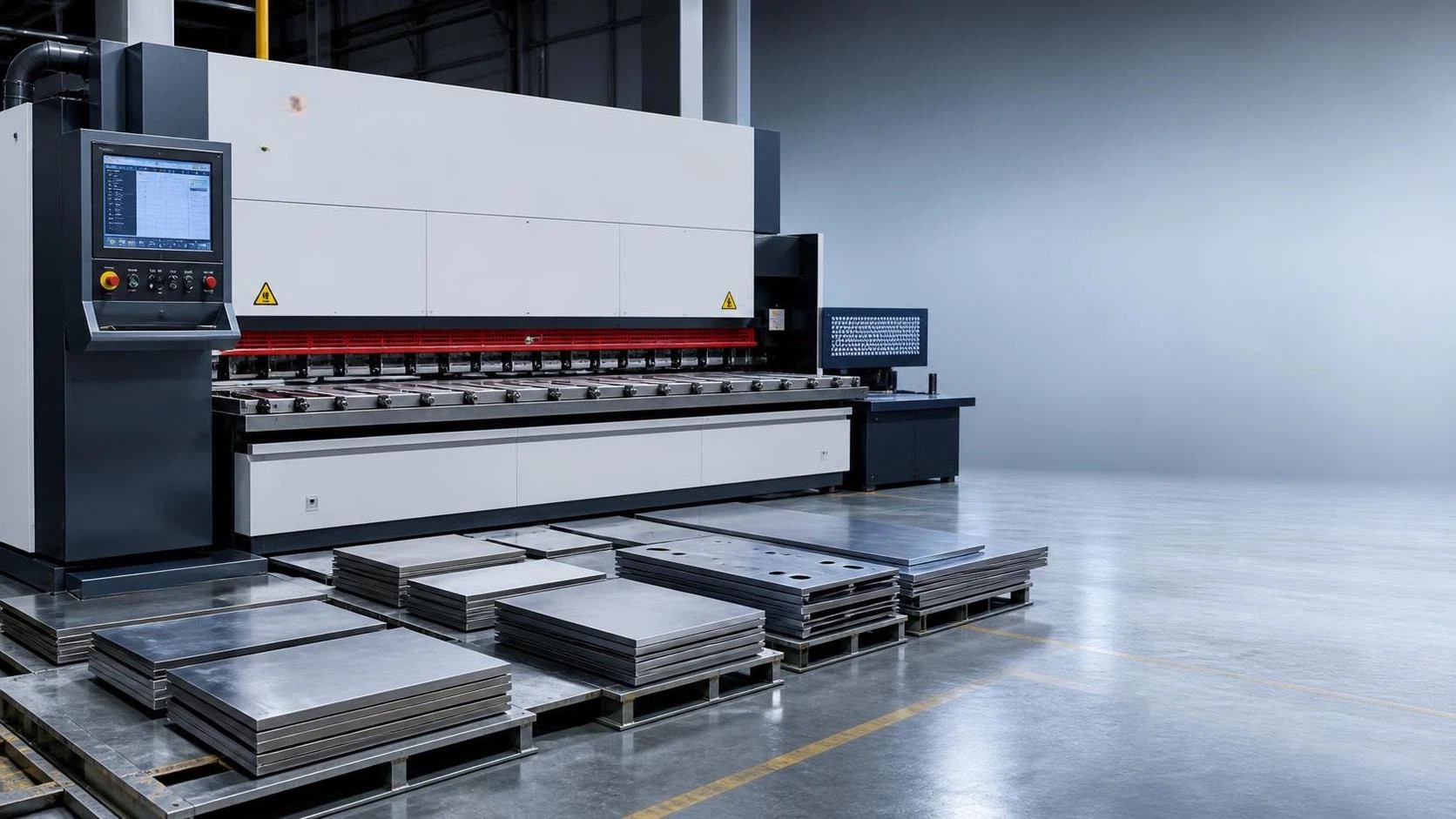
For many metal fabricators and workshop owners, a common question is: Do I need a CNC shearing machine for small batch steel plate cutting? The answer depends on material thickness, precision requirements, labor efficiency, product mix, and whether the current workload is truly “small batch” or simply an early stage of future expansion. In sheet metal and plate processing, a shearing decision is rarely just about cutting metal. It affects quoting speed, operator dependence, waste control, delivery reliability, and the ability to scale without reworking the production process later.
The short answer is that not every small-batch job needs CNC shearing. In many workshops, a conventional hydraulic shear, guillotine shear, or even outsourced cutting remains the more rational option. But there are also many cases where a CNC shearing machine becomes justified sooner than expected—not because batch size is large, but because part variation, tolerance consistency, labor constraints, and downstream process stability make manual methods more expensive than they appear.
Why “small batch” is often misunderstood in steel plate cutting
In purchasing discussions, “small batch” is usually treated as a low-volume condition, but in fabrication practice it can mean several different things:
- Low quantity of each part, but many different part sizes in one shift
- Repeated prototype or engineering change orders
- Short-run fabrication with tight lead times
- Intermittent cutting demand, but high requirements for consistency
- Mixed thickness processing across customer orders
This distinction matters. If a workshop cuts 20 identical strips once a week, CNC may be unnecessary. If it cuts 50 different plate sizes every day with frequent backgauge changes, manual positioning time becomes a hidden production cost. In that case, the question “Do I need a CNC shearing machine for small batch steel plate cutting” is really about workflow complexity, not just order volume.
Many smaller manufacturers underestimate the burden of setup variability. The machine may only cut a few hundred pieces per week, but if every job requires re-measuring, trial cuts, operator judgment, and quality checks, the actual production burden is much higher than the piece count suggests.
What a CNC shearing machine changes in practical terms
A CNC shearing machine does not transform shearing into a universal precision process, nor does it eliminate all operator skill. What it usually improves is repeatability in positioning, setup efficiency, and process control. Depending on the machine configuration, CNC can manage backgauge positioning, cutting sequence, stroke adjustment, gap setting support, and job storage.
For small-batch users, the most relevant benefits are often operational rather than purely mechanical:
- Faster switching between different cut lengths
- Reduced measuring and marking time
- More consistent first-piece accuracy
- Lower reliance on one experienced operator
- Better traceability of repeated jobs
- Less scrap during frequent changeovers
That matters most in workshops where cutting is upstream of bending, welding, assembly, or robotic processing. If the shearing step creates variability, the cost does not remain in the cutting area. It shows up later as poor fit-up, longer tack welding, re-squaring, assembly delays, and quality disputes.
When CNC shearing is probably not necessary
There are still many situations where buying a CNC shearing machine is hard to justify.
If a company mainly cuts standard stock sizes into rough blanks, tolerance expectations are moderate, and experienced operators are available, a conventional hydraulic shear may be entirely adequate. This is especially true when:
- Part geometry is simple and repetitive
- Thickness range is narrow
- The workshop already has stable manual procedures
- Delivery pressure is not severe
- Secondary trimming or machining is expected anyway
- Capital budget is limited and other bottlenecks are more urgent
In such cases, CNC can become a “nice-to-have” feature rather than a productivity necessity. A common mistake is to assume that CNC always produces a faster return because it sounds more advanced. In reality, if the bottleneck is material handling, not gauge setting, automation at the shear may have only a modest effect.
Another case where CNC may not be necessary is when outsourcing is viable. Some fabricators with irregular demand are better served by subcontracting plate cutting until their order profile becomes more stable. This avoids tying up capital in equipment that may remain underutilized.
When small-batch work does justify CNC shearing
The stronger case for CNC appears when “small batch” is combined with one or more of the following conditions.
High mix, low volume production. This is common in job shops, enclosure manufacturers, agricultural equipment suppliers, maintenance fabrication, and custom structural component work. Here, the challenge is not how many pieces are cut, but how often dimensions change.
Tight downstream fit requirements. If sheared parts go directly into press braking, fixture welding, or assembly, inconsistent blank size causes cumulative errors. CNC improves process discipline before those costs spread.
Skilled labor dependency. Some workshops run acceptably only because one veteran operator knows how to compensate for machine behavior, material spring characteristics, and manual gauging errors. That is a business risk. CNC cannot replace expertise completely, but it reduces dependence on undocumented operator habits.
Frequent reorders of custom parts. Storing programs and recalling dimensions is valuable even for small runs if the same non-standard jobs come back regularly.
Rising labor costs or labor shortages. In many markets, this is becoming more important than machine price. Even when the cutting volume is not high, the cost of slow setup and rework can exceed the financing cost of more capable equipment.
Customer pressure on consistency and lead time. Export-oriented fabricators, in particular, often face stricter expectations around repeatability, documentation, and shipment timing. A more controlled shearing process can support broader quality performance, even if volumes remain moderate.
The decision should be based on total process cost, not machine price alone
Buyers often compare a CNC shearing machine with a conventional shear by looking only at initial purchase cost. That is rarely enough. For small-batch steel plate cutting, the more meaningful comparison is total process cost over time.
That includes:
- Setup time per order
- Number of trial cuts
- Material scrap from measuring error
- Operator training and substitution risk
- Downtime from manual adjustment mistakes
- Rework in bending, welding, or assembly
- Order delays caused by slow changeovers
A workshop may save money upfront by choosing a simpler machine, then lose margin on every short-run order because quoting assumed ideal cutting efficiency that never happens in reality. This is especially common in mixed-order production where office staff see low volume, but shop-floor teams experience constant interruption and adjustment.
For procurement teams and managers, the right question is not whether CNC is cheaper per hour. It is whether the business loses more through inconsistency and labor intensity than it would spend on a more controlled cutting platform.
Thickness, tolerance, and edge quality still matter
Not all shearing decisions are about automation. Material characteristics remain central.
If the workshop processes thicker plate, wider sheets, or higher-strength material, machine rigidity and blade condition may matter more than CNC controls alone. A CNC system can improve positioning, but it cannot compensate for an underspecified frame, poor blade clearance management, or unsuitable tooling practices.
Likewise, buyers should be realistic about what shearing can achieve. If the application demands extremely tight dimensional tolerances, complex contours, or premium edge quality for visible parts, laser, plasma, or machining may be more appropriate depending on the material and part function. Shearing remains efficient for straight cuts, but it is not a universal substitute for all cutting methods.
This is where some purchasing mistakes begin. Companies compare CNC shearing with laser cutting as if both solve the same problem. In practice, they serve overlapping but different production needs. For straightforward rectangular blanks and strip cutting, shearing is often faster and less expensive per piece. For irregular geometry or high part complexity, it is not the right comparison.
Common misconceptions in small-batch machine selection
Several assumptions appear repeatedly in the market.
“Small batch means manual is always enough.”
Not if the product mix is high and changeovers dominate labor time.
“CNC is only for mass production.”
In plate shearing, CNC often creates value through flexibility and repeatability rather than through high-volume automation alone.
“Accuracy depends only on the machine.”
Material flatness, blade wear, squareness, backgauge calibration, and operator handling all affect results.
“A lower-cost machine is less risky for uncertain demand.”
Sometimes true, but sometimes the greater risk is locking the workshop into low-efficiency processing just when customer expectations are rising.
“If current jobs are small, future jobs will stay small.”
Many fabricators underestimate how quickly demand changes when they begin serving export customers, OEM support work, or more complex custom fabrication segments.
What buyers should evaluate before making the call
A useful evaluation starts with the production pattern, not the brochure specification.
Decision-makers should review at least these points:
- How many dimensional changeovers happen per day or per shift?
- How much time is currently spent on measuring, marking, and trial cutting?
- What is the real scrap rate from setup error?
- Do downstream teams report recurring fit-up problems?
- How dependent is output on one or two experienced operators?
- Are repeat jobs frequent enough for stored programs to create value?
- Is the business moving toward shorter lead times or more customized orders?
For international buyers and sourcing managers, supplier capability also matters. A CNC shearing machine purchase is not only about the machine body. It involves controller usability, spare parts support, commissioning, documentation quality, electrical conformity, and after-sales response. Certification claims such as CE should be checked carefully in context rather than assumed to guarantee overall performance or suitability. If a project involves regulated destinations or customer audits, documentation should be reviewed in detail. Specific conformity requirements may vary by market and application, and some items may require case-by-case verification 【待核实】.
A practical rule of thumb
If your small-batch cutting work is simple, repetitive, and not especially time-sensitive, a conventional shear may remain the smarter investment.
If your “small batches” actually involve frequent size changes, custom orders, recurring setup loss, inconsistent output, or growing pressure on delivery and quality, CNC shearing deserves serious consideration.
In other words, the decision is less about how many plates you cut and more about how difficult each order is to process reliably.
The more useful question is whether your current method will hold back the next stage of business
Many machine purchases in fabrication are delayed because current production is still “manageable.” But manageable is not always efficient, scalable, or resilient. A workshop can survive for years with manual shearing routines that depend on experienced staff and informal quality correction. The issue appears when delivery schedules tighten, labor becomes less stable, or customers demand greater repeatability across orders.
That is why the answer to “Do I need a CNC shearing machine for small batch steel plate cutting” should be approached as a business capability question, not only a machine comparison. For some companies, CNC is premature. For others, waiting too long creates higher hidden costs than the machine itself.
The best decision usually comes from mapping the full cutting workflow, identifying where variation and delay actually occur, and judging whether those problems are temporary or structural. If they are structural, small-batch work may be exactly where CNC shearing starts to make economic sense.
search
Products Navigation
Send Us A Message