




Shearing Machine Blade Material and Replacement Cost Explained
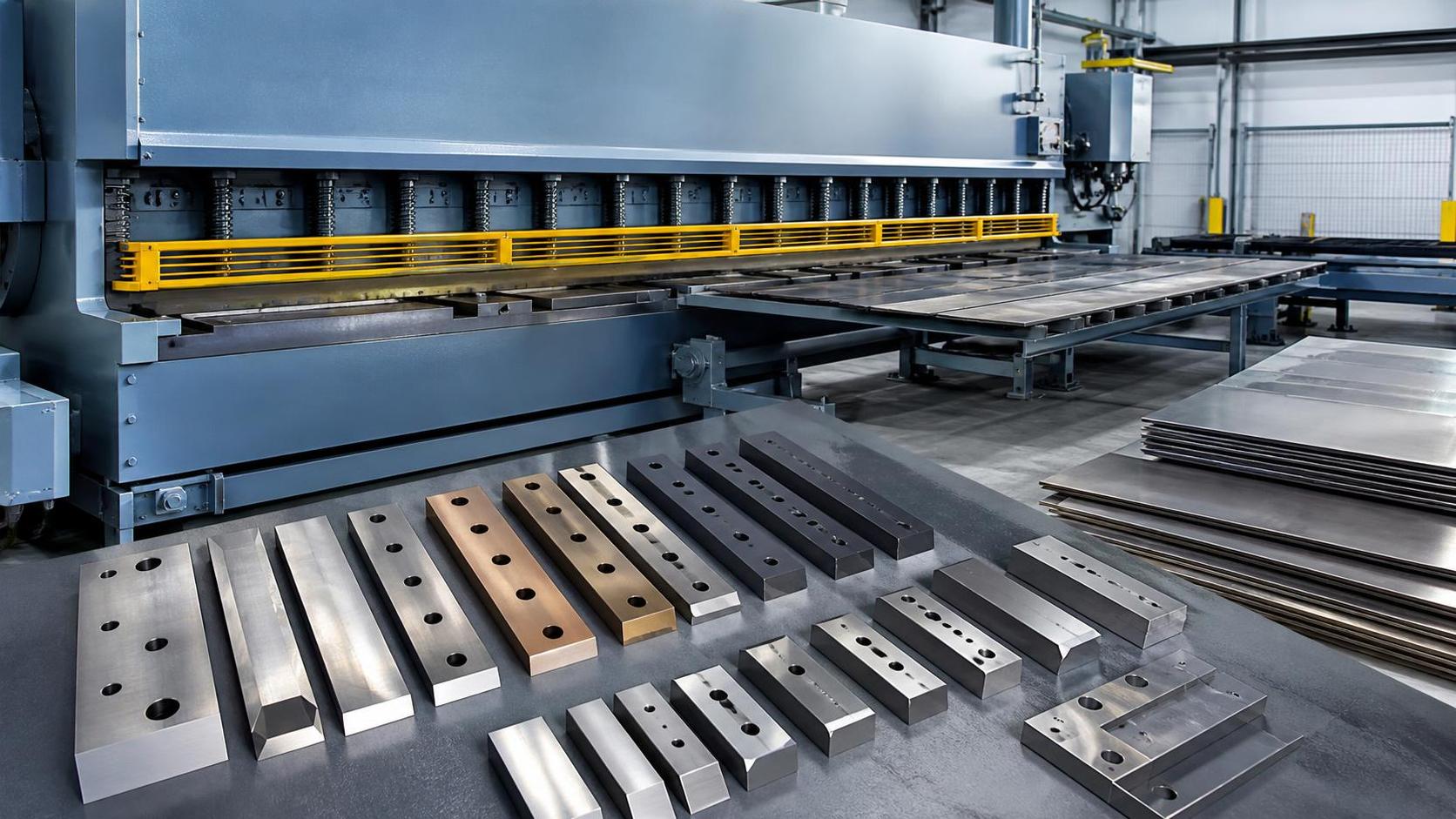
If you are trying to understand shearing machine blade material and replacement cost, the real question is usually simple: which blade will last long enough to justify its price, and when should you replace it instead of forcing one more production run out of it? That decision affects cut quality, machine load, scrap rate, maintenance downtime, and your cost per ton far more than many buyers expect. A cheap blade that wears quickly is often more expensive in practice. A premium blade that is mismatched to the material being cut can also be a bad buy.
In day-to-day production, blade selection is not just about hardness. It is about matching blade material, heat treatment, sheet thickness, tensile strength, cutting frequency, and sharpening strategy to the work you actually do. That is where many purchasing decisions go wrong.
What blade material really changes in a shearing machine
People sometimes assume all shearing blades are basically the same steel with different prices attached. They are not. The blade material affects edge retention, toughness, resistance to chipping, tolerance to heat, and how many times the blade can be reground before performance drops off.
A short answer, if you only need one: for general carbon steel sheet cutting, standard alloy tool steel blades are often enough; for heavier use, higher-strength material, or tighter quality requirements, higher-grade alloy blades usually lower the true replacement cost over time.
The blade does not work in isolation, either. Two factories can buy the same blade material and get very different results because one machine has proper clearance and alignment while the other does not. When users complain that a blade “didn’t last,” the root cause is often a combination of material choice, setup, and operating habits.
Common shearing machine blade materials
The names and grades vary by supplier and market, but in practical terms, most buyers will encounter a few broad categories.
1. Carbon tool steel or basic alloy steel
This is usually the lower-cost option. It can be acceptable for light-duty work, thin mild steel, limited production hours, or operations where blade replacement is not very disruptive. The downside is shorter edge life and weaker wear resistance under demanding use.
2. Cr12MoV and similar high-wear alloy tool steels
This is a common choice in the sheet metal industry. It offers a useful balance of hardness, wear resistance, and cost. For many shops cutting carbon steel plate and sheet in steady production, this type of material is often the practical middle ground. It is not the cheapest blade on the quote, but it is frequently the most reasonable one for overall operating cost.
3. H13 and hot-work tool steel types
These are often chosen where toughness matters and the blade needs better resistance to cracking or impact. In some applications, especially where cutting conditions are harder on the blade edge, this material performs more consistently than wear-focused grades that may chip under stress.
4. D2 and comparable high-chromium tool steels
These are known for strong wear resistance and can be a good fit for abrasive cutting conditions. But there is a tradeoff: very hard, wear-resistant material is not automatically better if your application involves shock, misalignment, or inconsistent loading.
5. Tungsten-alloy or specialty blades
These are not the default choice for ordinary sheet shearing. They may appear in more specialized applications, but higher price does not guarantee better economics for normal fabrication work. Unless there is a clear process need, most users should not start here.
What matters most is not memorizing a grade chart. It is understanding what you cut every day: mild steel, stainless steel, galvanized sheet, high-strength plate, aluminum, copper, or mixed jobs. Blade material should follow that reality.
Why replacement cost is more than the blade price
When buyers ask about replacement cost, they often mean the purchase price of a new blade set. But the full cost is broader.
It usually includes:
- New blade price
- Shipping and lead time impact
- Installation labor
- Machine downtime during changeover
- Regrinding cost, if the blade is still salvageable
- Scrap or rework caused by declining cut quality before replacement
- Potential stress on hold-downs, guides, and hydraulic components if a worn blade is kept in service too long
This is why the lowest quoted blade price can be misleading. In a production environment, one unplanned stop may cost more than the gap between a standard blade and a better alloy blade.
There is another point that experienced operators watch closely: replacement timing. Replacing too early wastes usable life. Replacing too late usually costs more than the blade itself. Once burr height rises, cut edges distort, or the machine begins working harder than normal, you are often already paying a hidden penalty.
What drives shearing machine blade replacement cost
There is no reliable universal price list because blade cost depends heavily on size, material grade, heat treatment standard, precision requirement, and supplier quality level. Even two blades with similar dimensions may differ significantly in cost if one has better material consistency and heat-treatment control.
In real purchasing work, these are the main cost drivers:
- Blade dimensions: longer, thicker, or custom-profile blades cost more.
- Material grade: higher alloy content and more demanding metallurgy usually increase price.
- Heat treatment quality: this is one of the least visible but most important factors.
- Machining precision: straightness, flatness, and edge consistency matter for fit and cutting quality.
- Application type: blades for stainless or high-strength materials may require a better specification.
- Supplier capability: low-cost sources sometimes reduce cost through inconsistent material or weaker process control.
If you need an exact number, it has to be quoted against your machine model, blade drawing, cutting material, thickness range, and expected workload. Anything more precise than that, without actual specifications, is guesswork.
How to tell whether you need sharpening or full replacement
This is one of the most useful cost-control questions, because not every worn blade needs to be discarded.
Sharpening is often still reasonable when the blade has normal edge wear but no serious chipping, cracking, warping, or structural damage. A well-maintained blade can usually go through multiple regrinds before replacement becomes necessary. The limit depends on the original blade thickness, the amount removed in each grind, and whether the blade still maintains the required geometry after rework.
Full replacement is more likely when you see:
- deep chips or edge breakage
- cracks near the cutting edge
- loss of dimensional accuracy after repeated grinding
- uneven wear that suggests poor machine alignment and secondary damage
- persistent poor cut quality even after proper adjustment and regrinding
A common mistake is to keep grinding a blade that has already lost too much usable section. At that point, the blade may technically still cut, but it stops cutting well. That is not the same thing.
Common misunderstandings that increase cost
“The hardest blade is the best blade.”
Not always. Hardness improves wear resistance, but too much hardness without enough toughness can make the edge chip under demanding conditions.
“If the blade still cuts, it should stay in service.”
A blade can keep cutting while quietly raising burrs, increasing machine load, and reducing downstream quality. The cost shows up later, not immediately.
“Stainless steel only needs a stronger machine, not a different blade strategy.”
Stainless often changes wear behavior and edge life. If you cut it regularly, blade material and maintenance intervals need to reflect that.
“Replacement cost is just procurement cost.”
This is probably the most expensive misunderstanding. Downtime, rejects, and unstable output usually matter more.
How buyers should choose blade material in practice
If your work is mostly thin mild steel, moderate volume, and normal tolerance requirements, a mid-range alloy blade is usually enough. Spending for a premium grade may not return much value unless uptime is critical.
If you process thicker plate, higher-strength material, or long production runs, then blade life stability becomes much more important than initial price. That is where better alloy material and tighter manufacturing control often pay for themselves.
If your jobs change frequently, the best choice is often not the hardest blade available, but the most forgiving blade that gives acceptable life across mixed materials. Shops with varied orders usually need balance more than specialization.
Before ordering, confirm five things with the supplier:
- machine model and blade dimensions
- material being cut
- thickness range
- daily or monthly cutting volume
- whether you prefer longer life, lower upfront cost, or easier regrinding
That last point matters because different buyers optimize for different constraints. A repair workshop, a contract fabricator, and a high-volume production line should not all buy the same blade specification.
Where supplier quality shows up later
Blade material is only part of the story. Consistent heat treatment, finish accuracy, and inspection standards are what make the material perform the way it should. A blade sold under a familiar material name can still disappoint if the process behind it is weak.
This is one reason many buyers prefer working with machinery suppliers that understand the machine side as well as the consumable side. Companies such as Wuxi Samgins International Trade Co., Ltd., which has supplied shearing machines and other metal processing equipment to overseas markets under ISO9001 and CE-oriented production standards, are typically in a better position to discuss blade selection in context rather than as a standalone part number. That kind of support is useful when the issue may involve both blade grade and machine setup.
That does not mean every operation needs a premium supplier relationship. But if your line depends on stable cutting quality, technical support has real value.
When spending more makes sense, and when it does not
Pay more for blade material when downtime is expensive, the material being cut is demanding, quality complaints are costly, or sharpening intervals are currently too short. In those cases, a better blade often reduces your true replacement cost.
Do not pay more just because a sales sheet uses stronger wording. If your application is light-duty and the machine is not running long hours, a simpler blade can be the more rational choice.
The right question is not “What is the best blade?” It is “What is the lowest total cost way to get stable cuts on my actual workload?” That is a different decision.
Final thought on shearing machine blade material and replacement cost
Shearing machine blade material and replacement cost should be evaluated together, not separately. Blade material affects wear life, regrinding potential, and cut consistency. Replacement cost includes not just the new blade, but also labor, downtime, scrap, and lost stability. If you match the blade to the material being cut, maintain proper machine clearance, and replace or regrind at the right time, you usually get better economics without chasing the most expensive option on the market.
FAQ
How long does a shearing machine blade usually last?
It depends on blade material, sheet material, thickness, machine condition, and production volume. There is no reliable fixed service life across all applications.
Is regrinding always cheaper than buying a new blade?
Not always. Regrinding is cost-effective only when the blade still has enough usable section and no structural damage.
What blade material is commonly used for general sheet metal work?
Mid-range alloy tool steels such as Cr12MoV-type materials are often used because they balance wear resistance and cost reasonably well.
Why does a new blade sometimes perform poorly from the start?
Common causes include wrong blade material, poor machine alignment, incorrect clearance, or inconsistent blade manufacturing quality.
Should I buy based on the lowest quote?
Only if the application is light and downtime risk is low. In steady production, the lowest quote often turns into a higher operating cost.
Internal Link Anchor Text Suggestions
- shearing machine blade selection guide: blade selection or technical support page
- how to choose a hydraulic shearing machine: equipment buying guide page
- shearing machine maintenance checklist: maintenance knowledge page
- difference between swing beam and guillotine shears: comparison article page
- sheet metal cutting equipment for fabrication shops: category or solution page
External Authority Source Suggestions
- tool steel manufacturer technical data sheets
- machine tool or sheet metal fabrication industry association guidance
- official machine or blade manufacturer maintenance manuals and application notes
search
Products Navigation
Send Us A Message