




How Thick Can a Standard Shearing Machine Cut in Mild Steel?
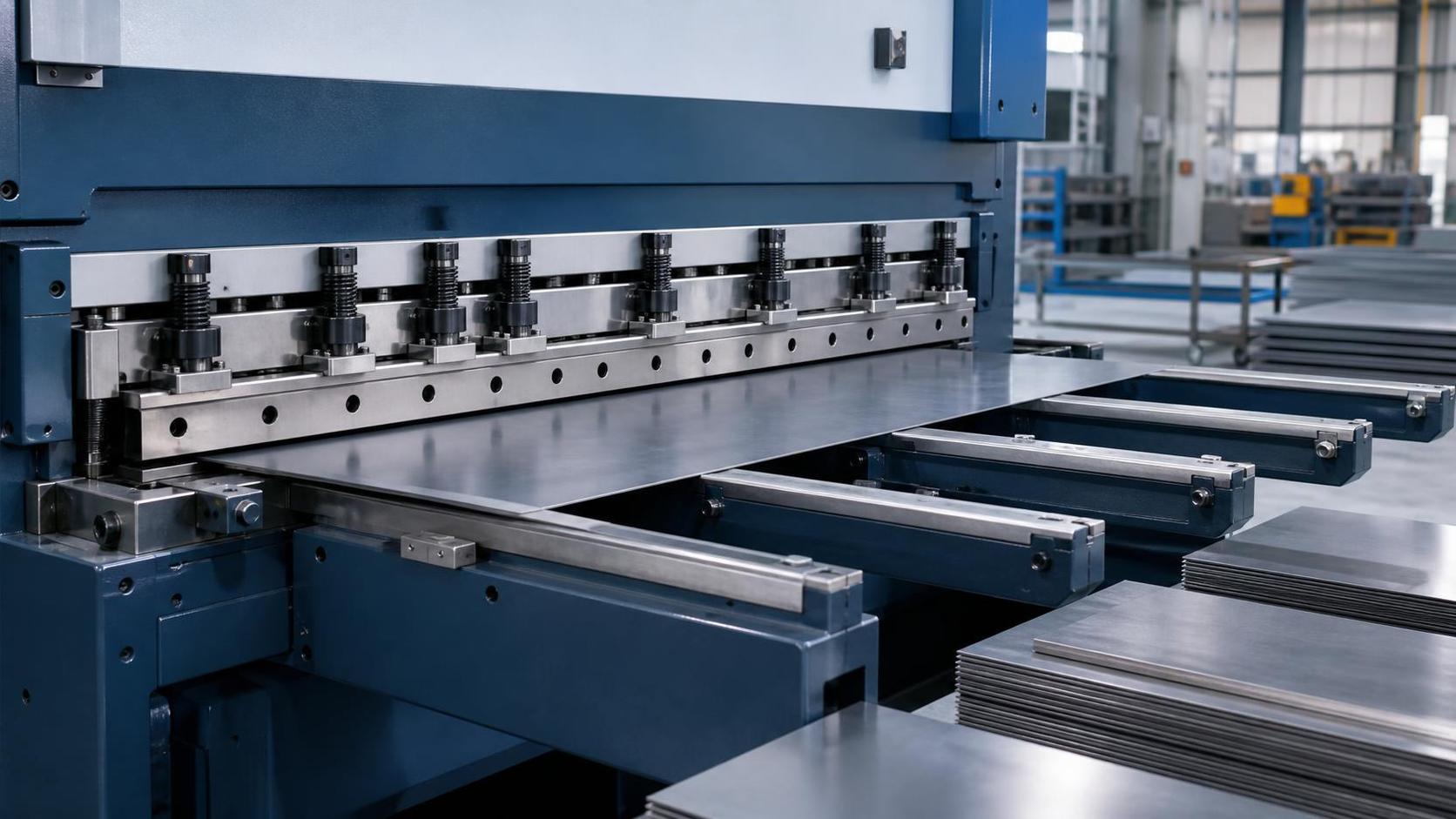
Thickness in Practice Depends on More Than the Nameplate
A standard shearing machine can often cut mild steel plate in a range that starts from thin sheet and reaches several millimeters, while heavier hydraulic models may go further if the cutting length is reduced and the material is truly low-carbon steel. There is no single universal number. When people ask, “How thick can a standard shearing machine cut mild steel plate,” the practical answer depends on the machine structure, rated cutting width, blade clearance, rake angle, hold-down force, and the actual tensile strength of the plate being loaded.
In workshop terms, the published capacity is usually based on mild steel under a specified strength condition and at a defined full cutting length. If the plate is harder than assumed, has surface scale, or is being cut close to the machine’s maximum width, the real cutting capacity may be lower. If the cutting length is shorter than the full blade length, the machine may handle greater thickness than its full-width rating suggests, but this should be treated carefully and confirmed against the equipment design.
A common misunderstanding is to read a machine label as an absolute cutting promise under all conditions. In reality, a shearing machine rated for one thickness at one length may behave very differently when the operator changes material grade, strip width, backgauge position, blade condition, or stroke setting.
What “Standard Shearing Machine” Usually Refers To
In metal fabrication, “standard shearing machine” often refers to a guillotine shear or swing beam shear used for straight cutting of plate and sheet. These machines are typically selected by two linked values: maximum thickness and maximum cutting length. Mild steel is the usual reference material because it is common in structural and general fabrication work.
Guillotine shears generally offer a more controlled blade movement and can be favored where cut accuracy, lower twist, and cleaner edge condition matter. Swing beam shears are also widely used and can be practical for many routine jobs, though the blade path is different and performance at the upper end of thickness capacity may vary by design. For thin to medium mild steel plate, both can be suitable if the clearance and blade geometry match the job.
Mechanical shears may still be found in some facilities, especially for repetitive work in a narrower thickness range. Hydraulic shears are more commonly associated with broader plate handling because they usually provide steadier force, adjustable stroke, and better control over hold-down pressure.
The Capacity Number Has Conditions Attached
If a machine specification states a maximum cutting thickness for mild steel, that figure is usually tied to several assumptions:
- The plate is plain low-carbon steel rather than high-strength low-alloy material, stainless steel, or work-hardened stock.
- The cut is made across the rated maximum width, not on a short offcut where the load distribution changes.
- Blade clearance has been adjusted correctly for the plate thickness.
- The upper and lower blades still have usable edges and have not rounded off from wear.
- The hydraulic system, if present, is operating at proper pressure and oil temperature.
Remove any one of those assumptions and the machine may still cut the plate, but edge quality, dimensional stability, and machine stress can change quickly. The machine might produce a cut, yet still be operating outside its sensible working range.
Mild Steel Thickness Ranges Usually Discussed in Workshops
For ordinary sheet metal work, standard shearing machines are often used on thin gauge material up through medium plate. At the lighter end, the challenge is usually not force but avoiding burr, bowing, or marking from hold-downs. At the thicker end, the challenge becomes force, blade loading, frame deflection, and keeping the cut face reasonably straight.
When fabricators ask how thick can a standard shearing machine cut in mild steel, they are often really asking two separate questions. First, what thickness can the machine physically shear without stalling or overloading? Second, what thickness can it shear repeatedly while still maintaining acceptable cut quality, blade life, and machine reliability? Those answers are not always the same.
A machine may technically sever a plate near its upper limit, but repeated production at that limit can increase wear on seals, cylinders, blade edges, gibs, and hold-down components. It can also introduce more camber, more edge deformation, and greater variation along the cut length.
Material Strength Changes the Real Answer
Mild steel is often treated as if it were one uniform material, but in actual processing there can be noticeable differences from batch to batch. Hot rolled plate with mill scale may behave differently from pickled material. A plate with higher actual tensile strength may require more cutting force than the nominal grade suggests. If the material has residual stress from prior leveling, flame cutting, or rolling, the sheet may move during or after the cut.
This is one reason published capacities are better viewed as reference values rather than unconditional limits. If the steel is tougher than ordinary mild steel, a machine that appears sufficient on paper may leave a rough fractured zone, excessive burr, or edge rollover that is not acceptable for downstream bending or welding.
Blade Clearance Is One of the Most Overlooked Settings
Incorrect blade clearance is a frequent cause of poor results. If the clearance is too small for the thickness, cutting force rises sharply, the blade edge can chip, and the machine may show unnecessary strain. If the clearance is too large, the cut edge may show more burr, more distortion, and a larger fractured area.
For thin mild steel sheet, operators often need a tighter and more controlled clearance to keep the edge crisp. For thicker plate, a larger clearance is typically required. The right value depends on thickness and material condition, and the machine’s adjustment mechanism matters. Some shears allow fast, repeatable clearance adjustment; others require more manual setup and can be mis-set if maintenance references are poor or the scale is inaccurate.
When someone believes a shear “cannot cut” a certain mild steel plate, the actual problem may be a badly adjusted clearance rather than insufficient tonnage.
Rake Angle, Hold-Downs, and Cutting Length Matter Together
The rake angle on the upper blade reduces peak cutting force by allowing the cut to progress from one side to the other rather than hitting the full width at once. A larger rake angle can help with thicker plate, but it may also increase the tendency of the workpiece to twist or bow, especially on narrower strips. This is why a machine that handles thick mild steel well is not always the best choice for thin precision blanks.
Hold-down cylinders or clamps are equally important. Without enough hold-down force, the sheet can lift during the cut, which affects squareness and edge quality. On wide sheets, poor clamping can lead to visible movement before fracture completes. On narrow strips, support at the front and side becomes just as important as the hold-down itself.
Cutting length changes the load picture. A machine may be rated to cut a given thickness across its full blade length, but if the work is shorter, the required force distribution changes. Some operators assume that a short cut automatically means unlimited extra thickness. That is not a safe assumption. Localized loading, frame design, and blade support geometry still place limits on what the machine can tolerate repeatedly.
Cut Quality Tells You Whether the Thickness Is Really Suitable
A clean cut in mild steel should show a relatively small rollover zone at the top edge, a burnished shear zone, then a fractured zone, with burr kept within an acceptable range for the next process. As the plate approaches the machine’s upper working limit, several signs may appear:
- the burr becomes heavier and less consistent from one end of the cut to the other;
- the plate edge shows more twist, especially on narrow strips;
- the machine noise becomes harsher and the stroke feels less smooth;
- the cut face develops more tearing than shearing;
- dimensional repeatability begins to drift because the material shifts under load.
Those symptoms often matter more than whether the plate can be separated in a single stroke. If the edge must go directly to welding, laser marking, hemming, or precision forming, poor shearing quality can create more downstream work than expected.
Thickness Is Also Limited by the Job After Shearing
Some plates can be sheared mechanically but still should not be processed that way for the intended part. If the edge is going into a cosmetic panel, a visible burr or slight bow may be unacceptable. If the part is heading to a press brake, uneven edge condition can affect bend consistency. If the blank is for a welded assembly, edge hardening or rough fracture may increase cleanup time before fit-up.
For heavier mild steel plate, thermal cutting or another process may be chosen even when a shear could technically make the cut, simply because part geometry, edge tolerance, or handling practicality points in another direction.
Common Errors When Estimating Shearing Capacity
Several shop-floor mistakes lead to unrealistic expectations about how thick a standard shearing machine can cut mild steel plate.
- Confusing stainless steel capacity with mild steel capacity. Stainless usually needs more cutting force, so the same thickness number cannot be carried over.
- Ignoring blade wear. A machine with dull blades may seem underpowered even though the core structure is adequate.
- Looking only at thickness while forgetting cutting width. A full-width plate and a short strip do not load the machine in the same way.
- Using old hydraulic oil or a poorly maintained system. Pressure loss and sluggish response can show up first during thick plate cutting.
- Assuming every plate sold as “mild steel” behaves identically in shear.
Installation and Handling Affect Real Performance
Shearing machines are sensitive to leveling and foundation condition. If the frame is not installed properly, the blade gap may vary across the cutting length, and that can show up as a burr difference from left to right. Heavy plate cutting magnifies this problem. Uneven anchoring, floor settlement, or inadequate support under the machine base can all influence repeatability.
Material handling around the shear also affects practical capacity. Thick mild steel plate carries more mass, and poor infeed support can cause sagging before the cut. If the plate drops or twists at the discharge side, the edge may be marked or bent after separation. Front support arms, side squaring arms, rear supports, and discharge handling are not accessories in the abstract; they can determine whether the machine’s nominal thickness capacity is usable in daily work.
Transport and installation conditions matter before production even starts. A machine moved without proper locking, alignment checks, or commissioning may show hydraulic leaks, blade parallelism issues, or backgauge misalignment that are mistaken for basic design weakness.
Maintenance Has a Direct Effect on Maximum Usable Thickness
Capacity on paper stays still; capacity in service changes with maintenance. Blade rotation or regrinding intervals have a visible effect on shearing force and edge condition. Gib adjustment, lubrication state, hydraulic cleanliness, seal wear, and hold-down pad condition all influence how close the machine can operate to its intended range.
Blade material and sharpening quality also matter. A poorly reground blade may have edge geometry that increases cutting resistance or causes local chipping. Once that happens, the machine may leave streaks, notches, or inconsistent fracture zones on mild steel plate that previously cut cleanly.
Backgauge accuracy is part of the same picture. At greater thicknesses, impact and vibration can reveal looseness in the gauge system. The machine may still cut through the plate, but blank length repeatability can drift enough to affect subsequent assembly or machining.
When Published Capacity Should Be Treated Conservatively
It is sensible to be cautious with rated thickness when the work includes narrow strips, frequent short cuts near the machine’s upper range, material with uncertain chemistry, or production schedules that run long batches without much setup time between thickness changes. In those situations, a formal capacity number may not reflect how comfortably the machine will run.
Another reason for caution is mixed production. If one shift cuts thin sheet and the next shift cuts thick plate, frequent blade clearance changes and stroke adjustments need to be done accurately every time. A machine that is theoretically flexible can still produce inconsistent results if its setup system is difficult to repeat.
Choosing by Application Rather Than by Maximum Claim
The better question is often not simply how thick can a standard shearing machine cut in mild steel, but at what thickness it can cut the required width, finish, and volume without turning setup, rework, and maintenance into recurring problems. A narrow range of typical material thicknesses usually tells more than the single highest number on a specification sheet.
If the work is mostly thin to medium mild steel plate with frequent size changes, blade adjustment speed and backgauge repeatability may matter more than extreme thickness. If thicker plate appears regularly, frame rigidity, hydraulic stability, and support equipment become more important. If the sheared edge feeds directly into bending or welding, edge quality should carry more weight than raw cutting force alone.
So, how thick can a standard shearing machine cut mild steel plate? In practical use, it can range from light sheet to medium or heavier plate depending on machine design and cutting length, but the workable limit is defined by material condition, setup accuracy, blade state, and the edge quality the job actually requires. A machine reaches its real capacity only when those conditions are aligned.
search
Products Navigation
Send Us A Message