




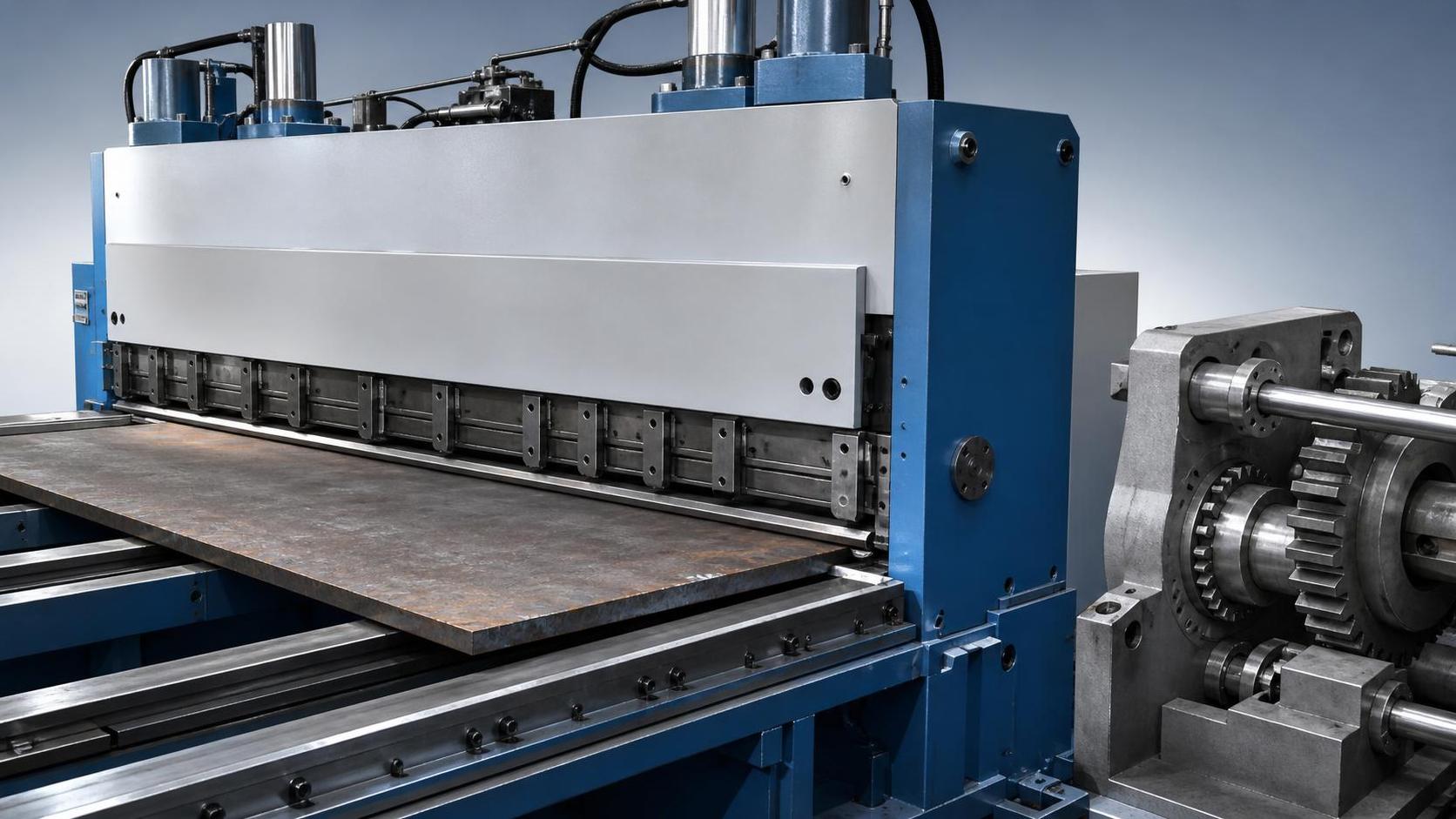
Is a Hydraulic Shearing Machine Better Than Mechanical for Heavy Plate?
When a workshop starts cutting thicker plate, the usual question comes up quickly: is a hydraulic shearing machine better than mechanical for heavy plate? It is not just a technical comparison. The wrong choice can lead to unstable cuts, more edge distortion, higher wear on the machine, and repeated adjustments that slow production.
A common situation is that a machine performs acceptably on thinner material, but once heavy plate enters the schedule, operators begin seeing uneven shearing quality, higher vibration, and more strain during continuous work. If you are comparing equipment for thicker steel or other demanding plate materials, the real decision should be based on cutting behavior, machine structure, maintenance needs, and how predictable the machine remains under load.
Why this question becomes important when plate thickness increases
For light-gauge sheet, many buyers can work with several machine types and still get acceptable results. Heavy plate changes that. As thickness goes up, the force required to shear the material rises sharply, and small differences in machine design become much more important. A machine that feels fast and simple on thin stock may become harder to control on thicker plate.
The main concern is not only whether the blade can go through the material. It is whether the machine can deliver force smoothly, keep blade clearance stable, reduce shock during the cut, and hold acceptable edge quality over time. In heavy-duty processing, these points affect scrap rate, blade life, operator confidence, and the amount of rework required before welding or further machining.
That is why buyers often ask whether a hydraulic shearing machine is better than mechanical for heavy plate. In many heavy plate applications, hydraulic systems are preferred because they are generally better suited to controlled, high-force cutting. But that does not mean mechanical shearing machines have no place. The better option depends on the thickness range, production rhythm, tolerance expectations, and how the machine will be used day after day.
The first mistake: judging only by cutting speed or initial purchase cost
One common misunderstanding is to compare these machines the same way people compare simpler workshop equipment. Many buyers first look at speed, footprint, or purchase price. Those factors matter, but for heavy plate they are incomplete. A machine that appears economical at the start may become expensive if it causes blade wear, repeated setup corrections, or inconsistent edge condition.
Mechanical shearing machines are often appreciated for their straightforward drive structure and fast operation in suitable applications. They can work well for lighter materials, repetitive jobs, and environments where the cutting range is stable and not especially demanding. The issue begins when the same machine is expected to handle thick plate regularly. The impact loading and reduced flexibility in force control can make heavy-duty work less forgiving.
Hydraulic machines are usually chosen when the shop needs stronger and more controllable cutting force, better adaptability across material thicknesses, and smoother operation under demanding conditions. For heavy plate, that smoother force delivery is often the deciding factor because it affects both machine stress and cut consistency.
How hydraulic and mechanical shearing machines behave differently on heavy plate
The core difference is how cutting force is generated and transferred through the machine. A mechanical shearing machine typically relies on a flywheel, clutch, and mechanical transmission to create the cutting stroke. This can be efficient in stable, repetitive work, but the force curve is less flexible. In heavy plate applications, the cut can feel more abrupt, and the machine may transmit more shock through the frame and tooling.
A hydraulic shearing machine uses hydraulic cylinders to drive the blade movement. This arrangement usually allows more stable pressure application through the stroke. For thick materials, that smoother action helps the blade engage the plate with better control rather than relying on a more sudden mechanical impact. In practical terms, that often means less vibration, more predictable cutting behavior, and easier adjustment across different material conditions.
Heavy plate also tends to expose weaknesses in frame rigidity, hold-down performance, and blade clearance setup. Hydraulic machines are often paired with design features that make these factors easier to manage. If your production includes varying thicknesses or mixed materials, that flexibility can reduce the amount of compromise required from one job to the next.
Is a hydraulic shearing machine better than mechanical for heavy plate in most workshops?
In most heavy plate scenarios, yes, a hydraulic shearing machine is the more practical choice. That answer comes from the nature of the work rather than from preference. Thick plate requires sustained cutting force, controlled blade motion, and reliable performance during repeated high-load cycles. Hydraulic systems are generally better aligned with those needs.
That said, “better” should be defined carefully. Better does not always mean faster in every situation. It means more suitable for the actual demands of thick material: better control, better stability, easier adjustment, and less stress concentration during cutting. If your shop mainly processes heavy plate and edge quality matters for downstream assembly, hydraulic is usually the safer long-term direction.
Mechanical shearing machines can still make sense where the work is lighter, the plate thickness range is narrow, and production values simple repetition over flexibility. But when buyers ask specifically about heavy plate, they are already pointing toward the operating zone where hydraulic machines tend to show their advantages more clearly.
What to check before deciding between hydraulic and mechanical
Instead of starting with machine labels, start with the work itself. Many selection mistakes happen because buyers compare brochures before they define their cutting conditions. A better approach is to work through a short decision checklist.
- Confirm the real maximum plate thickness you expect to cut regularly. Occasional heavy work and daily heavy work are different situations. A machine should be matched to routine use, not just peak possibility.
- Review material type, not just thickness. Mild steel, stainless steel, and higher-strength materials do not behave the same under shear. Demanding materials increase the need for stable force and accurate setup.
- Consider edge quality requirements. If the cut edge goes directly into fabrication, welding, or fit-up work, smoother and more repeatable shearing becomes more valuable.
- Assess production rhythm. Continuous heavy plate cutting places more strain on the machine than occasional batch cutting. This affects the importance of thermal stability, wear behavior, and maintenance planning.
- Check adjustment needs. If your jobs vary in thickness and plate type, a machine that supports easier control and setup changes will usually save time over the long run.
- Evaluate maintenance capability. Some workshops prefer simpler mechanical systems, but heavy-duty work often shifts the balance toward machines that handle load more predictably, even if the system itself is more complex.
By the time you finish this checklist, the answer becomes clearer. If your work is truly heavy plate processing, the comparison usually moves away from headline speed and toward control, stability, and service life under real load.
Where mechanical shearing machines still make sense
It would be inaccurate to treat mechanical shearing machines as outdated or unsuitable in every case. They can still be a reasonable choice in shops that process thinner plate, repeat the same jobs frequently, and do not need broad adjustment capability. In those settings, the machine’s straightforward operating pattern may be enough.
They may also suit operations where budget pressure is high and the material range is narrow. If the machine is not being pushed into heavy plate work on a regular basis, a mechanical system can remain productive and manageable. The problem starts when expectations expand without changing the equipment. A machine chosen for moderate work often struggles when it is asked to perform like a heavy-duty platform.
So the better question is not whether mechanical machines are good or bad. It is whether they are matched to your actual cutting load. For heavy plate, mismatch happens more easily, and the cost of that mismatch becomes visible in downtime, quality variation, and operator frustration.
Why hydraulic shearing machines are often preferred for heavy-duty fabrication
Hydraulic shearing machines are often preferred because they offer a more controlled cutting process when load conditions become demanding. The blade movement is usually smoother, the pressure application is more stable, and the machine can handle variation in material thickness with less abrupt behavior. For heavy plate, this often translates into a more manageable production process.
Another practical advantage is operational consistency. In heavy fabrication, consistency matters more than isolated peak performance. Shops need a machine that behaves predictably across long shifts, changing job lots, and different operators. Hydraulic systems are often better suited to that requirement because they support steady force delivery rather than relying on a more impact-oriented mechanical stroke.
For buyers sourcing equipment through suppliers such as Wuxi Samgins International Trade Co.,Ltd, the useful approach is to treat shearing machines as part of a broader fabrication line rather than as standalone purchases. A shop that also works with bending machines, plate rolling machines, leveling machines, CNC cutting equipment, or edge preparation equipment should choose a shearing machine that supports the overall workflow. In heavy plate fabrication, hydraulic shearing machines often fit that workflow more naturally because they are better aligned with controlled, high-load processing.
A practical way to make the final decision
If you are still deciding, it helps to think in terms of risk reduction rather than brand preference or machine category alone. Start by asking what failure would cost you most. In heavy plate processing, the usual problems are poor cut consistency, excessive machine strain, hard-to-maintain blade settings, and production interruptions when the machine is pushed near its limit.
Then compare the two machine types against those risks. If a mechanical machine can technically handle the work but leaves little margin for variation, that may not be enough. Heavy plate jobs often expose those narrow margins very quickly. A hydraulic shearing machine usually gives more operational room, which is why many buyers consider it the safer investment for demanding plate work.
It is also worth reviewing the machine with the people who will actually use it. Operators, maintenance staff, and production planners often notice different concerns. Operators care about cut feel and repeatability. Maintenance teams care about wear points and service access. Planners care about schedule reliability. For heavy plate, hydraulic machines often answer those concerns more evenly.
Frequently Asked Questions
Does a hydraulic shearing machine always cut more accurately than a mechanical one?
Not automatically. Accuracy also depends on blade condition, frame rigidity, hold-down design, machine setup, and operator practice. But for heavy plate, hydraulic machines usually offer better control during the cut, which can help maintain more consistent results.
Is a mechanical shearing machine unsuitable for thick steel?
Not in every case. It can still be used within its intended range. The issue is regular heavy plate processing. When thick steel becomes a routine workload, hydraulic machines are often the more suitable option because they handle high-force cutting more smoothly.
What matters more for heavy plate: tonnage or machine type?
Both matter. Tonnage is essential, but machine type affects how that force is delivered and controlled. For heavy plate, the stability of the cutting process is often just as important as the theoretical capacity.
Should I choose based on current jobs or future jobs?
Choose based on your normal workload plus realistic near-term expansion. Buying only for today can create limitations quickly, especially if your plate thickness range is already moving upward.
How do I know if hydraulic is worth the extra complexity?
If your work involves thicker plate, variable materials, or repeated heavy-duty cutting, the added control and stability often justify the choice. If your jobs are lighter and highly repetitive, a mechanical machine may still be sufficient.
Conclusion
So, is a hydraulic shearing machine better than mechanical for heavy plate? In most heavy plate applications, yes. The reason is straightforward: thick material demands stable force, smoother cutting action, and better control under load. That is where hydraulic shearing machines usually have the advantage.
The best decision comes from matching the machine to the real work, not from choosing by habit or comparing only on speed and purchase price. If your shop handles heavy plate as a regular task, hydraulic is generally the more dependable path. If your work stays within lighter or narrower conditions, mechanical may still be appropriate. The useful next step is to define your actual material range, cutting frequency, and quality expectations before selecting the machine platform.