




How CE-compliant hydraulic radial drilling machines reduce operator injury claims in stamping lines
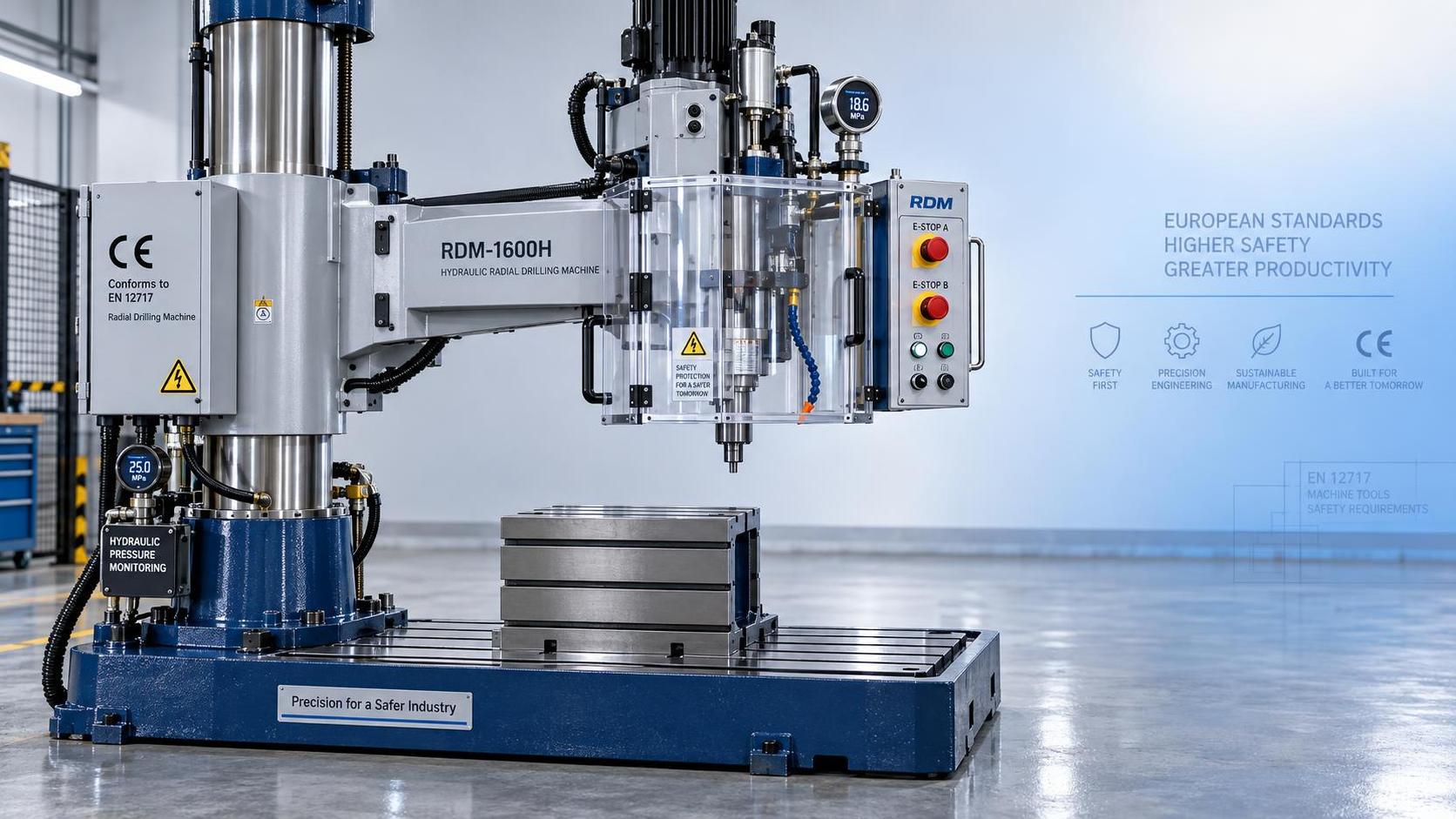
Why CE Compliance Isn’t Just a Label — It’s a Risk Mitigation Strategy in Stamping Lines
In high-speed stamping lines, operator safety is non-negotiable — and CE-compliant hydraulic radial drilling machines from Wuxi Samgins are proving pivotal in reducing injury claims. Engineered to meet stringent EU safety directives, these machines feature enclosed guarding, emergency stop integration, pressure-relief systems, and ergonomic positioning — all minimizing human error and physical strain. For quality control and safety managers overseeing metal fabrication facilities, selecting a CE-certified hydraulic radial drilling machine isn’t just regulatory compliance; it’s a proactive investment in workforce protection, incident reduction, and long-term operational continuity.
The Real Cost of Non-Compliant Drilling Stations
A hydraulic radial drilling machine sits at the intersection of precision and force — rotating arm, heavy spindle, variable feed rates, and frequent manual part handling. In stamping environments, where operators move rapidly between press stations, transfer systems, and secondary machining cells, any unguarded motion or unexpected pressure surge becomes a latent hazard. We’ve seen cases — not hypotheticals, but documented service reports — where non-CE machines lacked integrated light curtains on radial arm travel zones, or used outdated hydraulic relief valves that failed to respond within required 100ms thresholds under overload. These aren’t edge cases. They’re gaps that show up in near-miss logs, OSHA-style incident investigations, and increasingly, in insurance premium reviews.
CE compliance, specifically under Machinery Directive 2006/42/EC and EN ISO 13857 (safety distances), forces a systemic approach: not just “does it stop?” but “how fast does it stop?”, “what’s the worst-case energy release?”, and “can an operator reach into the hazard zone before interlocks engage?”. That’s why certified machines from manufacturers like Wuxi Samgins — established in 2012, ISO9001-certified, and designing strictly to EU CE standards — embed safety into mechanical architecture, not as bolt-on accessories.
What CE Compliance Actually Demands — Beyond the Decal
Look past the CE mark. What matters for your stamping line is how those requirements translate into field-deployable features:
- Enclosed radial arm travel: Not just a guard rail — full polycarbonate or steel mesh enclosures with interlocked access doors that cut power to both rotation and feed when opened.
- Two-channel emergency stop circuitry: Redundant wiring paths so a single fault doesn’t disable the E-stop function — verified per EN ISO 13850.
- Hydraulic pressure monitoring: Real-time sensors feeding into the control PLC, triggering automatic shutdown if pressure exceeds safe operating range — critical when drilling high-strength stampings that resist penetration.
- Ergonomic spindle height adjustment: Motorized vertical column travel with preset positions, eliminating repeated overhead reaching or stooping during tool changes.
These aren’t optional upgrades. They’re baseline design criteria built into Wuxi Samgins’ CE-compliant hydraulic radial drilling machines — alongside their broader portfolio of CNC cutting machines, shearing machines, plate rolling machines, and deburring equipment, all engineered for export markets across Europe, North America, and Southeast Asia.
When Drilling Meets Welding — A Safety Continuum
Stamping lines rarely end at the drill station. Many feed directly into welding cells — especially for structural components, pressure vessels, or pipeline flanges. That’s where safety logic must extend beyond one machine. Consider a scenario: an operator finishes drilling a large steel frame, then walks 3 meters to load it onto a Welding manipulator. If the manipulator lacks its own CE-compliant anti-fall mechanism or fails to integrate with the same emergency stop network, the safety boundary fractures.
Wuxi Samgins’ LHQ-series welding manipulators — available in models from LHQ1010 to LHQ7070 — are designed with this continuity in mind. Their integrated anti-falling safety device prevents uncontrolled boom descent; their VFD-driven retraction ensures smooth, predictable movement; and their remote hand control box allows operators to maintain safe distance while adjusting torch position. The result? Fewer transitions, fewer exposure points, and tighter alignment between drilling, handling, and joining processes — all traceable back to shared engineering principles rooted in EN standards.
How to Verify — Not Just Assume — CE Readiness
Don’t rely on a certificate PDF alone. Ask for:
- The Declaration of Conformity signed by the manufacturer’s authorized EU representative — not just the factory.
- Technical file references covering risk assessment (per EN ISO 12100), test reports for guarding integrity, and hydraulic system validation.
- Proof of conformity for subcomponents — especially PLCs, emergency stop buttons, and pressure switches — which must carry their own CE marks.
Wuxi Samgins, headquartered 30 minutes from Shanghai by high-speed rail, maintains full documentation for each CE-certified hydraulic radial drilling machine shipped internationally. Their team routinely supports customers through local authority audits — not as a sales add-on, but as part of their commitment to “honesty and trustworthiness, pragmatism and innovation.”
Final Thought: Compliance Is a Starting Point, Not a Finish Line
A CE-compliant hydraulic radial drilling machine won’t eliminate all risk. But it does shift the burden away from procedural controls — like “always lockout before clearing chips” — and toward inherent safety. That reduces dependency on perfect human behavior in high-tempo environments. For safety managers, that means fewer injury claims, lower insurance volatility, and stronger justification for capital spend when justifying ROI to operations leadership.
If your current drilling setup predates 2015, or if your last CE verification was based solely on visual inspection rather than functional testing, now is the time to revisit specifications — not just model numbers, but actual implementation of EN ISO 13857 guarding distances, EN 60204-1 electrical safety, and Machinery Directive Annex I essential health and safety requirements. The goal isn’t paperwork. It’s preventing the next claim before it happens.
search
Products Navigation
Send Us A Message