




How to Evaluate CNC Bending Machine ROI for Small Fabrication Shops
How to Evaluate CNC Bending Machine ROI for Small Fabrication Shops
For small fabrication shops, investing in a CNC Bending machine is not just a production decision. It is a financial decision that affects cash flow, margins, and capacity planning.
A lower sticker price may look attractive at first. But the real question is how quickly the machine turns labor, material, and setup time into measurable return.
That is why ROI analysis matters. It helps separate a necessary investment from a costly purchase that does not fit the shop’s order mix.
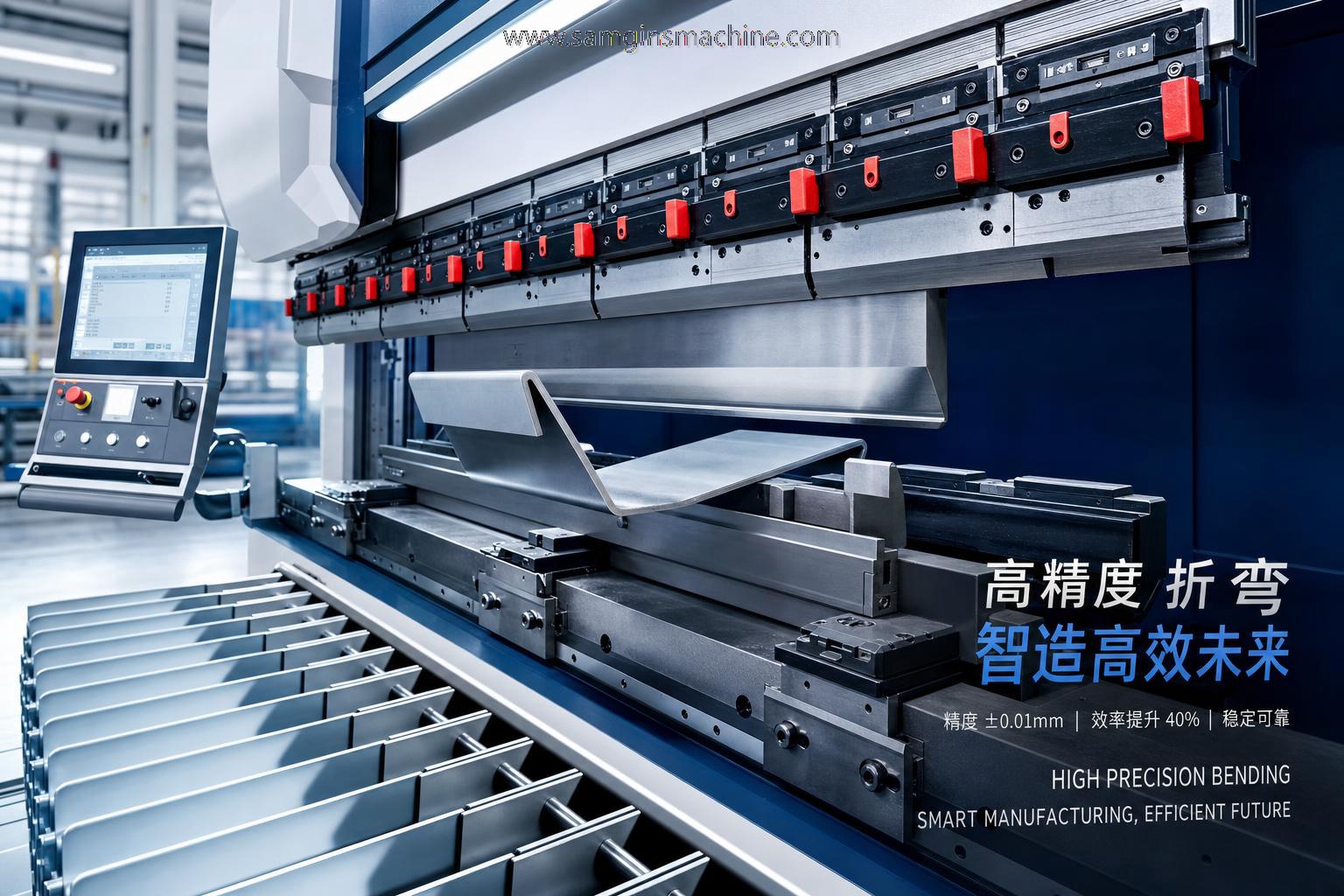
In practical terms, a CNC Bending machine should improve throughput, repeatability, and utilization. If it cannot do that consistently, the payback period will stretch too far.
For equipment buyers, the clearest approach is simple. Start with total cost, compare it with annual financial gains, then test whether the assumptions hold in daily production.
Start with the Full Cost, Not Just the Purchase Price
The purchase price is only one part of CNC Bending machine ROI. A reliable evaluation includes every cost required to get the machine running at target output.
Common cost items usually include installation, freight, tooling, operator training, electrical preparation, software, and maintenance support. Ignoring these costs distorts the investment case.
Use a practical total investment checklist
- Machine price and optional configurations
- Shipping, customs, and inland transport
- Foundation, power supply, and plant layout changes
- Bending tools, dies, clamps, and spare parts
- Commissioning, training, and trial production losses
- Annual maintenance, service, and consumables
This baseline matters because many small shops underestimate startup costs. The result is an ROI model that looks strong on paper but weak in actual operation.
Measure the Financial Gains That a CNC Bending Machine Can Create
The value of a CNC Bending machine comes from multiple gains working together. In most shops, labor savings alone do not tell the whole story.
1. Labor efficiency
A CNC Bending machine reduces manual handling, setup guesswork, and operator dependency. One trained operator can often manage output that previously required more labor hours.
To quantify this, compare current labor cost per bent part with projected cost after automation. Include wages, overtime, rework hours, and indirect supervision time.
2. Material utilization
Better repeatability means fewer mistakes. That reduces scrap, cutoffs, and wasted sheet or profile material, which directly improves gross margin.
Even a small scrap reduction can have a visible effect. This is especially true when processing higher-value materials or small batches with tight dimensional requirements.
3. Output consistency
Consistent bends reduce downstream fitting problems, welding corrections, and inspection failures. This improves schedule stability and lowers hidden quality costs.
For finance reviews, consistency should be treated as a cost reducer. It lowers customer claims, internal delays, and the margin erosion caused by unpredictable rework.
4. Capacity expansion without proportional hiring
A CNC Bending machine can create room for more orders without adding the same percentage of labor. That operating leverage is often where the strongest ROI appears.
If your shop turns away work during peak periods, faster bending capacity can convert missed opportunities into booked revenue.
Build a Simple ROI Formula That Matches Shop Reality
A useful ROI model does not need to be complicated. It only needs to reflect real production conditions and conservative assumptions.
Basic ROI formula
ROI = Annual net financial gain divided by total investment cost.
Annual net financial gain should include labor savings, scrap reduction, added contribution from higher output, minus maintenance and operating cost increases.
Basic payback formula
Payback period = Total investment cost divided by annual net financial gain.
For small fabrication shops, a realistic target is often a payback period of 18 to 36 months. The acceptable range depends on order visibility and capital pressure.
A quick example
This kind of model is easier to defend internally. It turns the CNC Bending machine discussion into a clear capital allocation decision.
Test the Assumptions Behind the Numbers
A strong ROI case depends on reliable assumptions. That is where many equipment approvals succeed or fail.
First, check order stability. If future demand is uncertain, use a lower utilization rate in the model. Conservative inputs make the decision more credible.
Second, validate setup time improvements. Ask for cycle-time data from similar applications, not generic claims from broad catalogs.
Third, review operator learning time. A CNC Bending machine produces better returns when training is short and programming is manageable.
Finally, stress-test maintenance assumptions. Downtime risk can erase expected gains if local service, spare parts, or technical support are weak.
Look Beyond Bending: ROI Often Depends on the Whole Line
In real workshops, bending efficiency is linked to upstream and downstream processes. A CNC Bending machine may perform well, yet total output stays limited by another bottleneck.
That is why line balance matters. If welding distortion, feeding delays, or profile correction slow delivery, the equipment plan should address those stages too.
For example, structural steel shops handling welded sections may also need beam correction equipment. In that setting, YTJ-60A and YTJ-80A H beam straightening machine can support light to medium-duty fabrication workshops.
Its role is different from a CNC Bending machine, but the logic is similar. It reduces correction delays and improves dimensional consistency after welding.
Models such as YTJ-60A and YTJ-80A handle flange correction efficiently, with compact structure, stable feeding, and fine adjustment capability for controlled straightening performance.
What Financial Approvers Should Ask Before Signing Off
A good equipment proposal answers operational and financial questions at the same time. These checkpoints help keep the decision grounded.
- What current bottleneck will the CNC Bending machine remove?
- How many labor hours per week will actually be saved?
- What scrap rate improvement is realistic from current data?
- Can added capacity be filled with confirmed or likely orders?
- What is the expected payback under a conservative utilization case?
- How strong are installation, training, and after-sales support?
If these questions do not have direct answers, the ROI case is still incomplete. A CNC Bending machine should be approved based on evidence, not optimism.
Why Supplier Capability Also Affects ROI
Machine performance is only part of the equation. Supplier reliability influences startup speed, operating stability, and support cost over the life of the asset.
Wuxi Samgins International Trade Co.,Ltd specializes in mechanical equipment and related products, including CNC machine tools, laser cutting machines, welding equipment, bending machines, and metal fabrication systems.
Based in Wuxi, Jiangsu Province, the company serves international markets across Southeast Asia, Europe, the Americas, and Oceania. Production and design follow ISO9001 quality system requirements and EU CE standards.
That matters during procurement. Better documentation, practical design solutions, and responsive service can shorten ramp-up time and protect the expected return on a CNC Bending machine.
Final Decision: Focus on Payback, Risk, and Fit
The best CNC Bending machine is not simply the fastest or cheapest model. It is the one that fits your part mix, labor structure, order volume, and capital expectations.
A sound ROI review should combine full investment cost, realistic annual gains, conservative utilization, and support risk. When those factors align, the purchase case becomes much clearer.
In small fabrication shops, disciplined analysis usually leads to better buying decisions. It also reduces the chance of paying for capacity that never turns into profit.
Before approval, compare at least three scenarios for the CNC Bending machine: conservative, expected, and high-utilization. That final step keeps the investment decision practical and defensible.
search
Products Navigation
Send Us A Message