




How to Evaluate a Pipe Bending Machine Manufacturer Before Requesting a Quote
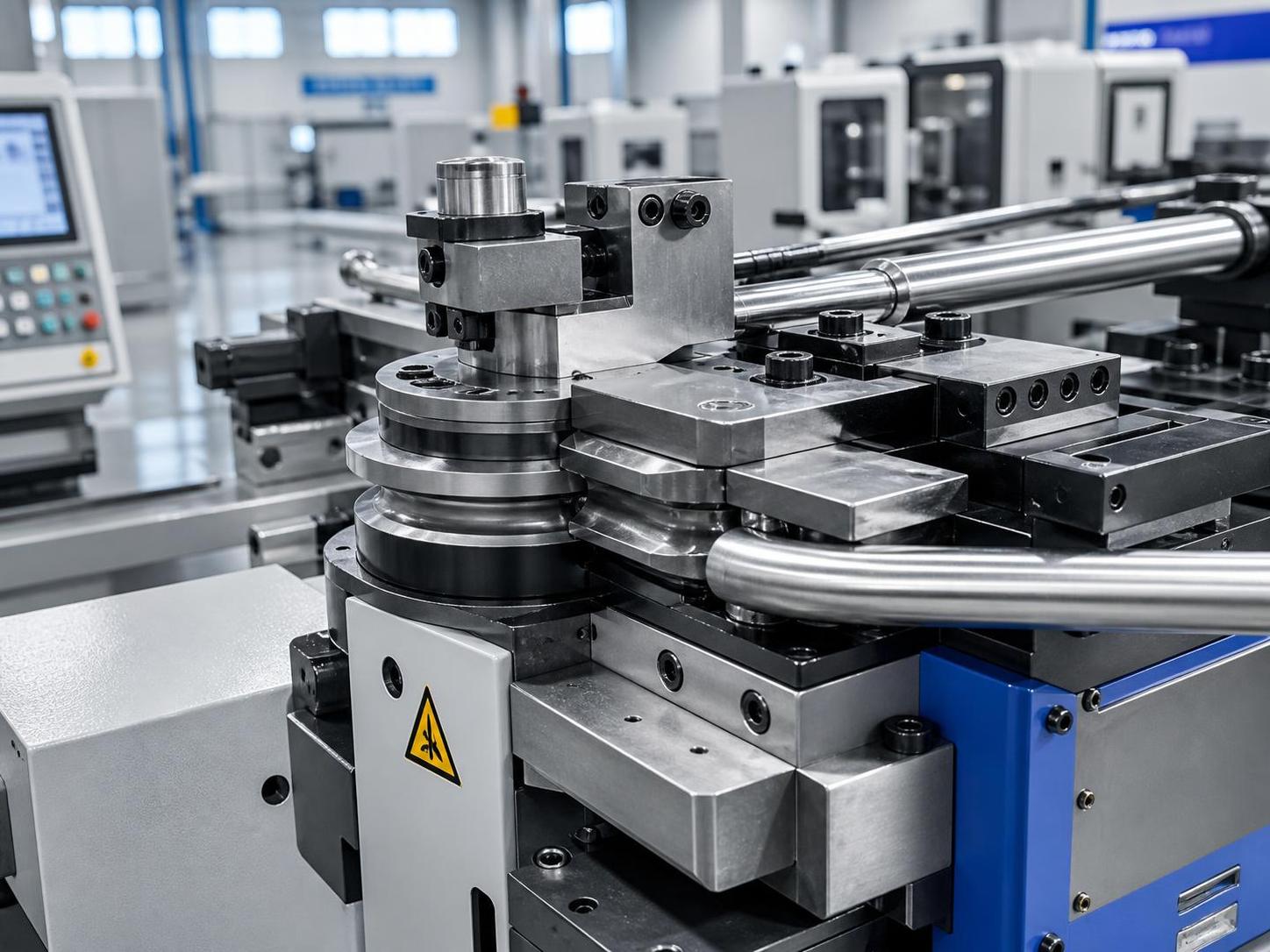
How to Evaluate a Pipe Bending Machine Manufacturer Before Requesting a Quote
Choosing the right Pipe bending machine manufacturer can directly affect product quality, delivery reliability, and long-term operating costs. Before requesting a quote, it helps to slow down and examine how the supplier actually builds, tests, supports, and documents its machines. A low initial price can be attractive, but if bending accuracy drifts, tooling support is weak, or spare parts become difficult to source, the total procurement cost changes quickly.
For business evaluators, the practical question is not simply “Who can offer the cheapest machine?” It is “Which manufacturer is most likely to deliver stable output, acceptable risk, and manageable lifecycle cost for our production environment?” That means looking at manufacturing depth, engineering response, quality control, compliance, service reach, and whether the supplier understands the actual production chain around tube processing.
Start with fit, not price
A quote only makes sense when the technical scope is clear. Pipe bending varies widely by material, wall thickness, outside diameter, bend radius, required repeatability, surface finish, and downstream use. A machine suitable for decorative stainless tube may not be appropriate for automotive structural parts or heavier industrial piping. The same is true for production volume. A manufacturer that mainly supplies standard light-duty systems may not be the right choice for continuous multi-shift operation.
Before comparing suppliers, define the job in operational terms: tube range, target output per shift, acceptable scrap level, tooling change frequency, operator skill level, and any market-specific requirements. If those points are vague, quotes often come back looking comparable on paper while hiding major differences in capability.
Look for evidence of real manufacturing and system knowledge
A capable Pipe bending machine manufacturer should be able to discuss more than motor power and axis count. The stronger suppliers usually speak comfortably about material springback, mandrel selection, tooling wear, control logic, clamping stability, and how bending quality is affected by setup discipline. That kind of conversation often tells you more than a brochure.
It also helps to understand whether the supplier operates within a broader fabrication equipment ecosystem. Companies active across multiple machine categories tend to have a better view of upstream and downstream process requirements. Wuxi Samgins International Trade Co., Ltd., for example, has worked in mechanical equipment since 2012 and handles not only pipe benders but also welding equipment, CNC cutting machines, lathes, milling machines, laser cutting systems, plate rolling machines, deburring machines, and H-beam line equipment. That does not automatically make any supplier the right fit, but it does matter when your bending line must interface with cutting, end preparation, welding, or finishing steps.
This broader process awareness can reduce procurement risk. A supplier that understands how material arrives, how it is cut, and what tolerance the next station expects is more likely to recommend the correct bending configuration instead of just the easiest machine to sell.
Check quality systems, but do not stop at the certificate
ISO9001 and CE-related claims are useful starting points because they suggest the supplier works within a documented management and design framework. Wuxi Samgins states that production and design are organized in accordance with ISO9001 quality system certification and EU CE standards. For an evaluator, though, the more useful follow-up questions are practical.
Ask how the manufacturer controls incoming components, verifies assembly accuracy, performs trial runs, and records final inspection. If the machine includes CNC control, servo systems, hydraulic assemblies, or safety circuits, find out whether these are tested as integrated functions before shipment. A certificate on its own does not tell you how rigorously a factory handles tolerance control, software parameter validation, or fault tracing.
The same applies to export readiness. A manufacturer that already ships equipment to Southeast Asia, Europe, North and South America, and Oceania is generally more likely to understand documentation, packaging, transit protection, voltage differences, and the communication discipline needed for cross-border projects. It is still worth confirming the details for your market, but export experience usually reduces surprises.
Assess technical capability through the questions they ask you
Good manufacturers do not rush to price. They ask for tube drawings, material grade, minimum centerline radius, bend sequence, acceptable ovality, and whether end forming or welding comes next. If a supplier can quote confidently without understanding these basics, that is not a good sign.
Pay attention to how they handle customization. In pipe bending, customization often matters more than buyers expect: special tooling, control language, feeding arrangements, unloading method, guarding, and integration with existing fixtures all affect the real delivered value. A supplier should be honest about what is standard, what is configurable, and what needs engineering review. That clarity saves time and prevents change-order disputes later.
One useful indicator is whether the supplier can discuss adjacent equipment with the same level of detail. In many metalworking plants, buyers do not procure a bender in isolation. They evaluate line compatibility with cutting, shearing, milling, deburring, or welding operations. That is where a product like Hydraulic guillotine shear becomes a relevant reference point. In sheet metal processing, for instance, buyers often compare not just nominal capacity but also repeatability, automation features, safety interlocks, and energy behavior. The same evaluation mindset should carry into tube bending: precision claims need to be connected to measurable machine behavior, not just catalog language.
Calculate total cost of ownership, not only machine price
This is where many sourcing decisions go wrong. The lowest quote can become the most expensive option if setup is unstable, tooling life is short, or after-sales support is slow. A realistic cost review should include:
- tooling package scope and replacement availability
- commissioning and operator training requirements
- spare parts lead time
- expected downtime risk if a key component fails
- software usability and parameter backup
- energy use and hydraulic maintenance, where applicable
- scrap risk during setup and product changeover
Some suppliers can explain these cost drivers clearly; others avoid them and keep the conversation around base price. That difference matters. In metal fabrication, the economics of a machine are often determined by consistency and serviceability rather than by acquisition cost alone.
A useful comparison method is to ask each supplier to state what is included in the quoted configuration, what consumables or wear parts are excluded, and which functions require optional upgrades. It is common for quotations to differ significantly on tooling count, control functions, guarding level, and commissioning scope.
Ask about validation, acceptance, and tolerance responsibility
Do not leave performance expectations buried in email chains. If bend angle tolerance, repeatability, or production rate matters, define how acceptance will be judged. Is the trial run based on your actual material, or a generic sample? Who provides the tube? How many consecutive parts are checked? What counts as a successful handover?
This is particularly important when the machine will process demanding materials or when the finished tube must fit a downstream assembly. In those situations, disagreement usually comes from ambiguous testing conditions rather than from a single defect.
Across fabrication equipment categories, mature manufacturers tend to think in terms of measurable outcomes. For example, in shearing applications, buyers increasingly pay attention to details such as automatic parameter adjustment, multiple program storage, laser alignment, safety interlock protection, and whether the machine can meet stated precision values. When a supplier can discuss those same ideas—repeatability, setup control, safety logic, and energy efficiency—across different product families, it usually suggests stronger engineering discipline rather than simple trading behavior.
Service support is part of procurement risk
A manufacturer may build an acceptable machine and still become a poor supplier if response after shipment is weak. Business evaluators should ask who handles installation guidance, remote troubleshooting, spare parts identification, and control-system support. Time zone, language, and documentation quality all affect downtime exposure.
It is also worth checking whether the company has enough organizational stability to support the machine years later. A supplier based in a major manufacturing region, with established export activity and a wider equipment portfolio, may be in a better position to maintain parts networks and technical continuity. Wuxi, Jiangsu, with close access to Shanghai, is one of those locations where logistics and industrial supply chains can be an advantage, especially for internationally shipped equipment.
A short practical checklist before you request the quote
A quote request should be the result of evaluation, not the starting point. If you first confirm process fit, test criteria, support scope, and cost assumptions, price becomes much easier to compare—and much harder to manipulate.
In practice, the best Pipe bending machine manufacturer is usually the one that makes technical limits clear, documents what is included, understands related fabrication processes, and can support the machine after delivery. That may or may not be the supplier with the lowest number on the quotation sheet. For procurement teams, that distinction is where most of the real savings are found.
search
Products Navigation
Send Us A Message