




How to Judge Rolling Machine Plate Capacity Correctly
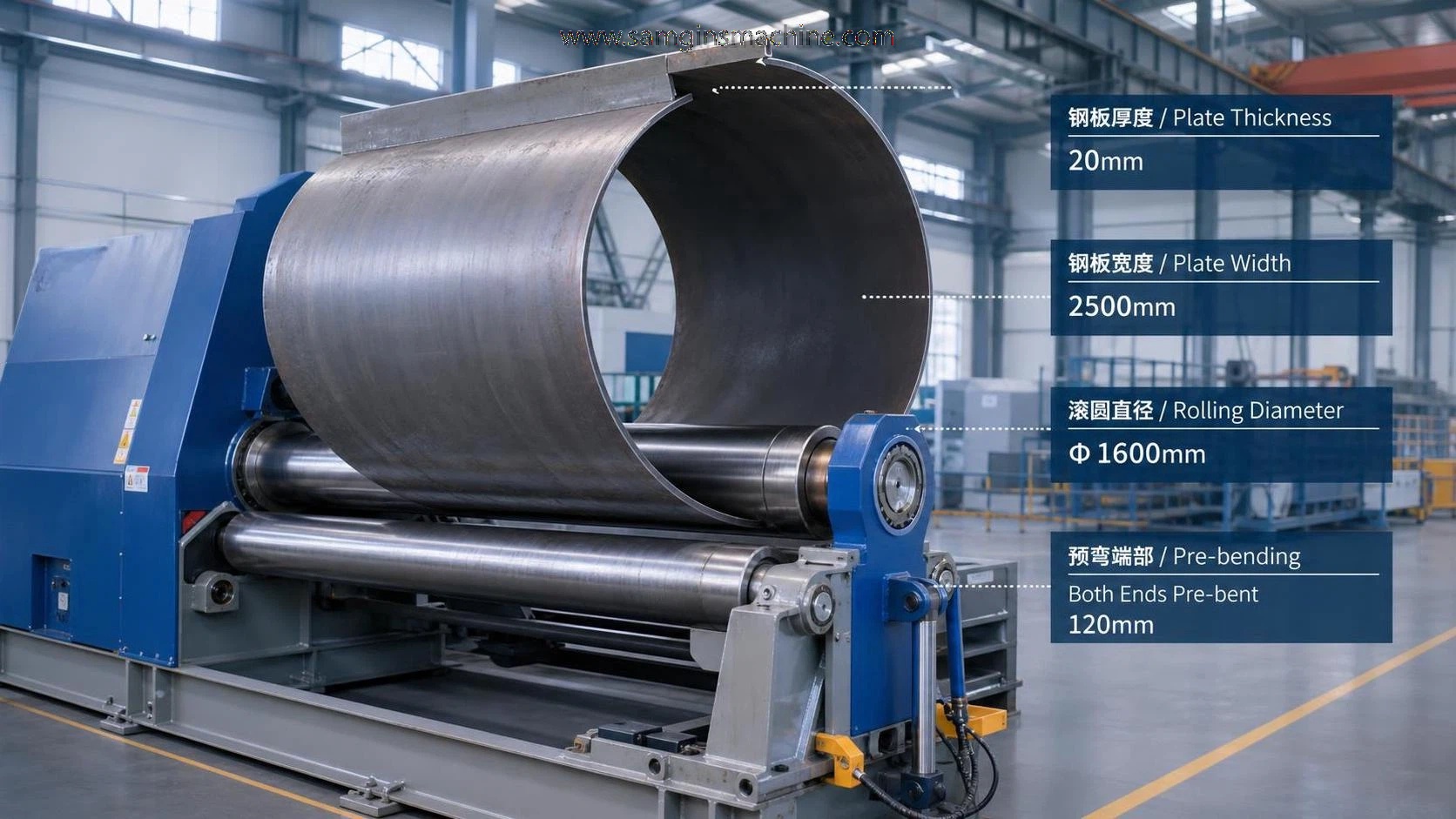
Choosing a Rolling machine is not only about the quoted maximum thickness. Plate capacity has to be judged against real production conditions, not catalog headlines. Thickness, width, yield strength, inside radius, and working method all change what a Rolling machine can actually deliver, which is why careful evaluation matters before comparing prices or lead times.
Why Plate Capacity Is Often Misread
A common mistake is treating one capacity figure as universal. In practice, every Rolling machine capacity claim is conditional.
Many quotations list a maximum plate thickness based on mild steel, a limited width, and a relatively large rolling diameter. Once any variable changes, the result changes too.
This becomes important in fabrication workshops handling pressure vessels, structural parts, tanks, cones, and heavy steel components. The same Rolling machine may perform well on carbon steel but struggle with stainless steel or high-strength plate.
In purchasing work, an overestimated machine creates downtime and rework. An oversized machine raises investment, floor space, and energy costs without adding useful output.
What Plate Capacity Really Means
Plate capacity describes the forming ability of a Rolling machine under stated conditions. It is not just a thickness number.
The most useful way to read capacity is as a combination of several limits working together:
- maximum plate thickness
- maximum plate width
- material grade and yield strength
- minimum rolling diameter
- pre-bending performance at plate ends
- repeatability over continuous production
A machine that rolls 20 mm Q235 plate at narrow width may not roll 20 mm Q345 plate at full width. That difference should be clarified early.
The role of width and radius
Wider plates require more force and better frame rigidity. Small-diameter rolling also demands more from the machine because deformation becomes more severe.
That means a Rolling machine should be judged by the hardest part it must produce, not by an average part.
The Core Factors That Affect Capacity
In actual sourcing, five factors usually decide whether a machine is correctly matched.
1. Material strength
Higher yield strength needs greater forming force. Stainless steel, alloy steel, and high-strength structural steel all reduce effective Rolling machine capacity.
If the supplier only states capacity for standard carbon steel, ask for conversion data for your target material grades.
2. Plate thickness and usable width
Thickness alone is misleading. Full-width rolling is harder than narrow-strip rolling. A specification without width is incomplete.
3. Minimum finished diameter
Some jobs only need large cylinders. Others require tighter diameters or short shells. The smaller the target diameter, the more demanding the job becomes.
4. Pre-bending requirement
Pre-bending reduces flat ends and improves fit-up before welding. Machines with weak pre-bending may still roll the body, but final assembly quality can suffer.
5. Duty cycle and stability
Catalog capacity may describe occasional operation. Continuous production needs stronger transmission, stable hydraulics, durable rollers, and rigid frames.
A Practical Way to Compare Machine Offers
When comparing one Rolling machine with another, place all offers into the same evaluation frame.
This method prevents a low price from hiding a lower usable capacity. It also makes technical comparison easier across different suppliers.
Capacity Judgment in Real Production Context
A Rolling machine rarely works alone. It sits inside a broader fabrication process that may include cutting, beveling, welding, straightening, and finishing.
That broader view matters. Wuxi Samgins International Trade Co., Ltd, based in Wuxi near Shanghai, supplies plate rolling machines along with CNC cutting, welding, milling, deburring, and H-beam line equipment.
In this kind of integrated manufacturing environment, machine selection is usually judged by line balance. A Rolling machine that exceeds upstream or downstream capacity may not improve throughput.
Standards also matter. Equipment produced under ISO9001 management and aligned with CE expectations tends to support more consistent quality review, documentation, and export readiness.
When structural steel is part of the workflow
Plate rolling is often connected with structural fabrication, especially where H-beam lines and welded assemblies share shop resources.
In those cases, adjacent equipment quality also affects output. For example, YTJ-60B and YTJ-80B H beam straightening machine fits H-beam production lines where straightening stability, material protection, and consistent feeding influence downstream efficiency.
Its structure shows what buyers often look for in heavy-duty forming equipment generally: stress-relieved frames, precision-machined components, wear-resistant roller materials such as 35CrMo and 40Cr, and controlled adjustment accuracy.
That does not make it a substitute for a Rolling machine. It does show how equipment should be judged by rigidity, drive quality, and repeatable control rather than headline numbers alone.
Questions Worth Asking Before Final Selection
Useful capacity evaluation usually depends on a short list of direct questions.
- What material grade was used for the stated Rolling machine capacity?
- Is the thickness rating valid at full plate width?
- What minimum diameter can be achieved under that rating?
- What is the separate pre-bending capacity?
- What is the roller material and heat-treatment method?
- Can the supplier provide similar application references?
- How does the machine perform in continuous multi-shift use?
If responses stay vague, the quoted capacity should be treated cautiously. Reliable suppliers can usually tie performance claims to clear operating conditions.
How to Turn Capacity Data Into a Better Decision
A sound decision starts with the heaviest real job, not the most common one. Define the thickest plate, widest plate, strongest material, and smallest diameter that must be rolled.
Then compare each Rolling machine against that requirement with a practical reserve. That reserve protects output when material variation, operator difference, or future product changes appear.
It is also worth checking the full production route. If rolling links to beam fabrication, welding, or straightening, the system should be reviewed as one process rather than as isolated machines.
The best next step is to build a short capacity checklist around your actual workpieces, ask suppliers to rate the same parts under the same conditions, and compare every Rolling machine on that common basis.
search
Products Navigation
Send Us A Message