




Rolling Machine Maintenance Checklist to Prevent Downtime
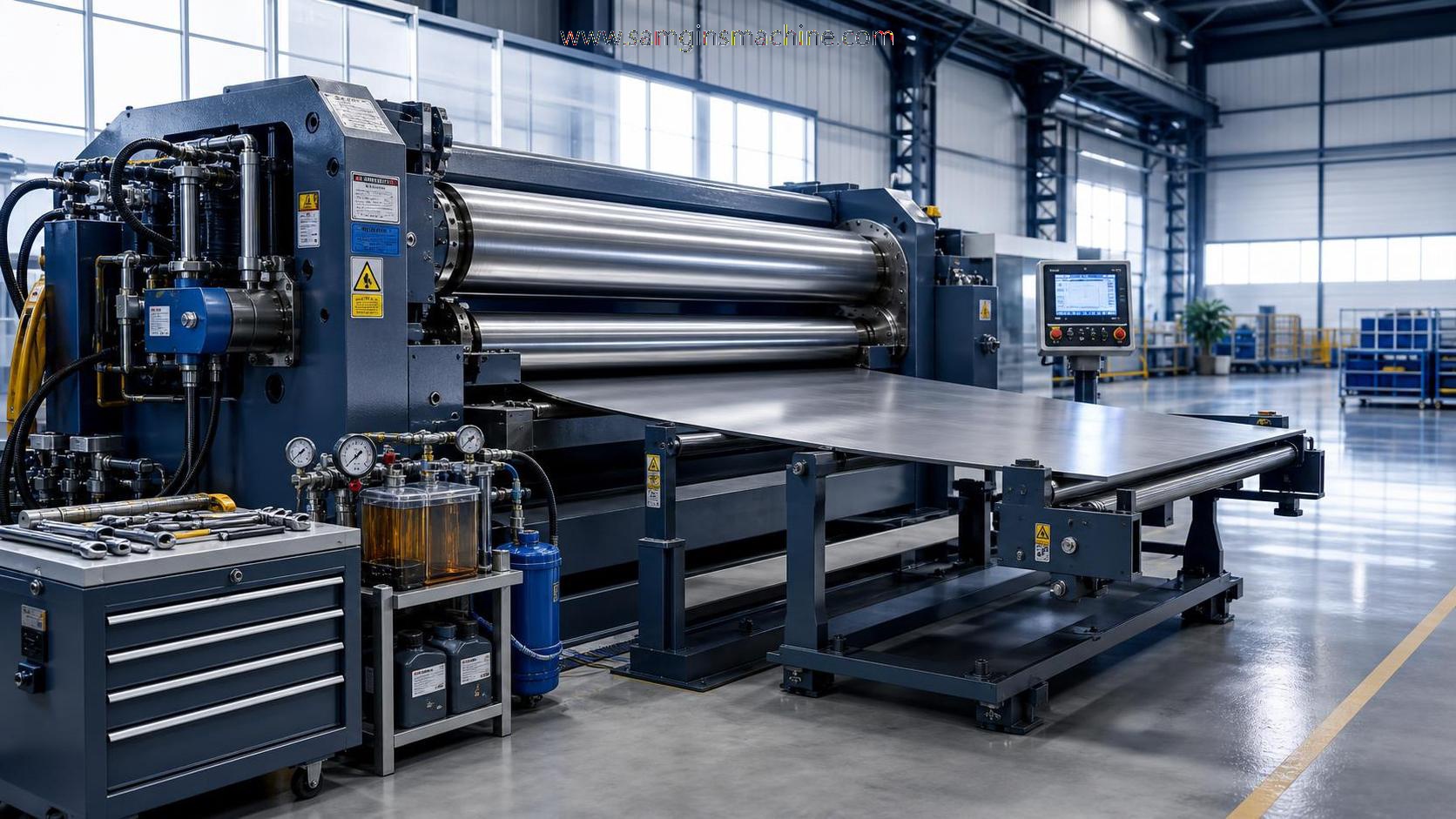
Rolling Machine Maintenance Checklist to Prevent Downtime
Unexpected downtime rarely starts with a major failure. More often, a rolling machine slows down, vibrates more, or loses repeatable accuracy before it stops completely.
That is why a practical rolling machine checklist matters. It turns scattered service tasks into a routine that protects production schedules, repair budgets, and operator safety.
In metal fabrication, even a short stoppage can delay plate rolling, welding preparation, and downstream assembly. A disciplined maintenance plan helps keep the whole line balanced.
Companies with broad equipment experience, including plate rolling machines, welding systems, and CNC machinery, usually reach the same conclusion: prevention costs less than recovery.
The guide below answers the questions that come up most often when building a rolling machine maintenance routine that actually reduces downtime.
What should a rolling machine maintenance checklist really cover?
A useful checklist should cover more than lubrication. The goal is to catch wear, drift, contamination, and unsafe conditions before they interrupt operation.
In practice, the best rolling machine checklist includes five inspection layers: daily condition, weekly function, monthly wear, quarterly calibration, and annual overhaul review.
- Roll surface condition, scoring, and material buildup
- Hydraulic pressure stability and hose leakage
- Gearbox noise, oil level, and temperature rise
- Bearing play, abnormal heat, and grease condition
- Electrical terminals, sensors, and emergency stop response
- Machine alignment, rolling accuracy, and repeatability
Simple checks matter most when they are consistent. A short checklist used every shift is usually more effective than a detailed form ignored for three weeks.
Need a quick reference point? This table helps separate urgent findings from items that can wait for planned service.
Which daily checks help prevent most rolling machine stoppages?
Daily checks are where most downtime prevention starts. They are not complicated, but they must be specific enough to catch early warning signs.
Before startup, walk around the rolling machine and look for oil traces, loose guards, damaged cables, and leftover material around the base or roller area.
Then listen during the first run. A new clicking sound, delayed roller response, or unstable hydraulic movement often appears before any visible failure.
During production, check whether plate feeding remains smooth. Skewed entry, slipping, or inconsistent curvature often points to roller contamination or pressure imbalance.
At shift end, clean contact surfaces. Fine metal dust and scale do more damage than many teams expect, especially when they mix with lubricant.
- Verify emergency stops and limit switches
- Confirm lubrication points are not blocked
- Record operating hours and unusual alarms
- Check hydraulic oil sight glass and temperature
- Inspect roller surfaces after heavy plate work
A daily record becomes even more useful when several machines share the same workshop. It helps identify whether the issue is machine-specific or process-related.
How do you know whether the problem is wear, misalignment, or poor lubrication?
This is where many service decisions become inefficient. Symptoms overlap, so replacing parts too early can waste time without solving the real problem.
If the rolling machine starts producing inconsistent bend radii, begin with alignment and roller condition before assuming a hydraulic fault.
If heat rises around bearings or drive points, poor lubrication is more likely. Dark grease, contaminated oil, or dry contact areas usually confirm it.
When the machine pulls to one side or the plate tracks unevenly, check parallelism, side supports, and roller wear pattern together. One reading alone is rarely enough.
A practical diagnostic sequence usually works better than random replacement:
- Review recent alarms and operator notes.
- Inspect lubrication condition and contamination.
- Measure roller alignment and backlash.
- Check hydraulic pressure under load.
- Test repeatability with standard material.
In heavier fabrication environments, rolling machines often work beside welding stations, positioners, and beam handling equipment. That makes shared maintenance discipline important.
For example, when a line also uses an Welding manipulator for pressure vessels, pipelines, or steel structures, alignment records across connected equipment become more valuable.
That kind of coordinated inspection is common in workshops that manage plate rolling, seam welding, and fit-up as one continuous process rather than separate tasks.
Are weekly and monthly tasks different from daily care, or just more of the same?
They are different, because daily care catches visible change, while weekly and monthly tasks confirm whether the rolling machine is still operating within acceptable mechanical limits.
Weekly maintenance should focus on function testing. Run the machine through a full motion cycle and compare response times, travel smoothness, and pressure stability.
This is also the right time to inspect chain tension, coupling integrity, electrical cabinet cleanliness, and cooling fan condition.
Monthly service should go deeper. Sample hydraulic oil if contamination is suspected, inspect filters, verify fastener torque, and measure roller wear where load concentration is highest.
If the rolling machine handles variable plate thicknesses, monthly calibration becomes even more important. Small drift can stay hidden until a larger job exposes it.
More advanced workshops also review related automation. Equipment such as the Welding manipulator, especially models with 1000mm to 7000mm lifting and telescopic stroke, benefits from the same preventive logic.
The point is not to compare unlike machines. It is to apply the same rule: moving structures, drives, controls, and load-bearing elements all need scheduled verification.
What maintenance mistakes cause downtime even when a checklist exists?
The first mistake is treating the rolling machine checklist as a paperwork task. If readings are copied forward without inspection, the checklist loses all value.
Another common issue is over-lubrication. Excess grease attracts dust, traps fine particles, and can accelerate wear instead of reducing it.
Missed cleaning is also expensive. Scale, welding residue, and metal fines often migrate into sensors, guides, and hydraulic sealing points.
Some teams replace seals or bearings repeatedly without checking root causes. Misalignment, overload, contaminated oil, or improper plate handling may be the real source.
A less obvious mistake is ignoring trend data. One abnormal temperature reading may be acceptable. Three weeks of gradual increase usually means intervention should not wait.
- Do not mix lubricants without compatibility review
- Do not postpone small leak repair during busy periods
- Do not skip no-load testing after component replacement
- Do not assume operator compensation equals machine health
In facilities supplying global markets, consistent documentation matters as much as the repair itself. ISO9001-based routines and CE-oriented safety habits usually make maintenance more repeatable.
How often should a rolling machine be reviewed for long-term reliability?
The answer depends on workload, plate thickness range, duty cycle, and operating environment. Still, most rolling machine service plans should include a formal quarterly and annual review.
Quarterly review should compare wear trends, fault history, oil condition, and dimensional accuracy. It is the right point to decide whether preventive replacement is justified.
Annual review should be broader. Recheck geometry, inspect structural stress points, review motor load history, and update spare parts planning based on actual usage.
A good long-term review also asks whether the rolling machine still matches the current process. Production changes can push an originally suitable machine into a higher-risk duty pattern.
If downtime has already become recurring, the next step is not only repair. Rebuild the checklist around failure modes, assign inspection intervals, and make acceptance limits measurable.
In short, reliable rolling machine maintenance is a system, not a single task. Start with daily observations, support them with weekly and monthly checks, and use trend reviews to prevent repeat failures.
That approach helps extend service life, protect accuracy, and reduce unplanned stoppages across fabrication work involving rolling, fit-up, and welding operations.
The most practical next move is to audit the current checklist, remove vague items, add measurable checkpoints, and align service intervals with actual machine load.
search
Products Navigation
Send Us A Message