




How to Select a Thread Rolling Machine for Bolt and Fastener Production
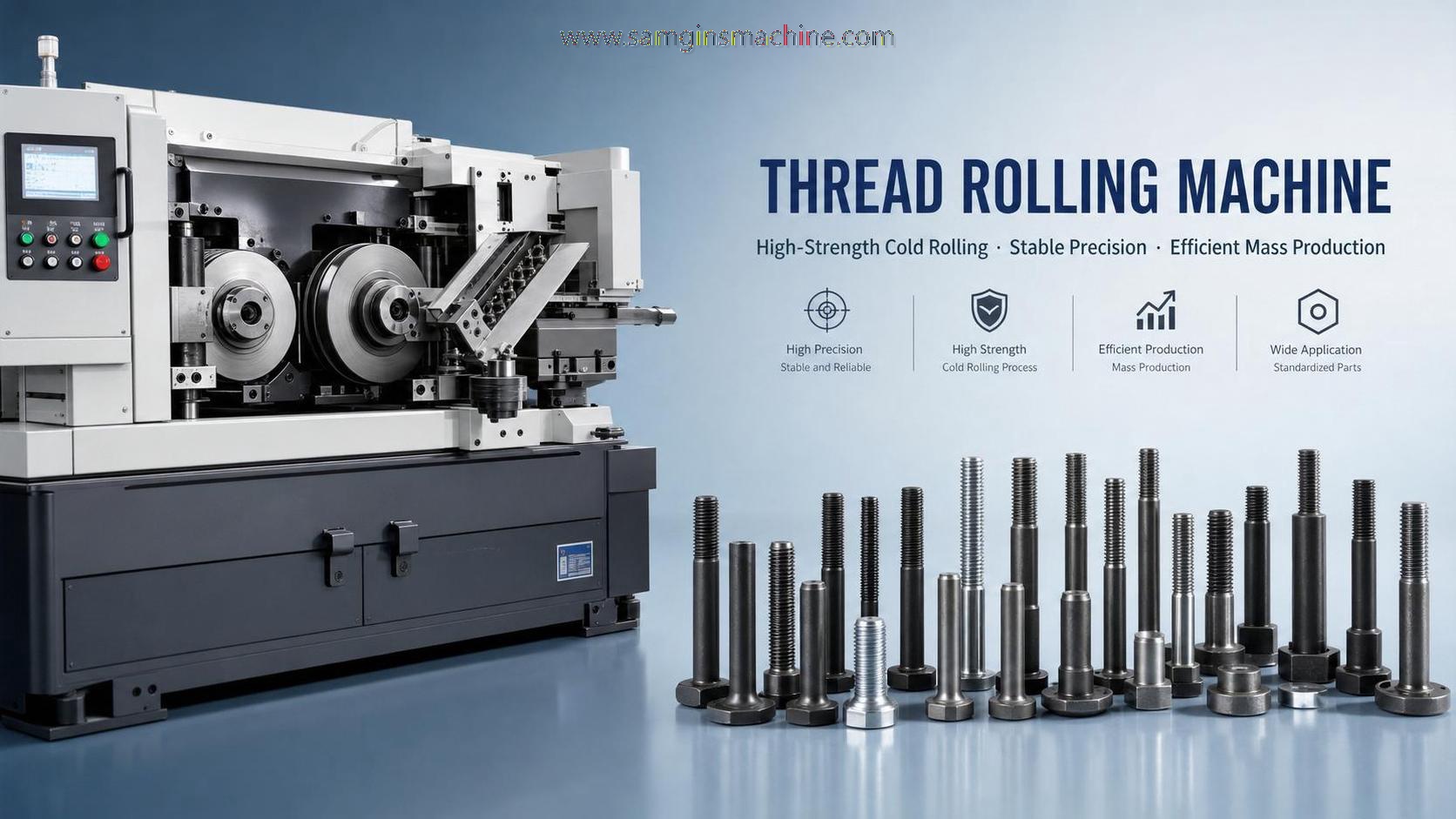
Selecting a Thread rolling machine for bolt and fastener production is less about buying the biggest model and more about matching capacity, precision, and process stability to the actual job.
In fastener manufacturing, that decision affects thread quality, cycle time, material use, maintenance cost, and delivery reliability. A poor fit usually shows up later as scrap, downtime, or uneven output.
That is why equipment evaluation should start from production reality: what materials are being rolled, which thread standards must be met, how large the order volumes are, and how much automation is expected over time.
Why thread rolling remains a preferred process
A Thread rolling machine forms threads by cold rolling rather than cutting them. The material is displaced under pressure, so the metal fiber flow stays continuous.
This matters in bolts and fasteners because continuous grain structure supports better fatigue strength, wear resistance, and dimensional consistency.
The process also avoids chip generation. In practical production, that means cleaner operation, better material utilization, and easier integration into repeatable manufacturing lines.
For buyers comparing rolling with conventional cutting, the real value is not only speed. It is the combination of finish quality, lower waste, and a more stable path to volume production.
What should be defined before comparing machines
Machine selection becomes clearer when the workpiece profile is defined first. Diameter range, thread pitch, part length, material grade, and target output should be documented before any quotation review.
A machine that performs well on standard bolts may not be ideal for anchor bolts, T-shaped screws, or larger-pitch fasteners.
It is also useful to separate current demand from planned demand. Many production bottlenecks appear when a line is purchased only for today’s order mix.
Key pre-purchase inputs
- Workpiece material, such as carbon steel, alloy steel, or non-ferrous metal
- Diameter and pitch range across the main fastener family
- Thread standard and tolerance expectations
- Daily or monthly production volume
- Manual, semi-automatic, or automatic operation preference
- Available floor space, power supply, and coolant arrangement
The machine factors that deserve the closest attention
Capacity figures are often the first numbers reviewed, but they should be read in context. Maximum rolling pressure, diameter range, pitch range, and feed mode all need to match the actual parts being produced.
For example, a machine with strong rolling force may still be inefficient if the usable diameter window does not suit the dominant fastener sizes.
Precision should be reviewed beyond catalog claims. In bolt and fastener production, thread profile fullness, pitch consistency, and surface roughness usually matter more than one headline figure.
A capable Thread rolling machine should deliver stable diameter consistency across long production runs, not only on a sample part during inspection.
Matching the machine to application range
Different fastener categories create different demands. Standard bolts with steady volume need high repeatability and efficient throughput. Larger structural parts often require more rolling force and broader pitch capability.
Anchor bolts and high-strength standard parts add another layer of scrutiny because the final thread quality influences assembly reliability in service.
For this reason, application fit should be treated as a technical and commercial issue together. The right machine protects both product performance and production economics.
One useful reference in this area is the Z28-650 thread rolling machine, which is designed for precision external threads, high-strength standard parts, anchor bolts, and T-shaped screws.
Its scope reflects a common purchasing reality: one Thread rolling machine often needs enough range to support both standard orders and larger, more demanding workpieces.
Reading technical data in a practical way
Technical specifications become more meaningful when they are tied to production conditions. A 500KN maximum rolling pressure, for example, indicates strong forming capability, but only if the tooling, setup, and material condition are also appropriate.
The same applies to feed range. A radial feed range of Φ6-110mm and an axial feed range of Φ6-80mm can cover many bolt and fastener applications, yet the actual decision depends on the dominant part family.
Pitch range should be checked just as carefully. If the machine supports workpiece pitch from Φ1-12mm, it may suit both standard fasteners and larger screw pitch requirements, which can reduce the need for multiple dedicated units.
Surface performance is another meaningful indicator. When a Thread rolling machine can achieve roughness around Ry 0.1-0.8 μm and precision at GB197-63 Grade 2, it points to a process level suitable for demanding fastener output.
Signs that a specification is commercially useful
- The rated range covers most of the active order mix
- The machine supports stable quality on high-strength materials
- The output model aligns with expected labor planning
- The dimensions and weight fit the factory layout
- Cooling, hydraulic, and main motor power suit local utility conditions
Production efficiency is more than output per hour
In many purchase reviews, efficiency is treated as a simple speed question. In reality, usable efficiency includes setup time, die change convenience, scrap rate, and consistency over extended shifts.
Cold rolling has a clear advantage here. Because it is chipless, material loss is reduced, cleanup is simpler, and line conditions are often easier to control.
Some machines also support manual, semi-automatic, and automatic working modes. That flexibility can be important where order structures change or where automation is being introduced step by step.
A machine that is readily adaptable to automated processing can create long-term value even if the initial production plan is still semi-automatic.
Supplier capability matters almost as much as machine capability
The buying decision should include the supplier’s manufacturing background, export experience, and quality discipline. This is especially relevant for machinery used in continuous fastener production.
Wuxi Samgins International Trade Co.,Ltd, established in 2012 in Wuxi, serves a broad range of metalworking equipment categories, from CNC machine tools and laser cutting systems to rolling, bending, and deburring equipment.
That wider equipment background is useful because a Thread rolling machine often sits within a larger fabrication process, not as an isolated purchase.
The company’s products have been supplied to Southeast Asia, Europe, the Americas, and Oceania, with production and design organized around ISO9001 and EU CE standards. For machinery sourcing, that context supports confidence in process control and documentation.
A practical way to narrow the final choice
Shortlisting works best when technical fit and operating cost are reviewed together. A lower purchase price can become expensive if tooling wear, adjustment time, or rejected parts increase later.
It helps to compare final candidates against the same decision sheet.
- Main part types and materials
- Required thread quality and standards
- Capacity under normal operating conditions
- Tooling compatibility and changeover time
- Power, footprint, and maintenance access
- Supplier response speed, spare parts, and technical support
Where larger diameters, stronger materials, or wider pitch requirements are involved, checking a model such as the Z28-650 against actual samples can be more valuable than relying on brochure language alone.
Turning selection criteria into a better investment
The best Thread rolling machine is the one that fits the fastener range, maintains quality through long runs, and leaves room for future production changes.
In practice, that means defining part requirements clearly, verifying usable capacity, reviewing precision data carefully, and checking whether the supplier can support stable long-term operation.
A structured comparison built around material, thread standard, production volume, and line integration will usually lead to a better result than choosing on headline price or maximum force alone.
The next step is straightforward: map your active bolt and fastener range, compare it against machine capability, and use that matrix to judge whether the equipment will still make sense after production scales.
search
Products Navigation
Send Us A Message