




What Is a Thread Rolling Machine and How Does It Form Threads Without Cutting?
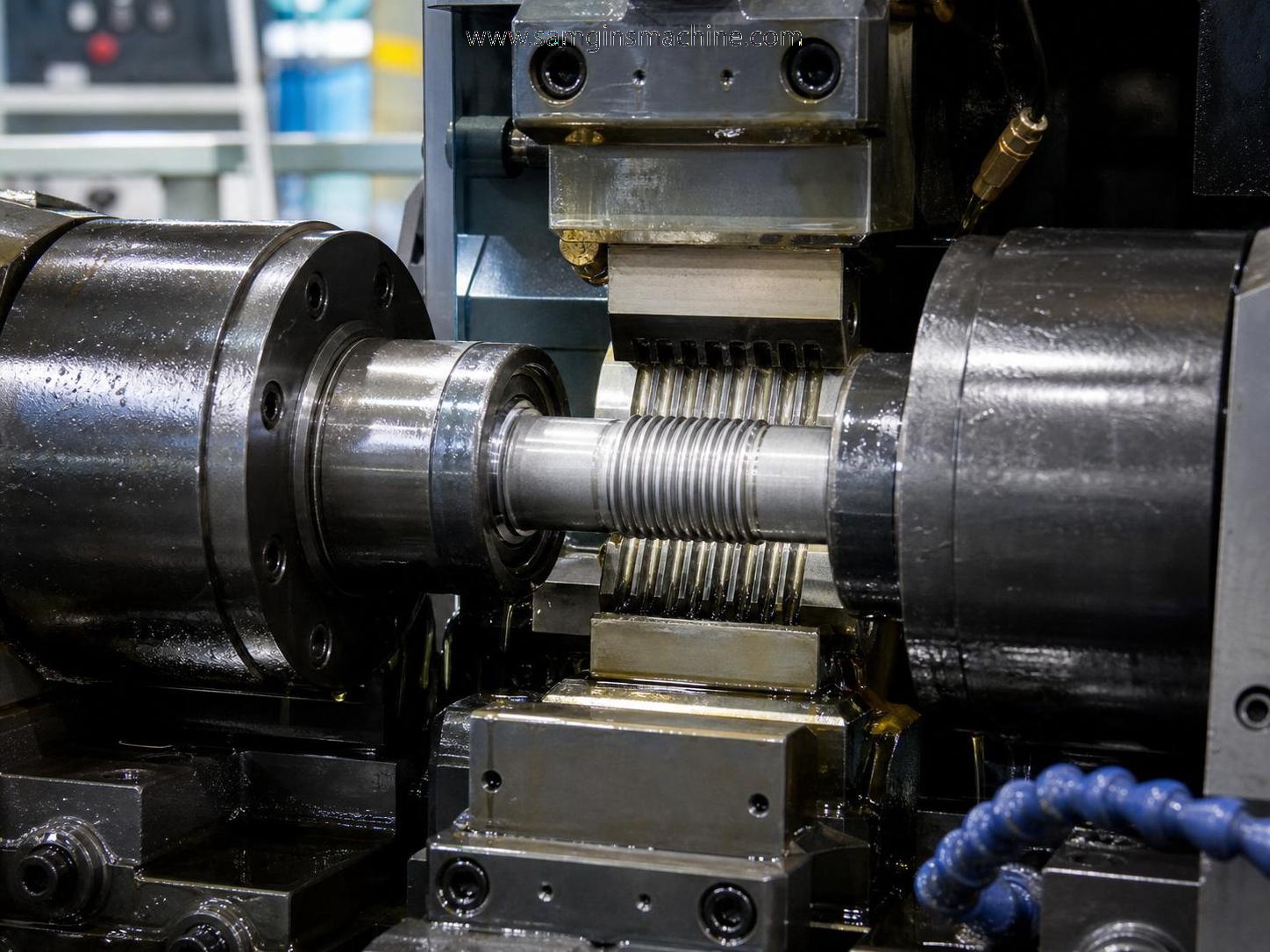
What Is a Thread Rolling Machine and How Does It Form Threads Without Cutting?
A thread rolling machine forms precise, durable threads by displacing metal rather than cutting it away, making it a highly efficient solution in modern manufacturing.
This matters because thread quality affects strength, fatigue life, assembly speed, and product consistency.
Compared with thread cutting, thread rolling keeps the material continuous.
That simple difference changes performance in a big way.
In real production, a thread rolling machine is widely used for bolts, screws, studs, pipes, shafts, and automotive fasteners.
It is especially valuable when high output and repeatable thread accuracy are required.
How a Thread Rolling Machine Works
A thread rolling machine does not remove chips.
Instead, hardened dies press into the outer surface of a rotating or fed workpiece.
As pressure increases, the metal flows plastically into the die profile.
That flow creates the thread crest and root without cutting away material.
The process usually follows four basic stages.
- The blank is prepared to the correct diameter.
- The workpiece is positioned between rolling dies.
- The dies apply force and form the thread profile.
- The finished part exits with a smooth, compacted surface.
This is why thread rolling is often described as a cold forming process.
The material is reshaped under force, not machined away by a tool edge.
Why Threads Form Better Without Cutting
The biggest advantage is grain flow.
A cutting tool interrupts the metal structure at the thread surface.
A thread rolling machine compresses and redirects that structure along the thread shape.
This usually improves fatigue resistance and tensile performance.
The rolled surface is also smoother.
Lower surface roughness helps reduce stress concentration during repeated loading.
Another benefit is material efficiency.
Since no chips are produced, raw material use is generally better controlled.
For high-volume fastener production, that can mean noticeable cost savings over time.
Main Performance Benefits
- Higher thread strength
- Better fatigue life
- Faster production cycles
- Improved surface finish
- Reduced scrap and chip handling
- More consistent thread dimensions
Types of Thread Rolling Machines
Not every thread rolling machine works the same way.
The machine type usually depends on part geometry, output target, and thread specification.
Flat Die Machines
These use one stationary die and one moving die.
They are common for screws and small fasteners in mass production.
Two-Die Cylindrical Machines
These are widely used for bolts, shafts, and similar parts.
They offer strong control over thread accuracy and productivity.
Three-Die Machines
These provide balanced pressure around the workpiece.
They are useful for precision parts and demanding thread rolling applications.
Choosing the right thread rolling machine starts with the part, not the catalog.
Key Materials and Process Limits
A thread rolling machine works best on ductile materials.
Common examples include low-carbon steel, alloy steel, stainless steel, aluminum, and some copper alloys.
If the material is too hard or brittle, thread rolling becomes difficult or unstable.
Blank diameter control is another critical factor.
If the blank is oversized, die pressure rises and thread shape can distort.
If the blank is undersized, thread depth may be incomplete.
Lubrication also matters more than many first-time buyers expect.
Good lubrication reduces friction, supports surface quality, and protects die life.
Common Process Risks
- Incorrect blank diameter
- Poor die alignment
- Insufficient lubrication
- Material hardness outside process range
- Worn dies causing pitch or profile errors
Thread Rolling Machine vs. Thread Cutting
Both methods can produce usable threads, but they serve different production goals.
In short, thread cutting remains useful for low volume, repair work, or difficult materials.
But a thread rolling machine is often the better option for speed, consistency, and mechanical performance.
What Buyers Should Check Before Choosing a Machine
A buying decision should go beyond maximum diameter and motor power.
The better approach is to match the thread rolling machine to actual production conditions.
- Confirm thread type, pitch, diameter, and material grade.
- Check whether output targets require manual, semi-automatic, or automatic feeding.
- Review die availability and replacement cost.
- Ask about tolerance stability during long production runs.
- Evaluate maintenance access, controls, and operator training needs.
This is also where supplier experience matters.
Wuxi Samgins International Trade Co., Ltd supplies mechanical equipment across metalworking and fabrication fields.
Its portfolio covers CNC machine tools, welding robots, cutting systems, forming equipment, and thread rolling solutions.
Production and design are organized under ISO9001 quality management and EU CE standards.
That kind of background is useful when equipment selection affects long-term process reliability.
A Practical Look at Related Automation Trends
Thread rolling does not exist in isolation.
In many factories, it sits beside welding, cutting, milling, and handling systems.
That broader automation trend matters because buyers often compare several production bottlenecks at once.
For example, a shop improving structural fabrication may also review an Space frame welding machine.
The WJ-5500 model is designed for welding truss structures made from steel metal.
It supports dual-side welding, imported PLC control, and workpiece lengths from 800mm to 5500mm.
Its balanced output and stable control reflect the same purchasing logic used for a thread rolling machine.
Buyers are not only purchasing a machine.
They are purchasing process stability, maintenance predictability, and output confidence.
Maintenance and Daily Use Tips
Even a strong thread rolling machine can lose accuracy if daily care is weak.
- Inspect dies for wear before profile defects appear.
- Keep lubrication clean and consistent.
- Verify alignment after die changes.
- Track thread measurements during long shifts.
- Train operators to recognize pressure and feed abnormalities early.
These are simple checks, but they directly affect output quality and tool life.
Final Takeaway
A thread rolling machine forms threads by applying pressure that moves metal into shape instead of cutting it away.
That gives rolled threads clear advantages in strength, finish, speed, and material use.
The real value becomes obvious when production volume is high and thread consistency matters every day.
When evaluating any thread rolling machine, focus on material range, die system, throughput, control stability, and supplier support.
That approach leads to a better technical decision and a more reliable manufacturing process.
search
Products Navigation
Send Us A Message